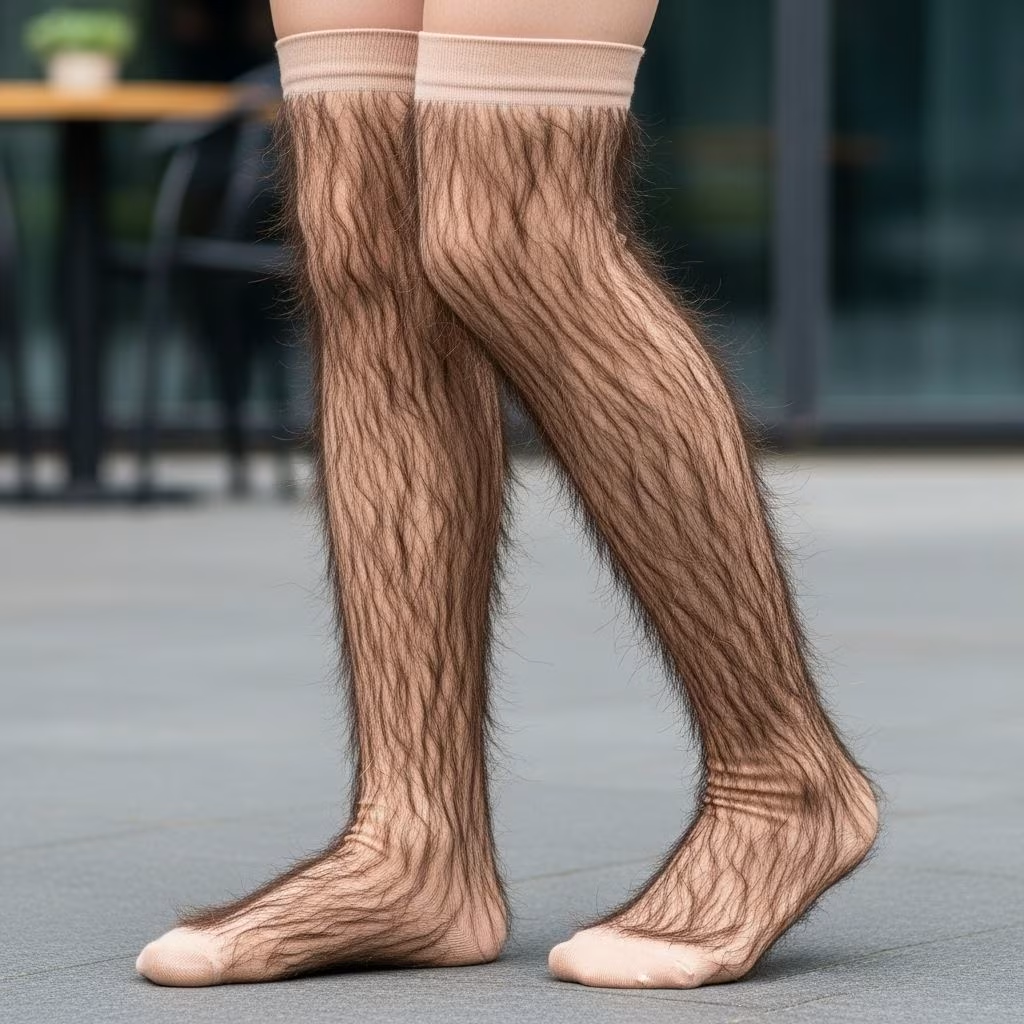
Hairy Leg Stockings: The Viral ‘Anti-Pervert’ Fashion Phenomenon
At the crossroads of social commentary and fashion novelty, hairy leg stockings rocketed to international attention when a single viral image claimed to offer women an unexpected defense against unwanted attention: the appearance of densely furred, unshaven legs. What started as a quirky post on Chinese social media rapidly morphed into a broader commentary on gender, safety, satire, and the lengths women might go to avoid harassment.
The Origins: How Did Hairy Leg Stockings Go Viral?
In early June 2013, a photo began circulating on China’s microblogging platform Sina Weibo, depicting a woman’s legs covered in stockings that mimicked the appearance of thick, dark hair. According to the translated caption, the stockings were promoted as “super sexy, summertime anti-pervert full-leg-of-hair stockings, essential for all young girls going out.”
The image purported to showcase a new form of sartorial self-defense: women could don these stockings to instantly make their legs appear so unkempt and unattractive that harassers would be repelled. The concept echoed longstanding fears and serious societal concerns about harassment, but it also carried a distinctly tongue-in-cheek, satirical tone.
The Idea Behind Hairy Leg Stockings
Described as both anti-pervert and protective, the alleged goal of these stockings was clear: anyone tempted to harass a woman would be instantly deterred by the sight of obviously fake, grossly hairy legs. According to Chinese social media users and various news outlets, the product was “designed to help fend off unwanted male attention” and “essential for all young girls going out.”
Yet, upon closer examination, several facts emerged:
- The viral image was the only known photograph circulating online, raising questions about whether the stockings were a real product or a digital hoax.
- No major commercial manufacturers or retailers of such stockings could be found after the image went viral.
- The satirical side was amplified by responses suggesting, “Why bother buying them? Just stop shaving your legs!”
Whether real or not, the mere concept reflected underlying anxieties faced by women and hinted at how humor and absurdity can be harnessed as social critique.
Anti-Harassment Fashion in a Global Context
China was not alone in developing innovative or bizarre apparel as a defense against harassment. Other examples from across Asia include:
- Anti-camouflage Accessories in Japan: Undergarments designed to block infrared cameras used by voyeurs, and even a disguise turning a woman into a vending machine to escape stalkers.
- Anti-rape Lingerie in India: Clothing that could shock an assailant with an electric current.
These approaches, while diverse, underscore a disturbing global reality: the persistence of sexual harassment and violence has spurred inventive, and sometimes outlandish, technological and sartorial reactions.
The Satire and Controversy: Deeper Social Critique
The notion that hairy leg stockings might provide safety from harassment was met with humor, skepticism, and biting criticism. Reactions on social media varied widely—from disgust at the very sight of the product, to outright laughter, and to serious reflection on why such inventions are ever entertained.
| Reaction Type | Example |
|---|---|
| Disgust | “Damn, so disgusting!!!” — Weibo user |
| Skepticism | Questions of practicality and whether attractive strangers would also be repelled |
| Critique | “This will not only prevent perverts, it’ll definitely also result in preventing handsome guys from approaching you.” |
| Reflection | Pointing out how focusing on women’s appearance misses the root issue of harassment |
Writers and social critics sharply observed that such accessories ultimately shift the burden of safety and social decorum onto women, rather than addressing the behaviors of perpetrators. As one commentator noted, “How about we start making chastity belts for men?”
Gender Politics, Street Harassment, and the Safety Dilemma
The viral success of the hairy leg stockings reflected something deeper than novelty. It cast a spotlight on continuing struggles:
- Street harassment remains a daily concern for many women worldwide.
- Women’s autonomy is too often restricted by the expectation that they modify their appearance or behavior to prevent being targeted.
- Public Discourse: The image’s popularity instigated conversations about victim-blaming, consent, and practical solutions to social violence.
The comedic undertone of the stockings juxtaposed with grim statistics: for example, in India, a woman is reportedly raped every 20 seconds—fueling the demand for extreme personal protective measures.
Are Hairy Leg Stockings a Genuine Solution or a Social Satire?
The ambiguity over the stockings’ very existence highlighted a critical debate. Was this a real product? Or a viral piece of performance art—a Photoshop prank designed to underscore societal absurdities?
- Some analysts speculated the photo could simply show an unusually hairy pair of natural legs.
- No concrete evidence exists of mass-manufactured hairy leg stockings, despite demand or curiosity.
- The underlying message resonates, regardless of the product’s reality: social expectations compel women to devise ever-stranger means of managing unwanted advances.
Even if the stockings began as a joke, their virality—spanning China, broader Asia, and the West—amplified more serious conversations around gender, modesty, consent, and the often problematic ways these are enforced through fashion.
Fashion’s Role in Addressing Social Issues
Historically, fashion has periodically intersected with activism, offering both ironic commentary and functional tools against oppression or violence. The hairy leg stockings, while likely an apocryphal product, fit within a lineage that includes:
- Anti-assault clothing: From whistles and pepper spray to electrified underwear.
- Clothing designed to reduce objectification: Such as face-kinis (masking the face), high-coverage outerwear, and even novelties meant to repel the gaze.
In each case, the solution is both symptom and symbol—highlighting women’s ongoing need to mediate their bodily presence in public spaces.
Public Response: Outrage, Humor, and Disbelief
Media commentary in the West often treated the hairy leg stockings as yet another baffling Asian fashion trend—akin to the infamous face-kini or vending machine disguises in Japan. However, users worldwide weighed in with reactions that transcended cultural borders:
- Mockery: “If you want hairy legs, why not just let them grow?”
- Empathy: Acknowledging the pressures that give rise to such “defenses.”
- Skepticism: Doubt about whether products like these are solutions or distractions from the real issues.
Frequently Asked Questions About Hairy Leg Stockings
What are hairy leg stockings?
Hairy leg stockings are tights designed to mimic the appearance of very hairy legs, allegedly to repel unwanted attention and harassment.
Are hairy leg stockings a real, purchasable product?
Despite international media attention, there is no verifiable evidence of mass-manufactured hairy leg stockings beyond viral photos. The image may have been a hoax or digital manipulation.
How did the idea for hairy leg stockings originate?
The idea first appeared in a viral image on Chinese social media, where the caption promoted the stockings as a way for women to protect themselves from harassment by making their legs appear unattractive.
Did the stockings receive any criticism?
Yes. Many critics felt the product mocked the real problem of harassment and placed the burden on women to protect themselves, rather than addressing the root causes of predatory behavior.
Are there similar anti-harassment fashions globally?
Yes. Other examples include anti-camouflage undergarments in Japan, electrified lingerie in India, and various accessories designed to deter harassment or assault.
The Takeaway: What Do Hairy Leg Stockings Tell Us?
The hairy leg stockings story will likely endure as a symbol of both creative satire and the urgent conversations needed around gendered violence and victim-blaming. Whether conceived in jest or reality, the viral reach of the concept exposes:
- How public attention can swing from lighthearted mockery to serious debate when fashion intersects with activism.
- The problematic expectation that women must navigate public safety largely through their own appearance and behavior.
- Opportunities for more meaningful discussions about preventing harassment through education, legal action, and shared social responsibility, rather than gimmicky solutions.
Ultimately, the hairy leg stockings phenomenon is not simply a quirky viral fad; it is a mirror reflecting society’s most persistent anxieties and often-misguided attempts to solve them through humor, fashion, and viral attention.
References
- https://blogs.ubc.ca/ubcoeap104fall2013/2013/11/08/scaring-invention-anti-pervert-hairy-stockingscassie-christian-aining/
- https://freepresshouston.com/hairy-leg-stockings/
- https://www.cosmopolitan.com/style-beauty/fashion/news/a13386/woman-invents-hairy-leg-stockings-to-fend-off-perverts/
- https://www.smithsonianmag.com/smart-news/hairy-stockings-and-other-pervert-deterring-fashion-accessories-1811528/
- https://www.businessinsider.com/chinas-anti-pervert-hairy-leg-stockings-2013-6
- https://abcnews.go.com/ABC_Univision/Entertainment/anti-perv-stockings-stupid/story?id=19436562