Harlequin Cat: Info, Pictures, Rarity & History
The harlequin cat is admired for its distinct and striking fur pattern—primarily white with bold, irregular patches of another color. While not a distinct breed, this remarkable coloration is instantly recognizable and is particularly cherished among cat lovers for its beauty and unique expression within several cat breeds.
This article provides an in-depth look at the harlequin cat: where this pattern comes from, its historic records, breeds that commonly display it, the genetics behind the pattern, as well as its rarity, care, and behaviors. From casual admiration to prospective adoption, this guide provides everything you need to know about the harlequin cat pattern.
What Is a Harlequin Cat?
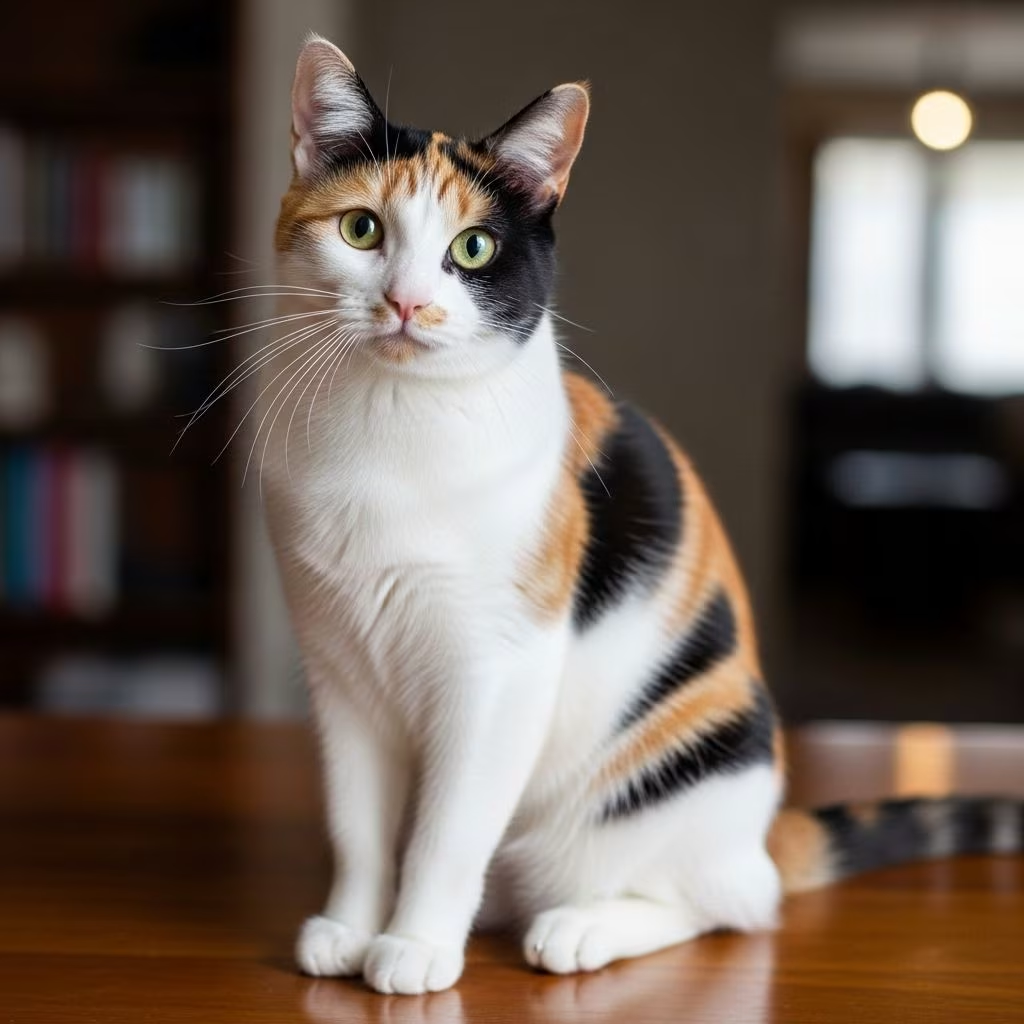
A harlequin cat is a feline whose coat is predominantly white—usually between 75–80%—with large, irregular spots of color contrasting against the white background. These colored patches typically appear on the head, back, and tail. Almost any color can be represented in the patches, including black, blue, red, cream, or calico. Some harlequins may even display tabby striping in the colored zones.
- Harlequin refers only to a coat color pattern, not a specific cat breed.
- The harlequin color arrangement appears only in certain breeds—it is not available across all cats.
- The colored patches are usually large and irregular, distinct from the more symmetrical and smaller spots seen in other patterns.
- Sometimes, the pattern is bi-color (one other color with white), or tri-color (such as a calico variation with larger, bolder patches).
This descriptive term has become closely associated with a dramatic and playful look, setting harlequins apart in both cat shows and households alike.
How the Harlequin Pattern Stands Out
- Typically consists of 75–80% white fur.
- Large, irregular color patches distributed along the body.
- Head and tail often display the most concentrated color.
- Pattern appears in different breeds and may present alongside tabby or tortoiseshell markings within the patches.
Earliest Records of the Harlequin Cat in History
White-spotting and piebald patterns have appeared in cats since the earliest days of domestication, though there are no formal records marking the emergence of the harlequin pattern specifically.
Key Historical Notes:
- Cats with significant portions of white—over 50% of their coat—have existed for millennia.
- Artwork and illustrations from 10th century Europe show cats featuring the harlequin-style coloration.
- This indicates the pattern has been present for at least a thousand years, if not longer.
However, the lack of precise breeding records in early cat domestication means the true origins of the harlequin pattern are lost to time. In modern times, harlequin cats can regularly be found in shelters or as part of established breeds.
Genetics Behind the Harlequin Pattern
The dramatic appearance of harlequin cats is guided by the activity of the white-spotting gene (S). This gene is responsible for restricting the distribution of pigment, resulting in bands or patches of white alongside areas of traditional coloring.
- White-spotting (S) gene: Modifies how much pigment appears on the cat’s coat.
- Extensive white: Harlequin cats possess a variant of this gene that produces mostly white fur, with colored patches accounting for only 15–25% of the fur.
- Versatile patterning: The gene can express as minimal white (e.g., locket or tuxedo cats), to moderate piebald, to the high white of the harlequin type.
- Tri-color variations: In tricolor harlequin cats, colors may arrange in broad fields, differing from the small scattered spots of classic calicos.
Since harlequin is not a breed but a color pattern, the underlying breed will influence aspects such as fur length, texture, and personality—but not the distribution of color itself.
Popular Breeds Displaying the Harlequin Pattern
The harlequin coat pattern can appear in several pedigreed cat breeds, most commonly where the genetics for white spotting are present. Some breeds where the harlequin pattern is seen include:
- Persian
- British Shorthair
- Maine Coon
- Norwegian Forest Cat
- Japanese Bobtail
- Turkish Van
Each breed brings its own unique attributes to the harlequin pattern. The length of coat, presence of undercoat, facial structure, and even temperament may vary widely depending on which breed sports the harlequin look.
Breed Comparisons Table
| Breed | Common Personality | Coat Type | Harlequin Pattern Frequency |
|---|---|---|---|
| Persian | Mellow, affectionate, lap cat | Long, soft fur | Common in pedigreed lines |
| Norwegian Forest Cat | Independent, playful, loyal | Very long, thick, waterproof fur | Occasional |
| Maine Coon | Social, gentle, inquisitive | Long, flowing fur | Seen but less common |
| British Shorthair | Calm, dignified, affectionate | Short, plush coat | Can occur |
| Japanese Bobtail | Active, friendly, agile | Short or long, unique bobbed tail | Relatively frequent |
| Turkish Van | Adventurous, water-loving, playful | Medium-long, semi-waterproof coat | Commonly exhibits pattern |
How Rare Is a Harlequin Cat?
Unlike in canine breeds, harlequin coloring in cats is relatively common, with many cats—both mixed-breed and pedigreed—displaying versions of this color configuration. Availability depends heavily on region and the specific breeds present locally.
- Many shelter cats exhibit high-white piebald or harlequin patterns.
- In some cat breeds, the harlequin pattern is rare and may be highly prized by breeders or for show purposes.
- Not all breeds can display the pattern; it is breed-restricted by gene presence.
Cats with the harlequin pattern are much more common than dogs sporting the same coloration.
Behavior & Temperament
Because harlequin denotes only a fur pattern, there is no direct link between the coloration and personality, size, or behavior of the cat. However, common traits may emerge based on the breeds most often associated with this pattern. For example:
- Persian harlequins: Mellow, affectionate, lap cats, thrive on attention.
- Norwegian Forest Cat harlequins: Loyal, playful, yet more independent.
- Japanese Bobtail harlequins: Curious and active, with an athletic build.
Overall, many harlequin cats are reported to be:
- Playful and intelligent
- Affectionate and sociable
- Adaptable to multi-pet homes
Still, a cat’s core personality will be shaped more by genetics, environment, and early socialization than by its coat pattern alone.
Health and Care Considerations
The harlequin pattern itself does not contribute to any specific health issues, nor does it affect the overall lifespan of the cat. However, care requirements will depend on the underlying breed:
- Long-haired harlequins (like Persians or Norwegian Forest Cats): Require frequent grooming, regular brushing, and sometimes professional grooming to keep their fur tangle-free and in good condition.
- Short-haired harlequins (like British Shorthair): Require less grooming, but still benefit from regular brushing to remove dead hair and skin oils.
- All cats: Require regular veterinary check-ups, vaccination, and attention to breed-specific health conditions, including dental and metabolic issues.
Cats with high levels of white in their coat should also be monitored for potential hearing issues (especially those with blue eyes), though this is not always the case in harlequins.
Harlequin Cat FAQs
What is a harlequin cat?
A harlequin cat is one with a coat that is mostly white (75–80%), adorned with several large, irregular patches of another color. This is a color pattern, not a breed.
Are harlequin cats rare?
Harlequin-patterned cats are not particularly rare. They appear quite commonly in mixed-breed cats and certain pedigreed breeds, though in some breeds, the harlequin pattern can be less frequent and thus more sought after by enthusiasts.
Which breeds can display the harlequin pattern?
Several cat breeds show this pattern, including Persian, British Shorthair, Maine Coon, Norwegian Forest Cat, Japanese Bobtail, and Turkish Van.
Does the harlequin pattern affect personality?
No. The pattern is simply aesthetic; temperament and behavior are determined by breed, upbringing, and individual traits.
Do harlequin cats need special care?
Not because of their coloration. Care requirements depend on the needs of the breed (e.g., grooming for long hair, exercise needs, regular health check-ups).
Interesting Facts About Harlequin Cats
- Harlequin patterning can occur in both bi-color (white plus one color) and tri-color (white plus two colors or tortoiseshell) cats.
- The term “harlequin” comes from stage clowns in Italian commedia dell’arte, known for wearing elaborate patchwork costumes.
- The pattern is more frequently seen in cats than in dogs and is usually better tolerated in terms of associated health.
- Some harlequin-patterned cats may have “odd eyes,” a condition called heterochromia, often seen in high-white felines.
Should You Get a Harlequin Cat?
If you are enchanted by dramatic, bold coat patterns and enjoy the surprise of never knowing quite how the patches will lay, a harlequin cat may be the perfect companion. With no added health or behavioral risks linked to their picturesque coloring, their suitability depends mainly on the breed type, grooming needs, and your preference in feline personalities.
Whether you find a harlequin-patched kitten in a shelter or deliberately seek out a pedigreed breed, these cats tend to spark joy and attract attention wherever they go!