Introduction: Halloween, Costumes, and the Politics of Cultural Respect
Every year as Halloween approaches, the hunt for clever, eye-catching costumes heats up. Social feeds and party stores fill with endless options, from superheroes to pop culture icons. Yet, amid this excitement, there is a persistent, troubling trend: costumes that exploit or misrepresent marginalized cultures—especially so-called ‘Latina’ or Latino costumes. Far from harmless fun, these outfits perpetuate damaging stereotypes, reduce identities to caricatures, and ignore the rich, complex realities of the people they supposedly “celebrate.”
Understanding the Issue: Culture Is Not a Costume
To call out offensive ‘Latina’ Halloween costumes is not about banning fun—it’s about recognizing that mocking or sexualizing someone’s culture, history, or struggles for entertainment is deeply problematic. Latinas (and Latinos more broadly) are a vibrant, diverse group, not a punchline. When their identities become Halloween props, it diminishes real people and promotes outdated, harmful views of an entire community.
11 Offensive ‘Latina’ Costumes You Shouldn’t Wear This Halloween
Here are some of the most notorious ‘Latina’ costumes you should avoid—each example shines a light on why these are far more damaging than they might seem, and why conversation around them matters.
- Señorita Mariachi
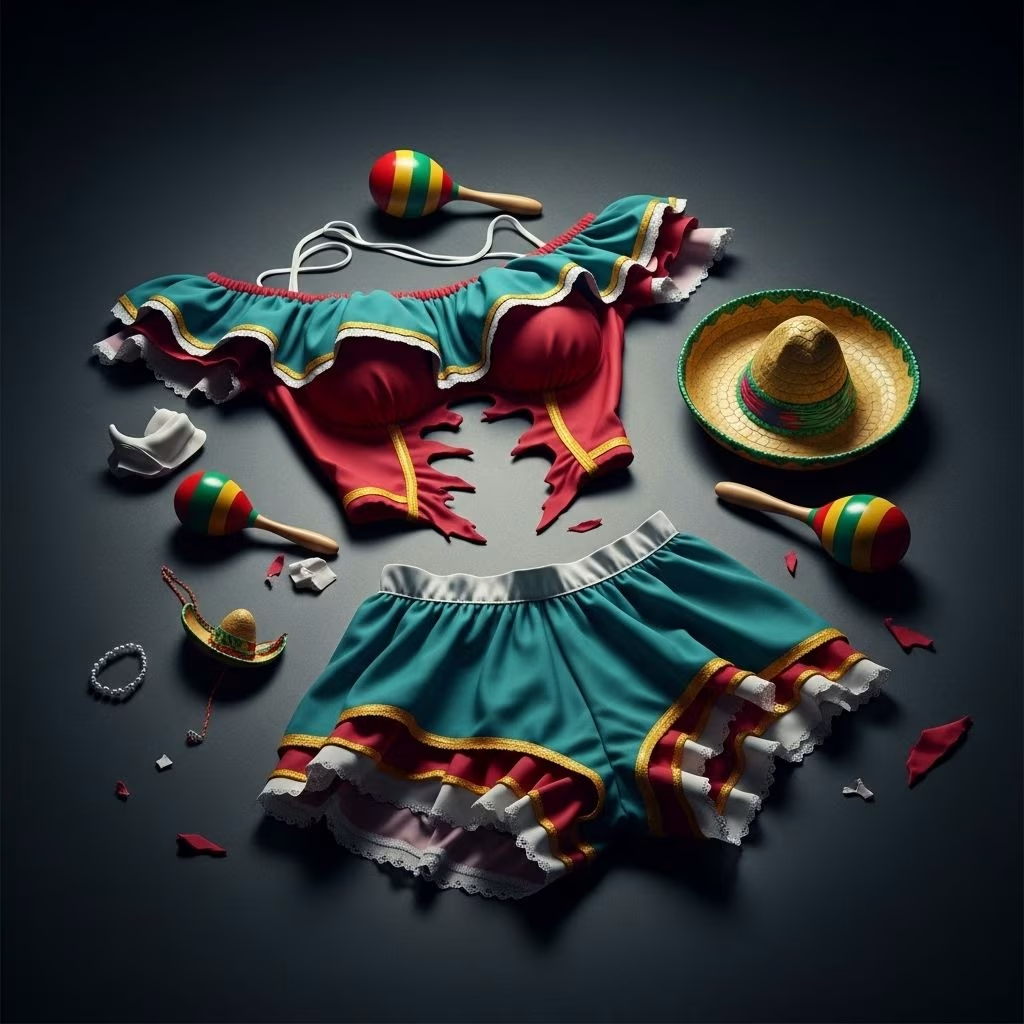
This costume claims to transform you into a “sexy señorita” who makes “sweet Spanish music.” However, it trivializes the rich tradition of mariachi culture and reduces female musicians’ struggles for acceptance to a shallow stereotype. Female mariachis have fought to be taken seriously in a male-dominated sphere—turning their achievements into a costume is not respectful.
- Sexy Illegal Alien
Combining a short dress, sombrero, and handcuffs, this outfit manages to spoof multiple racist and sexist myths in one. It implies that Latinas are nothing more than exotic, sexualized criminals, and even jokes about undocumented status, trivializing real human rights struggles.
- Eye Candy Matador
Not only does this costume belittle the longstanding cultural traditions of bullfighting (where real women fight for recognition), but it also serves to reduce female figures challenging sexism in male-dominated traditions into décor for Halloween parties.
- Black/Brown Face
Painting your skin darker—whether for a supposed joke or “authenticity”—is never appropriate. This echoes racist entertainment traditions that have caused enduring harm, and there is no excuse for it during any season.
- Chonga/Chola
Chongas and cholas have distinct identities rooted in working-class and gang-influenced communities. Both face real-life discrimination and classism. Dressing up as either for a party means mocking the lived experiences and ongoing struggles against racism.
- Sexy Mexican Bandit
Hypersexualization meets tired criminal stereotypes in this one. The bandito, often depicted as unkempt and criminal in old media, is not a quirky Halloween costume, especially when it touches on negative, gendered ideas about Latinx people.
- Sugar Skull Makeup
Día de los Muertos (Day of the Dead) is a sacred celebration—a fusion of indigenous and Spanish traditions that honors loved ones. Painting a skull on your face for Halloween is not just inaccurate, it’s disrespectful to people for whom this holiday carries profound meaning. It’s not about candy, but remembrance and spirit.
- Cantina Gal
The ‘Cantina Girl’ trope is a hackneyed, sexualized stereotype that erases the complex histories of Latin American women. Representing Latinas as merely “party props” has been an issue for decades—not just in costumes, but throughout pop culture.
- Tequila Pop Dude
Nothing says stereotype like a costume covered in shot glasses, a sombrero labeled “Tequila,” and the implication that all Mexicans exist to serve entertainment and drinking. These sorts of outfits flatten entire cultures into tired punchlines.
- Sexy Shooter Girl
Another example of hypersexualization combined with frontier imagery, this costume attempts to be cheeky while reinforcing ideas about Latinas being dangerous, exotic, or only valuable for their looks. It plays into both misogyny and xenophobia.
- Sexy Mariachi
Just as with the Señorita Mariachi, this outfit devalues the real struggle and achievement of women breaking into the male-dominated mariachi scene—reducing them to background noise in party culture.
Why These Costumes Are Harmful
Wearing costumes that mock or sexualize Latina identities may feel like harmless escapism, but here’s why these choices have lasting consequences.
- Perpetuation of Stereotypes
Outfits that sexualize, criminalize, or otherwise stereotype Latinas normalize damaging beliefs. They reinforce ideas that Latinas are inherently exotic, criminal, or hypersexual—concepts that underpin real-life prejudice, from hiring bias to school discipline disparities.
- Cultural Appropriation
Taking sacred symbols, traditions, and modes of dress from Latin cultures for a night of fun undermines the significance those entities hold. Day of the Dead imagery, chola makeup, and mariachi threads aren’t fashion statements, but expressions of heritage, grief, and pride. Using them carelessly is appropriative—not appreciative.
- Reinforcing Issues of Marginalization
Many Latina identities represented in these costumes historically face discrimination and exclusion. Turning those identities into a joke makes it easier for others to dismiss their real-world struggles, further marginalizing already vulnerable groups.
- Historical Pain and Erasure
Many costumes draw directly from painful periods in Latinx histories, whether referencing colonialism, immigration, or criminalization. They erase the complexities of these stories, replacing them with simplifications that don’t honor lived experiences.
Table: Examples of Offensive Costumes vs. Harmful Stereotypes
| Costume Name | Key Stereotype | Why It’s Harmful |
|---|---|---|
| Señorita Mariachi | Hypersexualization, trivializing achievement | Reduces women’s cultural struggle to a joke |
| Sugar Skull Makeup | Cultural appropriation | Strips sacred rituals of significance |
| Sexy Illegal Alien | Criminalization, racism | Makes a joke of civil rights |
| Chonga/Chola | Classism, racism | Mocks real struggles of marginalized women |
| Tequila Pop Dude | Alcoholism stereotype | Reinforces idea Latinos are party props |
What Is Cultural Appropriation, Really?
Cultural appropriation occurs when someone outside a particular culture takes elements of that culture—costumes, symbols, language—often without understanding their full context or significance. The result is that traditions and identities are trivialized or repurposed without permission, contributing to historic erasure and new forms of discrimination.
- It’s Not About Policing Fun: Cultural appropriation isn’t about preventing joy, but about ensuring that joy doesn’t come at someone else’s expense.
- History Matters: Many symbols or styles used in costumes carry weighty histories of struggle, pride, or pain. Ignoring that context contributes to continued misunderstanding and exclusion.
- Skin Color Is Not A Costume: Painting your skin to “match” another ethnicity has a history of being used to exclude, belittle, and dehumanize people. Avoid it at all costs.
Common Arguments and Why They Miss the Mark
- “But It’s Just a Joke!”
Comedy that belittles others based on real-world injustice isn’t harmless. Context matters—especially when communities with less power are being targeted. - “It’s Just a Costume—Don’t Take It So Seriously”
What you wear in public shapes how you (and your culture) are seen. Real harm comes from normalizing disrespect, even unintentionally. - “I Didn’t Know It Was Offensive”
Research your costume’s origins. When in doubt, pick something unrelated to someone else’s identity, history, or struggle.
What To Wear Instead: Creative and Respectful Alternatives
Halloween can absolutely be fun and inclusive. Here are some respectful alternatives for standing out at your next party—without harming others.
- Invented characters, like witches, robots, or aliens.
- Pop-culture icons whose outfits don’t rely on ethnic, religious, or class stereotypes.
- Classic monsters, animals, or fantastical beings.
- Original DIY inventions that showcase your creativity, not someone else’s heritage.
Voices From the Community: Why These Conversations Matter
Latina writers, activists, and artists have spoken out for years about how these costumes perpetuate microaggressions and normalize broader forms of exclusion. It isn’t just about party stores or Halloween: it’s about how society at large decides what is “funny,” what is “acceptable,” and whose stories deserve respect.
Quotes From Subject Matter Experts
- “When you dress up as a culture that’s either currently being oppressed or has been oppressed in the past, you’re being offensive.”
- “Día de los Muertos is a deep spiritual tradition; it’s not a makeup trend.”
- “Latinas are a culture, not a costume.”
Frequently Asked Questions (FAQs)
Q: Is it ever okay to wear a cultural costume for Halloween?
A: If a costume draws directly from a culture to which you do not belong, especially if it involves sacred symbols or traditional dress, it’s best to avoid it. Appreciation is different from appropriation—always learn the history and context before you choose.
Q: What’s the harm in wearing sugar skull makeup if I like the style?
A: Sugar skull makeup is part of Día de los Muertos—a tradition focused on honoring loved ones who’ve passed away. Wearing it purely as a decorative style disregards its history and meaning, and is considered disrespectful by many.
Q: Are there non-offensive costume recommendations for Halloween?
A: Yes. Choose imaginative, pop-culture, or horror-inspired characters—anything that doesn’t rely on ethnic or cultural stereotypes. Invent your own hero, villain, or creature; use fashion and makeup to create an original persona.
Q: How can I talk to friends about these issues without causing drama?
A: Focus on education and empathy. Share why certain costumes are problematic and encourage creative alternatives. Most important—listen to and amplify voices from marginalized communities.
Conclusion: Halloween With Kindness and Creativity
Staunchly defending ‘Latina’ costumes as “just fun” omits the broader picture: Halloween costumes aren’t created in a vacuum. They reflect and reinforce beliefs about who belongs and who doesn’t. Choosing to boycott offensive costumes and support respectful, inclusive options is one way everyone can help shift fashion and social norms toward empathy—and leave tired stereotypes in the past. This October, let your costume be a celebration of storytelling and creativity, not of mockery or misunderstanding.
References
- https://www.cosmopolitan.com/style-beauty/fashion/news/a32349/offensive-latina-costumes/
- https://www.cosmopolitan.com/style-beauty/fashion/news/g5103/offensive-latino-halloween-costumes/
- https://www.marieclaire.com/beauty/a12768736/cultural-appropriation-halloween/
- https://blog.washcoll.edu/wordpress/theelm/2015/10/can-offensive-halloween-costumes-be-oppressive/
- https://escholarship.org/uc/item/6nd4c2f8
- https://www.beautylish.com/t/yvypjc/is-my-costume-racist
- https://dialnet.unirioja.es/descarga/articulo/7265438.pdf
- https://catalyst-journal.com/2024/08/for-a-rooted-cosmopolitanism