New York Fashion Week 1993: The Moment that Changed Everything
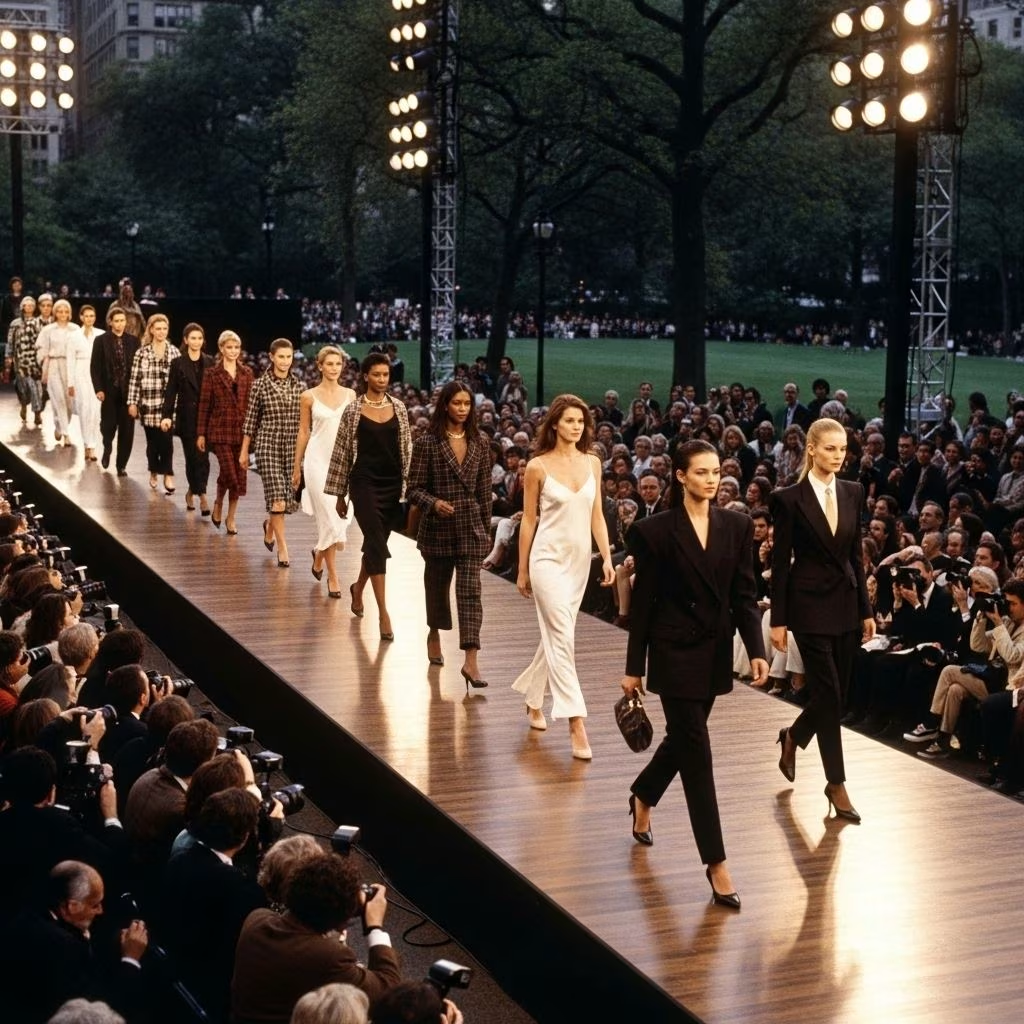
October 1993 marked a pivotal chapter in the history of New York Fashion Week. For decades, designers had scattered their presentations across Manhattan in a dizzying circuit, but that autumn saw a bold experiment: gathering the industry’s biggest names under a single tent in Bryant Park, a move that would transform NYFW’s reputation and legacy for years to come. This was the debut of Seventh on Sixth—a unifying concept that knitted together style, spectacle, and the culture of the supermodel era.
The Big Shift: From Chaos to Cohesion
Before 1993, New York’s fashion shows played out as a logistical maze, with editors, buyers, and tastemakers dashing between cramped hotel ballrooms, rented clubs, and makeshift studios. The unpredictability wasn’t just inconvenient—it had proved dangerous, with stories of ceilings collapsing from thumping music and uncomfortable, overcrowded venues.
- 1990 Debacle: Michael Kors’s show in a Chelsea loft ended with plaster raining down from the ceiling onto the editors’ laps thanks to booming disco bass.
- Result: The fashion community demanded safer, more streamlined venues. The idea for a centralized event began to ferment.
- 1993 Innovation: Seventh on Sixth gathered designers’ tents in scenic Bryant Park, providing a standardized runway, backstage, and press area.
This move not only tamed the week’s notorious logistics—it signaled that American fashion could produce mega-spectacle with the same polish as Paris and Milan.
The Supermodel Era in Full Swing
If Bryant Park became the new heart of American fashion, supermodels were its most glamorous ambassadors. Linda Evangelista, Christy Turlington, Claudia Schiffer, Cindy Crawford, Naomi Campbell, and Kate Moss—these were household names even far from the runways. Their strutting power was crucial for both labels and the media, fueling a cultural moment where fashion and celebrity fully merged.
- Runway presence: The era’s biggest shows were incomplete without supermodel cameos, who generated instant buzz in the press and on TV recaps.
- Cultural influence: Magazine covers, campaigns, and paparazzi coverage made supermodels as influential as Hollywood stars in the early 90s.
- Catwalk camaraderie: The 1993 runways celebrated diversity and friendship among models, helping fuel the optimistic, party-like vibe of the Bryant Park tent scene.
Key Trends and Runway Moments of 1993
The Spring/Summer 1994 collections, showcased in the fall of 1993, were notable for their youthful energy and experimental edge. Designers pushed boundaries while nodding to both the past and the pop cultural present:
- Grunge Goes Glam: Marc Jacobs’s now-legendary Perry Ellis show sent plaid flannel, slip dresses, beanies, and combat boots down the runway, baffling critics and ultimately leading to his dismissal—yet cementing his icon status.
- Slender Silhouettes: Streamlined tailoring, minimal embellishment, and a focus on the body replaced the excess of 80s fashion.
- Menswear Meets Marvel: Designers borrowed liberally from menswear tropes: oversized blazers, crisp menswear shirts, and tailored trousers—often worn by women for a fresh spin.
- Romantic Retro: Feathered hems, corset tops, and Old Hollywood-inspired gowns reflected a nostalgic mood, providing a counterpoint to street-inspired looks.
- Splash of Sport: Athletic details surged, from sporty stripes to track jacket-inspired cuts.
- Fabrics & Colors: Lightweight knits, sheer layers, and washes of pastel colors dominated, signaling a breezy optimism.
These trends filtered rapidly from tent to high street, making the 1993 collections among the most imitated in mainstream fashion of the decade.
Backstage Drama: The Realities of 1993 NYFW
Behind the glitz, Bryant Park’s makeshift tent village had energy bordering on frenetic. Designers prepped lines with last-minute tweaks, stylists wrangled supermodels through makeup and hair, and press teams scrambled to arrange interviews—and all under the pressure of looming showtimes.
The audience wasn’t just buyers and journalists. A mix of stars, socialites, and curious onlookers filled seats, drawing spotlights both on and off the runway. The proximity of everyone created an electrifying, party-like atmosphere unique to early 90s New York.
Magazine Magic: The Role of Cosmopolitan
Magazines like Cosmopolitan were instrumental in broadcasting the energy and newness of New York Fashion Week’s tented era. Their September 1993 ‘Runway Report’ became a visual feast for readers, offering not just coverage but also a sense of inclusion in the rarefied world of high fashion.
- Iconic imagery: Runway photography captured both high drama and backstage intimacy.
- Editorial essays: Sharp commentary dissected trends, model culture, and the social dynamics of show week.
- Trend digest: Readers sought the magazine’s verdicts on must-have accessories, key colors, and the “it” pieces of the season.
Cosmopolitan’s vibrant reportage helped define the decade’s aspirational style, urging readers to “borrow from the boys,” embrace individuality, and see the runway as a source of real-life inspiration—not just distant fantasy.
Lasting Impact: How 1993 Reshaped New York Fashion Week
The experiment of tenting in Bryant Park worked so spectacularly that it set a template for over a decade. Designers and audiences alike flocked to the central hub, building a community and raising New York’s global profile to rival Paris, London, and Milan. The tented shows continued for 17 years in Bryant Park before moving to Lincoln Center and later to other venues.
Key innovations from the 1993 era endure today:
- Centralized, stage-managed runways became the template for nearly all subsequent fashion weeks worldwide.
- The marriage of celebrity, media, and fashion solidified as a driving force in brand marketing and designer power.
- Supermodels established a new standard for global influence beyond the runway.
- Trends from the tent emerged in record time on magazine pages and retail racks.
1993 NYFW: Trends and Innovations Table
| Aspect | Before 1993 | 1993 Innovation |
|---|---|---|
| Venue | Multiple scattered, often cramped spaces | Unified tented campus at Bryant Park |
| Runway Trends | Eclectic, 80s excess | Grunge, supermodel era, minimalist, retro chic |
| Audience | Industry insiders, limited press | Press, buyers, high-profile celebrities, broader media |
| Supermodels | Emerging, not yet pop icons | Household names, driving trend adoption |
| Media Coverage | Print, slow pipeline | Magazine features, TV, real-time excitement |
Frequently Asked Questions (FAQs)
Q: Why was 1993 considered a turning point for New York Fashion Week?
A: 1993 marked the first year shows were centralized at Bryant Park under the “Seventh on Sixth” banner, making the event more organized, accessible, and visually compelling. This move helped NYFW become a global peer to Paris and Milan.
Q: What made Marc Jacobs’ 1993 Perry Ellis collection so controversial?
A: Jacobs’ grunge-inspired show broke with industry norms by championing streetwear, thrift, and rebellion. Though he was fired for it, the show is now viewed as revolutionary and cemented his place in fashion history.
Q: How did supermodels influence the 1993 runway?
A: Supermodels brought celebrity power and media attention, helping define trends and make runway looks instantly aspirational. The camaraderie of top models further contributed to the event’s legendary atmosphere.
Q: What role did magazines like Cosmopolitan play?
A: Cosmopolitan’s detailed runway reports, photo features, and commentary made high fashion accessible, encouraged readers to trust their own style instinct, and distributed trends beyond fashion’s inner circle.
Q: Did the tented Bryant Park format persist?
A: Yes, NYFW’s Bryant Park tents became an annual tradition for 17 years before the shows moved to new venues, proving the format’s huge success and influence.
The Enduring Legacy of 1993
The 1993 New York Fashion Week did more than change how shows were staged—it democratized fashion’s flagship celebration and made it an essential part of American culture. Models, designers, stylists, and editors who passed through the Bryant Park tents helped set the pace for an innovative, exciting, and media-savvy new era. Today’s global fashion weeks, media-multiplexed and star-studded, owe much to the exuberance and experiment of that pivotal season.
References
- https://scholarblogs.emory.edu/gbsl/tdibh-new-york-fashion-week/
- https://theblockvintage.wordpress.com/2021/07/21/cosmopolitan-september-1993-runway-report/
- https://www.elle.com/fashion/reviews/g28741/craziest-fashion-week-new-york-moments-ever/
- https://en.wikipedia.org/wiki/Cosmopolitan_(magazine)
- https://www.cosmopolitan.com/style-beauty/fashion/news/a36394/cosmo-1993-nyfw-tbt/