Inside the Secret Botox Society: The Hidden Face of Beauty
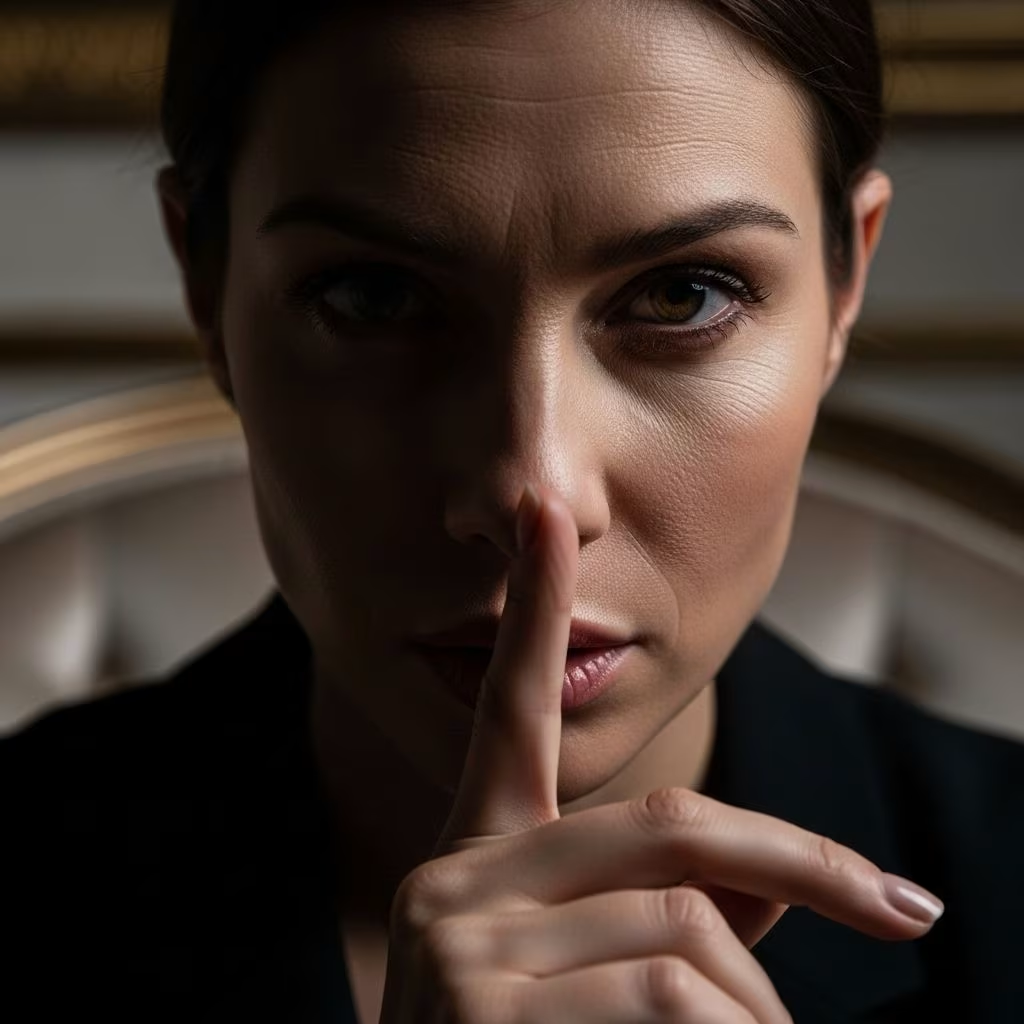
In today’s image-obsessed society, Botox—the famed wrinkle relaxer—has become almost as commonplace as a blowout or manicure in many circles. Yet, countless women continue to keep their injectables under wraps, telling no one or only a select few. This clandestine approach to cosmetic enhancement has created a “secret Botox society”—a silent network where members recognize each other by smooth foreheads and hushed rumors rather than open discussion. What drives this widespread secrecy? Why do so many women choose to keep their Botox treatments hidden even from those closest to them? This article dives into the motivations, secrets, and social undercurrents that shape this modern phenomenon.
My Secret Experiment: One Woman’s Introduction to Botox
The journey often starts quietly. For many, the first foray into Botox comes not in response to peer pressure but out of personal dissatisfaction: the moment when wrinkle creams don’t seem to do enough and subtle lines begin to etch themselves onto the face, even at rest. Several women describe their initial appointment as a private experiment—a way to turn back the clock without anyone noticing, or so they hope.
One woman, who began her Botox journey at age 30, kept her treatments entirely secret for years. Embarrassed by her lines and convinced she was the only one among her friends battling visible aging, she started with a focus on forehead and frown lines. To her surprise, the results were immediate: her facial expressions remained natural, and her skin was notably smoother. Still, no one around her seemed to notice, and she purposefully avoided telling nearly everyone—family, long-term partner, and most friends. Botox quickly became as routine as hair color or regular manicures, yet the secrecy endured.
The Prevalence of Secrecy: Behind Closed Doors
This personal story is far from unique. Considerable data supports the existence of a widespread, secretive culture around Botox and similar cosmetic interventions:
- A major survey found that up to 72 percent of women conceal nonsurgical procedures like Botox from friends and family.
- Half of those surveyed kept procedures secret from their significant others.
- Dermatologists have witnessed firsthand the extreme measures some patients take to erase all traces of their treatments.
From splitting bills into multiple payments to requesting that doctor’s offices issue insurance receipts only for unrelated medical visits, the determination to hide Botox runs deep. Even in groups of close friends, secrecy prevails—many admit to keeping their participation in the “Botox bandwagon” hidden from nearly everyone but a trusted inner circle.
How Dermatologists Aid in Discretion
The demand for secrecy doesn’t just affect patients—it shapes medical practices, too. Dermatologists and their offices routinely assist patients in maintaining their privacy. Common tactics include:
- Splitting billing between credit card, cash, and check to avoid a large, conspicuous charge.
- Issuing insurance documentation only for medical skin checks, omitting references to cosmetic procedures.
Dr. Gervaise Gerstner, a respected New York dermatologist, notes, “Women will split the bill two or three different ways. If they also came in for a mole checkup, we’ll print out a sheet for their insurance and it won’t have a whisper of Botox on it.” This professional complicity underscores the depth of the desire for secrecy.
Why Keep Botox a Secret?
The motivations behind this hush-hush culture are as varied as the women who participate:
- Stigma: Despite the increasing normalization of cosmetic procedures, there remains a fear of judgment—of appearing vain, inauthentic, or desperate.
- Competitiveness: Some seek a visible edge in social or professional circles but don’t want to reveal their “secret weapon.”
- Personal Pride: Others want to be seen as naturally youthful, uninterested in admitting to any artificial help.
- Relationship Dynamics: Hiding procedures from partners may arise from a desire to avoid conflict, suspicion about spending, or accusations of insecurity.
When asked directly, a 31-year-old woman who began Botox at 23 explained: “If a friend asked me, ‘You look so young. What are you doing?’ I wouldn’t say ‘Botox.’ I’d say, ‘I take really good care of my skin.’” This reticence is pervasive—even in close-knit friend groups where honesty is otherwise paramount, the default response is often evasive or outright untruthful.
The Stigma Around Cosmetic Enhancement
Much of the secrecy stems from a culture that simultaneously demands youthful looks and scorns those who admit to interventions. The ideal is to appear forever young—naturally, of course. To admit to Botox is to admit to aging, to flaws, and to engaging in a beauty arms race that many prefer to keep invisible. This paradox fuels both the demand for cosmetic interventions and the overwhelming urge to keep them hidden.
Inside the Mindset: Secrecy, Shame, and Self-Confidence
Whether secrecy is born from shame or a simple desire for privacy, it can impact both mental health and relationships. Experts warn that secret-keeping of all kinds can lead to anxiety and discord, especially when it comes to loved ones. Yet, not all omissions are classified as lies. Psychiatrist Dr. Leela Magavi articulates that hiding cosmetic procedures can be “more of an omission than a straightforward lie.” The ramifications often depend on intent: hiding as a way to avoid conflict or embarrassment may be less ethically charged than secrecy born from deeper deception, such as using shared funds without consent.
Still, the mounting pressure to hide treatments can reinforce negative emotions—fueling insecurities rather than alleviating them. In many cases, the secrecy itself becomes part of the performance: flawlessly smooth skin is only valuable if others believe it was achieved effortlessly.
The Psychology of Secrecy
- Stress: Keeping secrets, especially about appearance, can increase anxiety and self-consciousness.
- Relationship Tension: Hidden activities—especially those involving money or body changes—can spark distrust.
- Desire for Authenticity: Some break their silence to align with a more open, authentic self-image.
The Competitive Edge: Outshining Peers
In an era where comparison is only a swipe away, younger women are increasingly turning to Botox not simply to erase lines, but to stand out in their social or professional circles. Dr. Jessica Wu, a Los Angeles dermatologist, reports that her younger patients often view Botox as a tool to “look better than their friends.” Unlike other aspects of life, however, this advantage is usually kept secret. Despite oversharing every other detail on social media, these women draw the line at revealing their cosmetic routines. Theirs is a new form of competitive beauty—one that’s competitive precisely because it’s covert.
Generational Shifts and Social Media
- Increased pressure due to visual platforms (e.g., Instagram, TikTok).
- Desire not just to look young but to look “better than the rest.”
- Reluctance to admit to outside help—authenticity is prized, but only if it’s effortless.
Confessions: Coming Clean in the Secret Botox Society
Some women eventually break their silence, often spurred by a desire for self-acceptance and transparency. In telling their truth, they reject the underlying shame that secrecy perpetuates—celebrating the choice to embrace appearance-enhancing technologies as a form of self-care rather than subterfuge. As one woman confided, “Botox makes me look good and feel good. There shouldn’t be any shame in that.” The act of confession, whether public or private, is often liberating, ushering in greater authenticity and honesty in relationships.
Frequently Asked Questions (FAQs)
Q: Why do so many women keep their Botox secret?
A: The main reasons include fear of judgment, societal stigma around cosmetic procedures, personal pride in looking “naturally” young, and a desire to preserve a competitive edge among peers.
Q: Is hiding cosmetic work from a partner considered lying?
A: Experts suggest it’s more accurately an omission than a direct lie. The ethical weight depends on intent and how the secrecy affects the relationship.
Q: Are there risks to keeping procedures hidden?
A: Secrecy can increase emotional stress, contribute to relationship tension, and even lead to mental health strain if driven by shame or insecurity.
Q: Do dermatologists help patients hide Botox?
A: Yes, many dermatologists accommodate requests for billing or documentation strategies aimed at hiding cosmetic procedures from partners, families, or insurance providers.
Q: How common is secret Botox use?
A: Surveys indicate that as many as 72 percent of women who undergo non-surgical procedures keep them secret, at least from some people in their lives.
Quick Facts Table: The Hidden World of Botox
| Aspect | Key Details |
|---|---|
| % Keeping It Secret | 72% from friends and family; 50% from partners |
| Main Motivation | Stigma, pride, competition, relationship dynamics |
| Age Demographic | Increasingly women in late 20s and 30s |
| Common Secrecy Tactics | Splitting bills, requesting alternate receipts, only confiding in select friends |
| Emotional Impact | Varies: can include stress, pride, or eventual relief from confession |
Conclusion: Rethinking Secrecy in Modern Beauty Culture
The “secret Botox society” is a mirror of modern anxieties about beauty, aging, and authenticity. As cosmetic technology advances, and as cultural expectations continue to evolve, the challenge facing many women is not in whether to get Botox, but whether to own up to it. Perhaps the next chapter in beauty culture will not be about hiding interventions, but embracing them with openness and without judgment—making the “secret” society just another aspect of the everyday beauty conversation.
References
- https://wellconnected.murad.com/what-exactly-is-cosmetic-infidelity-heres-why-keeping-your-botox-a-secret-is-messing-with-your-mental-health/
- https://www.cosmopolitan.com/style-beauty/a37572/secret-botox-society/
- https://aaronkosinsmd.com/cosmopolitan-magazine-lets-talk-botox/
- https://www.cosmopolitan.com/uk/beauty-hair/skincare/a15069580/botox-before-and-after-review/