How Two People Share a Super Tiny, 17-Inch Closet—A Tiny Home Story
Molly Goldsmith and her boyfriend, Rodney Balajadia, exemplify the creativity and discipline needed to thrive in a 250-square-foot tiny home.
Their journey unfolded as they left their larger, less sustainable apartment behind and embraced a radically minimalist existence. What makes their story extraordinary is not just the cozy corners and clever use of reclaimed materials, but the way they’ve streamlined their lifestyle—most notably, sharing a closet that’s just 17 inches wide.
Background: The Shift to Tiny Living
Living in San Francisco’s Bay Area was financially tough. Molly, working as an operations specialist at a sustainable grocery store, and Rodney, an electrician, found their 700-square-foot apartment unsustainable on their combined incomes. Feeling cramped both spatially and financially, they took inspiration from Molly’s experience growing up with six siblings on a five-acre plot in Gilroy, California, and decided to drastically downsize.
- They discovered a builder in Oregon and purchased their $69,000 tiny house.
- The house was brought to Molly’s parents’ property, giving them community roots but independence.
- Unlike stereotypical cabins, their tiny house boasts full-size appliances and sustainable features, like reclaimed wood and insulation made from repurposed denim.
The Layout: Not Just a Shoebox
This clever tiny home defies expectations:
- A lofted bedroom offers a sense of separation.
- The kitchen includes a full oven, stove, fridge, and a farmhouse sink.
- A living area and bathroom are compact but comfortable.
- The stand-out feature: a screened “Catio” for their cats—a 36-square-foot porch designed for feline relaxation.
Tiny Wardrobe, Big Adjustments
Molly’s Closet Evolution
In college, Molly owned over 200 clothing pieces (excluding pajamas, underwear, and shoes). Her passion for sustainability gradually influenced her to pare down, but the move to tiny living was the catalyst for real change.
- She reduced her wardrobe by approximately 75%.
- Now, she maintains just 60 clothing items (not counting shoes or accessories).
- She admits it’s still “too much” and continues to edit down.
- Expensive items and sentimental clothing posed harder choices.
- A garage sale helped with the transition; seeing others excited to buy her previous clothing made parting easier.
Rodney’s Simplified Approach
- Rodney reduced his wardrobe by about one-third.
- He parted with roughly 20 items.
- He found it easier to let go of things for which he’d lost interest or no longer fit the lifestyle.
Tactics for Maximizing Minimal Space
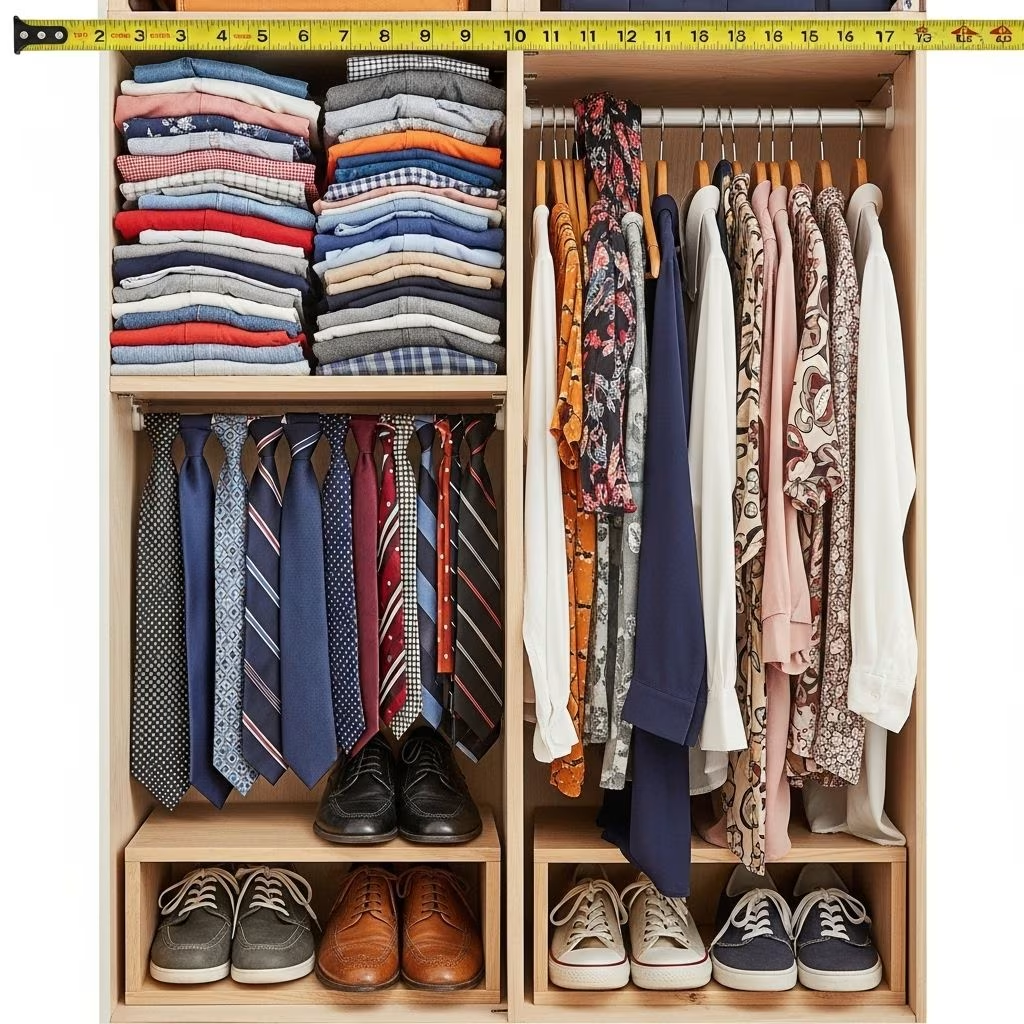
- Shared 17-inch closet: This is their only hanging space for garments.
- Under-couch storage: A hidden 6-by-3-foot space keeps items that don’t require hanging.
- Shoe drawers: Three deep drawers for shoes.
- Accessory baskets: Three small baskets hold socks, underwear, and bathing suits.
- Loft cubby: A single cubby at the bedside houses pajamas.
Lessons from Minimal Living
- Editing down a closet is easier when forced by necessity—and empowered by sustainable values.
- Letting go of once-expensive, rarely worn pieces isn’t as hard once utility and joy are prioritized.
- Organizing in a tiny house means every item has to earn its keep.
The Philosophy of a Tiny Home Wardrobe
Living tiny requires clarity and planning. Both Molly and Rodney have mastered the art of balancing wants with actual needs.
| Challenge | Solution | Result |
|---|---|---|
| Too many clothes, little space | Dramatic downsizing; focus on multipurpose pieces | Wardrobe fits in 17-inch closet and under-couch storage |
| Sentimental attachment | Garage sale, selective retention | Memories preserved where meaning was highest |
| Organizational difficulty | Baskets, drawers, cubbies in strategic places | Easy access, clutter minimized, maximum function |
| Future expansion (e.g., kids) | Honest discussion, planning for later growth | Flexible approach, tiny house as guest or rental in the future |
Minimalism and Sustainability
Molly’s studies in sustainability helped her develop a less-is-more philosophy. Beyond saving space, the couple invested in sustainable building choices to reduce their environmental footprint:
- Reclaimed wood structures.
- Denim-based insulation, repurposing old materials.
- Multi-use, durable fixtures over disposable, trendy items.
A Home for People—and Pets
Far from compromising on comfort, Molly and Rodney made their home inviting for their two cats. The custom “Catio” is a sign of their attention to detail and desire for connection—even their pets have dedicated tiny home luxury.
- The “Catio” allows indoor cats safe outdoor experiences, connected to the home via a window.
- This feature demonstrates maximized space for all residents—human and feline.
The Future: Is Tiny Living Forever?
Though the tiny house fits their life for now, Molly and Rodney acknowledge the spatial limitations. They dream of expanding their family, recognizing that some aspects of their tiny home—like the absence of hand railings—are less suited to future children.
- The couple plans to keep the tiny house long term, repurposing it as a guest house or potentially as a short-term rental (e.g., Airbnb) in the future.
- The joy and challenge of living tiny have shaped their values and aspirations; they do not see their home as disposable but as a lasting part of their lives.
Smart Tips from Molly & Rodney’s Tiny Closet Experience
- Edit Ruthlessly: Only keep what you wear and use regularly.
- Celebrate the purge: Garage sales or donation events can ease the attachment to letting things go.
- Make storage multi-use: Furniture with storage (like the under-couch area) is invaluable.
- Invest in organizers: Drawers, baskets, and cubbies keep even a tiny wardrobe neat and accessible.
- Sustainable choices matter: Select eco-friendly building materials and durable wardrobe staples.
Frequently Asked Questions
Q: How do you decide what clothes to keep in a tiny closet?
A: Prioritize versatility, comfort, and frequency of use. Pieces that layer well or suit multiple occasions are ideal. Sparking joy with your selections, à la Marie Kondo, helps too.
Q: What are the biggest challenges of sharing a 17-inch wide closet?
A: The main challenge is the lack of hanger space, requiring coordination on who needs it most and creative folding or storage for everything else. Regular purges and clear communication are essential.
Q: Are there specific items you wish you hadn’t parted with?
A: Sentimental or high-dollar items pose the greatest regret at first, but most become easier to release over time, especially when seeing others use and appreciate them.
Q: How do you handle laundry and out-of-season clothes in a tiny home?
A: Strategic use of the under-couch area and cubby or basket storage helps manage off-season clothing. Some pieces may be stored elsewhere temporarily or rotated out as needed.
Q: Will you always live in a tiny house?
A: While passionate about tiny living, Molly and Rodney expect to expand in the future, especially as a family grows. However, the tiny house will remain part of their lives, either as a guest space or rental.
Key Takeaways: Living Tiny, Living Well
- The journey to a tiny home and closet requires both practical adjustments and mindset shifts.
- Paired-down living delivers financial, environmental, and emotional benefits.
- Creativity turns constraints into comfort; every inch counts, and every item gets a second chance.
- A tiny lifestyle is about purposeful living—loving what you have, making every decision count, and cherishing space shared with those you love.
Bonus: Alternative Tiny Closet Inspiration
If you’re considering transitioning to a tiny home or want to optimize your small space, learn from Molly and Rodney:
- Modular closet systems can create functional storage (like the “cloffice” approach).
- Prioritizing organization makes even a mere 17 inches feel abundant.
- A tiny house isn’t about deprivation but intentional abundance—curating your life for ease, sustainability, and joy.
References
- https://www.cosmopolitan.com/style-beauty/fashion/a13083783/molly-goldsmith-tiny-home-closet/
- https://www.christinagoldsmith.com/blog/diy-custom-closet-with-modular-closets
- https://www.youtube.com/watch?v=I2T-WZIOp6Q
- https://www.easthamptonstar.com/archive/201904?page=668
- https://us.princesspolly.com
- https://www.youtube.com/watch?v=a1eOs7cQI4M