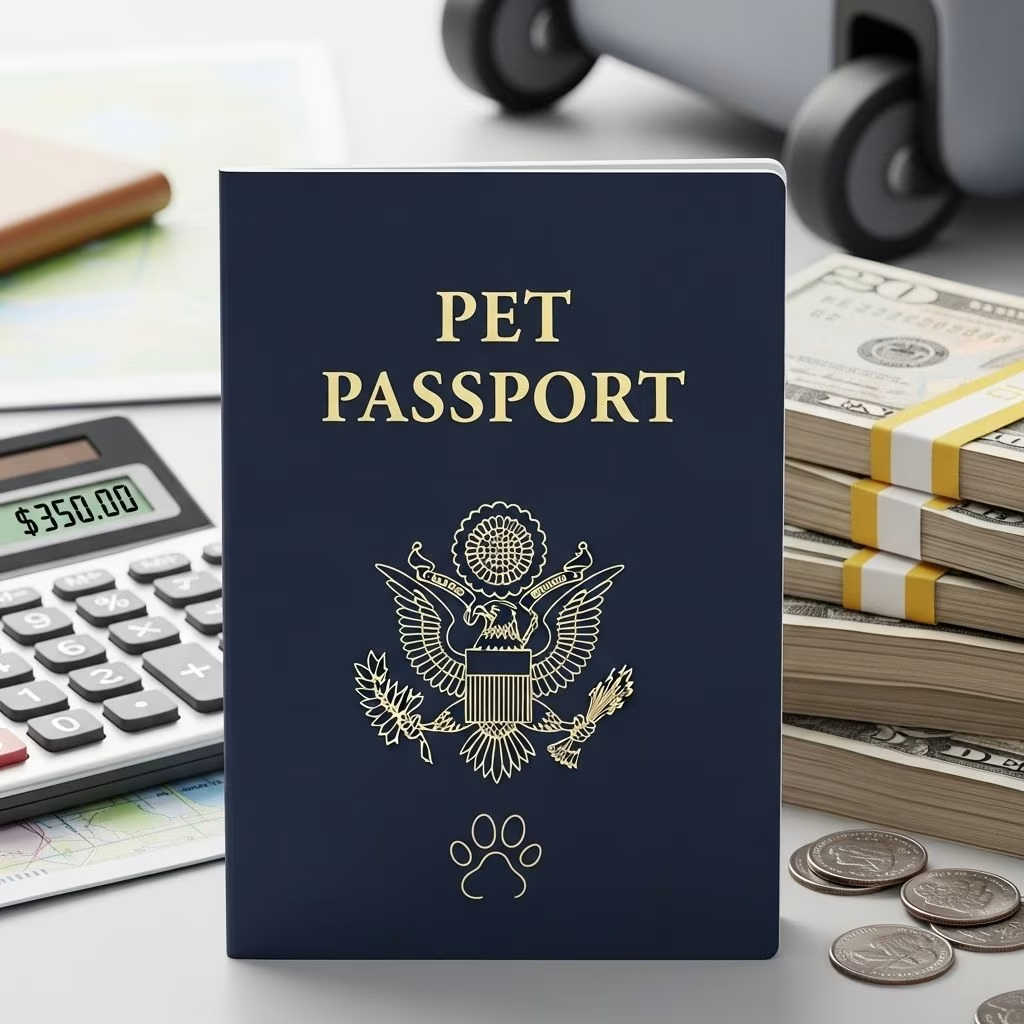
How Much Does a U.S. Pet Passport Really Cost in 2025?
If you’re planning to take your beloved cat or dog abroad, you may have come across the term “pet passport.” While the U.S. does not actually issue an official pet passport, the phrase is commonly used in travel circles to describe the bundle of documentation and veterinary records you’ll need for your pet to leave the country and re-enter. This comprehensive guide will walk you through every step, cost, and potential pitfall of the U.S. pet passport process in 2025, ensuring your furry friend travels safely and legally.
What Is a U.S. Pet Passport?
Despite frequent use of the term, a U.S. pet passport is not a government-issued book or standardized document like a human passport. In reality, it refers to a collection of required health and identification documents proving your pet’s eligibility to travel internationally. These may include:
- Proof of microchipping
- Up-to-date rabies vaccination certificate
- Veterinary Health Certificate (international or country-specific format)
- Record of other vaccinations or treatments (e.g., tapeworm or tick treatment, as required by destination)
- Government endorsements (e.g., USDA approval for health certificates)
Some countries and airlines may require additional paperwork or specific test results, especially after recent changes in public health regulations.
Why Are There So Many Rules for Pet Travel?
Rules around pet travel aim to prevent the spread of diseases such as rabies and ensure animal welfare during transit. U.S. regulations, as well as those of foreign destinations, typically serve several priorities:
- Rabies Control: Prevent re-introduction of dog (and sometimes cat) rabies into rabies-free regions.
- Identification: Ensure all traveling animals can be traced via microchip or other unique ID.
- Animal Welfare: Confirm that pets are fit for travel and protected from stress and disease during transit.
- Biosecurity: Limit the introduction of pests, parasites, and infectious diseases into new environments.
The Centers for Disease Control and Prevention (CDC), U.S. Department of Agriculture (USDA), and your destination country will each set requirements you must meet to move your pet across international borders.
Do You Need an Official U.S. Pet Passport?
There is no official U.S. pet passport. Instead, you’ll assemble a set of documents that serve the same purpose. In the European Union and some other countries, actual pet passport booklets exist and act as lifetime travel documents for pets. The U.S. does not issue these. However, with the correct paperwork, your American pet can travel internationally without an EU-style passport, provided all requirements are met for both departure and entry to the foreign country.
Timeline: How Far Ahead Should You Start?
Preparation for international pet travel should begin a minimum of 4 months before your departure date. Different countries impose waiting periods following vaccinations, require recent health checks, or necessitate paperwork processing that can take weeks. Here’s a general breakdown:
- 4+ Months Before: Research destination requirements. Schedule microchip appointment (if not already implanted and registered). Start rabies vaccination or booster if needed.
- 3 Months Before: Update other routine vaccinations. Confirm your veterinarian can issue the required health certificates (not all can, especially for international forms).
- 1 Month Before: Book the health certificate exam. Check all paperwork, airline, and transit country requirements. Assemble your travel kit.
- 10 Days Before: Obtain the official Animal Health Certificate, and any required end treatments (e.g., tapeworm for the UK, as mandated). Make paper and digital copies of all documents.
Tip: Some destinations have longer or more complicated timelines, especially if rabies titer tests or import permits are required, so always check well in advance.
Breakdown of the 2025 U.S. Pet Passport Costs
The total cost of your pet travel paperwork can range widely based on your pet’s needs, the country you’re visiting, and whether you need to rush any part of the process. Here are the most frequent expenses (all prices are in U.S. dollars):
| Item | Typical Cost | Notes |
|---|---|---|
| Microchipping (ISO standard 11784/11785) | $25 – $50 | Required for many international destinations |
| Rabies Vaccine | $15 – $35 | Mandatory for most countries |
| Additional Vaccinations (e.g., DHPP, Leptospirosis) | $20 – $30 each | Required by some countries |
| Tapeworm Treatment | $35 – $50 | Required for UK, Ireland, some EU countries |
| Veterinary Health Examination | $50 – $150 | Pre-travel health assessment |
| Health Certificate (USDA-endorsed) | $100 – $200 | Mandatory for export; price varies by vet and destination |
| USDA Endorsement Fee | $38 – $173 | Official stamp for international certificate |
| Emergency/Expedited Processing | $150 – $250 | If you need documents quickly |
Total Estimated Cost: $300 – $600, depending on services, number of pets, and requirements.
Step-by-Step Process for Getting Your U.S. ‘Pet Passport’
Here is a typical process to prepare your dog or cat for international travel in 2025:
- Research Entry & Airline Requirements: Check the specific pet import rules for your destination, any countries you’ll transit, and your chosen airline. Every country is different: some require import permits, waiting periods, or specific test results.
- Microchip Your Pet: Implantation of an ISO-compliant microchip is usually the first step if not already done. This must happen before (or sometimes at the same time as) rabies vaccination for it to be valid.
- Rabies Vaccination: Administer the rabies shot after the microchipping. Many countries require proof the vaccine was given at least 21 days before entry.
- Other Vaccinations & Treatments: Ensure all additional immunizations are current and provide proof per country requirements. Tapeworm treatment must often be administered within a tight time window before entry.
- Pre-Travel Veterinary Exam: Schedule a veterinary exam to obtain the international health certificate. For most countries, this must be done within 10 days before travel, but some require even shorter windows.
- Official Health Certificate & USDA Endorsement: Have a USDA-accredited vet complete the health certificate. Then, depending on the country, send it (digitally or by post via VEHCS) to the USDA for their official endorsement.
- Gather Your Paperwork: Collect all documents—microchip proof, rabies and vaccine certificates, USDA health certificate, and any country-specific forms. Bring original and digital copies.
- Check-In and Travel: Arrive early for your flight; airlines may require paperwork reviewed before boarding. Some may collect copies for their files, so always have spares.
Special Issues and Common Pitfalls
- Timing Errors: Not leaving enough time for mandatory waiting periods after rabies vaccination or health exams can ruin travel plans.
- Incorrect Documentation: Using the wrong form for your destination or not having your vet USDA-accredited.
- Microchip Problems: Missing, unreadable, or non-compliant chips.
- Expired Documents: Health certificates are valid for a short time (usually 10 days). Outdated paperwork means denial of entry.
- Country-Specific Rules: Missing out on transit country requirements or import permits.
- Rabies Regulations: Recent changes from the CDC mean tighter controls, especially for dogs coming in or out of high-risk rabies areas.
Pet Passports for Cats
Cats generally require fewer vaccinations and treatments than dogs, but they must still meet microchip, rabies vaccination, and health certificate rules for most international travel. The process, timeline, and typical costs are similar. Check destination requirements, as some countries mandate tests for ticks, tapeworm, or other parasites in cats as well.
Special Considerations: Returning to the U.S.
Pets returning to the United States have strict entry requirements—especially dogs. According to the CDC and USDA, all dogs entering or returning to the U.S. must comply with the latest rabies vaccination rules and provide proof of origin, microchipping, and regulated health documentation. If your pet has visited or come from a high-risk rabies country, you’ll need specific, USDA-endorsed rabies vaccination forms and possibly a stay at an approved animal care facility on entry.
Cats generally face fewer restrictions, but import bans occasionally apply during public health emergencies, so always check the CDC and USDA websites for updates as your return nears.
Additional Expenses to Budget For
- Carrier or Crate: Airlines require IATA-approved pet carriers for in-cabin or hold travel ($35 – $250).
- Airfare or Shipping Fees: Pet ticket prices are set by airlines and can vary drastically ($100 – $1000 or more).
- Pet Travel Agents or Concierge Services: Optional, but can streamline the process and start at $200 up to several thousand dollars, depending on complexity and services.
- Insurance: Travel insurance that covers pet health issues or trip interruptions.
- Vet Visits Before and After Travel: Unforeseen costs for stress, illness, or compliance with monitoring or quarantine upon arrival.
Do I Need a Pet Passport for Domestic U.S. Travel?
A pet passport is not required for travel within the U.S., but airlines, trains, and buses each have their own pet policies. You’ll generally need proof of current rabies vaccination and appropriate carriers. Check with your carrier ahead of time for size and paperwork restrictions.
Final Tips for a Smooth Pet Travel Experience
- Start the process as early as possible—at least 4 months out for most destinations.
- Double-check every country and airline requirement, including those for transiting countries.
- Keep multiple original and digital copies of all paperwork at all times.
- Microchip details must match exactly on all forms and in registration databases.
- Allow extra time at the airport—processing pet paperwork can take 30+ minutes.
- Contact your destination’s consulate or embassy if requirements are unclear.
- After return, return to your vet for a post-travel health check, especially if your pet visited countries with different disease risks.
Frequently Asked Questions (FAQs)
What is a “pet passport” in the U.S.?
In the U.S., “pet passport” refers to the collection of veterinary and government documents a pet needs for international travel—not a single physical document like a human passport or EU Pet Passport.
How much does it cost to get a U.S. pet passport in 2025?
Total costs typically fall between $300–$600, including microchipping, vaccination, veterinary exams, health certificates, and government endorsements. Last-minute processing or extra services can push costs higher.
How long does it take to get all the documents ready?
Preparation can take over 4 months if rabies titers, waiting periods, or government processing are needed. Health certificates must usually be obtained within 10 days before departure.
Can I get an official pet passport from the U.S. government?
No—the U.S. government does not issue pet passports. You’ll need to compile the relevant documents per your destination’s rules.
What if my pet is denied entry abroad or on return?
Incomplete, expired, or incorrect paperwork can mean your pet is denied entry, quarantined, or even returned to the country of origin at your expense. Always double-check all requirements well in advance.
Is the process different for cats?
The process is broadly similar, though some countries have different vaccination or treatment rules for cats. Costs and paperwork needs are about the same for both species.
Key Takeaways
- There is no official U.S. pet passport, but thorough documentation is required for international pet travel.
- Expect to spend $300–$600 on required procedures and paperwork, and begin preparations as early as possible.
- Failure to follow destination and airline requirements can result in denied entry or return of your pet.
- Always consult your vet and official resources before booking international travel with a pet.
References
- https://www.cdc.gov/importation/dogs/dog-import-form-instructions.html
- https://www.cdc.gov/importation/dogs/index.html
- https://travel.state.gov/en/international-travel/planning/personal-needs/pets.html
- https://www.acrossthepondpet.com/resources/blog/128-the-complete-guide-to-pet-passports-in-2025-requirements-for-uk-eu-and-us-travel
- https://www.aphis.usda.gov/pet-travel/us-to-another-country-export