What Hair Salon Appointments Will Look Like After COVID-19
The global outbreak of COVID-19 has irreversibly transformed almost every aspect of our lives, from how we work and socialize to how we approach self-care. For many, regular trips to the hair salon once provided a moment of indulgence and community—a place for transformation and connection. Post-pandemic realities, however, have dramatically reshaped the salon experience and the hairdressing profession itself. What can clients and professionals expect for the foreseeable future? Here we’ll examine the sweeping changes, daily challenges, and uncertain future confronting the hair industry as salons adapt to the long-lasting effects of COVID-19.
The Unique Risks and Realities of Salons
Unlike many other businesses, salons pose a unique set of challenges during a respiratory pandemic. Hairdressing demands close physical proximity for extended periods, often in small, indoor spaces—precisely the conditions that health experts warn against to reduce viral transmission. “Salons are specifically tricky because they require close contact for an extended period of time in an indoor space—all things we’re trying to avoid when minimizing risk,” explains Dr. Irfan N. Hafiz, an infectious disease specialist.
While guidance for salons will undoubtedly continue to evolve with public health data, current protocols have reshaped day-to-day operations and forced the industry into a new normal. As Dr. Meyer notes, “The idea is you’re responding to data on a 14-day or monthly basis. As you relax certain restrictions, you watch to see if cases decline—in which case you can relax even more—or to see if there’s a huge uptick in cases, in which case you pull back again.”
Client Experience: A New Normal at the Chair
A typical salon visit has been transformed. Gone are the spontaneous walk-ins and bustling waiting areas—here is the 2020s hair appointment, step by step:
- Pre-Booking & Remote Check-in: Many salons now require booking online and pre-paying for services to minimize in-person transactions.
- Waiting Outside: Clients are asked to wait in their cars or outside the salon and are invited in only when their stylist is ready, reducing shared airspace and crowding.
- No Guests Policy: Clients must attend appointments alone, with friends and family asked to remain outside or at home.
Upon entering, the changes are evident:
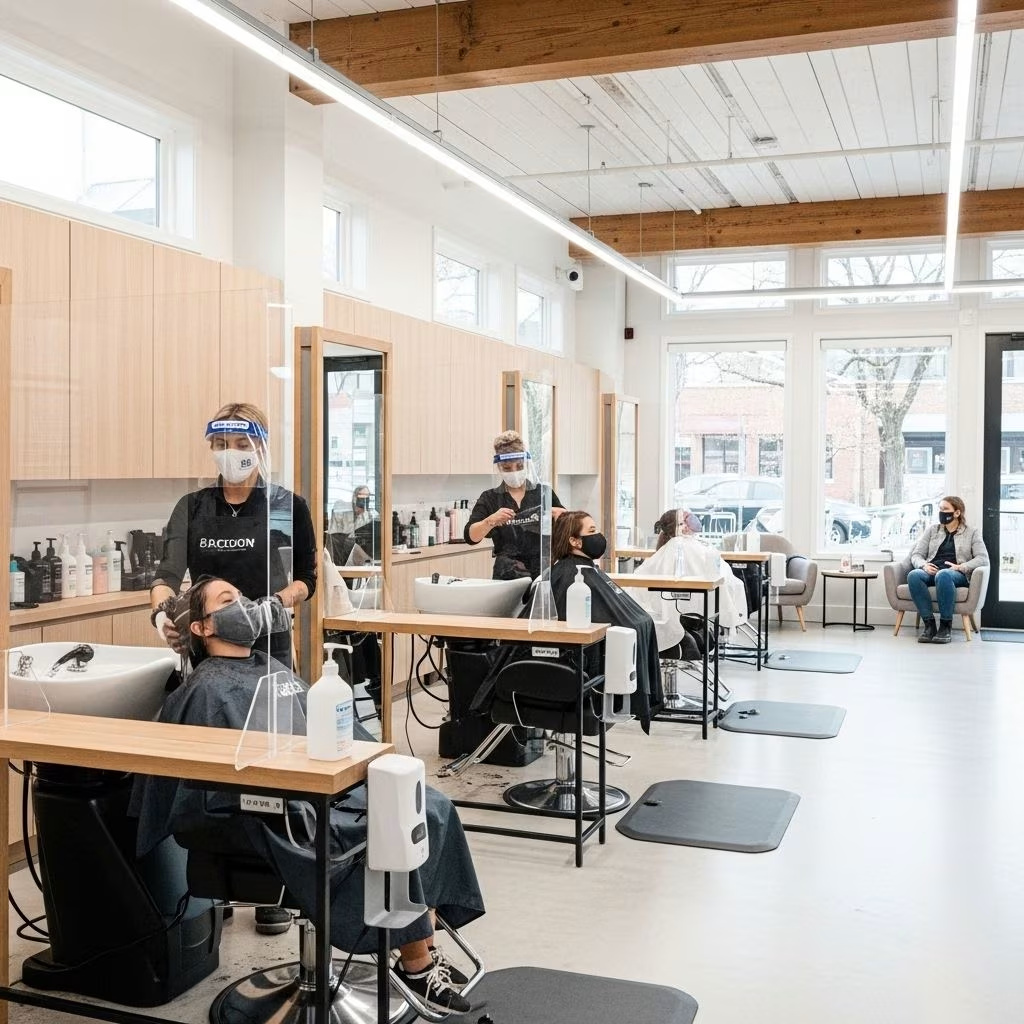
- PPE for All: Both stylists and clients are required to wear face masks throughout the appointment. Many salons have adopted face shields, disposable gloves, and even paper gowns for added protection.
- Muffled Conversation: Communication is stifled by masks, and small talk is often minimized to limit droplet spread.
- Sterilized Environment: Aromas of hair products are replaced with the sharp scent of disinfectant as tools, chairs, and high-touch surfaces are sanitized between every client.
- Redesigned Layouts: Spaced-out chairs, empty waiting areas, and visible signs of cleaning all reinforce the new hygienic priorities.
Comforts such as magazines, refreshments, and communal amenities are gone, replaced by a streamlined, sanitized environment designed for efficiency and safety over leisure and luxury.
The Impact on Stylists: Exhaustion, Anxiety, and Adaptation
The human cost of these precautions is substantial, especially for stylists who must balance their own health concerns with the realities of changed staffing and reduced income. The process between each client—once a brief pause for a chat or coffee—now becomes an intensive solo cleaning ritual:
- Sterilizing combs, scissors, and tools in hospital-grade disinfectant
- Wiping down all surfaces, from chairs to counter tops and door handles
- Changing into new gloves, aprons, and other protective gear
Stylists describe a daily routine that is both physically and mentally taxing:
- Longer Hours for Fewer Clients: With limitations on capacity and no assistants to speed up turnover, stylists often work longer shifts to offset lost income while facing fewer bookings per day.
- Economic Precarity: Many assistants and junior staff have been laid off, leaving experienced stylists to manage all duties—from cleaning to customer service—alone.
- Personal Protective Equipment: Many report discomfort and anxiety from wearing masks and shields all day, with one stylist describing “sweating and mild anxiety all day” due to PPE.
- Job Insecurity: There are widespread fears of layoffs, reduced hours, and even salon closures. Stylists worry about their own health, their clients’ well-being, and job prospects for themselves and their peers.
Financial Fallout: The Bleak Outlook for Salons
The combination of reduced booking capacity, increased costs for disposable and cleaning supplies, and uncertainty about fluctuating restrictions has created a financial crisis for many salons. “It’s going to be really telling in the next year what salons can survive this,” says Sally Hershberger, founder of Sally Hershberger salons. She predicts that businesses could be “cut by 50 percent for who knows how long,” with many unable to recover at all.
Some of the economic consequences already being seen or anticipated include:
- Permanent Closures: A significant number of salons forced to close temporarily during the initial lockdowns never reopened.
- Longer Wait Times and Reduced Offerings: Clients face months-long waiting lists and may find their range of options—such as blowouts or elaborate color treatments—limited due to time and space constraints.
- Higher Prices: The added costs of PPE, cleaning, and compliance with regulations are often reflected in increased fees for haircuts, color, and other services.
According to Jacob Khan, Atlanta-based stylist and founder of Jacob K Hair, “Even next year, the salon experience won’t necessarily look anything like what we’re used to.”
Industry Response: Innovation and Adaptation
Stylists and salon owners are responding to the challenge with resilience and resourcefulness, taking steps such as:
- Online Education: Many professionals have turned to digital training and skill-building, not only to stay current with hygiene protocols but also to diversify their offerings and maintain engagement with clients.
- Virtual Consultations: Consultations by phone, video, or text before a client steps inside help optimize appointment lengths and manage expectations.
- Enhanced Communication: Clear, frequent updates keep clients informed about safety rules, changes to service menus, and what to expect when they arrive.
Adopting New Hygiene and Safety Protocols
- Stylists and staff are now experts in disinfection, using virucide sprays or hospital-grade solutions to wipe down all tools, surfaces, and stations between every client.
- Hand sanitizer is available at every station for both staff and clients.
- Shared tools are minimized; personal kits are preferred where possible.
- Some salons have implemented checklists and business planning resources to ensure a consistent, safe practice.
The days of “double-booking” clients have changed; social distancing requires individual attention and careful scheduling, making the experience more exclusive but limiting the number of clients a stylist can serve each day. As stylists adjust, many cite increased pride in providing the safest possible service—even if it adds several hours of cleaning and preparation to their day.
What Clients Should Expect Before, During, and After Their Next Appointment
| Phase | What to Expect |
|---|---|
| Before Your Appointment |
|
| Upon Arrival |
|
| During Your Service |
|
| After Your Service |
|
The Emotional Toll: Loss and Resilience
While safety comes first, the emotional impact of these changes is profound. Clients and hairdressers alike mourn the loss of the convivial, communal salon vibe—once a sanctuary for gossip, support, and joy. Quiet, sterile salons, masked faces, and missing assistants are symbolic of the wider disruptions dealt by the pandemic.
Yet, there is also gratitude among stylists for being able to return to work at all, even under challenging new conditions, especially as many peers remain unemployed or have been forced to change careers altogether.
Looking Ahead: The Uncertain Future of Salons
The durability of these changes is hard to predict. While vaccines and effective treatments may eventually ease strict protocols, many industry experts believe some newly adopted standards are here to stay—and may set a higher bar for cleanliness and safety in the future.
Stylists and salon owners are cautiously optimistic, innovating to keep doors open while prioritizing the well-being of both staff and clients. The pandemic has forced the beauty industry to evolve almost overnight, but as with many sectors, adaptability and creativity are emerging as the essential tools for survival and growth.
Frequently Asked Questions (FAQs)
Q: Are blowouts and other high-contact services still available?
A: Many salons have temporarily suspended blowouts and similar services due to aerosol risk. Some reintroduce them as local restrictions ease, but always with additional safeguards.
Q: How far in advance should I book my appointment?
A: Due to reduced capacity and longer cleaning times between clients, salons often have weeks- or months-long waitlists. Book as far in advance as possible and be flexible with timing.
Q: Is it safe to return to the salon?
A: Salons have strict hygiene protocols, but no service is entirely risk-free. Immunocompromised clients should consult their doctors and consider the latest local guidance before booking.
Q: Can I bring a guest or child to my appointment?
A: Most salons have a strict no-guest policy to limit indoor occupancy. Check with your salon before your appointment and make alternative childcare arrangements if needed.
Q: Why are prices higher now?
A: Increased costs for PPE, cleaning supplies, and reduced client capacity have forced many salons to raise prices to stay viable.
Final Thoughts
The post-pandemic salon is defined by caution and care. Both professionals and clients must adjust expectations, show patience, and support the people whose work makes us all look—and feel—our best. The future of the beauty industry may be uncertain, but its creative and communal spirit continues to shine, even behind the mask.
References
- https://www.cosmopolitan.com/style-beauty/beauty/a32732078/coronavirus-hair-salon-future/
- https://www.beautylaunchpad.com/business/education/article/21159615/cosmoprof-x-blp
- https://www.cosmopolitan.com/uk/beauty-hair/a33535557/beauty-industry-government-lockdown-coronavirus/
- https://www.associatedhairprofessionals.com/updates/blog-posts/state-updates-regarding-covid-19
- https://salonproacademy.com
- https://www.oregon.gov/oha/ph/hlo/pages/board-cosmetology.aspx
- https://highland.edu/sitemap/
- https://www.congress.gov/search?q=%7B%22congress%22%3A%5B%22119%22%5D%2C%22source%22%3A%22all%22%2C%22search%22%3A%22myfreebingocards%22%7D