Monistat for Hair Growth: Does This Viral Beauty Hack Actually Help?
You may have encountered the latest beauty trend swarming social feeds and YouTube channels: using Monistat for hair growth. While this off-label use has gained traction online—especially among communities seeking faster, fuller hair—its efficacy and safety remain debated topics. Can this antifungal cream, designed for vaginal yeast infections, genuinely make your hair grow faster? Let’s examine what experts, science, and real users reveal about Monistat’s role in the journey to longer, healthier hair.
What Is Monistat and Why Is It Trending for Hair Growth?
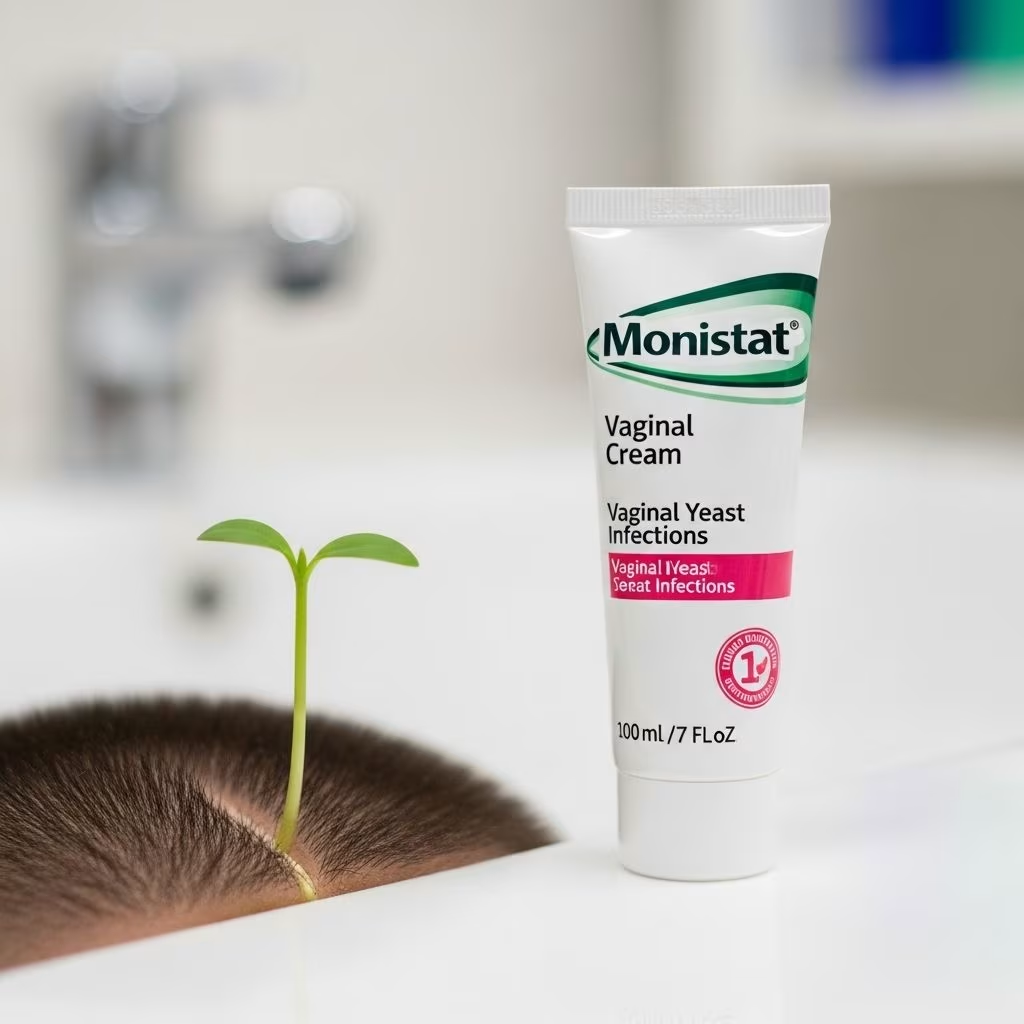
Monistat-7 is an over-the-counter antifungal cream best known for treating vaginal yeast infections. The key ingredient is miconazole nitrate, which combats yeast and fungal overgrowth. Recently, discussions on social media, beauty forums, and natural hair communities have promoted applying Monistat to the scalp as a solution to combat hair thinning and accelerate hair growth.
- The trend appears to be most popular among individuals with natural hair, but has been tried by people of all hair types.
- Users typically report massaging small amounts directly onto the scalp to ‘stimulate follicles’ or ‘reverse hair loss.’
- Fans cite anecdotal evidence of rapid hair growth and fuller edges after regular use.
But—does rubbing an antifungal cream on your head make biological sense? Where did this idea come from, and what do experts say?
Does Monistat Really Make Your Hair Grow Faster?
The foundation of this trend lies in the active ingredient, miconazole nitrate. Some believe it helps by targeting fungal scalp conditions linked to hair thinning. Additionally, it shares structural similarities with ketoconazole, an antifungal sometimes prescribed for certain hair disorders.
Expert Insights on Monistat and Hair Growth
According to Dr. Kari Williams, board-certified trichologist and hairstylist, the scientific evidence is lacking:
- No clinical studies prove Monistat promotes hair growth or reverses hair loss.
- Any perceived benefit likely comes from treating underlying fungal scalp conditions, not from enhanced follicle stimulation.
- Dr. Williams points out: “There are no scientific studies that show that Monistat is an effective treatment for hair loss.”
Observed links between yeast overgrowth and scalp issues, such as seborrheic dermatitis, do not mean Monistat is a one-size-fits-all solution for hair loss.
How Did the Monistat Hair Growth Rumor Start?
The internet’s fascination with Monistat for hair growth likely stems from its relationship to ketoconazole:
- Ketoconazole is an antifungal agent resembling miconazole nitrate in structure.
- Ketoconazole is sometimes prescribed to treat scalp fungal infections and hormonal hair loss.
- Some users extrapolate that if ketoconazole can help, then miconazole (Monistat) might provide similar effects—despite the lack of rigorous study.
This jump in logic glosses over the absence of peer-reviewed research or clinical evidence supporting Monistat for hair regrowth on healthy scalps—including those without fungal problems.
How (and Why) Monistat Could Impact the Scalp
Let’s look deeper at how topical antifungal agents work:
- Miconazole nitrate targets fungal and yeast overgrowth, restoring healthy scalp conditions.
- Scalp health is essential for robust hair growth; infections or inflammation can indirectly impair follicle performance.
- However, no data exists demonstrating that antifungals directly stimulate new hair growth if no underlying fungal issue exists.
Some research, such as a 2014 study on ketoconazole in rats, found improved hair growth rates, but these effects have not been verified in humans using miconazole. Additionally, ketoconazole was found less effective than minoxidil (the active ingredient in Rogaine) when it comes to regrowing hair.
Does Improving Scalp Health Encourage Hair Growth?
There’s consensus that a healthy, balanced scalp encourages better hair growth. Conditions such as chronic dandruff, seborrheic dermatitis, or yeast imbalances can leave the scalp inflamed or excessively oily, which can compromise follicle health.
- Antifungals like miconazole nitrate may be effective for addressing specific fungal scalp problems, improving scalp environment.
- However, there’s no robust evidence linking Monistat’s use on a healthy scalp to enhanced hair growth or follicle stimulation.
Is It Safe to Use Monistat on Your Scalp?
Monistat is FDA-approved—but only for its intended use: treating vaginal yeast infections. When applied to the scalp, its safety profile is less clear:
- Side effects may include: rashes, itching, irritation, burning, or headaches, especially if you have sensitive skin.
- There’s no research regarding long-term or repeated use on non-intimate skin, including the scalp.
- The product packaging does not recommend or address scalp use.
- Applying Monistat to broken skin, or if you have underlying scalp disorders, could exacerbate irritation.
- People taking specific medications, such as blood thinners (warfarin), may face additional risks.
The lack of rigorous testing means side effect likelihood, severity, and potential interactions are largely unknown. Always consult a medical professional before using Monistat in an off-label way.
What Does the Research Actually Say?
- No direct clinical studies exist on miconazole nitrate (Monistat) for hair growth in humans.
- Ketoconazole, a related antifungal, has shown limited promise for certain scalp conditions and associated hair loss, but is not directly comparable to Monistat.
- A large 2015 review of studies on topical antifungals for scalp health found ketoconazole and ciclopirox outperformed a placebo for certain inflammatory scalp conditions, but did not examine Monistat or its effect on healthy hair growth.
In summary: effective for scalp fungal problems, but unproven for making your hair grow faster or thicker if you don’t have an underlying infection.
What Are the Possible Side Effects of Using Monistat on Hair?
| Possible Side Effect | Description |
|---|---|
| Irritation | Redness, itching, or rash at the application site. |
| Burning Sensation | Temporary stinging or tingling where applied. |
| Headaches | Some users report headaches after scalp use. |
| Allergic Reaction | Potential for swelling, hives, or more severe responses, though rare. |
People with underlying conditions or those on certain medications should be particularly cautious. Discontinue use and seek medical advice if you experience severe or prolonged symptoms.
What Do Real Users Say About Monistat for Hair Growth?
Online testimonials about Monistat for hair growth range from glowing endorsements to warnings:
- Some users claim it “kick-started” their hair growth, especially in problem areas like edges or bald patches.
- Others report increased dryness, irritation, or no significant results at all.
- Many admit that any positive changes could also be due to improved scalp hygiene rather than the product itself.
- There’s no guarantee anecdotal results will translate to general effectiveness or safety.
Anecdotes are compelling but not a substitute for scientific evidence.
Are There Proven Alternatives for Hair Growth?
For those seeking clinically validated treatments for hair loss and growth, a few options are FDA-approved or supported by research:
- Minoxidil (Rogaine): Topical treatment shown to help regrow hair in many cases.
- Finasteride (Propecia): Oral prescription that addresses hormonal hair loss for men.
- Prescription shampoos and topicals containing ketoconazole or other ingredients for inflammation or fungal-related scalp issues.
- Microneedling, PRP treatments, and other in-office procedures under specialist supervision.
Always consult a dermatologist or certified trichologist to determine the cause of hair loss and the most effective treatments tailored to your unique needs.
How Should You Use Monistat for Hair Growth (If You Still Want to Try)?
If you’re curious or determined to try Monistat despite the uncertainty and possible risks, consider these unofficial steps that online communities often suggest:
- Mix a small amount of Monistat-7 with a carrier like aloe vera gel or your favorite hair oil to dilute potency and reduce irritation.
- Apply sparingly along the scalp with clean fingers, focusing on thinning or problem areas.
- Leave on for a few hours or overnight, depending on your tolerance, before washing off thoroughly.
- Watch carefully for any adverse reactions such as redness, itching, or burning.
- Cease use immediately if irritation develops, and consult a healthcare professional.
There is no medically-backed dosing, frequency, or method; use extreme caution and never apply to broken skin or open sores.
Expert Advice for Those Experiencing Hair Loss
Experts emphasize the importance of diagnosing the root cause of hair thinning or loss:
- Underlying issues such as hormonal changes, illness, medication, or scalp conditions should be addressed by medical professionals.
- FDA-approved therapies offer a safer and more effective path than unproven home hacks.
- Maintaining overall health—nutrition, stress management, and scalp hygiene—contributes to optimal hair growth conditions.
When in doubt, seek advice from a trichologist or dermatologist. Self-treating with off-label products can sometimes do more harm than good.
Frequently Asked Questions (FAQs)
Q: Can Monistat cause faster hair growth for everyone?
A: There’s no conclusive proof that Monistat promotes hair growth for everyone. Its effect is anecdotal and likely based on treating specific scalp fungal conditions, not general stimulation of hair follicles.
Q: Is it dangerous to use Monistat on the scalp?
A: While generally considered low-risk when used as directed for yeast infections, off-label use on the scalp can cause irritation, allergic reactions, or unanticipated side effects. Consult a healthcare provider and discontinue use if you experience discomfort.
Q: How long does it take to see results when using Monistat for hair?
A: Because there’s no scientific support behind this method, timelines for results are speculative. Some users claim to notice changes within weeks, but there’s no guarantee, and growth rates largely depend on individual biology and underlying health.
Q: Are there safer or more effective alternatives for hair growth?
A: Yes. Medically reviewed options such as minoxidil, finasteride, and specific prescription shampoos are safer and backed by research. Always discuss your options with a medical professional if you have concerns about hair loss.
Q: Why does the internet hype Monistat if science doesn’t support it?
A: Online trends often spread due to anecdotal success stories and the desire for fast results. However, lack of scientific backing makes these ‘miracle cures’ unreliable and sometimes risky.
The Takeaway: Should You Use Monistat for Hair Growth?
While Monistat is safe and effective as an antifungal cream for yeast infections, its use for hair growth is unproven and off-label. The best approach to thinning hair or slow growth is to consult a medical provider who can recommend evidence-based treatments with a known safety profile. Relying on medical expertise—and patience—remains preferable to online hacks with little scientific support.
References
- https://www.cosmopolitan.com/style-beauty/beauty/a33380809/monistat-for-hair-growth/
- https://www.oklahoman.com/story/lifestyle/health-fitness/2019/11/19/body-works-can-monistat-make-your-hair-grow/60419993007/
- https://www.healthline.com/health/monistat-for-hair-growth
- https://www.youtube.com/watch?v=qrPZKmz3PtE
- https://mariehayagmd.com/blogs/press-media/people-are-using-monistat-yes-monistat-for-hair-loss-are-they-onto-something
- https://www.youtube.com/watch?v=iV32JVjRtfI
- https://www.essence.com/hair/monistat7-hair-growth-black-women/
- https://www.clinikally.com/blogs/news/monistat-for-hair-growth-separating-myths-from-facts