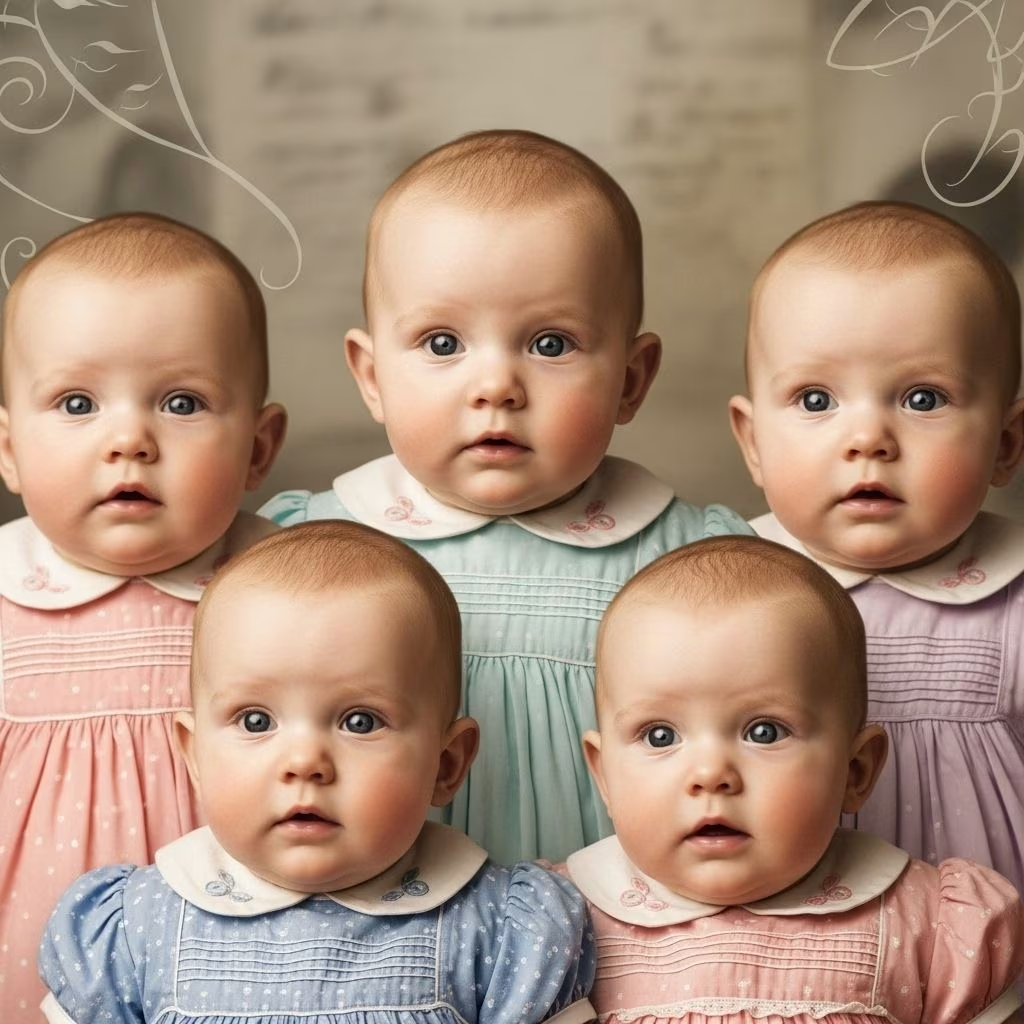
The Dionne Quintuplets: Miracle Birth, Childhood Exploitation, and Lasting Legacy
On May 28, 1934, in the rural community of Corbeil, Ontario, Canada, history was made when Elzire and Oliva Dionne welcomed five identical daughters: Yvonne, Annette, Cécile, Émilie, and Marie. Born two months premature, each weighed less than three pounds, yet these girls defied the odds and became the first quintuplets known to have survived infancy.
The Unprecedented Birth: A Global Sensation
The Dionne Quintuplets’ birth was both a miracle and a scientific marvel. At a time when medical technology was limited, the survival rate for multiple births, especially quintuplets, was exceedingly low. In fact, these five girls were the only set to survive more than a few days, instantly catapulting their family and community into international fame.
- Born on: May 28, 1934, in Corbeil, Ontario, Canada
- Parents: Oliva Dionne and Elzire Legros Dionne
- Delivered by: Midwives Douilda (Donalda) Legros, Mary-Jeanne Lebel, and Dr. Allan Roy Dafoe
- Order of birth: Yvonne, Annette, Cécile, Émilie, and Marie
- Premature: Born two months early; total birth weight around 14 lbs
Initial survival was due to quick medical intervention, including mother’s milk and incubators provided by the Hospital for Sick Children in Toronto. Modern studies established they originated from a single fertilized egg—rare monozygotic quintuplets.
From Rural Canada to World-Wide Fame
The Dionne quintuplets’ arrival during the hardship of the Great Depression made them a symbol of hope and resilience. They were dubbed “miracle babies”, and soon their tiny town saw numbers swell as millions flocked to “Quintland”—the hospital compound where the girls were raised and displayed.
- By 1937, up to 3,000 people per day visited to watch the girls play behind a one-way screen
- Endorsements and branding included toys, baby products, and even appearances in four Hollywood films
- Their fame rivaled Shirley Temple, and they were referred to as the “Eighth Wonder of the World”
Early Years: Protection or Exploitation?
While initially cared for by their family, the Dionne sisters’ lives quickly became enmeshed in legal and ethical controversy. Less than a year after their birth, the Ontario government declared the girls wards of the Crown through the Dionne Quintuplets’ Guardianship Act of 1935, citing concerns over their exploitation and health.
- Custody transfer: First to Red Cross, then officially to provincial government.
- Quintland: Purpose-built compound adjacent to their family home; managed as both hospital and tourist attraction.
- Financial interests: Revenues from admissions, merchandise, and endorsements heavily benefited government and those managing the compound.
- Family separation: Quintuplets only saw their parents during scheduled visits, while their siblings lived in the adjacent home.
Despite initial claims of protection, the government’s actions also institutionalized the girls and commercialized their childhood. The area surrounding “Quintland” saw roads improved and hotels built to accommodate the surge in tourism, likened in scale to Niagara Falls during the era.
Commercialization and Hollywood Stardom
The Dionne sisters became an industry unto themselves. Their images appeared on advertisements, dolls, and even toothpaste. Hollywood produced several films portraying an idealized, fictional version of their lives—”The Country Doctor” (1936), “Reunion” (1936), “Five of a Kind” (1938), and “Quintupland” (1939). These media representations amplified their fame and obscured their real-life struggles.
| Year | Major Events |
|---|---|
| 1934 | Dionne Quintuplets born; initial survival and global media frenzy |
| 1935 | Crown assumes legal custody; Quintland established |
| 1937 | Peak of tourism, with daily visitor counts in the thousands |
| Late 1930s | Hollywood releases multiple films based loosely on the quintuplets’ lives |
| 1943 | Dionne parents regain custody |
Family and Life After Fame
The Dionne quintuplets’ celebrity status came at a profound personal cost. For nine years they were separated from their family and raised under constant public scrutiny. Eventually, in 1943, custody reverted to their parents, but the reunion was fraught with tension and was never truly restorative.
- Sibling relationships: The five girls had several siblings from their parents’ large family, but the years of separation created emotional and psychological distance.
- Education: Their daily lives were meticulously scheduled, with limited interaction outside the Quintland environment.
- Public appearances: Even after returning home, their fame continued to overshadow their personal development.
Three of the sisters eventually married: Annette had three sons; Marie had two daughters; Cécile had four sons and one daughter, including twins.
Painful Legacies and Revelations
The Dionne quintuplets’ story is also a cautionary tale about the dangers of exploitation. In later years, they described a childhood shaped by emotional neglect, lost privacy, and the commercial interests of adults. Their memoirs, “We Were Five” (1964) and “Family Secrets: The Dionne Quintuplets’ Autobiography” (1994), reveal the depth of exploitation and their struggle to reclaim their story.
- Permanent public attention disrupted their sense of normalcy
- Overbearing control by guardians and hospital staff
- Profits from their fame rarely reached the sisters themselves
Later Years and Deaths
The later years of the Dionne sisters were marked by efforts to live private, meaningful lives. As adults, they largely retreated from public view and focused on family life. Yet, the physical and emotional repercussions of their unusual childhood endured. They suffered health challenges, and several died relatively young.
- Émilie Dionne: Died from an epileptic seizure in 1954
- Marie Dionne: Died in Montreal in 1970
- Yvonne Dionne: Died in Montreal, 2001
- Cécile Dionne: Died in Montreal, 2025
- Annette Dionne: Currently the only surviving sister
| Name | Date of Death | Significant Notes |
|---|---|---|
| Émilie | August 6, 1954 | Died of epileptic seizure |
| Marie | February 27, 1970 | Died in Montreal |
| Yvonne | June 23, 2001 | Died in Montreal |
| Cécile | July 28, 2025 | Died in Montreal |
| Annette | Alive | Currently resides in Canada |
Legacy of the Dionne Quintuplets
The Dionne Quintuplets’ story has enduring cultural and historical significance. Their birth marked advances in neonatal medicine, while their saga highlighted problems in child welfare, privacy rights, and the ethics of public guardianship. Museums honor their lives, films recount their experiences, and their story remains an object lesson in the consequences of celebrity and commodification.
- Medical breakthroughs: Their survival contributed to improvements in neonatal care techniques and protocols
- Cultural impact: Their story became a symbol of resilience, but also of the peril of exploitation
- Legal reforms: Sparked debate on government intervention and rights of children
- Museums: The Dionne Quints Museum, now relocated, preserves artifacts and tells their story for future generations
Frequently Asked Questions (FAQs)
Q: Who were the Dionne Quintuplets?
A: The Dionne Quintuplets were five identical sisters—Yvonne, Annette, Cécile, Émilie, and Marie—born in Ontario, Canada, in 1934. They were the first known quintuplets to survive infancy.
Q: Why were the Dionne sisters separated from their family?
A: The Ontario government assumed legal custody in 1935, citing the need to protect them from exploitation. The sisters lived in a specially built hospital compound, separated from their parents and siblings for nine years.
Q: How did their childhood affect them later in life?
A: The sisters’ memoirs describe exploitation, emotional hardship, and the difficulties of adjusting to a normal life after years in the public spotlight.
Q: What happened to the Dionne Quintuplets as adults?
A: Most of the sisters married and had children. Several died relatively young, and only Annette survives today.
Q: What is the lasting legacy of the Dionne Quintuplets?
A: Their story prompted improvements in medical care for premature infants, contributed to debates about child protection and government oversight, and remains a profound example of the impact of fame and exploitation on vulnerable individuals.
References
- https://dionnequintshome.com/about-us/
- https://www.britannica.com/topic/Dionne-quintuplets
- https://www.life.com/history/the-dionne-quintuplets-little-girls-lost-in-the-harsh-glare-of-fame/
- https://www.factinate.com/people/facts-dionne-quintuplets
- https://en.wikipedia.org/wiki/Dionne_quintuplets
- https://www.ripleys.com/stories/dionne-quintuplets
- https://www.amusingplanet.com/2020/01/the-sad-tale-of-dionne-quintuplets.html
- https://www.youtube.com/watch?v=NA2mDGSVwn8