Introduction
For writers, few experiences are as frustrating and isolating as a bout of writer’s block. The blank page looms, ideas stall, and self-doubt creeps in. Sometimes, however, the cure for creative stagnation comes from unexpected sources—like a group of bedraggled baby owls in the aftermath of a Florida storm, as recounted by novelist Kristen Arnett.
This is the story of how a natural disaster, an upended nest, and five tiny owls became unlikely muses for Arnett, helping her rediscover her creative voice, reframe her process, and ultimately finish her novel.
The Storm and the Stagnation
The skies over Central Florida were thick with foreboding clouds, heavy with the promise of a storm. Arnett describes the atmosphere as “like someone had mistakenly pulled a blanket over the sun,” a mood that matched her mental state at the time. She was stuck—deep in her first serious bout of writer’s block while working on a novel, surrounded by pages of stalled prose and a sense of creative defeat.
For days, Arnett waited for a sign, a spark that might clear the fog, but none came. The landscape outside mirrored her interior world: gray, unsettled, and waiting for a breakthrough.
Discovery in the Grass
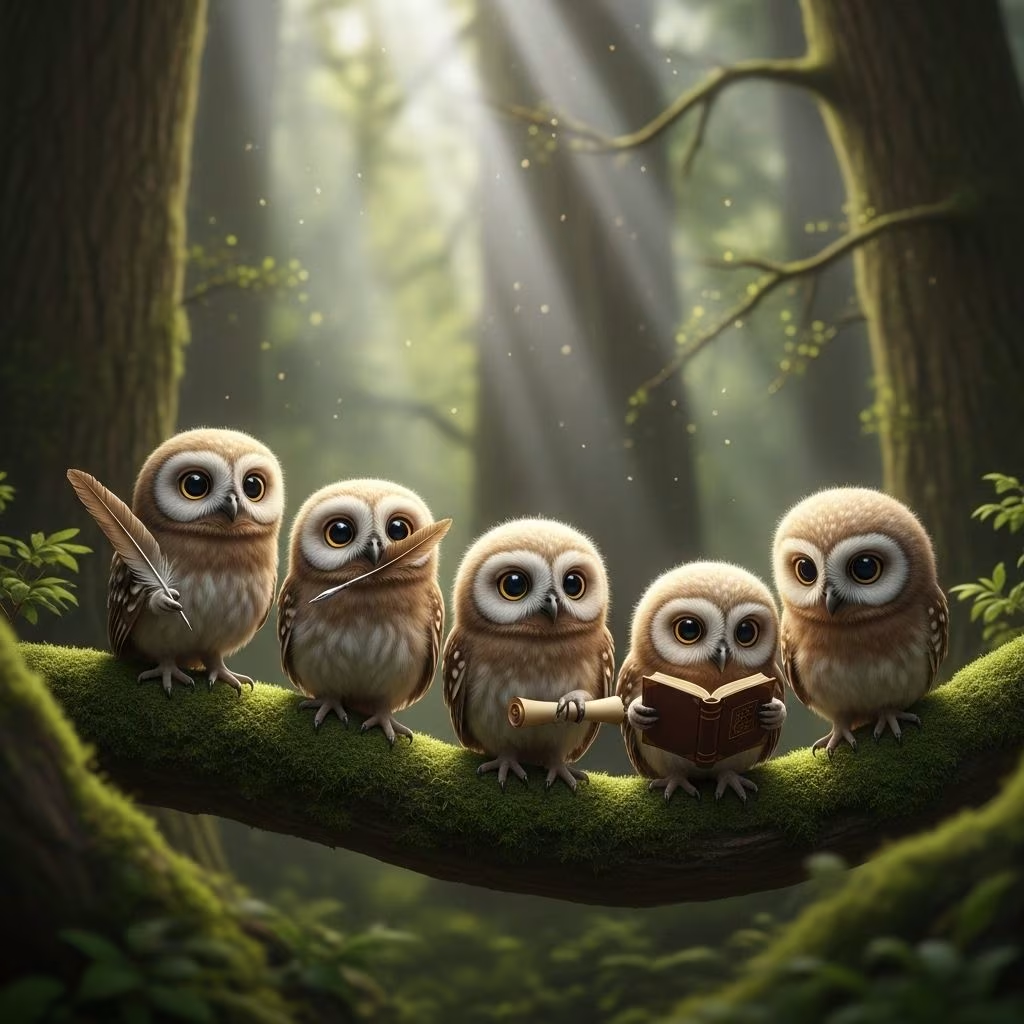
When the storm finally passed, the sun returned, illuminating a yard littered with the debris of a hurricane-strength tempest. Amid the chaos, Arnett spotted movement in the grass: five baby owls, disheveled and blinking in the sudden light, their nest destroyed by the falling limbs of a massive oak. The owls—soft, downy, and wide-eyed—looked as lost as Arnett felt.
Almost immediately, one of the owlets hopped onto the lip of her birdbath, gulping rainwater. Another joined, and the pair huddled together, their vulnerability and resilience striking a chord with Arnett. As a lifelong Floridian, she recognized herself in their plight—survivors in a landscape of upheaval.
Adopting the Owls
By nightfall, three of the owls had vanished, perhaps carried away by wildlife or reunited with their parents. The remaining two stayed, though, becoming Arnett’s “indefinite guests.” She found herself enchanted by their small, curious faces, their plush feathers, and the unnatural way their heads could swivel. Each evening, as the sky turned dusky lavender, the owls would set out to hunt, but every morning, they returned to perch together in the tree above Arnett’s writing table.
Their presence became a source of comfort and fascination. Arnett began to write outdoors, placing her table directly beneath their makeshift nest. The owls would watch her, yellow eyes blinking, occasionally hissing if she got too close, but generally accepting her as a quiet companion.
Finding Solace in Small Things
As days passed, Arnett’s writing sessions became a ritual. She would drink her morning coffee and go outside, expecting each day to be the last she would see the owls, yet they always returned. Their resilience and ability to thrive in minimal circumstances—just a shared branch and each other’s company—inspired Arnett to pare down her expectations.
She realized that, just as the owls thrived on simplicity, she could also focus on “one sentence” at a time, one “precisely chosen word.” Progress, she saw, didn’t have to be grand or dramatic—it could be a series of small steps, of “tiny hops forward,” much like the tentative movements of the baby owls.
The Owls as Metaphor: Creativity and Resilience
Arnett’s experience with the owls became a powerful metaphor for creative work. Their survival—amid the destruction of their nest, the unpredictability of the wild, and the absence of their parents—mirrored the isolation and uncertainty many artists feel. But through their quiet companionship and daily rituals, they also modeled resilience, adaptability, and the value of finding beauty in the everyday.
For Arnett, watching the owls “flit and trill” lifted her mood and imagination. She found solace in “the small, quiet parts” of her work, learning to appreciate incremental progress and the comfort of routine. The owls, she realized, offered a lesson in presence and persistence, qualities that are often the antidotes to creative block.
Moving On—And Letting Go
As Arnett’s draft neared completion, the owls matured. No longer vulnerable hatchlings, they grew restless, eager to leave the safety of the yard. One morning, Arnett found they had disappeared for good. While she felt a pang of sadness, she also recognized that their departure was a natural part of the cycle—just as her attachment to them had been a necessary, temporary stage in her own creative process.
Their absence, though bittersweet, left Arnett with a sense of peace and gratitude. She came to see the owls not only as sources of comfort and inspiration but as reminders that creativity, like nature, is cyclical: periods of growth, change, and sometimes, letting go.
Lessons Learned
Arnett’s story offers several lessons for anyone facing creative stagnation:
- Nature as Muse: Sometimes, inspiration arrives not from grand ideas but from observing the small dramas of the natural world.
- Ritual and Routine: Establishing daily rituals—like writing at the same time and place—can create a sense of stability, even in the midst of uncertainty.
- Small Steps Matter: Progress doesn’t have to be monumental. A single sentence, a single word, can be enough to move forward.
- Resilience Through Companionship: Connection—even with wild creatures—can ease loneliness and fuel creativity.
- Accepting Impermanence: Creative inspiration is often fleeting. Learning to let go is as important as learning to begin.
Owl Care Basics: What to Do If You Find Displaced Owls
Arnett’s story is also a reminder of the importance of coexisting with wildlife. If you encounter displaced baby owls (or any wild animal), here are some guidelines to follow:
- Observe From a Distance: Watch for signs of the parents. Often, they are nearby and may return to care for their young.
- Minimize Interaction: Avoid handling the animals unless absolutely necessary. Human interaction can stress wild creatures and reduce their chances of survival.
- Provide Shelter—Carefully: If the nest is destroyed, you can provide a makeshift nest (such as a basket) in a nearby tree, keeping a safe distance.
- Contact Professionals: If the animals are injured or in immediate danger, contact a local wildlife rehabilitator or animal rescue organization.
- Educate Yourself: Learn about local wildlife needs and best practices before intervening.
Frequently Asked Questions (FAQs)
What kind of owls did Kristen Arnett find?
Arnett does not specify the species in her essay, but Central Florida is home to several owl species, including the barred owl and the great horned owl. Without detailed description, it is difficult to confirm, but these are common native species in the region.
Is it safe to care for wild owls at home?
While Arnett’s experience is touching, caring for wild owls (or other raptors) at home is generally not recommended. Owls are protected by federal and state laws in the U.S., and unauthorized care can be illegal. Always contact wildlife professionals if you find injured or abandoned wild animals.
How can observing nature help with writer’s block?
Nature can offer distraction, perspective, and inspiration. Watching animals or natural processes can help writers shift their focus, reduce stress, and find metaphors that spark new ideas.
What should you do if you find a baby animal alone?
In most cases, it is best to leave the animal alone and observe from a distance. Parent animals often return. If the animal is in immediate danger, contact a wildlife rehabilitator.
How did the owls affect Arnett’s writing process?
The owls provided companionship, routine, and a reminder to appreciate small steps. Their presence helped Arnett shift her focus from the pressure of perfect output to the value of daily, incremental progress.
Conclusion
Kristen Arnett’s experience with the baby owls is a reminder that inspiration can come from the most unexpected places—and that sometimes, the cure for creative stagnation isn’t a grand revelation, but the quiet companionship of another living thing. The owls didn’t solve her problems with magic, but they did show her how to move forward, one hop at a time.
Their story is a testament to resilience, to the beauty of daily rituals, and to the value of looking—really looking—at the world just outside our doors. For anyone stuck in creative limbo, Arnett’s journey suggests that sometimes, all it takes is a pair of wide, yellow eyes gazing back at you from the branches above to remind you that progress, however small, is always possible.
Resources & Further Reading
- National Audubon Society: Guidelines for helping injured wildlife.
- Florida Fish and Wildlife Conservation Commission: Native owl species and wildlife laws.
- Mostly Dead Things and With Teeth by Kristen Arnett (her novels for readers interested in her literary voice).
References
- https://www.countryliving.com/life/kids-pets/a63742624/kristen-arnett-baby-owls-writers-block/
- https://www.publishersweekly.com/pw/by-topic/authors/profiles/article/96837-kristen-arnett-sends-in-the-clowns.html
- https://www.thisisthresholds.com/archive/49jqy59qi7zcdh8ro1jeupgvnd1n29
- https://wordofsouthfestival.com/2022-artists/
- https://writingcooperative.com/write-now-with-kristen-arnett-58f2aad90c28
- https://libguides.freeportlibrary.info/BookClubsandBookSuggestions/People