Why Your Dog’s Happy Face Might Mean Something Else
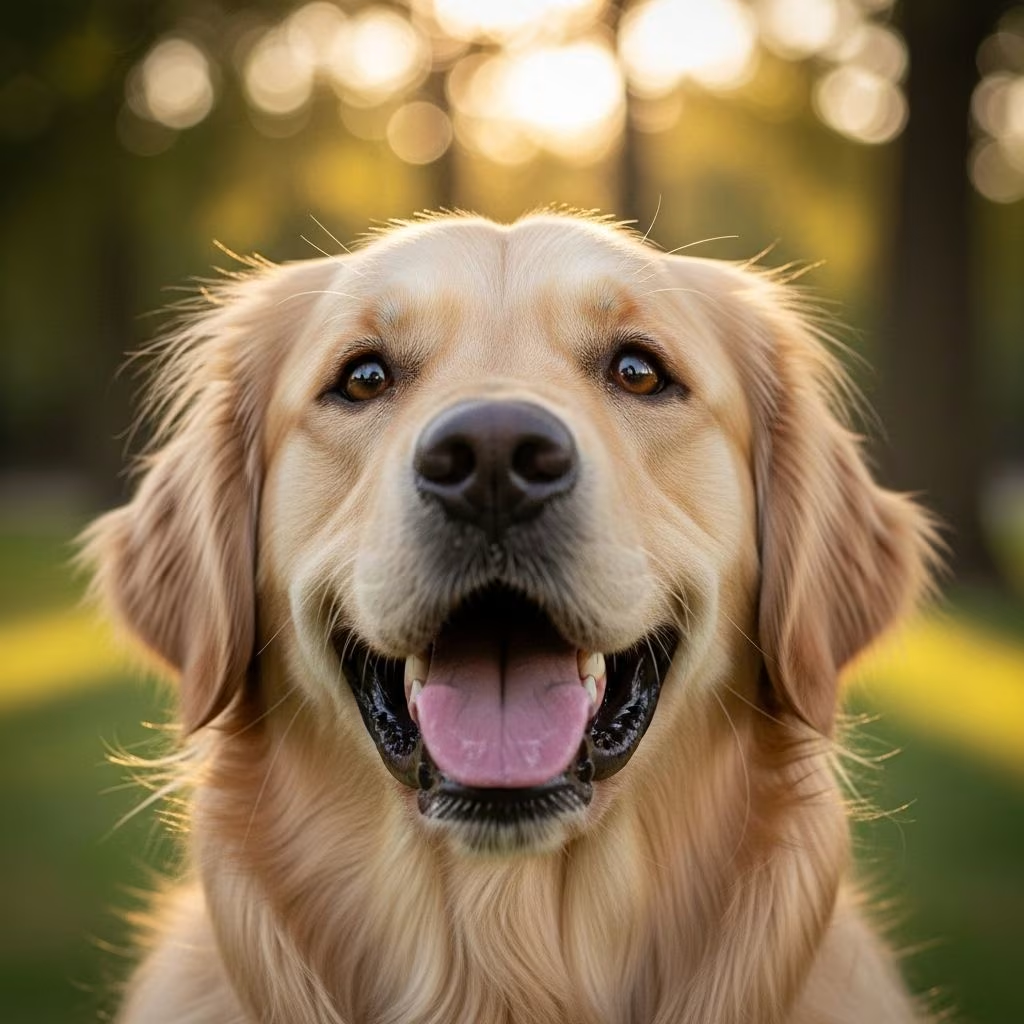
Anyone who spends time with dogs has witnessed a familiar sight: that wide, open-mouthed expression that looks like a smile. It’s tempting—and perfectly human—to frame this as proof of a dog’s happiness. But recent research and expert insights suggest that interpreting a canine ‘happy face’ is more complex than it appears. Here, we explore what a dog’s ‘smile’ really means, how to recognize genuine joy, and how to read your best friend’s emotional state accurately.
Understanding the Canine ‘Smile’
At first glance, a dog’s relaxed, open-mouth grin seems to be a direct analog to the human smile. But experts caution that this facial cue can convey much more than happiness. According to veterinary professionals, dog smiles can indicate feelings ranging from joy and relaxation to uncertainty and even stress.
- Relaxed open mouth: A loose jaw and relaxed face is usually a sign your dog feels safe.
- Soft eyes and lolling tongue: These signal contentment and friendliness, especially during calm interaction.
- Tense mouth, drawn lips, or exposed teeth: These might indicate discomfort, anxiety, or aggression.
While dogs have evolved to display more expressive faces around humans—developing eyebrow muscles absent in wolves—their ‘smiles’ aren’t always simple translations of our own emotional cues.
The Science of Dog Facial Expressions
Unlike humans, dogs communicate happiness through their entire body—not just their face. While positive emotions may trigger facial changes, a dog’s emotional state is reflected through physical behaviors and posture.
- Body language matters: A wagging tail, relaxed body, and playful postures (like the ‘play bow’) are clearer indicators of genuine happiness.
- Facial expressions evolve: Domesticated dogs have become adept at expressing emotion to interact with humans, but not all facial cues mean what we think they do.
- Scientific nuance: Dogs don’t react to emotionally comparable contexts with the same facial movements as humans, emphasizing the need for careful interpretation.
Why Do Dogs Smile?
The reasons a dog might show a smile-like expression are varied and often context-dependent. Scientists point to a blend of evolutionary, social, and emotional factors that influence canine facial displays.
- Evolutionary adaptation: Dogs that could communicate effectively with humans thrived and passed down those traits.
- Learned behavior: Dogs may ‘smile’ more when they notice it elicits positive reactions—treats, attention, or affection—from people.
- Social bonding: Friendly facial expressions help reduce tension, make the dog appear non-threatening, and encourage social interaction.
- Tension reduction: Among other dogs, this relaxed display can defuse potential conflicts.
The Emotional Context of the Dog Smile
A dog’s ‘smile’ is often part of a broader emotional repertoire. It accompanied by other signals, such as a gentle wag of the tail or relaxed posture, is a reliable indicator of contentment. But, isolated, it can be misleading. The key is context.
- During play or petting, a relaxed open mouth usually does mean happiness.
- In new or potentially stressful situations, that same expression could signal anxiety or uncertainty.
- In some cases, dogs mimic friendly expressions when seeking approval or reassurance.
Do Dogs Mimic Human Smiles?
Dogs don’t directly copy human smiles, but they do respond to our emotional states in ways that strengthen bonds. Recent studies show that dogs are equipped to distinguish between different human facial expressions, including happiness and anger.
- Emotional contagion: Smiling at your dog can trigger their own version of a smile. This is not conscious imitation but an automatic, positive response to your emotional cues.
- Oxytocin boost: When you and your dog share happy interactions, both experience increased levels of the ‘bonding hormone’ oxytocin.
- Learned associations: Dogs learn to link your smile with positive rewards and will respond accordingly.
Dogs Reading Human Emotions
Not only do humans attempt to read canine expressions—dogs are adept at interpreting ours. Research demonstrates that dogs can distinguish between happy and angry human faces, both among familiar people and strangers. This suggests a sophisticated level of emotional intelligence in our canine companions.
| Expression (Human) | Dog Reaction | Implications |
|---|---|---|
| Smile | Approaches, relaxed posture, possible dog ‘smile’ | Associated with positive rewards and safety |
| Angry face | Hesitates, may avoid eye contact or back away | Linked with negative consequences—dogs often steer clear |
How to Tell If Your Dog is Really Happy
If seeing your dog’s happy face isn’t always a reliable sign of joy, what should you look for? Experts recommend tuning into the entire package—body language, context, and familiar behavioral cues—to gauge canine emotion.
- Loose, wiggly posture: Relaxed shoulders, a softly wagging tail, and playful bows indicate wellbeing.
- Calm facial expression: Soft eyes and a gentle open mouth are more trustworthy indicators than a fixed ‘smile’.
- Belly display: Rolling over to show the belly is a strong sign of trust and playfulness.
- Vocalizations: Happy dogs may bark in a higher pitched, friendly tone or make playful noises.
Signs Your Dog May Be Stressed or Anxious
Some dog smiles are actually attempts to mask stress. Here’s what to watch for:
- Panting with tense body: Increased breathing paired with rigid muscles.
- Lips pulled back tightly: This can expose more teeth than usual—a sign of anxiety.
- Yawning or licking lips: Often associated with uncertainty, not relaxation.
- Avoidance behaviors: Turning away, hiding, or seeking distance.
If you spot these signals alongside your dog’s ‘smile,’ it may be time to assess their environment and make them more comfortable.
How Human Perception Shapes the Dog-Human Bond
Humans are naturally inclined to interpret animal facial expressions through the lens of our own emotional experience. This anthropomorphism—the projection of human emotion onto animal behavior—can lead to misunderstandings. For example, what appears as a happy grin could really be a sign that your dog is seeking reassurance or signaling submission.
- Danger of misinterpretation: Mistaking anxious or fearful expressions for happiness can inadvertently reinforce unwanted behaviors.
- Building better communication: Learning the nuances of canine body language helps foster trust and mutual understanding.
Frequently Asked Questions (FAQs)
Q: Can dogs smile just like humans?
No, dogs do not smile in the same way humans do. Their ‘smiles’ are the result of relaxed facial muscles and an open mouth, often paired with soft eyes and a relaxed body. This can indicate happiness, but could also be a response to stress or uncertainty.
Q: How can you tell if a dog is genuinely happy?
Look for a loose and relaxed overall posture, wagging tail, playful behaviors like the play bow, and soft eyes. A happy dog’s movements seem natural and fluid, without stiffness or avoidance behaviors.
Q: Do dogs react differently to happy and angry human faces?
Yes, studies show that dogs can distinguish between happy and angry facial expressions in humans—even in people they do not know. Dogs often associate happy faces with safety and rewards, while angry faces encourage avoidance.
Q: Is it possible for dogs to fake a smile?
Not in the way humans consciously fake smiles, but dogs may learn to display ‘smile-like’ expressions if they find these cues earn them positive attention or treats. It’s more a learned behavior than genuine manipulation.
Q: What other signals should dog owners watch to understand their pet’s feelings?
Observe body posture, tail movement, vocalizations, ear position, and the overall energy of your dog. Relying solely on facial expressions can lead to misunderstandings, while interpreting the complete body language gives a fuller picture of your dog’s emotional state.
Tips for Accurately Reading Your Dog’s Emotions
- Study canine body language alongside facial expressions.
- Pay attention to context—consider what’s happening around your dog when they ‘smile.’
- Watch for patterns specific to your dog’s personality and history.
- Learn and respond to your dog’s signals in ways that promote relaxation and trust.
- When in doubt, consult a behavioral specialist or veterinarian.
Summary Table: Common Dog Facial Expressions & Their Meanings
| Expression | Body Cues | Likely Meaning |
|---|---|---|
| Open mouth, soft eyes | Relaxed posture, loose tail wag | Content, social, happy |
| Panting, lips drawn back | Rigid posture, alert tail | Stress, discomfort |
| Teeth exposed, hard stare | Stiff body, ears upright | Defensiveness, agitation |
| Wide mouth, tongue out | Playful bow, wiggling body | Excitement, invitation to play |
| Yawn, lip licking | Avoiding eye contact, withdrawal | Uncertainty, possible anxiety |
Conclusion: Looking Beyond the Canine Smile
Decoding the meaning behind a dog’s happy face requires a holistic approach—moving beyond surface smiles to embrace context, body language, and individual temperament. While a relaxed, open-mouth expression is a good sign your pup may be content, happiness is best measured by observing the full spectrum of canine communication. By learning to read your dog’s unique signals, you’ll foster a stronger, more empathetic relationship and ensure your furry friend feels truly understood.
References
- https://thepetlabco.com/learn/dog/behavior/dog-smile
- https://www.akc.org/expert-advice/news/study-shows-dogs-can-tell-the-difference-between-happy-and-angry-faces/
- https://devildogpetco.com/blogs/the-devil-dog-blog/dog-smile
- https://www.petmd.com/dog/behavior/do-dogs-smile-science-behind-looks-we-get-happy-dog
- https://www.psychologytoday.com/us/blog/canine-corner/202502/do-dogs-smile
- https://www.countryliving.com/life/kids-pets/a64257374/dogs-happy-face-might-mean-something-else/