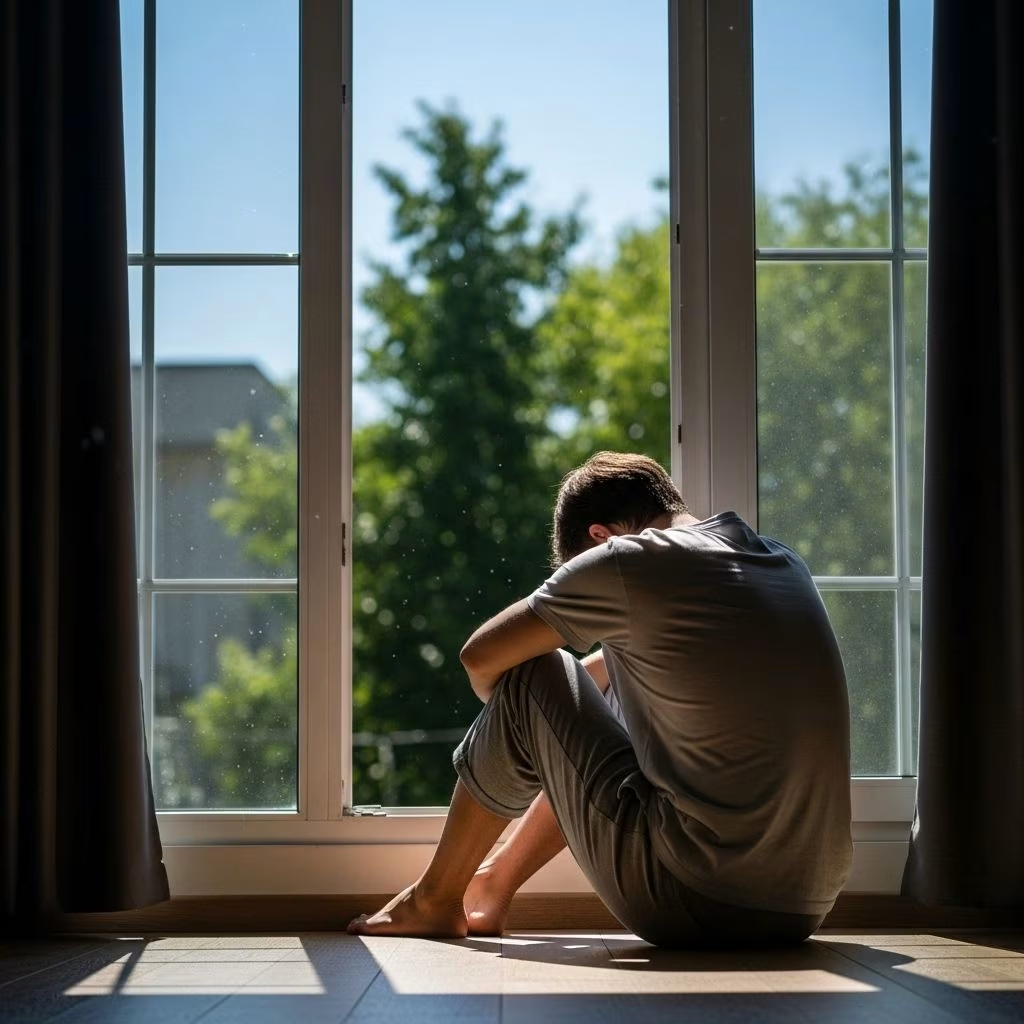
When most people think of Seasonal Affective Disorder (SAD), images of grey winter days, dwindling sunlight, and persistent cold likely spring to mind. We’re taught to expect a mood boost come summer — sunshine, longer days, and the promise of fun. But what if you looked out at a cloudless blue sky and felt nothing but dread? If the heat, humidity, and forced cheerfulness make you anxious, irritable, or deepens your sadness, you’re not alone. For a portion of people, summer triggers or worsens depression, a lesser-known phenomenon often termed summer SAD or reverse SAD.
What Is Summer Seasonal Affective Disorder?
Seasonal Affective Disorder (SAD) is commonly understood as a cyclical form of depression—most prevalent in winter—where symptoms intensify and ebb with the seasons. Yet, around 10% of SAD cases actually peak during the warmer months . People with summer-onset SAD experience depressive symptoms as temperatures rise, often beginning in late spring and resolving with the arrival of fall. This reverse pattern is frequently misunderstood, underreported, and at odds with society’s expectation that summer should be the happiest time of year .
- Alternate terms: Summer SAD, Summer-onset SAD, Summer Depression, Reverse SAD, Summer-related seasonal depression.
- Prevalence: SAD impacts around 4–6% of people in the U.S. and 5% in the UK; about 10% of these experience their worst symptoms in summer .
What Does Summer SAD Feel Like?
Symptoms of summer SAD overlap with those of general depression, but certain signs tend to be more common :
- Persistent low mood or sadness
- Significant anxiety or agitation
- Increased irritability and restlessness
- Insomnia or difficulty staying asleep
- Loss of appetite, often resulting in unintended weight loss
- Fatigue or lack of energy despite sleeping
- Trouble concentrating (“brain fog”)
- Lack of interest in social or enjoyable activities
- Headaches
- Reduced interest in or withdrawal from socializing
- Difficulty managing daily responsibilities due to mood
It’s important to note that the symptoms people experience—and the degree to which summer worsens their mental health—varies markedly from person to person. Some may feel primarily irritable and anxious; others become withdrawn or struggle to sleep. The unifying thread is the clear link between mood changes and the arrival of summer .
Why Does Summer Make Some People Feel Worse?
Because summer is nearly synonymous with leisure and happiness in popular culture, feeling miserable during the sunniest season can be surprisingly isolating. But summer SAD is not a moral failing or a sign of weakness; experts believe it is the result of a complex interplay of physical, psychological, and environmental factors .
Factors Contributing to Summer SAD:
- Excessive heat and humidity: High temperatures can cause discomfort, sap energy, disrupt sleep, and trigger irritability. Heat may also make daily tasks feel harder, leading to avoidance and withdrawal .
- Disrupted routines: Changes such as school holidays, work shifts, vacations, or caring for children at home can throw off the predictable patterns many rely on to manage stress and mood .
- Longer daylight hours: Prolonged sunlight can disrupt circadian rhythms—internal clocks that regulate sleep, hormone production, and mood—leading to insomnia and fatigue .
- Body image concerns: As clothing changes and social outings shift towards beaches and pools, some people become more self-conscious or anxious about their appearance, prompting isolation or depressive thoughts .
- Financial pressures: Summer expenses – from vacations to childcare – can add financial stress, especially when coupled with increased social expectations .
- Societal expectations: The assumption that everyone “should” feel happy in summer can increase feelings of guilt, alienation, or self-judgment for those experiencing the opposite .
- Geography and environment: Living in areas with extreme summer conditions (excessive heat, long daylight) can exacerbate symptoms, just as lack of sunlight contributes to winter SAD .
Summer SAD vs. Winter SAD: What’s Different?
| Winter-Onset SAD | Summer-Onset SAD |
|---|---|
| Triggered by short days, cold weather | Triggered by heat, humidity, longer days |
| Symptoms: hypersomnia, increased appetite, weight gain | Symptoms: insomnia, reduced appetite, anxiety, weight loss |
| Low energy, social withdrawal | Irritability, restlessness, agitation |
| Improves in spring/summer | Improves in fall/winter |
While both forms are legitimate and can be disruptive, summer SAD tends to manifest with agitation, insomnia, and appetite loss, whereas winter SAD more often involves oversleeping and carb cravings .
How Common Is Summer SAD?
Studies indicate that about 5% of people experience some form of SAD during the year, while roughly 10% of these have their worst symptoms in summer. People living closer to the equator may be more susceptible to summer SAD, as intense heat and long daylight hours can have pronounced effects on mood .
Why Don’t More People Talk About Summer Depression?
There is a societal myth that “no one feels bad in summer.” The cultural narrative emphasizes summer as a time for fun and freedom, so those who struggle with depression during the season often feel shame or fear judgment. In reality, mood disorders know no calendar. The mismatch between societal expectations and lived experience can deepen isolation for summer SAD sufferers.
In addition, awareness and research on summer SAD lags behind its winter counterpart—most public messaging about SAD revolves around the winter blues—leaving many people confused or invalidated by their summer struggles .
Managing and Coping with Summer SAD
If summer brings persistent sadness, anxiety, or irritability, there are ways to lighten the load and protect your mental health. The first step is recognition; knowing that summer-onset SAD exists can be a relief in itself and can empower you to seek support.
Professional Guidance
It’s a good idea to consult a clinician or mental health professional if you notice:
- Persistent symptoms interfering with your work, relationships, or self-care
- Inability to manage daily obligations due to mood changes
- Thoughts of self-harm or hopelessness
Treatment approaches may include:
- Therapy (e.g., cognitive-behavioral therapy)
- Adjustments in medications (if prescribed or needed)
- Sleep regulation techniques
Self-Management Strategies
- Establish a routine: Try to build a daily structure to create predictability, even as typical routines shift during summer .
- Practice sleep hygiene: Use blackout curtains, eye masks, and white noise to combat summer insomnia. Stick to consistent sleep/wake times when possible .
- Stay physically comfortable: Use fans or air-conditioning, stay hydrated, wear lightweight clothing, and seek shade as needed .
- Limit social obligations: Don’t feel pressured to accept every invitation. Set boundaries around gatherings, especially those involving situations you find stressful (like pool parties or large events) .
- Challenge summer myths: Remind yourself you’re not alone, and there’s nothing wrong with not loving summer .
- Plan enjoyable activities: Find summer rituals that offer comfort, such as reading indoors, visiting museums, or cool evening walks.
- Manage expectations and comparisons: Avoid social media scrolling if it increases feelings of inadequacy or FOMO (fear of missing out).
- Seek social support: Talk to friends or loved ones about how you’re feeling. Connection matters, even if you can’t join in every group activity .
FAQs About Summer SAD
Q: Is it normal to feel depressed in the summer?
A: Yes, it is normal. Though less common than winter SAD, summer-onset depression affects thousands. You’re not alone, and your experience is legitimate .
Q: Can geography make summer SAD worse?
A: Yes. Living in places with extreme heat or long days increases risk of summer SAD, just as northern latitudes raise the risk for winter SAD .
Q: What makes summer depression different from feeling “down” in other seasons?
A: The main difference is in the symptoms’ seasonal pattern and possible triggers, such as heat, disrupted sleep, and body image issues specific to summer .
Q: Will summer SAD ever go away?
A: For most people, symptoms begin to lift as autumn approaches. For recurring cases, professional treatment and lifestyle adjustments can lessen severity and duration.
Q: What should I tell my friends if I can’t do typical summer activities?
A: You can be honest about your limits or simply say you need time for yourself. Your mental health is as important as anyone’s expectations.
Takeaway: Every Season Has Its Own Shade
The pressure to enjoy summer can be overwhelming, especially if the season leaves you feeling physically and emotionally depleted. If you’re struggling through sunny days, remember that summer SAD is real and treatable. With self-knowledge, compassion, and support, you can find your own way to weather the heat — and make peace with any season.
References
- https://health.clevelandclinic.org/summer-depression
- https://www.nuffieldhealth.com/article/signs-symptoms-of-seasonal-affective-disorder-in-summer
- https://www.webmd.com/depression/summer-depression
- https://www.camh.ca/en/camh-news-and-stories/summer-depression
- https://www.mayoclinic.org/diseases-conditions/seasonal-affective-disorder/symptoms-causes/syc-20364651
- https://news.arizona.edu/news/beat-summertime-sadness-these-cool-tips
- https://www.nm.org/healthbeat/healthy-tips/emotional-health/why-do-i-feel-sad-in-the-summer