Hyperbaric Oxygen Therapy: A Comprehensive Guide
Hyperbaric oxygen therapy (HBOT) is a specialized medical treatment in which patients breathe pure oxygen in a pressurized chamber. This approach boosts oxygen delivery throughout the body, supporting healing from a range of medical conditions. HBOT has well-established medical applications and is subject to ongoing research for new therapeutic uses.
What is Hyperbaric Oxygen Therapy?
HBOT involves breathing 100% pure oxygen within a specially designed chamber that is pressurized to higher than normal atmospheric levels, typically between 1.5 to 3 times standard air pressure (atmospheres absolute or ATA). The increased pressure allows your lungs to absorb much more oxygen than would be possible under normal conditions, delivering high levels of oxygen to the bloodstream and, ultimately, to injured or diseased tissues.
- Monoplace chambers accommodate just one patient and are filled entirely with pure oxygen.
- Multiplace chambers can treat several patients simultaneously; each breathes pure oxygen via masks, hoods, or tubes while inside an air-pressurized chamber.
How Does HBOT Work?
The therapy is grounded in fundamental laws of physics and physiology:
- Henry’s Law: Higher pressure increases the amount of oxygen dissolved in the blood plasma.
- Boyle’s Law: Increased pressure reduces the size of gas bubbles in the blood.
- Oxygen diffuses throughout the body, promoting healing by delivering extra oxygen to hypoxic (low oxygen) or injured tissues.
Typical session durations range from 1.5 to 2 hours and may be repeated daily or several times per week, depending on the condition.
Mechanisms of Action
HBOT provides multiple physiological effects:
- Enhanced oxygenation: Effects extend beyond red blood cells, increasing oxygen directly in blood plasma and tissues (hyperoxemia & hyperoxia).
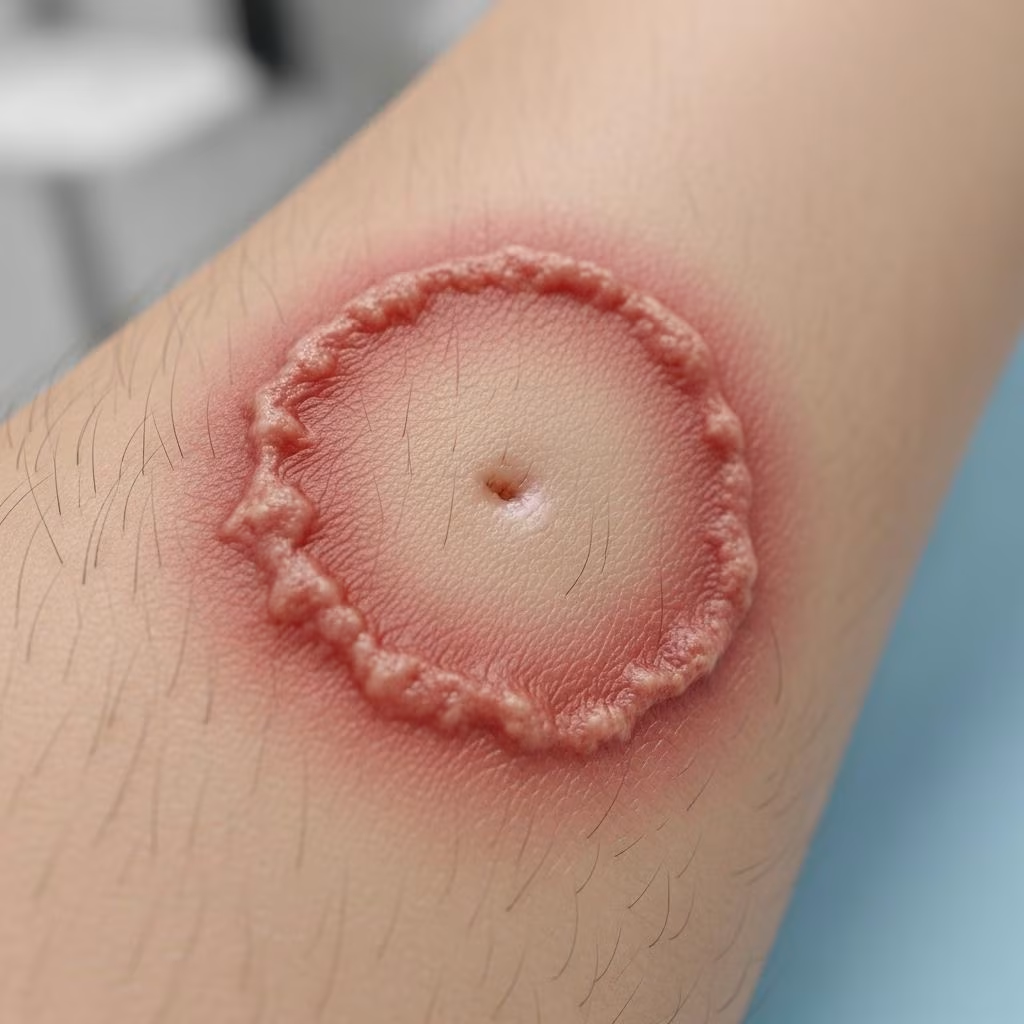
- Promotes wound healing: Accelerates healing by progressing injuries from an inflammatory phase to a proliferative phase and supporting new blood vessel formation (neovascularization).
- Reduces infection risk: High oxygen can help inhibit certain anaerobic bacteria and boost the immune response.
- Decreases tissue swelling and supports repair by aiding in the removal of waste from damaged tissues.
Approved Medical Uses & Indications
HBOT is an FDA-approved and internationally accepted treatment for several medical conditions. Its safety and effectiveness are best demonstrated in the following:
- Decompression sickness (“the bends”) — often in divers
- Air or gas embolism
- Carbon monoxide poisoning
- Chronic non-healing wounds (including diabetic foot ulcers)
- Soft tissue infections, such as necrotizing fasciitis
- Osteoradionecrosis (bone death after radiation)
- Thermal burns
- Certain crush injuries
Other emerging uses are still being studied, including treating traumatic brain injury (TBI), certain neurological conditions, and chronic infections, though strong evidence is still lacking in some of these areas.
Who Administers HBOT?
Hyperbaric oxygen therapy is given by specially trained healthcare professionals, including physicians, nurses, and respiratory therapists. Treatment typically takes place in specialized hyperbaric centers or hospitals and requires medical supervision due to the elevated pressures and oxygen doses involved.
Risks and Safety Considerations
HBOT is considered a safe procedure when administered by trained personnel in established facilities. Nevertheless, it carries potential side effects and risks that require careful screening and supervision:
- Fatigue and lightheadedness — most common short-term side effects.
- Barotrauma — discomfort or injury to the ears, sinuses, or lungs due to pressure changes.
- Temporary vision changes — can include nearsightedness, usually reversible.
- Oxygen toxicity — rare but serious, may cause seizures if oxygen levels are extremely high for prolonged periods.
- Claustrophobia — some individuals may feel anxious in the enclosed chamber.
HBOT is not suitable for everyone. There are specific contraindications that healthcare providers must consider, such as certain lung diseases, active infections, untreated pneumothorax (collapsed lung), and pregnancy in certain circumstances.
Preparation and What to Expect During Treatment
Each HBOT session generally follows a structured protocol:
- Medical assessment: Patients are screened for eligibility and informed about the procedure.
- Chamber entry: Patients wear a cotton gown and remove all jewelry or metallic objects.
- Pressurization: The chamber is gradually pressurized, often requiring patients to “clear” their ears as in an airplane ascent.
- Oxygen delivery: Patients will breathe pure oxygen through a mask or hood, or directly inside a monoplace chamber.
- Monitoring: Medical staff observe vital signs and comfort throughout the session.
- Decompression: At the end, the chamber is slowly depressurized to return to normal atmospheric pressure.
Duration and Frequency of Treatment
- Session length: Typically 90 to 120 minutes per session.
- Course: The number of sessions depends on the medical condition; some patients may require a few treatments, while others undergo 20 to 60 sessions over several weeks.
Effectiveness and Research Evidence
HBOT is strongly supported for certain conditions (decompression sickness, air embolism, chronic wounds) but evidence for other uses varies:
- For traumatic brain injuries (TBI), some small studies show benefit, but larger, well-controlled studies have not consistently demonstrated efficacy. More research is needed for conclusive results.
- HBOT shows promise in improving tissue oxygenation, reducing inflammation, and promoting new blood vessel formation.
- There is insufficient evidence to endorse HBOT for all proposed uses. Consultation with a healthcare provider is essential for evaluating risks versus benefits.
Frequently Asked Questions (FAQs)
Q: What conditions can be treated with HBOT?
A: HBOT treats decompression sickness, air embolism, carbon monoxide poisoning, chronic non-healing wounds, soft tissue infections, osteoradionecrosis, burns, and some crush injuries. Other uses like TBI, autism, or cancer are investigational and not broadly approved.
Q: Is HBOT painful or uncomfortable?
A: Most patients find HBOT painless. Some may feel ear pressure, like on an airplane; this is managed with ear-clearing techniques. Mild fatigue or lightheadedness can occur after sessions.
Q: How safe is hyperbaric oxygen therapy?
A: When performed in accredited centers by trained professionals, HBOT is considered very safe. Careful screening is performed to avoid risks for those with contraindications.
Q: Can children receive HBOT?
A: HBOT can be used for children in select, clinically appropriate circumstances, especially for conditions well-supported by evidence. Pediatric use requires specialist supervision.
Q: What are the most common side effects?
A: The most frequent side effects are temporary fatigue, lightheadedness, and ear or sinus discomfort due to pressure changes. Serious adverse events are rare in properly monitored settings.
Q: Will I need to change my daily routine during HBOT?
A: Most HBOT sessions allow patients to return to their normal activities afterwards. Some may experience mild tiredness; it is important to follow specific guidance from your provider regarding scheduling and concurrent medications.
Q: How are results measured for HBOT?
A: Doctors monitor wound healing, symptom improvement, and functional recovery depending on the condition. Not all effects are immediately visible—some take weeks or months to manifest.
Comparison: HBOT vs. Normobaric Oxygen Therapy (NBOT)
| Feature | Hyperbaric Oxygen Therapy (HBOT) | Normobaric Oxygen Therapy (NBOT) |
|---|---|---|
| Oxygen Pressure | 2.0–3.0 ATA (pressure above atmospheric) | 1.0 ATA (normal atmospheric pressure) |
| Oxygen Concentration | 100% pure oxygen | Variable (usually high-flow, but less than pure oxygen) |
| Chamber Required? | Yes, special hyperbaric chamber needed | No chamber; can use hospital oxygen supply |
| Effectiveness for Hypoxic Tissue | Superior, especially for severe tissue hypoxia or wounds | Less effective for deep tissue hypoxia |
| Risks / Side Effects | Possible barotrauma, oxygen toxicity, rare eye/ear effects | Lower risk profile; fewer side effects |
| Cost & Accessibility | More expensive, less widely available | Cheaper, available in most hospitals |
Key Takeaways
- HBOT is a proven medical therapy for a specific set of conditions, with expanding research seeking new applications.
- Its principle is simple: high-dose oxygen under increased pressure enables accelerated healing and recovery in select situations.
- Not all claims about HBOT’s benefits are currently supported by strong scientific evidence; always consult a provider first.
- The therapy is safe for most people when administered properly, and side effects are usually mild and short-lived.
Further Information & Clinical Consultation
If you have a medical condition that may benefit from HBOT, contact a certified hyperbaric medicine center or consult your physician to evaluate your eligibility and discuss possible outcomes.
Additional Resources
- The Undersea & Hyperbaric Medical Society (UHMS)
- FDA and hospital guidelines for approved HBOT indications
- Peer-reviewed studies on emerging HBOT therapeutic roles
References
- https://commons.und.edu/cgi/viewcontent.cgi?article=1084&context=pas-grad-papers
- https://pmc.ncbi.nlm.nih.gov/articles/PMC8465921/
- https://pure.johnshopkins.edu/en/publications/hyperbaric-oxygen-therapy-a-brief-history-and-review-of-its-benef-3
- https://pmc.ncbi.nlm.nih.gov/articles/PMC8554584/
- https://pure.johnshopkins.edu/en/publications/hyperbaric-oxygen-therapy-a-brief-history-and-review-of-its-benef-3/fingerprints/
- https://www.hh-bayarea.com/hbot-blog-oakland/2020/12/22/hbot-amp-wound-healing