Osteogenesis imperfecta (OI), or brittle bone disease, is a rare genetic disorder that causes bones to be fragile and break easily. Affecting both children and adults, OI varies greatly in severity and symptoms, sometimes presenting at birth, while other times not becoming evident until later in life. This article delves into the causes, types, symptoms, diagnosis, treatment options, and everyday management strategies for osteogenesis imperfecta, aiming to provide an authoritative and up-to-date overview of this complex condition.
What Is Osteogenesis Imperfecta?
Osteogenesis imperfecta is a genetic disorder characterized mainly by bones that break easily, often with little or no apparent cause. OI is sometimes inherited from one or both parents, or may result from new genetic mutations. It is primarily caused by defects in the genes responsible for producing collagen, the major protein in bone and connective tissue, most commonly involving the COL1A1 and COL1A2 genes.
- OI can affect both bone and other connective tissues in the body.
- Incidence rates are estimated at 1 in every 15,000 to 20,000 births.
- Collagen deficiency or abnormality leads to bone fragility and a host of other possible symptoms.
Causes of Osteogenesis Imperfecta
OI is almost always inherited in an autosomal dominant pattern, meaning one copy of the mutated gene from an affected parent can cause the disorder. In approximately 20–40% of cases, the genetic mutation appears spontaneously in a child with no family history of OI.
- Mutations most frequently occur in the COL1A1 and COL1A2 genes, both of which are crucial for type I collagen production.
- Some rarer forms of OI result from mutations in other genes related to collagen processing or structure.
- Severity is influenced by the type and location of the genetic mutation.
Types of Osteogenesis Imperfecta
OI appears in multiple distinct forms, classified according to severity, inheritance, and genetic findings. There are at least eight recognized types, but the first four account for most cases.
| Type | Key Features | Incidence/Prevalence |
|---|---|---|
| Type I | Mildest form; fewest fractures; normal to slightly short stature; blue sclerae; possible hearing loss as an adult | Most common |
| Type II | Most severe; multiple fractures at birth; severe bone deformity; often lethal in the perinatal period | Very rare |
| Type III | Severe; numerous fractures and progressive bone deformity; very short stature; often wheelchair-dependent | Rare |
| Type IV | Moderate severity; white or gray sclerae; moderate bone fragility and deformities; slightly short to normal stature | Less common |
| Types V–VIII | Rare, variable; other features like calcification of interosseous membranes, hyperplastic callus, or dentinogenesis imperfecta | Very rare |
Signs and Symptoms of Osteogenesis Imperfecta
The principal symptom of OI is bone fragility, but a range of other features may be present, often varying by OI type:
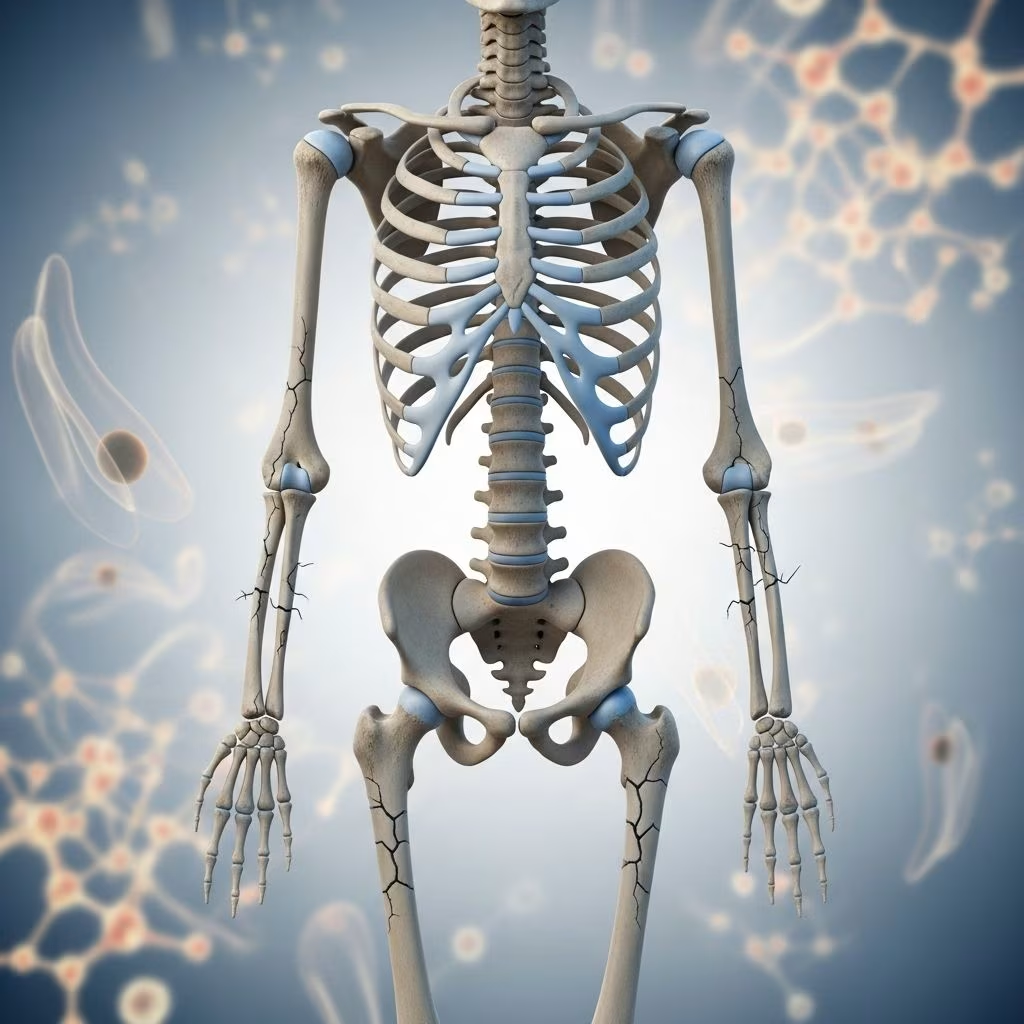
- Frequent bone fractures, sometimes from minimal trauma or even spontaneously
- Bone deformities, including bowed legs or arms and scoliosis
- Short stature or slow growth
- Loose joints (joint hypermobility)
- Muscle weakness and reduced mobility
- Blue, gray, or purple sclerae (the white of the eye appears discolored)
- Brittle teeth and dental problems (dentinogenesis imperfecta)
- Hearing loss (usually developing in early adulthood)
- Respiratory difficulties due to chest wall abnormalities
- Easy bruising
- Delayed wound healing
Diagnosis of Osteogenesis Imperfecta
Diagnosing osteogenesis imperfecta requires a combination of clinical evaluation, medical history analysis, and specialized tests. The process may include:
- Detailed medical and family history, whether there are recurring fractures, bone deformities, or relatives with OI
- Physical examination for signs like bone deformities, short stature, blue sclerae, joint laxity, or dental abnormalities
- X-rays to visualize fractures, assess bone density, and identify skeletal abnormalities
- Genetic testing to detect mutations in collagen-related genes (usually COL1A1 and COL1A2) using blood samples or cheek swabs
- Additional assessments such as hearing tests, dental exams, lung function tests, or bone density scans (DEXA)
Early and accurate diagnosis is crucial to ensure appropriate management and genetic counseling.
Treatment and Management of Osteogenesis Imperfecta
There is currently no cure for OI, but early intervention and a multidisciplinary care approach can improve quality of life and help reduce the risk of fractures and complications. The goals of treatment are to:
- Maximize mobility and independence
- Build muscle and bone strength
- Prevent or manage fractures and deformities
- Reduce pain and improve overall health
Nonsurgical Treatments
- Physical Therapy and Exercise
- Customized exercise programs help build strength, improve mobility, and reduce fracture risk.
- Hydrotherapy (in-water therapy) is often recommended to minimize stress on bones during movement.
- Low-impact activities like swimming, walking, and cycling are encouraged.
- Bisphosphonate Therapy
- Medications like pamidronate or zolendronate can slow bone resorption, increase bone density, and reduce fracture rates in both pediatric and adult patients.
- Close monitoring by a trained physician is essential due to potential side effects.
- Pain management: Analgesics or other pain-relief strategies for acute and chronic bone pain.
- Bracing, Splinting, Casting: Stabilize fractures, correct deformities, and support healing.
Surgical Treatments
- Rodding Surgery
- Insertion of metal rods into long bones (arms and legs) to stabilize bones, correct deformity, and help prevent recurrent fractures.
- Types of rods: fixed-length (may require replacement as a child grows) or telescoping rods that adjust to bone growth.
- Spinal Fusion
- Surgical fusion of deformed spinal segments (often for severe scoliosis) to prevent progression and improve stability.
Comprehensive Care and Support
- Multidisciplinary team: Involvement of orthopedists, geneticists, physiotherapists, dental specialists, audiologists, psychologists, and social workers.
- Regular follow-ups for monitoring growth, bone health, dental integrity, and hearing status.
- Attention to nutrition, especially ensuring adequate intake of calcium and vitamin D.
- Family and psychological support to address the emotional and social impact of OI.
Living with Osteogenesis Imperfecta
Individuals with OI—regardless of severity—face unique challenges in daily life, but with proper support, many lead rich, fulfilling lives. Important considerations include:
- Promoting safe, independent mobility, whether through walking aids, wheelchairs, or other adaptive devices.
- Preventing fractures by creating a safe environment, using protective gear, and teaching safe movement and transfer techniques.
- Educational outreach to teachers, caregivers, and peers about OI and appropriate accommodations.
- Addressing secondary issues, such as dental problems, hearing loss, or respiratory complications, through routine monitoring and specialist care.
- Accessing social and psychological support for both patients and families to manage the uncertainties and stresses related to OI.
Possible Complications
- Respiratory problems due to chest deformities or spine curvature
- Hearing loss, which may require hearing aids or surgical intervention
- Dental issues (such as weakened enamel or early tooth loss)
- Bone deformity can lead to mobility issues and long-term pain
- Scoliosis and other spinal issues
Current Research and Future Directions
Research into OI is ongoing and aims to uncover improved treatments, a better understanding of the disease process, and possible preventive measures. Topics under investigation include:
- Gene therapy and novel genetic interventions targeting the root causes of collagen abnormalities
- Better medications to promote bone growth and density with fewer side effects
- The use of stem cells to repair or replace defective bone tissue
- Advances in surgical techniques and materials for longer-lasting and less invasive treatment
Frequently Asked Questions (FAQs)
Q: What are the earliest signs of osteogenesis imperfecta?
A: The most common signs are frequent bone fractures (sometimes before birth), blue or gray tint to the sclerae, and bone deformities. Some forms may present with hearing issues or dental problems.
Q: Is there a cure for OI?
A: There is currently no cure, but treatments can significantly improve quality of life and reduce the frequency and severity of fractures.
Q: Can people with OI lead normal lives?
A: With medical support, most individuals with OI can achieve good levels of independence, education, and social involvement, but may face physical and accessibility challenges throughout their lives.
Q: Is OI always inherited?
A: Most cases are inherited in an autosomal dominant manner, but new (spontaneous) mutations account for a significant portion of cases—especially in families without a history of OI.
Q: What specialists are involved in OI care?
A: Multidisciplinary teams may include orthopedic surgeons, endocrinologists, geneticists, physiotherapists, occupational therapists, audiologists, dentists, psychologists, and social workers.
Q: Can prenatal testing detect OI?
A: Yes, OI can often be detected before birth through ultrasound, especially in severe forms, and confirmed by genetic testing if there is a family history or suspicion based on ultrasound findings.
Resources and Support
- Osteogenesis Imperfecta Foundation: Provides education, advocacy, and community for people with OI and their families.
- Genetic counseling services: Useful for families planning future pregnancies or seeking to better understand inheritance risks.
- Pediatric orthopedic clinics: Specialize in lifelong management of OI and related conditions.
Note: This article is for informational purposes and should not replace professional medical advice. If you suspect OI or have related concerns, consult a qualified healthcare provider or genetic specialist.
References
- https://www.rchsd.org/programs-services/genetics-dysmorphology/conditions-treated/osteogenesis-imperfecta/
- https://orthoinfo.aaos.org/en/diseases–conditions/osteogenesis-imperfecta
- https://rarediseases.org/rare-diseases/osteogenesis-imperfecta/
- https://www.webmd.com/children/brittle-bone-disease
- https://my.clevelandclinic.org/health/diseases/osteogenesis-imperfecta-brittle-bone-disease
- https://www.nichd.nih.gov/health/topics/osteogenesisimp/conditioninfo/treatments
- https://www.niams.nih.gov/health-topics/osteogenesis-imperfecta