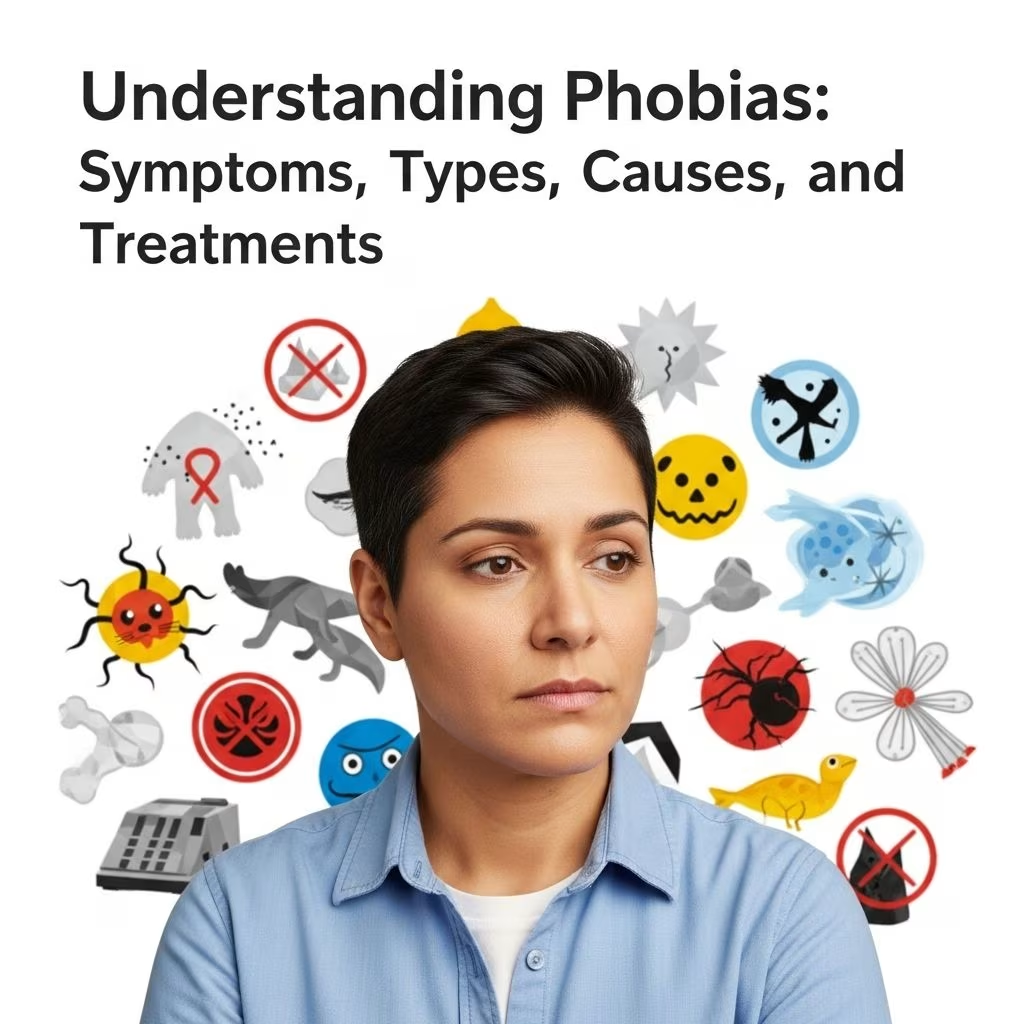
Phobias are one of the most prevalent and treatable mental health conditions, affecting millions worldwide. Defined by intense and persistent fear of certain objects, situations, or activities, phobias can interfere with daily functioning, relationships, and quality of life. Fortunately, most phobias respond well to specific psychological treatments, offering hope and relief for those who struggle with these anxieties.
What Is a Phobia?
A phobia is an intense, irrational fear of a specific object, situation, or activity. This excessive fear occurs when the feared stimulus is encountered or even anticipated. Phobias provoke immediate anxiety, often leading to avoidance behaviors that can disrupt work, school, or personal life. They differ from ordinary fears in their intensity, persistence (lasting 6 months or longer), and the degree to which they impair functioning.
- Intense fear or anxiety upon exposure to the source of the phobia
- Avoidance of the phobic stimulus or endurance of it with extreme distress
- Recognized as irrational by the individual (insight is usually preserved)
- Impairment or significant distress in social, occupational, or other important areas
While many people fear things like heights or spiders, a phobia exists when this fear is excessive, irrational, and debilitating. For example, someone with a snake phobia may avoid parks or gardens altogether, even where snakes are rare.
Symptoms of Phobias
Symptoms of phobias vary, but generally fall into emotional, physical, and behavioral categories. They tend to emerge immediately when the individual confronts (or anticipates confronting) the phobic trigger.
Emotional and Behavioral Symptoms
- Overwhelming sense of anxiety, dread, or panic
- Persistent avoidance of the feared object or situation
- Anticipatory anxiety before encountering the trigger
- Disproportionate fear (out of proportion to actual danger)
- Difficulty functioning at home, school, or work due to avoidance
Physical Symptoms
- Rapid heartbeat (tachycardia)
- Shortness of breath or hyperventilation
- Sweating
- Trembling or shaking
- Nausea, dizziness, or fainting
- Feelings of lightheadedness
- Dry mouth
- Sleep disruption
- Exaggerated startle response
The presence of these symptoms varies based on the phobia’s severity and the individual’s coping mechanisms. Some people endure the trigger with severe distress, while others go to great lengths to avoid it entirely.
Types of Phobias
Phobias are generally categorized into three main groups: specific phobias, social phobia (social anxiety disorder), and agoraphobia.
| Type | Description |
|---|---|
| Specific Phobias | Intense fear of a particular object, animal, or situation (e.g., heights, spiders, flying). |
| Social Phobia (Social Anxiety Disorder) | Overwhelming fear of being judged or humiliated in social situations. |
| Agoraphobia | Fear of being in public spaces where escape may be difficult, often leading to avoidance of crowded places, open areas, or travel. |
Common Types of Specific Phobias
- Acrophobia: Fear of heights
- Arachnophobia: Fear of spiders
- Claustrophobia: Fear of confined spaces
- Trypanophobia: Fear of needles or injections
- Hemophobia: Fear of blood
- Aviophobia: Fear of flying
- Zoophobia: Fear of animals (specific or generalized)
- Emetophobia: Fear of vomiting
Many other specific phobias exist, related to almost any object, activity, or situation.
What Causes Phobias?
The causes of phobias are complex and often multifactorial. Both genetics and environment play a role, and phobias sometimes develop after traumatic or distressing experiences.
- Genetic factors: Having a close relative with a phobia or other anxiety disorder increases risk.
- Brain chemistry: Imbalances in certain neurotransmitters and brain regions involved in fear responses may contribute.
- Environmental factors:
- Traumatic events: Direct experience (e.g., dog bite, airplane turbulence)
- Observational learning: Witnessing others experience trauma or showing fear (e.g., seeing a parent panic during a storm)
- Informational transmission: Learning about dangers through news, stories, or warnings (e.g., extensive coverage of airplane crashes)
- Personality traits: More likely in people with behavioral inhibition, negative affectivity, or other anxiety disorders
Who Gets Phobias? (Risk Factors)
Phobias are common and can develop at any age, though most begin in childhood or adolescence. Both men and women are affected, though some phobias are more prevalent in women.
- Family history of phobia or other anxiety/mood disorder
- Individual history of trauma or negative experiences
- Personality traits favoring anxiety and fear responses (e.g., behavioral inhibition)
- Parental modeling of anxiety or overprotectiveness
- Stressful or negative life events
- Somatization or comorbid psychiatric disorders
- Female sex (generally higher rates of specific phobias)
- Twin with phobia (genetic risk)
Small fears are a normal part of development in childhood, but persistent, excessive fear that disrupts normal functioning may signal a true phobia.
How Are Phobias Diagnosed?
A mental health professional will diagnose phobias based on clinical interviews, standardized questionnaires, and behavioral observations. Diagnostic criteria are drawn from the Diagnostic and Statistical Manual of Mental Disorders (DSM-5). The hallmark features include:
- Persistent, excessive fear prompted by a specific object or situation
- Immediate anxiety response, sometimes escalating to a panic attack
- Recognition by the individual that the fear is unreasonable or excessive
- Avoidance or extreme distress if encountering the phobic trigger
- Fear and avoidance lasting at least 6 months
- Significant distress or impairment in daily life (work, school, or relationships)
Evaluation may also involve assessing for other anxiety or mood disorders, since phobias commonly co-occur with these conditions.
Complications of Phobias
When left untreated, phobias can cause a range of complications that reach far beyond the initial fear itself:
- Impaired quality of life: Reduced ability to participate in activities, schooling, work, or travel
- Social isolation: Avoidance of situations or social gatherings
- Development of other mental health issues: Depression, other anxiety disorders, substance abuse
- Physical health problems: Somatic symptoms, stress-related illnesses, sleep disruption
- Financial and occupational setbacks: Missing work, declining opportunities
Fear-related avoidance can reinforce the phobia over time, making it harder to overcome without intervention.
How Are Phobias Treated?
Phobias are among the most treatable mental health disorders, with several evidence-based therapies available. The primary goal is to help the individual manage fear, stop avoiding the trigger, and reclaim lost activities and opportunities.
Cognitive Behavioral Therapy (CBT)
- Exposure Therapy: The gold standard and most effective approach. Patients are gradually and repeatedly exposed to the feared object or situation in a safe setting, helping to reduce anxiety over time.
- Cognitive Restructuring: Helps patients challenge and change irrational thoughts related to their phobia.
Other Psychotherapies
- Systematic Desensitization: Combines relaxation techniques with gradual exposure.
- Virtual Reality Exposure: For phobias where in vivo exposure is impractical.
- Self-Help or Internet-Based Therapy: For milder cases and those unable to access in-person care.
Medications
- Short-term sedatives or beta-blockers: For acute situations or infrequent exposures (e.g., flying for someone with aviation phobia).
- SSRIs and other antidepressants: Sometimes prescribed if the phobia co-occurs with other anxiety or mood disorders.
Medication is rarely the sole treatment for phobias, but it can help reduce symptoms when combined with therapy.
Prognosis and Living With Phobias
With proper treatment, individuals with phobias typically experience significant reductions in symptoms—often to the point where anxiety no longer disrupts everyday life. Motivation, persistence, and access to resources all improve outcomes.
When to Seek Help
It may be time to seek professional help if:
- Phobia-related fear or avoidance interferes with school, work, relationships, or routines
- Symptoms cause distress, difficulties coping, or reduce quality of life
- Self-help strategies have not been effective
Mental health professionals such as psychologists, psychiatrists, licensed therapists, and counselors can provide assessment, diagnosis, and treatment plans tailored to individual needs.
Frequently Asked Questions (FAQs)
Q: How common are phobias?
A: In the United States, about 19 million adults—or around 8-10% of the population—have at least one phobia at some point in their lives.
Q: Can phobias go away on their own?
A: Some mild fears may lessen over time, but most phobias persist and can worsen without treatment. Therapy is highly effective in helping people overcome their phobias.
Q: Are children affected by phobias?
A: Yes, phobias often develop in childhood or adolescence. Early intervention can greatly improve quality of life and prevent complications.
Q: Is medication necessary to treat phobias?
A: Most people benefit primarily from psychological therapies, especially exposure therapy. Medication can be a helpful supplement for severe symptoms or when phobias co-occur with other mental health conditions.
Q: Can people with phobias live normal lives?
A: Absolutely. With professional treatment and support, most people can manage their phobias and lead fulfilling lives.
Key Takeaways
- Phobias are persistent, irrational fears that disrupt daily life but are highly treatable.
- They may arise from genetic, environmental, or psychological factors.
- Diagnosis is based on detailed clinical assessment and symptom criteria.
- Cognitive behavioral therapy, particularly exposure therapy, is the first-line treatment.
- Most individuals experience significant improvement with proper care.
If you or someone you know is struggling with a phobia, consider reaching out to a mental health professional for assessment and treatment. Early intervention leads to better outcomes and can help restore a sense of freedom and well-being.
References
- https://bestpractice.bmj.com/topics/en-gb/693
- https://pmc.ncbi.nlm.nih.gov/articles/PMC7233312/
- https://www.wecaremoreohio.com/blog/phobias
- https://hopkinsmedicalassociation.com/medical-conditions/mental-health-treatment/anxiety-disorder-treatment/
- https://www.hopkinsguides.com/hopkins/search?q=Specific+Phobia
- https://pure.johnshopkins.edu/en/publications/specific-phobias
- https://obssr.od.nih.gov/sites/obssr/files/2021-11/BSSR%20Fact%20Sheet%20-%20Phobias%20-%20FINAL.pdf