Ankle fractures are among the most common serious injuries of the lower limb, often resulting from falls, car accidents, sports injuries, or severe twisting. In cases where bone pieces are displaced or joint stability is compromised, surgical intervention becomes necessary. Open Reduction and Internal Fixation (ORIF) is a widely recognized surgical procedure that realigns fractured bones and uses implants to maintain stability and promote healing.
What is Open Reduction and Internal Fixation (ORIF)?
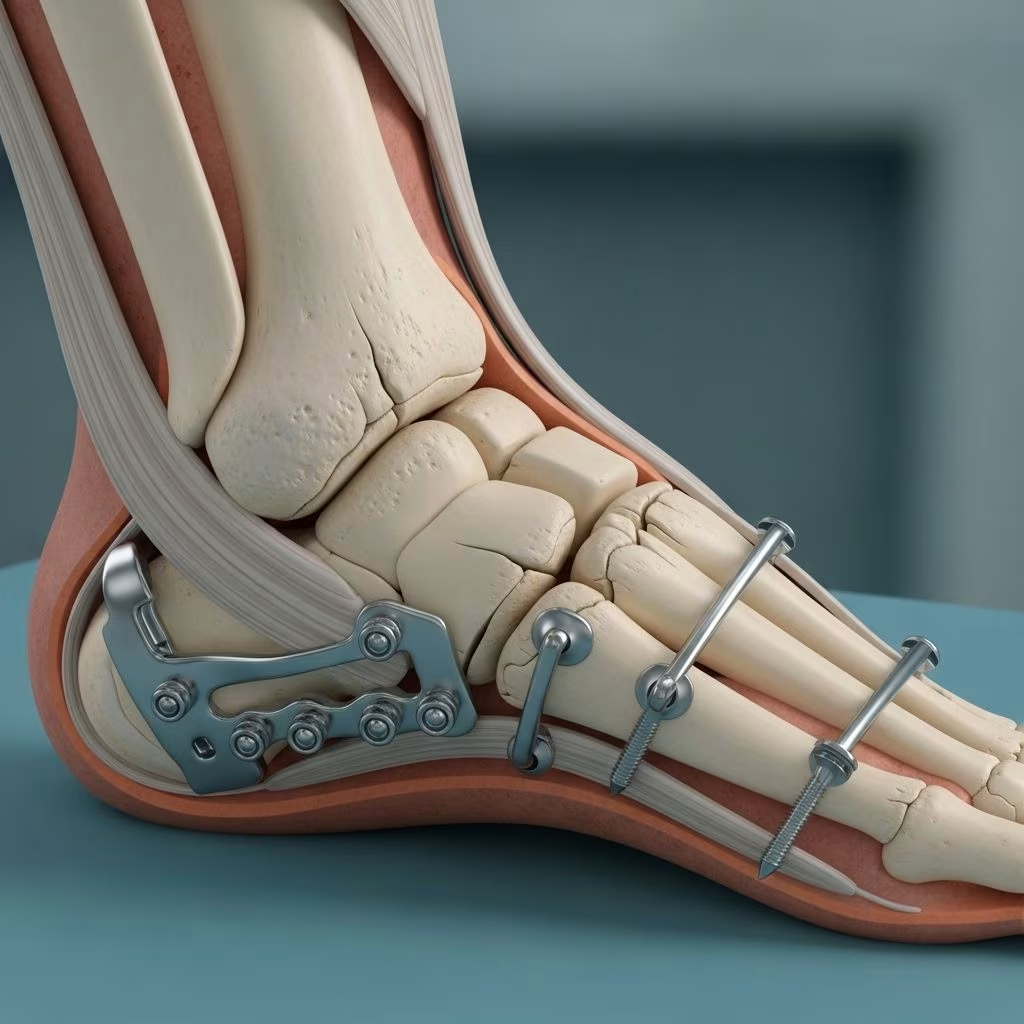
Open Reduction refers to the surgical realignment of fractured bones, while Internal Fixation involves the use of hardware like plates, screws, or rods to secure those bones during the healing process. In ankle fractures, ORIF is typically indicated when the bones of the ankle (tibia, fibula, and talus) are misaligned or unstable, and when the skin or soft tissue integrity necessitates precise intervention for best functional outcomes.
Why Might I Need ORIF for an Ankle Fracture?
An ORIF procedure is recommended for specific types of ankle injuries, notably when:
- There is a displaced (misaligned) fracture of the ankle bones.
- A fracture involves more than one bone (bimalleolar, trimalleolar fractures).
- The ankle joint has shifted out of place (dislocation present).
- Bone fragments are unstable and would not heal properly with casting alone.
- The fracture is open, with bone protruding through the skin.
- Conservative (non-surgical) treatment has failed or would likely result in poor alignment and function.
By surgically realigning and stabilizing the bones, ORIF seeks to restore joint function, alignment, and mobility, and to minimize the risk of long-term complications such as arthritis or chronic instability.
Anatomy of the Ankle Joint
The ankle joint is formed by the meeting of three bones:
- Tibia – the shinbone, forming the inner (medial) side of the ankle.
- Fibula – the smaller bone of the lower leg, forming the outer (lateral) side of the ankle.
- Talus – the small bone below the tibia and fibula that supports ankle movement.
Fractures may affect one (unimalleolar), two (bimalleolar), or all three (trimalleolar) bones. The surrounding soft tissues, including ligaments and cartilage, are often also affected.
Indications for ORIF
- Displaced ankle fractures where bone fragments will not line up correctly without surgery
- Bimalleolar or trimalleolar fractures compromising the stability of the ankle
- Open fractures with bone protruding through the skin (risk of infection and poor healing)
- Fractures involving joint surfaces, risking joint incongruity
- Unsatisfactory alignment following attempted closed reduction (realignment without surgery)
ORIF is considered urgently in cases with neurovascular compromise, open wounds, or when soft tissues are at risk.
Risks and Possible Complications of ORIF
Like all surgeries, ORIF for ankle fractures carries certain risks. Potential complications include:
- Infection, particularly in open fractures or where hardware is used
- Damage to nerves or blood vessels during the procedure
- Blood clots (deep vein thrombosis)
- Poor bone healing (nonunion or malunion)
- Allergic reaction or irritation from metal implants
- Joint stiffness or limited range of motion
- Hardware problems requiring future surgery (breakage, loosening)
- Development of arthritis in the joint over time
Your orthopedic surgeon will explain your specific risk factors and measures to minimize them.
Preoperative Preparation: What to Expect
Preparation for ORIF involves:
- Detailed physical examination and imaging (X-rays, possibly CT scans)
- Discussing medications – stopping certain drugs like anticoagulants as advised
- Informing your doctor about allergies, underlying conditions, or previous surgeries
- Fasting instructions – typically no food or drink after midnight on the morning of the surgery
- Planning for postoperative recovery and mobility support
Your healthcare team will provide explicit instructions tailored to your needs.
The ORIF Surgical Procedure: Step-by-Step
Ankle fracture ORIF generally proceeds as follows:
- Anesthesia — Usually performed under general or regional (spinal or nerve block) anesthesia.
- Incision — The surgeon makes a careful incision over the fracture site to access the injured bones.
- Reduction — Displaced bone fragments are repositioned to restore normal alignment.
- Internal Fixation — Metal hardware such as screws, plates, or rods are secured to the bone to hold it in place during healing.
- Soft Tissue Repair — If required, ligaments or other soft tissues are repaired.
- Closure — Incisions are closed with sutures or staples and covered with a sterile dressing. Immobilization is provided initially by splinting or casting.
The specific approach (lateral, posterolateral, or anterior) depends on the fracture type and location. Surgical time varies based on the complexity of the fracture and any associated injuries.
Postoperative Care and Recovery
Recovering from ORIF for an ankle fracture is a gradual process and involves a coordinated approach:
- Initial Hospital Stay: You may stay in the hospital from a few hours to several days, depending on your overall health and any surgical complications.
- Pain Management: Pain is managed with prescribed medications, cold therapy, and limb elevation.
- Monitoring for Complications: The surgical team checks for signs of infection, blood clots, neurovascular status, and proper wound healing.
- Immobilization: A cast, boot, or splint is applied. Weight-bearing is usually restricted for a period determined by the surgeon based on bone healing and stability.
- Physical Therapy: Begins as soon as safely possible and is critical to restore mobility, strength, and range of motion. Progression from non-weight-bearing to partial and full weight-bearing happens gradually.
Typical Recovery Timeline
| Phase | Timeline | Key Activities |
|---|---|---|
| Initial Healing | First 2–6 Weeks | Immobilization, pain control, no weight-bearing, anti-swelling measures |
| Rehabilitation | 6–12 Weeks | Gradual increase in activity, physical therapy, transition to partial/full weight-bearing as permitted |
| Full Recovery | 3–12 Months | Continued strengthening, regaining function, possible return to sports |
Most patients regain good function in the ankle, though some residual stiffness and swelling are common for weeks to months. Recovery duration may vary based on fracture severity, age, and individual health factors.
Potential Long-Term Outcomes
- Majority of patients attain excellent to good functional recovery with adherence to their rehabilitation program.
- A small proportion may experience persistent issues such as ankle stiffness, chronic pain, or post-traumatic arthritis.
- In rare cases, further surgery may be necessary to remove problematic hardware or address complications.
Alternatives to ORIF for Ankle Fractures
While ORIF is the standard for displaced or unstable fractures, other treatments may be considered in certain cases:
- Non-surgical management: For less severe, non-displaced fractures. Typically involves casting and close monitoring.
- External fixation: Used in cases with significant soft tissue swelling, open fractures, or when immediate ORIF is not possible due to patient factors.
- Minimally invasive procedures: Such as percutaneous pinning or smaller incisions in select cases.
The choice of procedure depends on fracture complexity, patient health, risk factors, and surgeon expertise.
How to Prepare at Home Following Surgery
- Arrange for transportation and home support as you may be non-weight-bearing for several weeks.
- Prepare your living space to avoid trips and falls (remove loose rugs, arrange essentials for easy access).
- Organize assistive devices such as crutches, a knee scooter, or a walker as advised.
- Follow wound-care instructions precisely and watch for symptoms such as fever, excessive swelling, or discharge.
- Adhere to all prescriptions for pain, anti-inflammatories, and any antibiotics.
Frequently Asked Questions (FAQs)
Q: How long will I need to keep weight off my ankle after ORIF?
A: Non-weight-bearing is usually required for 6–8 weeks, but exact timing depends on the type and stability of your fracture and your surgeon’s advice. Gradual progression is guided by X-ray evidence of healing and your rehabilitation program.
Q: Can the metal plates and screws cause problems later?
A: Most patients do not notice their implants. In some cases, hardware may cause discomfort or irritation, especially if prominent, and can be removed in a separate minor surgery if necessary.
Q: What are the signs of complications I should watch for?
A: Redness, persistent swelling, fever, drainage, or increased pain should prompt immediate medical attention. Also, report numbness, excessive bruising, or calf pain (could indicate nerve, infection, or blood clot issues).
Q: Will I regain full ankle function?
A: Most patients regain strong functional use of their ankle, but some residual stiffness or discomfort can remain, especially in complex cases. Strict adherence to physical therapy will help optimize recovery.
Q: Is ORIF a permanent solution?
A: ORIF is designed to permit bone healing and restore anatomy. In select cases, hardware may be removed in the future, but many patients retain their hardware lifelong without problems.
References and Further Reading
- Talk to your orthopedic surgeon for case-specific information on your ankle fracture and options.
- Reputable sources include the American Academy of Orthopaedic Surgeons (AAOS), hospital orthopedics departments, and published surgical guidelines.
References
- https://pmc.ncbi.nlm.nih.gov/articles/PMC9903107/
- https://atm.amegroups.org/article/view/116511/html
- https://www.acfas.org/comparison-of-temporary-external-and-percutaneous-k-wire-fixations-for-treatment-of-ankle-fracture-%E2%80%93
- https://pmc.ncbi.nlm.nih.gov/articles/PMC8510629/
- https://www.orthobullets.com/trauma/1047/ankle-fractures
- https://orthopedicreviews.openmedicalpublishing.org/article/35688-outcomes-after-unstable-fractures-of-the-ankle-what-s-new-a-systematic-review
- https://www.mayoclinic.org/diseases-conditions/broken-ankle/diagnosis-treatment/drc-20450038
- https://jamanetwork.com/journals/jamanetworkopen/fullarticle/2814057