


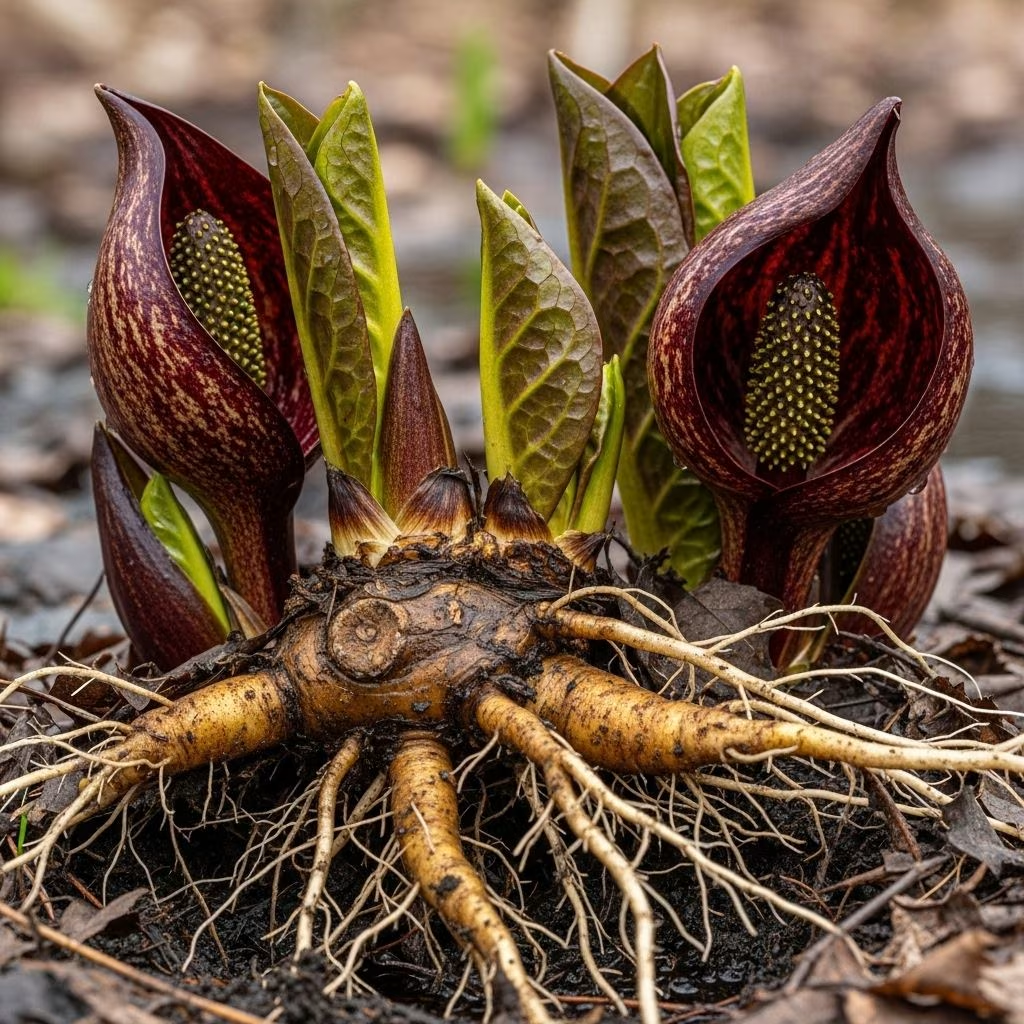
Eastern skunk cabbage (Symplocarpus foetidus) is a perennial wildflower native to wet habitats of eastern North America. Prized and respected for its unique ecology and debated in traditional medicine, its root has a legacy that spans botany, indigenous knowledge, herbal medicine, and curiosity about wild food.
Plant Profile: Eastern Skunk Cabbage (Symplocarpus foetidus)
Eastern skunk cabbage is a member of the Arum family (Araceae). Its genus name, Symplocarpus, means “connected fruits,” while the species name foetidus refers to its distinctive foul odor, which is reminiscent of a skunk or decaying meat.
- Common Names: Eastern skunk cabbage, swamp cabbage, polecat weed, meadow cabbage
- Scientific Classification: Symplocarpus foetidus, Family Araceae
- Habitat: Found in wetlands, swamps, bogs, and wet floodplains of eastern North America, especially from Nova Scotia to Minnesota, south to Tennessee and North Carolina.
This plant is famed as one of the earliest native wildflowers to bloom, often emerging from frozen ground as early as February. Its leaves typically appear later, in mid-spring. The combination of spathes (protective hoods) and spadices (flower spikes) gives it a unique look, and the odor serves an important role in attracting pollinators, predominantly flies and beetles.
Unique Anatomy of the Skunk Cabbage Root
The root system of skunk cabbage sets it apart among wildflowers and contributes to its survival in harsh, wet environments.
- Contractile Roots: Skunk cabbage roots are contractile—they grow downward and pull the plant deeper into mucky soil, which stabilizes the stem and protects it from frost and disturbance over time.
- Rhizome: The below-surface rhizome is thick, knobby, and stores energy for the plant to bloom early each year. It is notoriously difficult to dig up after a few years of growth.
- Life Span: Plants can live up to 20 years, and the bulk of the stem and root system may remain underground and deeply embedded in swampy soil.
The contractile nature of the root means that as the skunk cabbage ages, it subsides deeper underground, making mature specimens nearly impossible to extract.
Ecological Role & Habitat
Eastern skunk cabbage is tightly tied to its wetland ecosystem:
- Grows in saturated, mucky soils along slow-moving streams, seeps, bogs, and swamps where groundwater is abundant.
- One of the earliest sources of nectar and pollen for flies and beetles when few other flowers are blooming in late winter and early spring.
- Leaves serve as larval food for certain moth species.
- Seeds are dispersed by small mammals, birds, and floods. The seeds drop into moist soil, propagating new plants.
The plant’s ability to surface through snow—thanks to thermogenesis (heat production through chemical means)—enables it to bloom far ahead of most other vegetation.
Nutritional & Medicinal Properties
There is a long history of medicinal interest in eastern skunk cabbage root—though its actual nutritional value as a wild food is disputed due to the toxicity inherent in all parts of the plant.
Major Constituents
- Contains calcium oxalate crystals, which can cause severe irritation and are considered toxic if consumed raw.
- Other compounds include alkaloids, saponins, and resins found in the root and leaves.
Medicinal Uses (Traditional/Herbal)
- Native American and early herbal applications included the root for its antispasmodic and expectorant properties.
- Treatments involving cough, asthma, respiratory distress, rheumatism, and as a topical poultice for wounds.
- Root or rhizome was dried (to reduce toxicity) and then steeped as a tea or ground for medicinal preparations.
Important: The use of skunk cabbage root for such purposes requires specific preparation to mitigate the plant’s toxicity. Today, these uses are not supported by modern medicine and consuming the plant raw is dangerous.
Traditional and Historical Uses
Eastern skunk cabbage has featured in a variety of folk and indigenous medicinal practices, but raw ingestion was always discouraged. Historical references suggest:
- Dried, powdered root used as a remedy for respiratory complaints such as asthma, cough, and bronchitis.
- External applications: Fresh leaves were occasionally applied as a poultice to treat burns or swelling, often in combination with other herbs.
- Sacred and ritual use: Some Native American communities viewed the plant as spiritually significant and involved it in purification rituals.
Early American settlers also experimented with the dried root as an expectorant and sedative in homemade remedies, but abandoned its use as easier and safer medicines became available.
Safety and Toxicity
All parts of the eastern skunk cabbage plant, including the root, contain very high levels of calcium oxalate crystals—needlelike compounds that cause intense burning, swelling, and pain if chewed or eaten raw, and can potentially cause more serious toxicity.
- Skin Irritation: Handling fresh plant material can cause irritation; gloves are advisable when foraging or gardening around them.
- Oral Toxicity: Consumption of raw root or leaves can result in severe oral and throat pain, vomiting, and gastrointestinal upset.
- Caution for Foragers: Only the thoroughly dried root is referenced in historical medicinal use, prepared in a way that destroys or crystalizes the harmful compounds. Cooking alone will not necessarily neutralize the irritants.
Because of its toxicity and the existence of safer alternatives, skunk cabbage root is rarely if ever used in modern herbalism.
Culinary Notes & Taste
Flavor Profile: The smell (and taste) of eastern skunk cabbage are universally described as unpleasantly strong, similar to skunk spray or rotting flesh, especially when leaves or roots are bruised.
- Raw Taste: Acrid, pungent, bitter, and very harsh due to calcium oxalate crystals.
- Aroma: Overpowering odor given off from both fresh leaves and roots, especially when cut or bruised.
- Edibility: Only considered edible in traditional contexts after very careful drying and processing to reduce toxins. Not recommended today due to risk of poisoning and lack of culinary value.
Though folklore sometimes refers to its use as a survival food (after drying and pounding to flour), in practice it is not a desirable wild edible compared to other available roots. Unprocessed root would cause a painful burning sensation when chewed.
| Property | Fresh Root | Dried Root |
|---|---|---|
| Smell | Pungent, skunky, rotten | Milder, but odor persists |
| Taste | Acrid, bitter, burning | Duller, less acrid, but still unpalatable |
| Edibility | Toxic/irritating | Historically used medicinally; not recommended today |
Eastern vs. Western Skunk Cabbage
| Feature | Eastern Skunk Cabbage (Symplocarpus foetidus) | Western Skunk Cabbage (Lysichiton americanus) |
|---|---|---|
| Native Range | Eastern North America, eastern Asia | Pacific Northwest North America |
| Root System | Contractile, deep, forms rhizomes | Spreading, less contractile |
| Odor | Skunky, strong | Also unpleasant; sometimes likened to skunky onions |
| Traditional Uses | Dried root used medicinally | Leaves occasionally used, but less for roots |
| Edibility | Toxic unless very well-processed | Similar toxicity; rarely if ever eaten |
Frequently Asked Questions (FAQs)
Q: Is Eastern skunk cabbage root edible?
A: The root is technically edible only after extensive drying and processing to reduce toxins; however, it is not recommended for modern consumption due to severe oral irritation, toxicity, and the availability of safer alternatives.
Q: What was Eastern skunk cabbage root used for medicinally?
A: Traditionally, Native Americans and early herbalists dried the root for use in treating respiratory disorders such as coughs, asthma, and bronchitis. Uses have since fallen from favor due to safety concerns and lack of clinical evidence.
Q: Does Eastern skunk cabbage have any nutritional value?
A: Not in practical terms for human consumption. Its nutritional value is offset by its high content of calcium oxalate crystals and irritant compounds, making it a poor wild food.
Q: Can I grow skunk cabbage in my garden?
A: It is possible in wet, boggy garden environments where the plant can keep its roots cool and moist. Note that it is nearly impossible to transplant mature plants due to their deep contractile roots; seeds or very young plants are best for propagation.
Q: What ecological role does Eastern skunk cabbage root play?
A: The deep, contractile roots anchor the plant in mucky soils, preventing erosion in wetlands, while also storing nutrients and energy that allow the plant to thrive and bloom extremely early in the year.
References: Plant data and ethnobotanical accounts referenced from the USDA Forest Service, Missouri Botanical Garden, North Carolina State University Plant Database, and Virginia Working Landscapes.
References
- https://www.fs.usda.gov/wildflowers/plant-of-the-week/symplocarpus_foetidus.shtml
- https://www.vaworkinglandscapes.org/native-plant-watch/native-plant-highlights/whats-in-bloom-eastern-skunk-cabbage/
- https://plants.ces.ncsu.edu/plants/symplocarpus-foetidus/
- https://www.missouribotanicalgarden.org/PlantFinder/PlantFinderDetails.aspx?taxonid=292066
- https://hort.extension.wisc.edu/articles/skunk-cabbage-symplocarpus-foetidus/
- https://www.natureinstitute.org/article/craig-holdrege/skunk-cabbage
- https://www.vof.org/2021/03/20/the-preserves-spring-spotlight-species/


