


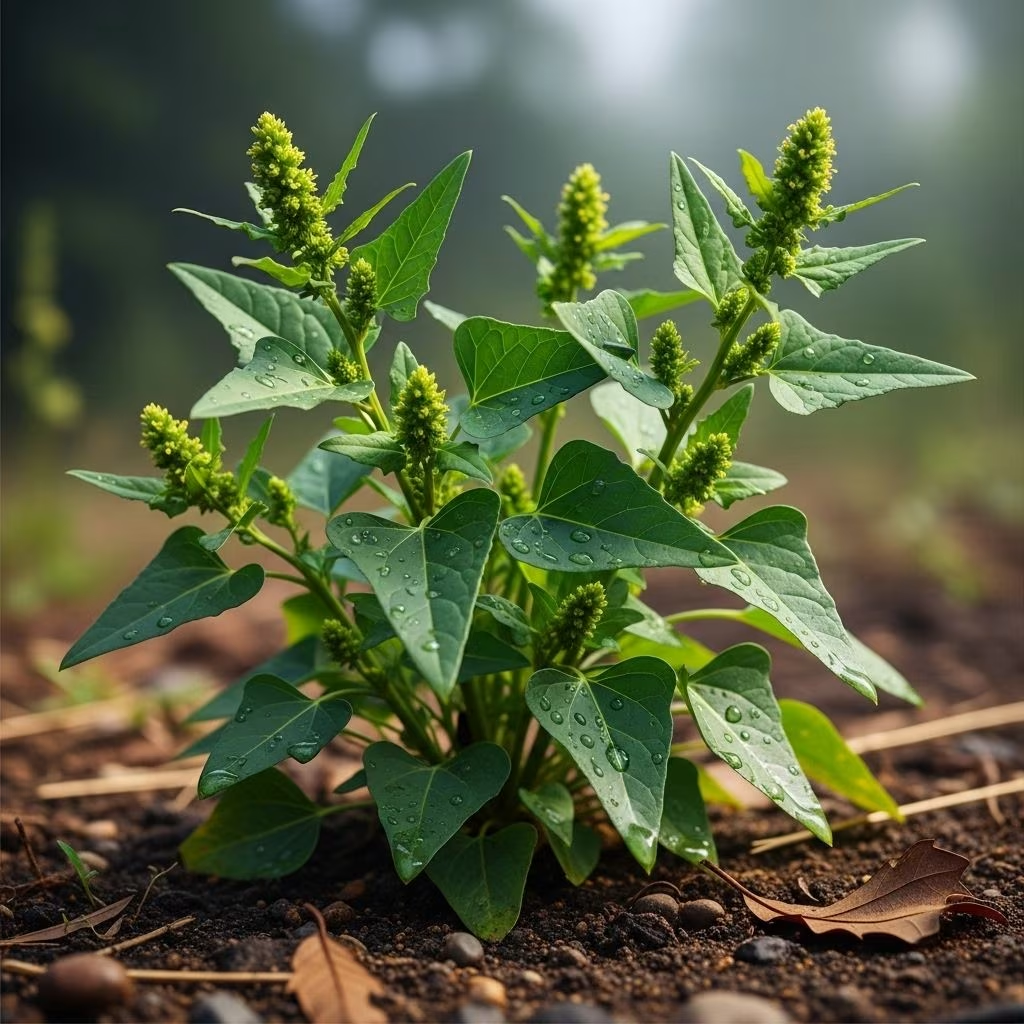
Good King Henry (Blitum bonus-henricus), often called poor man’s asparagus, perennial goosefoot, or Lincolnshire spinach, is an ancient perennial plant celebrated for its culinary versatility, nutritional richness, ease of growth, and forgotten heritage. Once a staple in cottage gardens across Europe, it is slowly regaining attention for its robust flavor, resilience, and dietary value. This comprehensive guide explores Good King Henry’s history, identification, health benefits, culinary uses, and its distinct taste.
- Table of Contents
- History and Background
- Botanical Description and Identification
- Growing Habits and Cultivation
- Nutritional Content and Health Benefits
- Culinary Uses of Good King Henry
- Taste Profile of Good King Henry
- Medicinal and Traditional Uses
- Potential Hazards and Safety
- Good King Henry vs Similar Plants
- Frequently Asked Questions (FAQs)
- Conclusion
History and Background
Good King Henry has a long-standing reputation among European edible plants. Native to Southern Europe and the Alps region, it spread across Europe and the British Isles, likely by the Romans who valued its resilience and nutritional abundance. Its moniker, Good King Henry, pays tribute to the French King Henry IV, a monarch renowned for his benevolence toward rural folk and the common table. The plant’s abundance and hardiness meant it featured frequently as ‘peasant food,’ especially in impoverished rural communities, where it provided sustenance in place of harder-to-cultivate crops. Over centuries, changing culinary trends and market gardening pushed it to near obscurity—yet it is now experiencing a revival among gardeners and chefs aiming to champion forgotten crops and biodiversity.
Botanical Description and Identification
- Botanical Name: Blitum bonus-henricus (syn. Chenopodium bonus-henricus)
- Common Names: Good King Henry, poor man’s asparagus, perennial goosefoot, Lincolnshire spinach, mercury goosefoot
- Family: Amaranthaceae
Good King Henry is a perennial herbaceous plant, reaching 1 to 2 feet (30 to 60 cm) in height. Its leaves are waxy, broad, and triangular/diamond-shaped with distinctly pointed bases and smooth to wavy edges. The undersides of leaves are slightly mealy, echoing its relationship to spinach and quinoa.
The plant produces upright spikes of tiny greenish flowers—each with five sepals—between May and September. Seeds are reddish-brown, 2–3 mm in size, clustered at the top of the stems. In early spring, Good King Henry’s pencil-thick shoots are among the first edible greens to emerge, often likened in use to asparagus. The flower buds, resembling broccoli in appearance, are another seasonal delicacy.
Key Visual Features
- Broad, waxy, arrow-shaped or triangular leaves (~10 cm across)
- Erect or sprawling stems up to 2 feet tall
- Spikes of tiny, greenish, inconspicuous flowers
- Pencil-thick edible shoots in spring
- Root system: Fleshy, branching, perennial—producing new shoots annually
Growing Habits and Cultivation
Good King Henry is known for its hardiness and low-maintenance growing needs, making it an excellent choice for permaculture gardens, edible landscapes, or as a kitchen garden perennial.
- Soil: Prefers fertile, well-drained soils; will tolerate clay if improved with organic matter
- Light: Thrives in partial shade but tolerates full sun, especially in cooler climates
- Water: Moderate needs—keep consistently moist but not waterlogged
- Hardiness: Fully winter hardy (down to at least -15°C); tolerates frost
- Propagation: By seed (requires cold stratification) or division of established plants. Dislikes transplanting, so direct sowing or careful handling is advised
- Maintenance: Minimal—mulching helps retain moisture and suppress weeds
Harvesting: Pick young leaves throughout spring and early summer. Shoots are best harvested when pencil-thick, before they become hollow. Flower buds and stems may be picked before blooming in late spring and early summer.
Nutritional Content and Health Benefits
| Nutrient | Approximate Value (per 100g, raw) | Benefits |
|---|---|---|
| Vitamin C | ~75 mg | Immune support, antioxidant protection |
| Iron | 3–6 mg | Red blood cell production, energy |
| Calcium | Varied—comparable to spinach | Bone health, muscle function |
| Magnesium | Moderate | Enzyme function, nerves, muscles |
| Dietary Fiber | High | Digestive and gut health |
In addition to these key nutrients, Good King Henry supplies a range of micronutrients, including potassium, phosphorus, and trace minerals. It also contains plant compounds (flavonoids, saponins) linked to possible antioxidant and anti-inflammatory effects.
- Supports immune function and skin health (high vitamin C)
- Provides vital minerals for overall wellness
- Valuable for vegetarians and vegans as a plant source of iron and calcium
Culinary Uses of Good King Henry
This plant is exceptionally versatile. Historically, Good King Henry was considered a staple vegetable, providing nutritious greens, tender shoots, and protein-rich seeds throughout the year. Each part of the plant has a distinct timing and preparation method.
Edible Parts and How to Use Them
- Leaves: Harvest young and tender for salads, or cook as you would spinach (steamed, sautéed, added to soups and stews). Mature leaves may become bitter and are best cooked with other greens
- Shoots: Early spring shoots may be steamed, boiled, or grilled like asparagus
- Flower Buds: Can be lightly fried in butter, steamed, or eaten like small broccoli florets
- Seeds: Seeds can be dried and ground into flour, but should be soaked overnight to remove natural saponins
Good King Henry stores well in the refrigerator for up to five days if leaves are wrapped in a damp cloth.
Popular Culinary Applications
- As a spinach alternative in traditional recipes (spanakopita, green pies, quiches)
- Mixed with other spring greens—such as sorrel, nettle, or dandelion—for “pot herbs” or wild green medleys
- Young shoots as a seasonal ‘asparagus’
- Flower buds added to stir-fries or served as a side vegetable
- Ground seeds as a protein addition to breads or porridge
Taste Profile of Good King Henry
The flavor of Good King Henry is often compared to spinach, though it is slightly milder and earthier—especially when picked young in the spring. As the leaves mature through summer, a subtle bitterness emerges, sometimes described as reminiscent of darker leafy greens. If cooked with other spring potherbs, the flavor profile balances well with both tangy (from sorrel) and mellow (from nettle or dandelion) notes.
- Raw Leaves: Mild, earthy, faintly nutty
- Cooked Leaves: Spinach-like, soft texture, more pronounced flavor as they age
- Shoots: Delicate, subtle, similar to asparagus
- Flower Buds: Gentle and faintly sweet, like young broccoli
Best Practice: Mix with other greens for a balanced, complex flavor or add a squeeze of lemon to cut any bitterness in mature leaves.
Medicinal and Traditional Uses
Good King Henry was valued historically not only for food but also for its medicinal properties:
- Digestive Aid: Used as a mild, safe laxative for children and adults
- Antiparasitic: Employed in folk remedies against intestinal worms
- Wound Healing: Poultices from leaves applied to chronic wounds, ulcers, and abscesses in pre-modern Europe
- Antioxidant Content: Flavonoids may support liver function and help resist oxidative stress, though research is less robust compared to other medicinal herbs
While soaps made from saponins in the seeds were once used for cleaning, today Good King Henry’s medicinal usage is largely historical or supplemental.
Potential Hazards and Safety
Like spinach and many leafy wild greens, Good King Henry contains oxalic acid. In normal dietary amounts, this is not problematic for most people, but those with a history of kidney stones, gout, rheumatoid arthritis, or acid sensitivity should consume it in moderation. Cooking—especially boiling—significantly reduces oxalic acid levels.
Tips for Safe Use:
- Always cook mature leaves before eating
- Eat raw leaves or shoots only in small quantities
- Pregnant and breastfeeding women should consult a health professional before adding new wild or foraged plants to their diet
Good King Henry vs Similar Plants
| Plant | Leaf Shape | Edibility | Main Use |
|---|---|---|---|
| Good King Henry | Triangular/arrow-shaped, waxy | Leaves, shoots, seeds edible | Spinach & asparagus substitute |
| Lamb’s Quarters (Chenopodium album) | Lobed, powdery underside | Leaves edible | Spinach alternative, raw/cooked |
| Quinoa (Chenopodium quinoa) | Ovate, broad | Seeds edible | Grain substitute |
| Nettle (Urtica dioica) | Heart-shaped, toothed margin | Leaves & shoots edible when cooked | Potherb, soup, tea |
Frequently Asked Questions (FAQs)
Q: Is Good King Henry safe to eat?
A: Yes, all parts are edible, though mature leaves should be cooked to reduce oxalic acid levels. Those with sensitivities to oxalates or prone to kidney stones should exercise caution.
Q: What does Good King Henry taste like?
A: Young leaves have a mild, spinach-like flavor; older leaves are more bitter. Shoots are delicate and can be used like asparagus, while buds are reminiscent of baby broccoli.
Q: How do you grow Good King Henry?
A: Sow seeds in situ in autumn or cold-stratify before spring sowing. The plant thrives in fertile, well-drained, partially shaded sites. Dividing mature plants is also effective.
Q: Is Good King Henry invasive?
A: No, it is not generally invasive, but it can self-seed if allowed. Regular harvesting keeps growth in check.
Q: Can you eat Good King Henry seeds?
A: Yes, but soak seeds before use (to remove saponins). Seeds can be ground into flour for baking or gruel.
Conclusion
Good King Henry deserves renewed attention as a perennial, resilient, and nutritious addition to gardens and kitchens alike. Its heritage as the “poor man’s asparagus,” ability to thrive with minimal care, and its unique flavor profile underline its role in food history and sustainable gardening. Whether you wish to forage, grow, or cook with a forgotten green, Good King Henry offers both nourishment and a taste of the past—spanning rustic peasant tables to modern culinary experimentation.
References
- https://earthedup.com/2023/05/02/good-king-henry/
- https://permapeople.org/plants/blitum-bonus-henricus-good-king-henry
- https://totallywilduk.co.uk/2024/07/04/good-king-henry-blitum-bonus-henricus/
- https://uvicpermaculture.wordpress.com/permaculture-plants-goodkinghenry-2/
- https://plantura.garden/uk/herbs/good-king-henry/good-king-henry-overview
- https://blog.firsttunnels.co.uk/what-is-good-king-henry-and-why-grow-it-in-your-garden/
- https://www.britannica.com/plant/Good-King-Henry
- https://backyardlarder.co.uk/2019/04/april-plant-profile-good-king-henry/
- https://fsus.ncbg.unc.edu/main.php?pg=show-taxon-detail.php&taxonid=4383


