


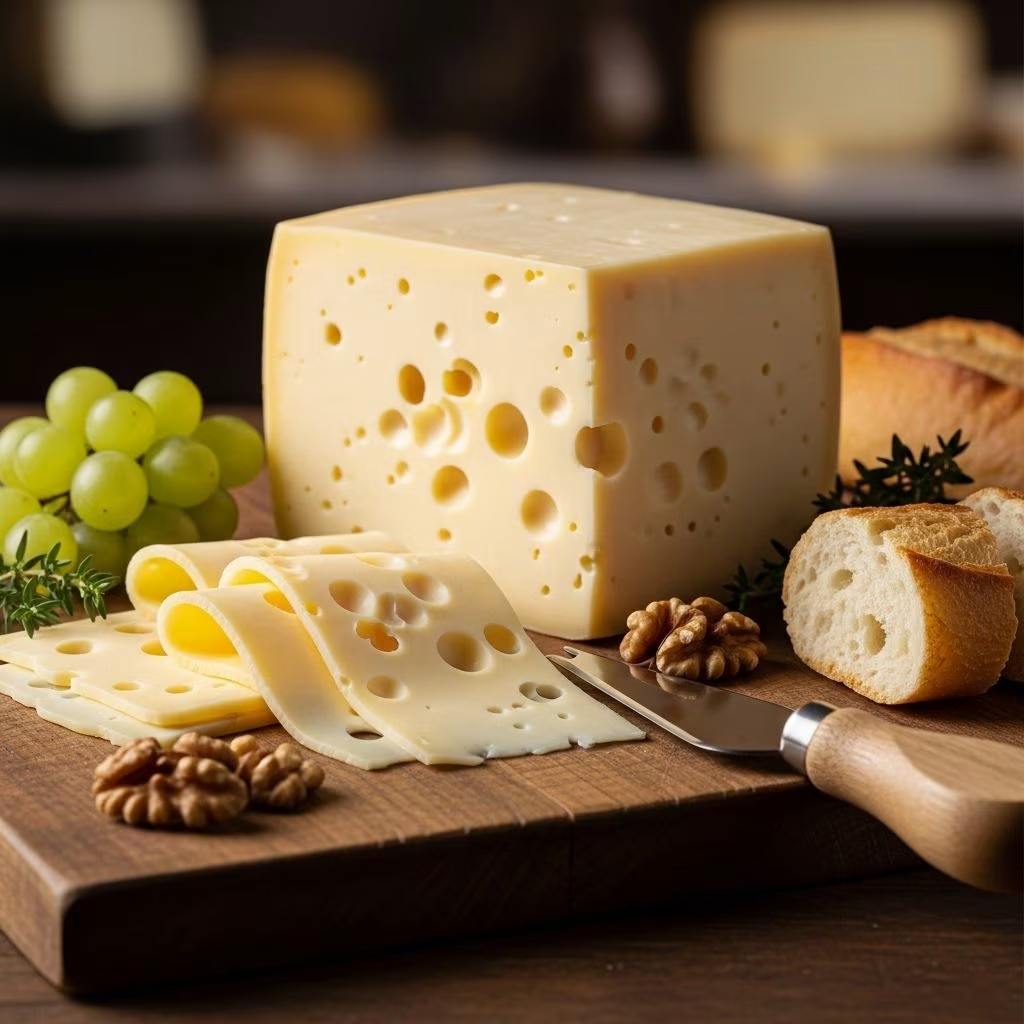
- Overview
- History & Origins
- Production Process
- Nutritional Benefits
- Taste and Flavor Profile
- Culinary Uses
- Pairings and Serving Suggestions
- Varieties and Types
- Storage and Handling
- Frequently Asked Questions (FAQs)
Havarti Cheese: An Overview
Havarti cheese is a semi-soft, sliceable cow’s milk cheese originating from Denmark. Celebrated for its mild, buttery flavor and creamy texture, it’s found in both plain and flavored forms. Today, Havarti is loved globally for its versatility in cooking and its distinctive taste that appeals to a broad range of palates.
History & Origins
The Danish Roots
Havarti’s journey began in Denmark during the mid-1800s. The cheese’s creation is credited to Hanne Nielsen, a pioneering Danish cheesemaker who, after traveling across Europe to study cheesemaking techniques, developed Havarti on her farm, Havartigaard, near Holte.
Nielsen experimented with various methods and was inspired by cheeses like Dutch Gouda and German Tilsiter. Her use of a washed-curd technique gave Havarti its mild flavor and smooth texture. Within decades, Havarti became a beloved Danish staple, gaining international recognition and even reaching royal tables. In the 1950s, after the Stresa Convention on cheese naming, the cheese was officially dubbed “Havarti”.
Production Process
Key Steps in Making Havarti Cheese
- Milk Selection: Made primarily from pasteurized cow’s milk, occasionally with variations like goat or sheep’s milk for specialty types.
- Culture Addition: Cultures are introduced to promote thickening and initial flavor development.
- Curd Formation: Rennet helps form curds, which are then heated gently and separated from the whey.
- Curd Handling: Curds are washed in cold spring water—a distinctive step that enhances Havarti’s signature mildness.
- Molding and Salting: Curd is placed into molds and salted, either through brining or dry salt addition.
- Aging: Havarti is aged for three months for a young, soft cheese, or up to 12 months for a mature, firmer texture and deeper flavor profile.
Traditional Havarti contains few additives, making it gluten-free and often suitable for vegetarians—though rennet type should be checked on packaging. In the EU, authentic Danish Havarti is protected by the PGI (Protected Geographical Indication) mark, ensuring it is made in Denmark with Danish milk.
Nutritional Benefits
Health Advantages of Havarti
Havarti cheese offers several nutritional benefits, with a profile similar to other semi-soft cheeses:
- High in Calcium: Supports healthy bones and teeth. Havarti is a good source of dietary calcium.
- Protein-Rich: Promotes muscle growth and repair.
- Essential Vitamins: Includes Vitamin B12, which aids nerve function and energy metabolism.
- Healthy Fats: Contains saturated fats; best enjoyed in moderation for balanced diets.
- Gluten-Free: Safe for those with gluten sensitivities, barring any cross-contamination in processing.
- Probiotics: Unpasteurized and traditionally produced Havarti may provide beneficial probiotic bacteria due to aging processes.
Like all cheeses, Havarti is best consumed thoughtfully, especially for those monitoring sodium or cholesterol intake. Always check labels for rennet source and ingredients if you have dietary restrictions.
Taste and Flavor Profile
| Attribute | Young Havarti | Aged Havarti |
|---|---|---|
| Texture | Semi-soft, springy, creamy, easy to slice | Firmer, slightly crumbly, less creamy |
| Aroma | Buttery, mild | Stronger, nutty |
| Flavor | Mild, buttery, slightly sweet and acidic, delicate tanginess | Piquant, pronounced nutty or hazelnut notes, tangier, more complex |
| Appearance | Pale yellow to ivory, scattered irregular small holes (eyes) | Darker yellow, eyes less pronounced but detectable |
Overall, Havarti delivers a harmonious, balanced flavor that appeals to a broad range of tastes. Its mildness allows it to blend well in dishes, while aged Havarti stands out with rich, nutty undertones reminiscent of hazelnut.
Culinary Uses
How Havarti Shines in the Kitchen
- Slicing: Excellent in sandwiches, wraps, burgers, and cheese boards for its easy slicing and soft mouthfeel.
- Melting: Havarti’s creamy texture and meltability make it ideal for grilled cheese, paninis, quesadillas, and croque monsieur.
- Cooking: Use in casseroles, frittatas, omelets, or over baked pasta dishes for a subtle, creamy depth.
- Snack & Appetizers: Cubed or sliced for platters, often paired with fruits, nuts, or charcuterie.
- Plating: Complements salads, soups, and spreads due to its mild, complementary flavor.
Havarti’s versatility means you can mix it into mashed potatoes, melt over meats, or incorporate in savory pastries. Its relatively neutral flavor serves as a canvas for bolder seasonings or ingredients.
Pairings and Serving Suggestions
Best Matches for Havarti
- Wine Pairings: Havarti pairs well with light wines like Chardonnay, Sauvignon Blanc, Pinot Noir, and even fruity Rieslings. Its mildness allows it to complement without overpowering.
- Beer Pairings: A good match for Belgian-style ales, lagers, and pilsners.
- Fruit & Nut Pairings: Apples, pears, grapes, figs; nuts like walnuts and almonds.
- Charcuterie: Smoked meats, salami, prosciutto.
- Spreads & Crackers: Multigrain or rye crackers, honey, fruit preserves, or seed-based spreads.
Serving Tips:
- For optimal flavor, serve Havarti at room temperature.
- Sliced or cubed, arrange on boards with fresh or dried fruits for variety.
- Try melted Havarti in fondue for a creamy, mild alternative.
Varieties and Types
Flavored Havartis
- Dill Havarti: Classic pairing with dill weed, adds a fresh herbal note.
- Caraway Havarti: Earthy, slightly licorice-like flavor.
- Red Pepper Havarti: Subtle heat and color.
- Herb Havarti: Added chives, basil, or other herbs for aromatic depth.
- Fruit-Infused: Sometimes blended with cranberry or coconut for unique tastes.
Matured & Specialty Types
- Aged Havarti: Finer, more pronounced nutty taste.
- Cream Havarti: Increased fat content for even greater creaminess.
- Artisan Havarti: Made with regional, organic, or raw milk for more distinctive flavors.
These varieties allow for creative use in both savory and sweet applications, whether in salads, baked goods, or paired with seasonal produce.
Storage and Handling
To preserve Havarti’s flavor and texture, proper storage is essential:
- Wrap in wax or parchment paper to let cheese breathe and prevent excess moisture buildup.
- Avoid plastic wraps, which can alter taste and cause sogginess.
- Refrigerate at 34–38°F (1–3°C). Ideal for extending shelf-life.
- Consume within 7–10 days of opening for peak quality; whole, unopened Havarti keeps for weeks.
- Freeze only if necessary; freezing can impact texture and flavor.
Frequently Asked Questions (FAQs)
Q: Is Havarti cheese suitable for vegetarians?
A: Usually yes, as most commercial brands use vegetarian rennet; however, always check the label to confirm.
Q: Is Havarti cheese gluten-free?
A: Yes, traditional Havarti is naturally gluten-free unless processed with additives containing gluten.
Q: How can I tell if Havarti cheese has gone bad?
A: Signs include a dry, cracked surface, excessive hardening, mold growth (other than its original surface smear), or sour odor. When in doubt, discard.
Q: Can Havarti be frozen?
A: While possible, freezing is not recommended for high-quality cheese as it affects texture; best used for cooked dishes after thawing.
Q: Is Havarti cheese high in fat?
A: Yes, like most cheeses, Havarti contains saturated fat—one ounce has about 8 grams—so enjoy in moderation if monitoring dietary fat intake.
Q: What makes Danish Havarti special?
A: The PGI mark ensures traditional methods and Danish cow’s milk are used, signifying authenticity and superior quality.
Q: What dishes commonly use Havarti?
A: Besides cheese boards, Havarti is excellent in grilled cheese, sandwiches, pasta bakes, omelets, savory pastries, and with fresh fruits.
Q: What is the texture of Havarti compared to other cheeses?
A: Havarti’s texture is less dense and more pliable than cheddar or Swiss, but firmer than brie or cream cheese. Its semi-soft nature makes it suitable for both slicing and melting.
Final Thoughts on Havarti
Havarti cheese stands as a testament to innovative Danish dairy craftsmanship. Its employability in kitchens worldwide is a reflection of its accessible taste and culinary adaptability. From its gentle, buttery start to its mature, nutty crescendo, Havarti continues to offer both comfort and culinary excitement—making it an essential cheese for enthusiasts, chefs, and everyday meals alike.
References
- https://anycheese.com/types/havarti/
- https://www.classpop.com/magazine/havarti-cheese
- https://sarasboxesandboards.com/blogs/news/5-fascinating-questions-about-havarti-cheese-answered
- https://www.castellocheese.com/en-us/us-havarti-pgi/
- https://en.wikipedia.org/wiki/Havarti
- https://www.castellocheese.com/en-us/cheese-types/semi-hard-cheese/havarti-cheese/
- https://www.prb.co.id/en/news-detail/get-to-know-havarti-cheese-origin-characteristics-and-how-to-enjoy
- https://www.murrayscheese.com/wom/journal/behind-the-rind/all-about-havarti-cheese-the-snacking-and-melting-crowd-pleaser
- https://www.wisconsincheese.com/the-cheese-life/article/127/havarti


