


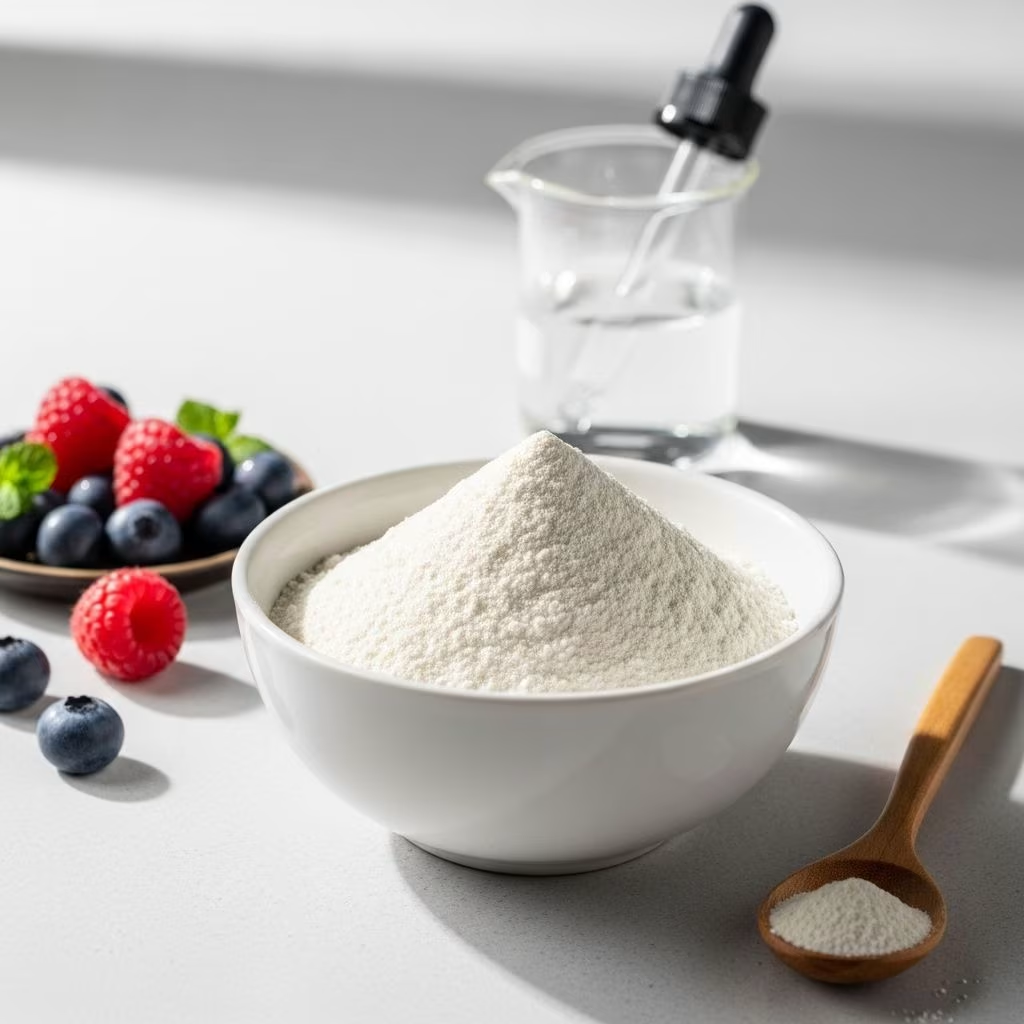
Lactalbumin, also known as alpha-lactalbumin, is a significant protein found in the milk of mammals, notable for its unique structure, physiological roles, and wide-ranging benefits for nutrition and health. This article offers a comprehensive look at lactalbumin—covering its scientific background, nutritional relevance, health benefits, uses in food and supplements, and sensory aspects, including taste and texture.
Introduction
Milk from mammals contains a range of proteins that not only nourish newborns but also serve distinct biological and functional purposes. Among these, lactalbumin—primarily the alpha isomer (α-lactalbumin)—stands out for its unique properties, vital role in lactose synthesis, and valuable amino acid content. This protein is now recognized for its applications beyond infant nutrition, including its use in high-protein foods, clinical nutrition, and supplements. Understanding lactalbumin is critical for nutritionists, food technologists, and anyone concerned about health and dietary choices.
What Is Lactalbumin?
Lactalbumin is a whey protein found in the milk of almost all mammalian species. In scientific terms, alpha-lactalbumin—also written as α-lactalbumin or LALBA—is the principal form present in milk and is encoded by the LALBA gene in humans. It is especially abundant in human, bovine (cow), and goat milk, although concentrations vary by species and lactation period.
- Chemical Structure: Alpha-lactalbumin is a relatively small protein composed of 123 amino acids with a tightly folded structure stabilized by four disulfide bridges.
- Abundance: In human milk, α-lactalbumin constitutes about 22% of total protein; in bovine milk, it is about 3.5%, forming a smaller but still nutritionally important portion.
- Physical State: In solution, it primarily exists in a calcium-bound (holo) form, which is vital for its stability and biological function.
The protein is isolated from milk or whey (the liquid part remaining after milk has been curdled and strained during cheese production) using advanced purification techniques, ensuring high nutritional quality and safety.
Nutritional Profile of Lactalbumin
Lactalbumin’s nutritional value is a reflection of its unique amino acid composition and digestibility, making it a superior dietary protein, especially for infants, children, and adults with increased protein needs.
- Essential Amino Acids: Rich in tryptophan, lysine, cysteine, and branched-chain amino acids (BCAAs) such as leucine, isoleucine, and valine, all crucial for growth, muscle building, immune support, and neurotransmitter synthesis.
- Bioactive Peptides: Upon digestion, lactalbumin releases peptides with potential prebiotic, antibacterial, antitumor, and immune-modulating activities.
- Protein Quality: Features high biological value (BV), net protein utilization (NPU), and protein digestibility-corrected amino acid score (PDCAAS)—all indicators of superior protein for human nutrition.
- Other Nutrients: Low levels of fat and lactose; high in calcium, zinc, and sulfur-containing amino acids.
| Component | WPI (Whey Protein Isolate) | WPC (Whey Protein Concentrate) |
|---|---|---|
| Protein | 90–92% | 34–80% |
| Alpha-lactalbumin (of total protein) | >28% | >28% |
| Fat | 0.5–1.0% | <10% |
| Lactose | 0.5–1.0% | <60% |
| Ash (minerals) | 2.0–3.5% | <10% |
| Total moisture | 4.0–5.0% | 4.0–5.0% |
Note: Values are typical and may vary by product and purification method.
Biological Functions
The biological significance of alpha-lactalbumin extends beyond its structural properties:
- Lactose Synthesis: Regulates the production of lactose, the main carbohydrate in mammalian milk, by acting as the regulatory subunit of lactose synthase—a complex with β-1,4-galactosyltransferase.
- Infant Nutrition and Development: Provides essential amino acids and peptides vital for growth, cognitive development, and immunity in infants.
- Calcium and Zinc Binding: Acts as a matrix for high-affinity calcium and zinc binding, potentially supporting mineral transport and bioavailability.
- Bactericidal and Antitumor Activity: Certain forms, such as HAMLET (Human Alpha-lactalbumin Made LEthal to Tumor cells), have been shown to induce apoptosis (programmed cell death) in some tumor cells and may play a role in host defense.
Health Benefits of Lactalbumin
The health-related applications and benefits of alpha-lactalbumin stem from its nutritional profile, bioactive components, and functional properties:
- High-Quality Protein for Muscle Growth: Rich in BCAAs, especially leucine, which is known to support muscle protein synthesis in both athletes and the elderly.
- Supports Infant Nutrition: Its amino acid composition is close to that of human breast milk, making it ideal for fortifying infant formulas to approximate the nutritional quality of natural milk.
- Improved Mood and Sleep: Contains a high level of tryptophan, a precursor to serotonin and melatonin, thus may help modulate mood and improve sleep quality, especially in adults.
- Immune Modulation and GI Health: Bioactive peptides derived from α-lactalbumin may strengthen the immune system and support gastrointestinal health by modulating gut flora and acting as prebiotics.
- Antioxidant and Detoxifying Effects: The cysteine content supports glutathione production, an important intracellular antioxidant.
- POTENTIAL Cancer Therapy: Early research on the HAMLET complex indicates selectivity in inducing apoptosis in tumor cells, though clinical applications are still under investigation.
Applications and Uses
Alpha-lactalbumin’s broad utility is driven by its solubility, nutritional profile, and bioactivity:
- Infant Formula Fortification: Used to mimic the protein profile of human milk and improve nutritional value for formula-fed infants.
- Medical and Clinical Nutrition: Formulations for elderly, athletes, convalescents, or individuals with protein-energy malnutrition frequently include α-lactalbumin for its high digestibility and balanced amino acids.
- Sports and Performance Nutrition: Popular in protein supplements aimed at muscle recovery, lean mass gain, or overall health support due to its BCAA content and digestibility.
- Functional Foods: Added to yogurt, beverages, protein bars, cereals, and functional snacks as a value-added protein ingredient.
- Specialized Supplements: Marketed for cognitive enhancement, sleep support, gut health, and immune modulation, sometimes as part of protein blends or focused formulations.
- Potential Pharmaceutical Uses: Under investigation for anti-cancer, antimicrobial, and immunomodulatory therapies.
Taste and Sensory Qualities
When evaluating food protein ingredients, taste and sensory appeal are important for consumer acceptance. Derived directly from milk, alpha-lactalbumin’s sensory profile is influenced by its purity, how it’s processed, and its interaction with other food ingredients.
- Flavor: Alpha-lactalbumin is generally described as mild, clean, and slightly sweet, reflecting the natural flavor of whey. It lacks the sometimes “barnyard” or bitter notes linked to other milk proteins such as beta-lactoglobulin.
- Texture: Soluble and smooth when dissolved, alpha-lactalbumin does not form gels upon heating like other milk proteins, making it ideal for clear beverages and protein-fortified foods.
- Aftertaste: Minimal or absent, which contributes to its popularity as an ingredient in high-protein shakes, bars, and infant formulas.
- Applications: Because of the milder taste, it is particularly suitable for neutral-flavored or sweet formulations (e.g., dairy-based beverages, desserts, sports drinks, protein supplements).
Sourcing, Purity, and Allergies
Lactalbumin is sourced primarily from:
- Bovine Milk and Whey: Most commercial preparations are derived from cow’s milk or isolated from cheese whey using filtration, chromatography, or precipitation methods.
- Human Milk: Not available for commercial purposes but studied for infant nutrition research.
The protein’s purity is crucial for infant formulas, medical nutrition, and certain clinical applications. Products may be labeled as Alpha-Lactalbumin Whey Protein Isolate (WPI) or Concentrate (WPC), indicating protein content and processing levels.
Allergy Considerations: While less allergenic than beta-lactoglobulin, alpha-lactalbumin is still a milk protein and can cause reactions in individuals with cow milk allergy. Products must be clearly labeled and those diagnosed with milk allergies should avoid them.
Comparison with Other Milk Proteins
| Feature | Alpha-Lactalbumin | Beta-Lactoglobulin | Casein |
|---|---|---|---|
| Source | Whey (milk – all mammals) | Whey (mainly cow milk) | Curds (milk – all mammals) |
| Allergenicity | Low-moderate | High (common allergen) | Potentially high |
| Gel Formation | Does not gel | Forms gels | Forms strong gels |
| Amino Acids | High tryptophan/BCAAs | High BCAAs | High glutamine/proline |
| Digestibility | Very high | High | Medium |
| Taste | Mild, sweet | Sometimes bitter | Mild |
| Main Use | Infant formulas, supplements | General whey products | Cheese, slow-release protein |
Frequently Asked Questions (FAQs)
Q: Is lactalbumin the same as whey protein?
A: Lactalbumin (specifically, alpha-lactalbumin) is a key component of whey protein, but whey is a mixture of several proteins, including beta-lactoglobulin, immunoglobulins, and serum albumin.
Q: Can people with lactose intolerance consume lactalbumin?
A: Lactalbumin preparations are typically low in lactose, but trace amounts may remain depending on processing. Those with lactose intolerance should choose highly purified isolates and check product labels.
Q: Is alpha-lactalbumin better than casein for muscle building?
A: Alpha-lactalbumin offers rapid digestibility and a high concentration of BCAAs, ideal for post-exercise recovery, while casein digests slowly and suits overnight protein needs.
Q: Does lactalbumin have any proven medical uses?
A: Beyond nutritional support, alpha-lactalbumin is being researched for antimicrobial, immune, and anticancer activities (such as HAMLET)—though these are not yet standard therapeutic uses.
Q: What is HAMLET and why is it important?
A: HAMLET is a folding variant of human alpha-lactalbumin that forms in acidic environments (like the stomach). It has shown the ability to induce apoptosis in tumor cells, making it of significant interest for future cancer therapy research.
References
- α-Lactalbumin – Wikipedia
- Alpha-Lactalbumin (LALBA): A Multifunctional Protein in Lactation and Beyond – ELISA kit
- Alpha-lactalbumin – ADPI
- Applications for α-lactalbumin in human nutrition – PubMed Central
References
- https://en.wikipedia.org/wiki/%CE%91-Lactalbumin
- https://www.elisakits.co.uk/blog/alpha-lactalbumin-lalba-a-multifunctional-protein-in-lactation-and-beyond/
- https://adpi.org/ingredient-resources/alpha-lactalbumin/
- https://pmc.ncbi.nlm.nih.gov/articles/PMC5934683/
- https://www.arlafoodsingredients.com/4a2eac/globalassets/afi/upcoming-events/vitafoods—downloads/alpha-lactalbumin-for-infant-nutrition-brochure.pdf


