


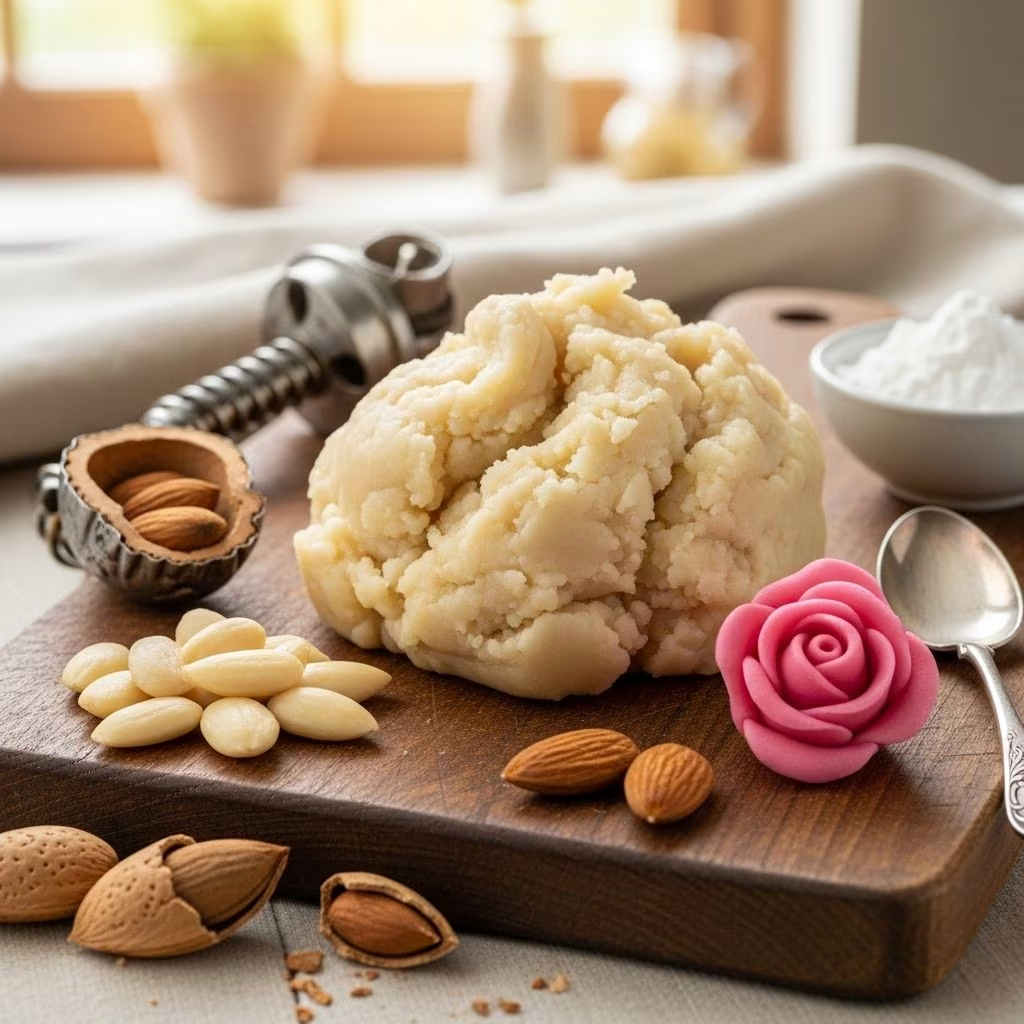
Marzipan—the rich, pliable almond paste—has delighted palates around the world for centuries. This article explores marzipan’s origins, composition, health and dietary benefits, distinct uses in culinary traditions, flavor characteristics, and frequently asked questions to fully understand what makes marzipan unique and cherished.
What Is Marzipan (Raw Paste)?
Marzipan is a sweet, pliable confection made from finely ground almonds and sugar, sometimes enhanced with a bit of almond extract or rose water. In its most basic form, marzipan is a raw almond paste that can be eaten as-is, shaped, or used as an ingredient in other confections and desserts. Traditionally, this almond paste is moulded, glazed, or colored for decorative cakes, candies, and pastries.
History and Origins of Marzipan
Marzipan’s history is rich and interwoven with global culinary traditions. Its precise origins are debated, but many historians trace it to the Middle East, later spreading through Europe, especially Italy, Germany, Spain, and France. By the Middle Ages, marzipan was a delicacy across royal courts and later became emblematic of festive and celebratory occasions in many cultures.
- Middle Eastern roots: Almond-sugar pastes have been enjoyed since the Arab expansion into Europe.
- Spread through Europe: Italian, German, and Spanish cities developed their own marzipan traditions—each with regional twists and protected recipes.
- Modern global favorite: Today, marzipan is recognized worldwide, especially in holiday baking and confectioneries.
Marzipan Ingredients and Production Process
Core Ingredients
- Almonds: The foundation of marzipan; blanched, peeled, and finely ground to make almond meal or flour.
- Sugar or sweetener: Powdered sugar is traditional, but modern recipes may use sugar alternatives like erythritol or monk fruit for ketogenic or sugar-free diets.
- Liquid binder: Usually water or sometimes natural syrups (maple, agave, rice malt) are used to bring the mixture together.
- Flavor enhancers: Almond extract (for extra almond flavor) and rose water (for a floral note), both optional but commonly used.
- Other flavorings: Orange blossom, vanilla extract, or food-grade alcohol like Grand Marnier for special variants.
Production Process
- Blanching and peeling almonds: Almonds are soaked in hot water, skins are slipped off, and they are dried completely.
- Grinding: Dried almonds are finely ground into a flour or meal. Grinding too long may release oils and affect consistency.
- Mixing with sugar: Almond meal is combined with powdered sugar, typically at a ratio of about 2:1 or 1:1, depending on taste.
- Binding: A small amount of water or syrup is added, along with any desired flavoring, and the mixture is processed until it forms a smooth, cohesive dough.
- Kneading and shaping: The marzipan is kneaded briefly to reach a satiny texture and then shaped into logs or moulded as needed.
Optional Additions
- Pinch of salt for balance
- Kosher or vegan variations by substituting ingredients
- Cocoa or melted chocolate for chocolate-flavored marzipan
Nutritional Profile and Health Benefits
Marzipan provides both indulgence and notable nutritional qualities, primarily from almonds, which are high in healthy fats, fiber, vitamins, and minerals. However, due to its sugar content, marzipan is energy dense and should be enjoyed in moderation.
| Nutrient | Per 30g serving (approx.) | Main Source |
|---|---|---|
| Energy | 120-140 kcal | Almonds, Sugar |
| Fats (total) | 5–8 g | Almonds |
| Carbohydrates | 14–18 g | Sugar, Almonds |
| Protein | 2–3 g | Almonds |
| Fiber | 1–2 g | Almonds |
| Vitamin E | ~1.5 mg | Almonds |
Potential Health Benefits
- Rich in Vitamin E: Almonds, the main ingredient, contain antioxidants and support skin and immune health.
- Provides healthy fats: Monounsaturated and polyunsaturated fats support cardiovascular health.
- High in plant protein: Almonds lend a small but valuable amount of protein.
- May be gluten-free & vegan: Traditional marzipan contains no gluten or animal products, making it suitable for many diets.
- Low-carb/sugar-free versions: Using sugar alternatives allows marzipan to fit low-carb and keto diets.
Note: Traditional marzipan contains high sugar, which may affect blood sugar and caloric intake.
Culinary Uses of Marzipan
Marzipan’s softness, moldability, and almond richness make it uniquely versatile in baking, candy making, and decorative arts. Common culinary uses include:
- Cake covering: Marzipan is rolled out and draped over cakes (notably fruitcakes and Christmas cakes) as a delicious underlayer for fondant or icing.
- Shaping and molding: Marzipan can be tinted and molded into fruits, animals, flowers, or other decorations for cakes and desserts.
- Candies and truffles: Marzipan is shaped into small balls or logs, sometimes dipped in chocolate or dusted with cocoa powder to make German ‘Marzipankartoffeln.’
- Filling: Used as a filling for pastries (Danish, croissants), chocolates, and holiday stollen.
- Eating raw: Slices of marzipan may be eaten as a sweet treat on their own.
- International desserts: Spanish mazapán, Italian frutta martorana, German marzipankartoffeln, and French pâte d’amande are all culturally significant marzipan confections.
Taste and Texture of Marzipan
| Attribute | Description |
|---|---|
| Flavor | Sweet, nutty—dominated by the rich, natural almond character, often with a floral or aromatic note from added extracts (usually almond or rose water) |
| Sweetness level | Medium to high, depending on sugar ratio; some varieties are less sweet |
| Texture | Smooth, soft, and pliable at room temperature; easily shaped and cut. Premium marzipan is never gritty. |
| Mouthfeel | Moist, slightly chewy, and melting; not oily or dry |
Benzaldehyde, a natural compound in almonds, imparts the signature almond aroma and flavor. Some industrial marzipans use bitter almonds for a stronger, more pronounced flavor.
Types and Varieties of Marzipan
- European marzipan: Variations exist in Italy, Spain, and Germany; each country uses slightly different almond-to-sugar ratios, flavorings, and techniques.
- Spanish “Mazapán”: Usually lower in almonds, sometimes mixed with egg whites.
- German marzipan: Lübeck and Königsberg marzipan are famous; often use a high proportion of almonds (up to 70%).
- Italian marzipan: Sicilian “Frutta martorana” are colorful fruit-shaped confections.
- Homemade marzipan: May be customized to dietary preferences—more or less sweet, vegan, or gluten-free.
Marzipan vs. Almond Paste: What’s the Difference?
| Marzipan | Almond Paste | |
|---|---|---|
| Texture | Smooth, firmer, moldable | Softer, coarser, less sweet |
| Almond Content | Lower (often 30-50%) | Higher (up to 60-70%) |
| Sweetness | Sweeter | Less sweet |
| Uses | Shaping, candy, decoration, covering cakes | Filling for pastries, enriched doughs |
While sometimes used interchangeably, marzipan is typically sweeter and more suited to decorative or raw applications, while almond paste is richer in almonds and often used as a baking ingredient.
Storage, Shelf Life, and Handling
- Refrigeration: Homemade marzipan lasts 10 days (water-based) or 2–3 weeks (if made with syrup) in the refrigerator.
- Freezing: Marzipan can be frozen for up to 3 months without losing texture or flavor.
- Handling tips: Always keep marzipan in airtight wrap to prevent drying out. Protect from direct sunlight to avoid rancidity from almond oil oxidation.
Frequently Asked Questions (FAQs)
Q: Is marzipan gluten-free?
A: Yes, authentic marzipan is naturally gluten-free—always check for cross-contamination and additives if you have severe gluten intolerance.
Q: Can marzipan be made vegan?
A: Absolutely! Traditional recipes use only almonds, sugar, and water or syrup, making them vegan by default. Some versions use egg white as a binder; vegan alternatives skip this ingredient or use liquid sweetener.
Q: Is marzipan suitable for people with nut allergies?
A: No. Marzipan is made chiefly from almonds, making it unsuitable for those with tree nut allergies.
Q: What is the best almond-to-sugar ratio for marzipan?
A: This varies by region and taste. Classic marzipan can range from 30% to 60% almonds by weight; more almonds yield a richer, less sweet paste.
Q: Can marzipan be colored and flavored?
A: Yes. Food coloring and appropriate extracts (e.g., vanilla, citrus, floral) are commonly used for themed decorations and custom treats.
Q: How is marzipan different from fondant?
A: While both are used to cover cakes and make decorations, fondant is sugar-based with a chewy, neutral flavor, whereas marzipan is almond-based and distinctly nutty.
Conclusion
Marzipan is a unique raw almond paste with a rich history and distinctive flavor. Its health benefits stem from almonds’ nutritional profile, and its culinary flexibility makes it a favorite worldwide. Whether eaten as a sweet treat, shaped into edible art, or used in cakes and pastries, marzipan remains a confectionery staple for celebrations and everyday indulgence alike.
References
- https://elavegan.com/homemade-marzipan-recipe/
- https://en.wikipedia.org/wiki/Marzipan
- https://www.tashasartisanfoods.com/blog/homemade-marzipan-recipe/
- https://www.daringgourmet.com/how-to-make-marzipan-almond-paste/
- https://motherwouldknow.com/how-to-make-marzipan/
- https://www.escoffier.edu/blog/recipes/what-is-marzipan-uses-recipes-techniques/
- https://germanfoods.org/german-food-facts/marzipan/
- https://foodtasia.com/almond-paste-and-marzipan/


