


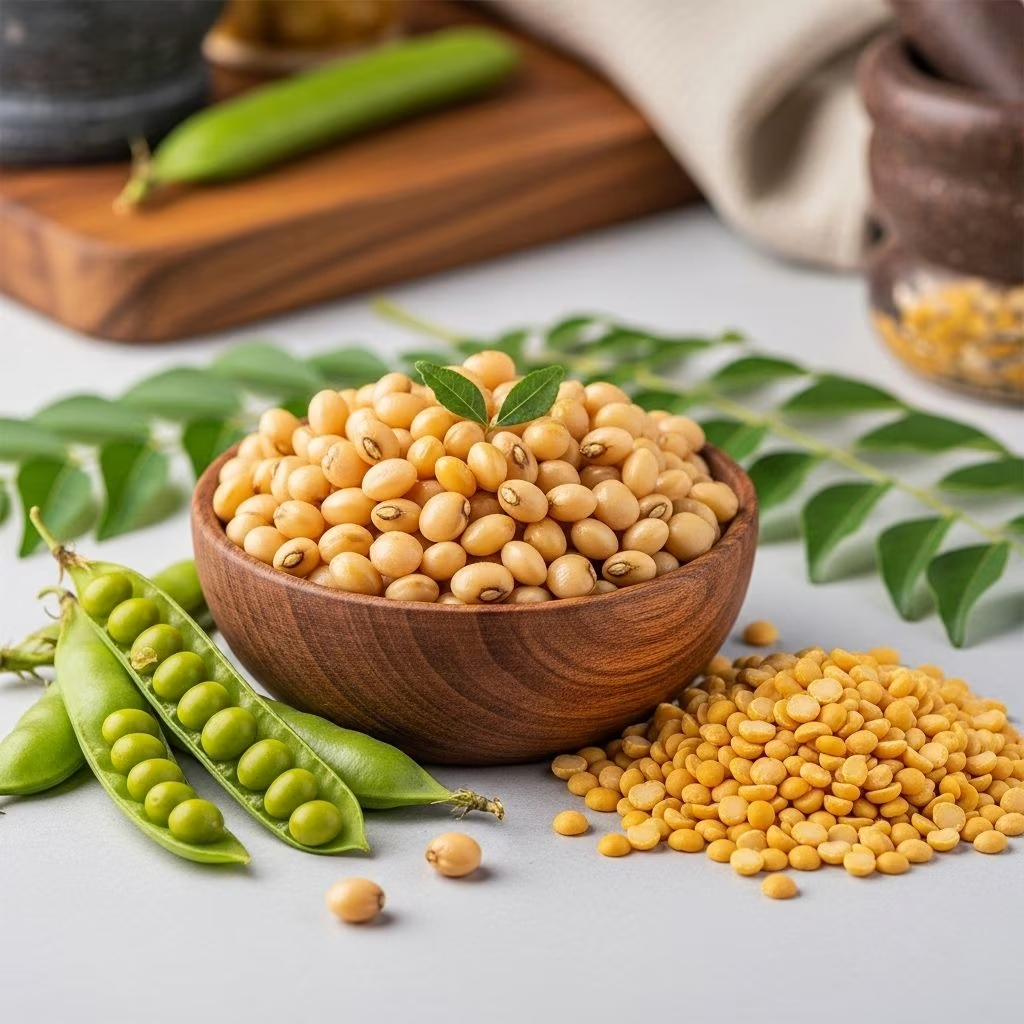
Pigeon pea (Cajanus cajan), also called red gram, Congo pea, and yellow dal, is a tropical legume celebrated for its nutritional value, culinary versatility, drought resilience, and essential role in sustainable agriculture. From the fields of India to plates worldwide, pigeon pea supports millions as a staple crop and a vital source of plant-based protein.
Pigeon Pea Overview
Pigeon pea (Cajanus cajan) is a fast-growing, highly adaptable pulse crop primarily cultivated in tropical and subtropical climates.
- Origin: Native to India and eastern tropical Africa, now grown globally in regions from South America to Southeast Asia.
- Major producer: India—about 92% of global production, reflecting its importance for food security.
- Growth conditions: Thrives in temperatures of 20–40°C, tolerates low rainfall (<625 mm annually), and is renowned for drought resistance.
This legume’s ability to prosper where other crops fail makes it vital in arid and semiarid agriculture and a reliable food source for millions.
Botanical Features and Origin
Pigeon pea is a woody shrub or small tree, often reaching up to 4 meters in height. Its botanical features contribute to its resilience:
- Root system: Deep taproot (up to 2 meters) helps access water and nutrients throughout droughts.
- Leaves: Trifoliate, lanceolate, elliptical leaflets that are evolutionarily adapted to hot climates.
- Flowers: Zygomorphic, usually yellow, with some varietal variations in color (red, purple, streaked).
- Pods & Seeds: Seedpods are 2–3.5 inches long, moderately hairy, sharp-pointed, containing 2–9 oval or round seeds. Seed colors vary from beige to dark brown.
Distribution: The deep taproot system and nodulation with rhizobia enable pigeon pea to grow in poor soils where other crops fail, enhancing its geographical range across Africa, Asia, and the Americas.
Nutritional Value
| Nutrient | Amount (per 100g dried) | Benefits |
|---|---|---|
| Protein | 20–22g | Supports muscle repair; essential amino acids for vegetarians |
| Carbohydrates | ~60g | Primary energy source |
| Dietary fiber | ~15g | Aids digestion; supports heart health |
| Fat | 1–2g | Low fat, suitable for low-fat diets |
| Iron | 5mg | Helps prevent anemia |
| Calcium | 130mg | Supports bone health |
| Potassium | ~1400mg | Regulates blood pressure & fluid balance |
| Vitamins | B vitamins (esp. B6, B9) | Cell metabolism, nerve health |
Mature and immature pigeon pea seeds both contain significant amounts of protein, carbohydrates, minerals, vitamins (notably B vitamins), and essential amino acids.
Health Benefits
- Plant-based protein: Ideal meat substitute in vegan and vegetarian diets; supports growth, maintenance, and repair.
- Rich in dietary fiber: Improves digestion, regulates blood sugar, and lowers cholesterol.
- Low glycemic index: Helps in diabetes management due to slow carbohydrate absorption.
- Micronutrient source: Iron helps prevent anemia; potassium supports cardiovascular health.
- B vitamins: Aid cell metabolism and neurological function.
- Antioxidants: Contains compounds associated with anti-inflammatory and disease-preventing properties.
- Supports satiety: High fiber and protein content promote fullness, assisting in healthy weight management.
Culinary Uses of Pigeon Pea
Pigeon pea’s flavor and nutritional value make it a star ingredient in diverse cuisines:
- India: Served as dal (split, cooked into stews or soups), used in curries, dosas, and idlis.
- Caribbean: Central to dishes like rice and peas, and soups.
- Africa: Boiled or fried, added to porridges and stews.
- Latin America: Cooked with rice, or pureed for refried peas.
Both fresh (immature) and dried (mature) seeds are edible. Immature peas are sweet and tender, used similarly to green peas, while mature ones are dried and split for stews, soups, and flour.
Popular Pigeon Pea Dishes
- Pigeon pea curry
- Dal (India)
- Rice and peas (Caribbean)
- Masala dosa batter (ground pigeon pea)
- Pigeon pea soup (Africa, Latin America)
Preparation Tips
- Soak dried pigeon peas 6–8 hours, then simmer until tender.
- Fresh peas require less cooking; ideal for salads or stir-fries.
- Pigeon pea flour used for gluten-free baking and as a thickener.
Taste and Flavor Profile
Pigeon pea offers a distinct sensory experience:
- Fresh peas: Sweet, tender, slightly nutty; comparable to green peas but heartier.
- Dried peas: Mild earthy flavor; subtle nutty undertones; dense, slightly creamy texture when cooked.
Pigeon pea’s sweetness and mildness blend well with robust spices, making it ideal for curries and rich stews. Poor quality peas (over-aged or damaged) lose sweetness and become tough.
| Form | Flavor | Best Uses |
|---|---|---|
| Fresh (Green) | Sweet, tender | Salads, stir-fries, soups |
| Dried (Mature) | Earthy, nutty, dense | Curries, stews, flour, dal |
Role in Sustainable Agriculture and Food Security
- Drought resistance: Deep roots and efficient water uptake ensure harvests during dry spells.
- Nitrogen fixation: Symbiotic relationship with rhizobia enriches soil, reducing fertilizer need.
- Soil improvement: Prevents erosion, reclaims marginal soils, and promotes biodiversity.
- Crop rotation: Used to restore fertility and break pest cycles as an intercrop with cereals.
Pigeon pea is highly valued by smallholder and subsistence farmers, supporting livelihoods and ensuring food and feed availability when other crops fail.
Growing and Harvesting Pigeon Pea
Climate and Soil Requirements
- Climate: Best suited for tropical/subtropical zones; tolerates high temperatures and low rainfall.
- Soil: Grows in various soil types, especially sandy loams, provided drainage is adequate.
Planting and Cultivation
- Plant seeds 3/4–1 inch deep, spacing 3–4 inches apart, preferably after the last frost.
- Long season crop: Harvest begins about 140 days after sowing.
- Grow as annual in regions with frost; perennial forms exist in warmer climates.
- Shrub types vary from compact to tree-like.
Harvest and Post-Harvest Handling
- Harvest when pods mature and dry; green peas picked earlier for tender use.
- Pods contain 2–9 seeds; avoid those with yellowish (aging/damaged) color.
- Dry peas stored for extended use as staple pulses.
Frequently Asked Questions (FAQs)
Q: What are the main health benefits of pigeon pea?
A: Pigeon pea is rich in protein, dietary fiber, and minerals like iron and potassium. It aids muscle and cell growth, supports digestion, helps prevent anemia, and is also low in fat, making it suitable for heart-healthy diets.
Q: Is pigeon pea suitable for vegetarians and vegans?
A: Yes, pigeon pea is a vital source of plant-based protein and essential amino acids, making it an ideal meat substitute for vegan and vegetarian diets.
Q: What is the difference between fresh and dried pigeon pea?
A: Fresh pigeon peas are green and sweet, used like green peas in salads and stir-fries. Dried ones are earthier, creamy when cooked, and serve as staple ingredients for curries, stews, and dal.
Q: Can pigeon pea improve soil quality?
A: Yes. Through root nodules and symbiosis with rhizobia bacteria, pigeon pea fixes nitrogen in the soil, enhancing fertility and supporting crop rotation schemes.
Q: Where is pigeon pea most commonly grown?
A: India is the world’s largest producer, with substantial cultivation in Africa, the Caribbean, Latin America, and Southeast Asia.
Q: What does pigeon pea taste like?
A: Fresh pigeon peas taste sweet and tender; dried peas are mild, earthy, slightly nutty, and develop a creamy texture when cooked.
Q: Does pigeon pea have other uses?
A: Beyond food, its stems and leaves can be used as forage for livestock, while its ability to fix nitrogen makes it valuable for soil restoration and erosion control.
Key Takeaways
- Pigeon pea is a versatile, protein-rich legume foundational to sustainable agriculture and diverse culinary traditions.
- With drought resistance, vital nutrients, and adaptable flavor, it supports food security and healthy diets worldwide.
- Pigeon pea’s sweet and earthy taste, high nutritional value, and agricultural benefits make it vital for present and future global food systems.
References
- https://plants.usda.gov/DocumentLibrary/plantguide/pdf/pg_caca27.pdf
- https://pmc.ncbi.nlm.nih.gov/articles/PMC8803422/
- https://aggie-horticulture.tamu.edu/vegetable/guides/specialty-vegetables/pigeon-peas/
- https://backyardnature.net/mexnat/cajanus.htm
- https://oar.icrisat.org/10485/1/Botanical%20Description%20of%20Pigeonpea.pdf
- https://en.wikipedia.org/wiki/Pigeon_pea
- https://www.merriam-webster.com/dictionary/pigeon%20pea
- https://www.ctahr.hawaii.edu/oc/freepubs/pdf/B-46.pdf


