


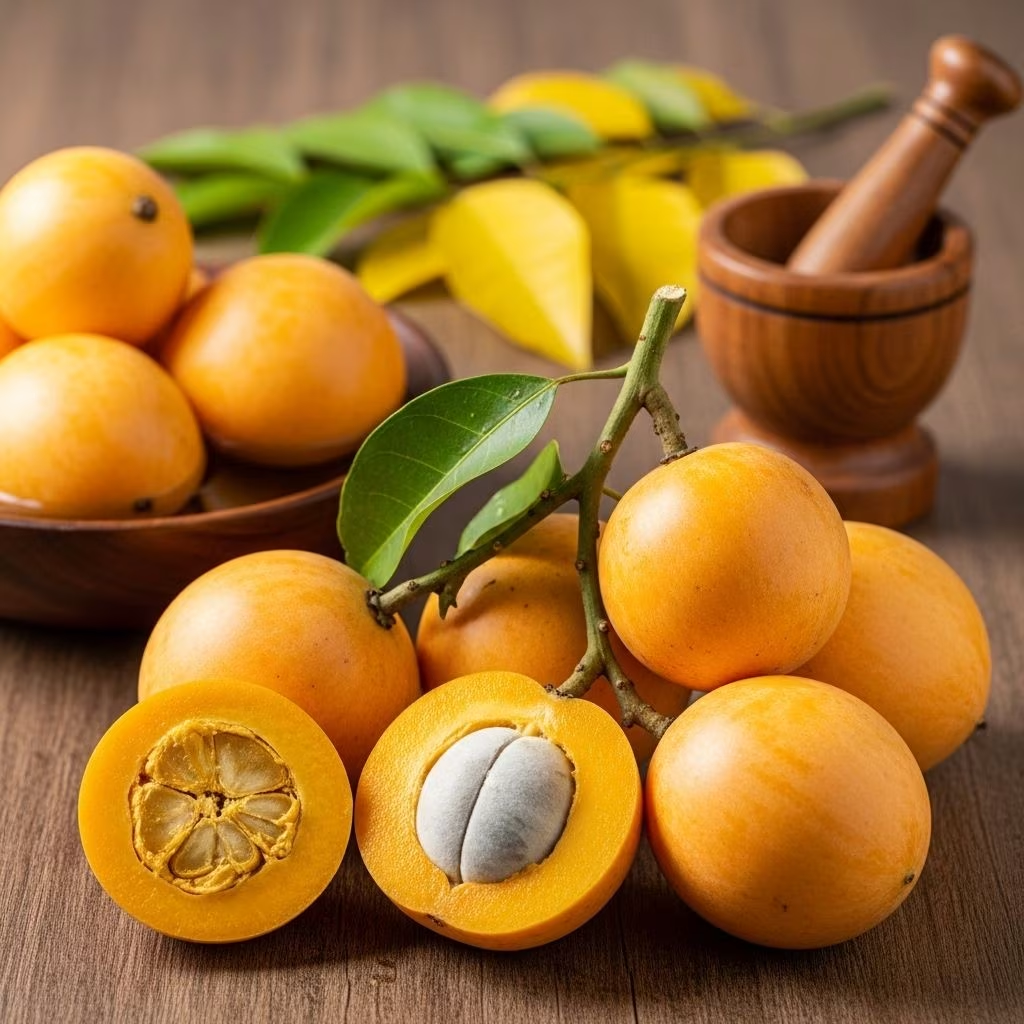
Yellow mombin, also known by names such as Spondias mombin, hog plum, amra, or cajazeira, is a fascinating tropical fruit that blends cultural history, culinary versatility, and remarkable health benefits. Native to Central and South America and widely grown in tropical climates around the world, the yellow mombin is a staple in many traditional diets and has piqued the interest of nutritionists and food lovers alike. In this comprehensive guide, discover what makes yellow mombin unique, how it’s used, its distinctive taste, and why it’s revered as a superfruit in some cultures.
Introduction to Yellow Mombin
Yellow mombin (Spondias mombin) is a tropical fruit tree in the Anacardiaceae family, originating from the Americas, particularly from southern Mexico through northern Peru and Brazil, and the West Indies. Beyond its native region, it has found a place in South Asia, West Africa, and throughout the Caribbean. The fruit is highly valued for its nutritional content, traditional remedies, and culinary applications, making it a prominent fruit in various cultures.
Botanical Profile and Plant Description
The yellow mombin tree is a medium to tall deciduous tree, reaching up to 20 meters (about 66 feet) in height with a thick, corky, and deeply fissured bark. Its branches are often whorled, and young trees may have blunt-pointed spines. The leaves are alternate, pinnate, and can grow up to 45 centimeters (about 18 inches) long, composed of 9-19 lanceolate, pointed leaflets.
During flowering season (January–May), the tree produces small, fragrant, white or purple-tinged flowers in large terminal panicles. The fruit appears from mid to late summer (July–November), dangling in clusters from the branches.
- Fruit size: 3–4 cm long, 1–2 cm wide
- Shape: Ovoid to oblong, slightly bumpy
- Skin: Thin, leathery, bright golden-yellow when ripe
- Pulp: Thin layer, juicy, translucent, very aromatic, fibrous
- Seed: Large, hard, corky central pit with spines
History and Global Distribution
Yellow mombin is native to moist lowland forests from southern Mexico through the Amazon, and throughout the West Indies. Historical evidence shows it was later introduced by the Portuguese to South and Southeast Asia, where it adapted well in tropical environments. Today, naturalized populations are found in Africa, India, Bangladesh, Sri Lanka, Indonesia, and much of the Caribbean. While it is commonly found wild or semi-wild, large-scale cultivation is rare except in parts of Brazil and Africa, where its traditional uses have commercial value.
Varieties and Related Species
Yellow mombin (Spondias mombin) should not be confused with its close relatives:
- Purple mombin (Spondias purpurea) – Distinct red or purple fruit, more widely consumed raw.
- Ambarella (Spondias dulcis) – Another Spondias species with a similar shape but a green, crunchy fruit.
Yellow mombin is sometimes called taperiba (in the Amazon), cajá (Brazil), hog plum (Caribbean), and “amra” (South Asia). The fruit’s general characteristics, such as its fibrous, acidic pulp and tough outer skin, distinguish it from these relatives.
Nutritional Content of Yellow Mombin
Yellow mombin offers notable nutritional benefits, especially for a tropical wild fruit. The following table summarizes its core nutrients per 100 grams of edible portion:
| Nutrient | Amount per 100 g |
|---|---|
| Edible pulp | 15–34% |
| Calories | 48–86 kcal |
| Protein | 0.51–1.06 g |
| Fat | 0.25–0.56 g |
| Carbohydrates | 12.3–25.6 g |
| Fiber | up to 17% |
| Vitamin C | 5.9 mg |
| Vitamin A | 37% daily value per 100g |
| Phosphorus | 35 mg |
| Calcium | 10 mg |
| Magnesium | 4 mg |
| Zinc | 0.24 mg |
The fruit is low in calories but notable for its fiber content, vitamin A (major for immunity and vision), modest vitamin C, and some essential minerals. The seed oil content is substantial (about 31.5%) but not typically consumed as food.
Health Benefits of Yellow Mombin
In many tropical societies, yellow mombin is prized as both food and medicine, and extensive folk uses underscore its health benefits.
- Rich in Vitamin A: Consuming 100g can provide around 37% of daily vitamin A needs, supporting healthy vision, skin, immune response, and reproductive health.
- Source of Fiber: Up to 17% dietary fiber helps promote gut health and regularity.
- Antioxidant Action: Its vitamin A and C content helps neutralize harmful free radicals in the body, potentially reducing the risk of chronic diseases.
- Astringent Properties: Yellow mombin pulp and leaves are naturally astringent, making them traditional remedies for digestive discomfort and mild diarrhea.
- Antipyretic and Diuretic: The juice and leaf decoctions are administered as natural fever reducers and mild diuretics in folk medicine.
- Anti-inflammatory and Wound Healing: Traditional use includes applying leaf decoctions to wounds, ulcers, and skin irritations.
- Calming Effect: Warm baths prepared with leaves are said to calm and soothe the vaginal mucosa and skin.
While some of these benefits are well-recognized in folk medicine, further scientific research is needed for confirmation.
Culinary Uses
Though not as widely eaten fresh as some other fruits, yellow mombin is cherished in local cuisines for its unique flavor and versatility. Here are some of its most popular culinary uses:
- Eaten raw: Often enjoyed fresh, especially by children and those looking for a tangy, thirst-quenching snack.
- Jams and Jellies: The pulp’s distinct acidity makes excellent jams, preserves, and jellies, balancing tartness and sweetness.
- Beverages: The fruit is juiced and used as a base for fresh juices, punches, and cool drinks. In Brazil and Amazonia, yellow mombin is often fermented to make a local “Vinho de Taperiba” or a cider-like beverage.
- Sorbets and Ice Cream: Extracted juice or pulp is made into sorbets, ice creams, and other frozen desserts.
- Pickling: In Mexico and the Caribbean, green (unripe) fruits are pickled in vinegar, consumed with chili and salt in a manner similar to olives.
- Stewing: Ripe fruits are often stewed with sugar to mellow the acidity and heighten aromatic notes.
- Alcoholic beverages: Distillation of the fermented fruit produces popular traditional spirits.
- Leaves as greens: Young leaves are sometimes cooked as a leafy vegetable in certain cultures.
Edible Parts and Food Value
Only about 15–34% of the fruit (the pulp and skin) is edible; the rest is the large, hard seed. Despite this, the bright, juicy pulp is highly aromatic and flavorful, making even small amounts desirable.
What Does Yellow Mombin Taste Like?
The flavor profile of yellow mombin is both distinctive and polarizing, combining intense tartness, faint sweetness, and rich aroma:
- Acidic and Astringent: The pulp is notably tangy, sometimes compared to a tart apricot or unripe mango, with an astringency that dries the mouth.
- Aromatic: Beyond acidity, the pulp releases a unique muskiness, often described as having tropical floral or slightly turpentine-like undertones.
- Juicy and Fibrous: The fruit is juicy but the pulp clings stubbornly to the large pit, making it somewhat laborious to eat fresh.
- Texture: When ripe, the flesh is soft, moist, semi-translucent, and fibrous.
Many people relish yellow mombin’s punchy tartness, especially when prepared with sugar or as a chilled drink, while others may find the raw fruit too intense for their palate.
Other Traditional and Medicinal Uses
- Folk Medicine: In addition to treating stomach upset and fever, leaf and bud decoctions are used externally for cleansing wounds and ulcers, owing to their astringent and antimicrobial qualities.
- Baths for Women: Mombin leaves are traditionally used in warm baths to soothe feminine health concerns, thanks to their calming action.
- Seed Oil: Although not commonly part of the diet, the seed contains about 31.5% oil, with potential uses in traditional applications and as a topical preparation.
- Animal Feed: Fallen or overripe fruits are fed to livestock; children may also snack on picked fruit while playing outdoors.
Frequently Asked Questions (FAQ)
Q: Can yellow mombin be eaten raw?
A: Yes, yellow mombin is often eaten raw, especially by children. However, due to its pronounced tartness and astringency, some prefer it stewed, sweetened, or juiced for more balanced flavor.
Q: Is yellow mombin the same as hog plum or ambarella?
A: Yellow mombin and hog plum are names for the same fruit (Spondias mombin). Ambarella (Spondias dulcis) is closely related but a distinct species with green, crunchy fruit and a different taste profile.
Q: Are there any side effects or allergies associated with yellow mombin?
A: While yellow mombin is generally safe, those allergic to related Anacardiaceae plants (such as cashew and mango) should try cautiously. Overconsumption of astringent fruit may cause digestive discomfort.
Q: How is yellow mombin used medicinally?
A: Traditional medical uses include treating wounds, reducing fever, acting as a mild laxative and diuretic, and calming skin and mucosal irritations through topical or bath application of leaf decoction.
Q: When is yellow mombin in season?
A: The fruit is typically in season from July to November, depending on the region.
Conclusion
Yellow mombin’s combination of health-promoting nutrients, household and traditional uses, unique acidic taste, and vibrant history make it a remarkable but underappreciated tropical fruit. Whether enjoyed as a refreshing drink, traditional jam, or home remedy, yellow mombin enriches lives in the regions where it grows. Its distinctive characteristics continue to inspire new culinary and wellness applications around the world, securing its place as a true superfruit of the tropics.
References
- https://azmartinique.com/en/all-to-know/fruits-vegetables/yellow-mombin
- https://en.wikipedia.org/wiki/Spondias_mombin
- https://www.growables.org/information/TropicalFruit/MombinYellowJuliaMorton.htm
- https://edis.ifas.ufl.edu/publication/MG059
- https://www.britannica.com/plant/hog-plum
- https://pfaf.org/user/Plant.aspx?LatinName=Spondias_mombin
- https://www.cabidigitallibrary.org/doi/full/10.1079/cabicompendium.51047
- https://tropical.theferns.info/viewtropical.php?id=Spondias+mombin


