


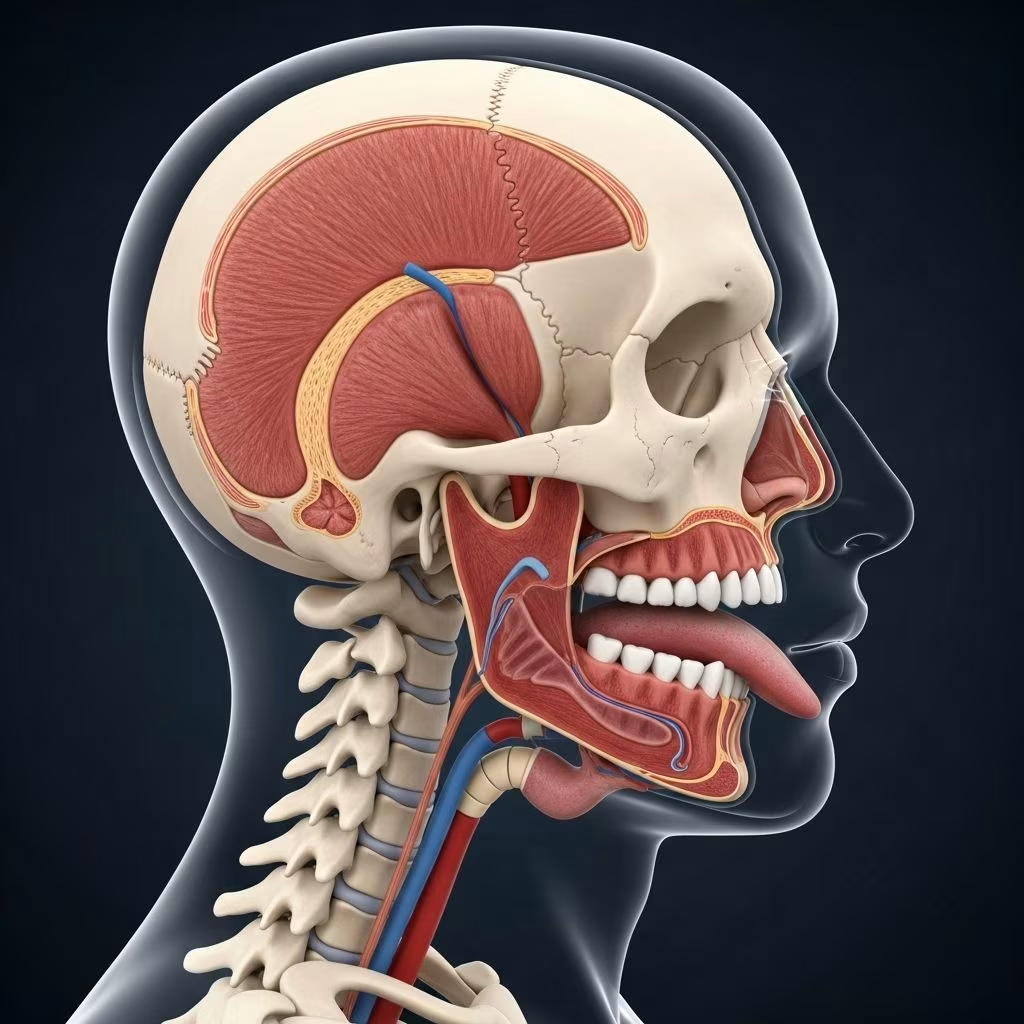
Your tongue’s resting position is a powerful but often-overlooked factor influencing the way you breathe, your facial structure, body posture, and even your sleep quality. As science uncovers more about the connection between lingual posture—the habitual placement of the tongue at rest—and functional breathing mechanics, it becomes clear that small, subtle muscular habits can have profound effects throughout life. This guide explains the anatomy, physiology, benefits, and actionable strategies to harness your tongue and breath for lasting health and vitality.
Understanding Lingual Posture
Lingual posture refers to the habitual placement of the tongue against the palate (roof of the mouth) or floor of the mouth when at rest—not while swallowing or speaking. Optimal lingual posture supports healthy orofacial development, airway patency, and efficient breathing. Suboptimal posture, such as the tongue resting at the mouth’s floor, can contribute to poor facial growth patterns, compromised breathing, and postural deviations.
Components of Lingual Posture
- Tip Placement: The tip of the tongue should rest lightly just behind the upper front teeth (incisive papilla), but not touch the teeth themselves.
- Mid and Back Tongue: The middle and rear portions of the tongue gently press against the entire palate, spanning from front to back.
- Lips and Teeth: Lips remain gently sealed, and the teeth are either lightly touching or slightly apart—never clenched.
- Jaw Relaxation: Jaw muscles remain at rest, facilitating nasal breathing.
Anatomy of the Tongue
The tongue is a muscular hydrostat composed of intrinsic (verticalis, transverse, longitudinal muscles) and extrinsic muscles (genioglossus, styloglossus, hyoglossus, palatoglossus). The genioglossus is especially pivotal for dilating the airway during inspiration, moving the lower part of the tongue forward to keep airways open during rest and sleep.
Functional Breathing Mechanics: Foundations and Physiology
Functional breathing mechanics refer to the efficient, natural movement of air through the nasal passages and lungs, supported by optimal diaphragm and orofacial muscle engagement. Effective breathing is nearly always through the nose and synchronized with the tongue’s proper resting posture, resulting in improved oxygenation, nervous system regulation, and physical development.
- Nasal vs. Oral Breathing: Nasal breathing filters, humidifies, and warms air, supports nitric oxide production, and maintains proper pressure differentials in the airway. Mouth breathing disrupts these processes, dries oral tissues, and undermines correct tongue posture.
- Diaphragmatic Breathing: Efficient breathing should primarily involve the diaphragm, not upper chest or accessory muscles. Proper tongue posture stabilizes oropharyngeal structures, facilitating diaphragmatic engagement.
The Tongue’s Role in Airway Patency and Breathing
The tongue is integral to upper airway patency (keeping the airway open) and is a highly adaptive muscular organ. Its position during breathing is critical:
- When the tongue rests against the palate, it forms and shapes the upper dental arch, supports the maxilla, and stabilizes oropharyngeal tissues.
- The genioglossus muscle (main tongue dilator) is activated slightly before the start of airflow, moving the tongue anteriorly and keeping the airway open during inspiration.
- Electromyographic (EMG) activity in the tongue increases airway stiffness and prevents collapse, especially during sleep and quiet breathing.
| Muscle | Action | Breathing Relevance |
|---|---|---|
| Genioglossus | Protrudes and depresses tongue | Main dilator; keeps airway open during inspiration |
| Geniohyoid | Draws hyoid bone forward | Aids in airway dilation |
| Palatoglossus | Elevates posterior tongue | Assists in swallowing and airway maintenance |
| Styloglossus | Retracts and elevates tongue | Shapes airway during swallowing/breathing |
Consequences of Poor Lingual Posture
If the tongue habitually rests at the mouth’s floor or presses against teeth, the following health impacts may occur:
- Mouth Breathing: Disrupted oxygen intake, dry mouth, increased risk of oral infections, and altered facial growth.
- Forward Head Posture: The head compensates for poor oropharyngeal alignment by jutting forward, resulting in neck and shoulder tension.
- Malocclusion and Dental Crowding: Poor lingual pressure allows teeth to drift, increasing the risk of overbite, crossbite, and crowded dentition.
- Snoring and Sleep Disruption: Collapsed or floppy airway tissues contribute to snoring, sleep apnea, and poor sleep quality.
- Suboptimal Facial Development: Cheeks become flatter, jawlines slacken, and maxillary growth may be stunted.
Benefits of Proper Tongue Posture
- Supports Nasal Breathing: Ensures the lips are sealed and the airway is optimized for nose breathing, reducing daytime fatigue and sleep disruption.
- Facilitates Balanced Facial Growth: Consistent tongue-palate contact shapes the maxilla and jaw, promoting symmetry and stronger facial features.
- Enhances Spinal and Head Alignment: Proper tongue posture reduces upper body strain, helping correct forward head and neck posture.
- Improves Oral Health: Helps prevent teeth grinding (bruxism), supports natural dental spacing, and decreases gum disease risk.
- Reduces Stress and Improves Sleep: Nasal breathing associated with correct tongue posture activates the parasympathetic nervous system, lowering stress levels and enhancing sleep quality.
How to Achieve and Maintain Proper Tongue Posture
1. The Basics of Mewing
Mewing is a widely recognized method that emphasizes correct tongue posture as the foundation of facial development and airway health:
- With mouth closed, gently press the entire tongue (not just the tip) against the roof of the mouth, creating even pressure from front to back.
- Lips remain closed but relaxed; teeth slightly apart.
- Practice nasal breathing at all times; do not clench or strain.
- Initial sensations of fatigue or tension are normal and will decrease with practice.
2. Functional Habits
- Regularly self-check your tongue position throughout the day.
- Be mindful during activities such as reading or working—these are common times for poor posture to develop.
3. Professional Tools and Therapies
- Consider medical devices (such as a functional activator) for retraining tongue posture, especially in children or those struggling with consistent practice.
- Consult orofacial myologists, orthodontists, or physical therapists specializing in airway and posture for individualized assessment and coaching.
The Link Between Breathing Mechanics and Tongue Posture
The relationship between tongue posture and breathing is bidirectional: Correct tongue posture facilitates nasal breathing by ensuring the airway remains open and reducing air resistance; nasal breathing, in turn, supports proper tongue habits.
Respiratory-Related Muscle Activity
Studies reveal that the tongue actively adapts to breathing phases, especially via the genioglossus muscle. This muscle stiffens and advances the tongue during inspiration, directly countering upper airway collapse and reducing snoring or sleep apnea risk.
The ability of the tongue to reshape the airway during breathing is detailed in the concept of the muscular hydrostat: contraction or compression redistributes tissue volume to maintain or open the airway, an effect critical during sleep and relaxation.
Frequently Asked Questions (FAQs)
What is the quickest way to test if I have proper tongue posture?
With your mouth closed and teeth slightly apart, try to rest your entire tongue against the roof of your mouth. If the tongue tip or back droops or pushes against the teeth, practice repositioning. Lips should remain sealed, and breathing should be comfortable through your nose.
Can poor tongue posture really affect my facial appearance?
Yes, over time, suboptimal tongue position can contribute to less defined jawlines, flatter cheeks, and crowded teeth, especially if established during developmental years.
Does mouth breathing always mean my tongue posture is wrong?
Mouth breathing is often both a cause and a consequence of poor tongue posture. Cultivating nasal breathing helps retrain the tongue to rest against the palate, restoring natural orofacial growth patterns and airway health.
Can improving tongue posture help my posture and reduce neck pain?
Improved tongue posture supports proper jaw alignment and head position, which can, in turn, reduce forward head posture and associated neck or upper back tension.
Is there an age limit for improving lingual posture and breathing mechanics?
While children are most responsive to improvements in posture and facial growth, adults can benefit from retraining tongue posture and breathing mechanics, experiencing better sleep, oral health, and postural stability at any age.
References
Proper Tongue Posture for Mewing: Complete Guide – Posturepro
Movement of the tongue during normal breathing in awake healthy … – PMC
References
- https://posturepro.co/blogs/post/proper-tongue-posture-benefits-guide
- https://pmc.ncbi.nlm.nih.gov/articles/PMC2652195/
- https://www.healthline.com/health/tongue-posture
- https://pmc.ncbi.nlm.nih.gov/articles/PMC6390887/
- https://www.alluredentalcenter.com/mouth-breathing-tongue-posture
- https://www.ladydentistanchorage.com/does-tongue-position-affect-breathing/
- https://www.breathe4sport.co.uk/post/correct-tongue-posture
- https://breatheworks.com/services/exploring-low-tongue-resting-posture/
- https://www.youtube.com/watch?v=Wle9Rq8dK0k


