


Table of Content
- Introduction
- Enso Symbolism
- Practice of Drawing Enso
- Benefits of Zen Practice
- Daily Practice
- Frequently Asked Questions (FAQs)
Introduction
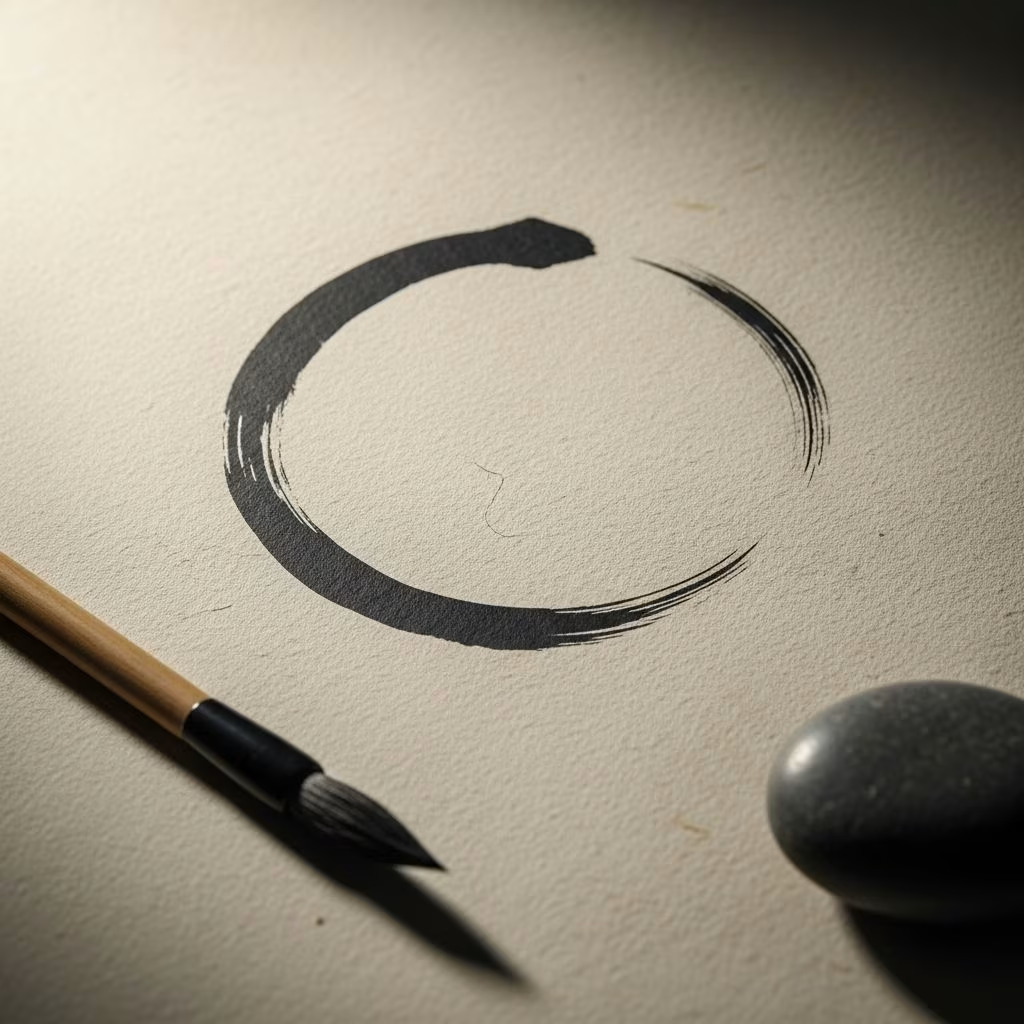
Zen Enso circles, also known as Ensō (円相), are a symbol of Enlightenment in Zen Buddhism. The term \”Ensō\” means \”circular form\” and is deeply rooted in Japanese calligraphy and art. These circles are often drawn in a single, fluid brushstroke, embodying the principles of mindfulness and meditation. The practice of drawing Enso circles is a reflection of the Zen concept of “no-mind” or mu-shin, where the mind is free from conscious thought during the creative process.
Enso Symbolism
The Enso symbol represents several profound concepts within Zen Buddhism:
- Enlightenment: The circle signifies the state of enlightenment or Buddhahood, often compared to a full moon or a great round mirror in Buddhist teachings.
- Emptiness and Freedom: It symbolizes the empty or unconditioned state of reality, reflecting freedom from the constraints of the conditioned mind.
- Strength and Elegance: The Enso embodies strength due to its simplicity and elegance, reflecting the powerful yet refined nature of Zen practice.
Historically, the Enso was first painted by the Chinese Zen Master Kyozan (814-890), marking the beginning of its use as a visual teaching tool in Zen Buddhism.
Practice of Drawing Enso
Drawing an Enso circle is a spiritual practice known as hitsuzendō, which combines meditation and art. Traditionally, it involves using a circular brush on thin Japanese rice paper (washi) in a single, swift stroke. This practice is meant to capture the practitioner’s state of being at the moment of creation, emphasizing the importance of living in the present.
Tools and Techniques
The tools used for drawing Enso circles are similar to those used in traditional Japanese calligraphy:
- Brush: A circular brush is preferred for its expressive and fluid strokes.
- Paper: The paper used is typically washi, which is highly absorbent and allows for deep ink penetration.
Techniques
The Enso can be drawn in various styles, reflecting the individuality of each artist. Common techniques include:
- Single Stroke: Drawing the circle in one continuous, uninhibited stroke.
- Open or Closed Circles: The circle may be left open or closed, symbolizing different philosophical concepts. An open circle signifies imperfection and potential for growth, while a closed circle represents unity and completeness.
Benefits of Zen Practice
Engaging in Zen practices, including drawing Enso circles, offers several profound benefits:
- Mindfulness and Focus: It enhances mindfulness by encouraging practitioners to be fully present in the moment.
- Emotional Balance: Zen practice helps in regulating emotions and achieving a state of inner peace.
- Creativity and Self-Expression: Drawing Enso circles allows for a unique form of self-expression and creativity, promoting personal growth.
Daily Practice
Incorporating Zen Enso circles into daily life can be as simple as dedicating a few minutes each day to this meditative practice. Here’s how to start:
- Find a Quiet Space: Identify a peaceful area where you can meditate without distractions.
- Set Your Tools: Use a brush and Japanese rice paper if possible, or any other medium that feels comfortable.
- Meditate Before Drawing: Take a few moments to calm your mind and center yourself.
- Draw the Circle: Execute the circle in one swift motion, focusing on the present moment.
- Reflect: After completing the circle, take a moment to reflect on your experience and emotion.
Frequently Asked Questions (FAQs)
Q: What is the significance of the Enso circle in Zen Buddhism?
A: The Enso circle symbolizes enlightenment, strength, and the true nature of reality, representing a moment of perfect unity and freedom from the conditioned mind.
Q: How do I start practicing drawing Enso circles?
A: Begin by creating a peaceful environment for meditation, gather your tools (brush and paper), and focus on drawing the circle in one fluid stroke while being fully present in the moment.
Q: Can I use any material to draw Enso circles?
A: While traditional materials like washi and a circular brush are preferred, you can use any medium that allows you to express yourself freely, such as drawing in the air or on different types of paper.
References
- https://www.buddhistchannel.tv/index.php?id=5%2C13335%2C0%2C0%2C1%2C0
- https://theartofzen.org/the-enso-circle-in-zen-symbolism-and-artistry/
- https://www.lionsroar.com/what-is-an-enso/
- https://en.wikipedia.org/wiki/Ens%C5%8D
- https://www.hellagood.life/the-enso-circle-or-zen-circle-for-modern-living/
- https://thematterhorn.substack.com/p/xx-art-of-zen-enso
- https://safety4sea.com/cm-enso-circle-letting-go-of-the-mind/
- https://fiveable.me/key-terms/history-japan/enso-circle
- https://inkandescent.us/january-soul-zen-circles/


