


- Understanding Wabi-Sabi Philosophy
- The Seven Aesthetic Principles of Wabi-Sabi
- Mindful Creative Expression Fundamentals
- Integrating Wabi-Sabi in Creative Practice
- Artistic Applications and Mediums
- Benefits and Personal Transformation
- Practical Exercises and Techniques
- Frequently Asked Questions
Understanding Wabi-Sabi Philosophy
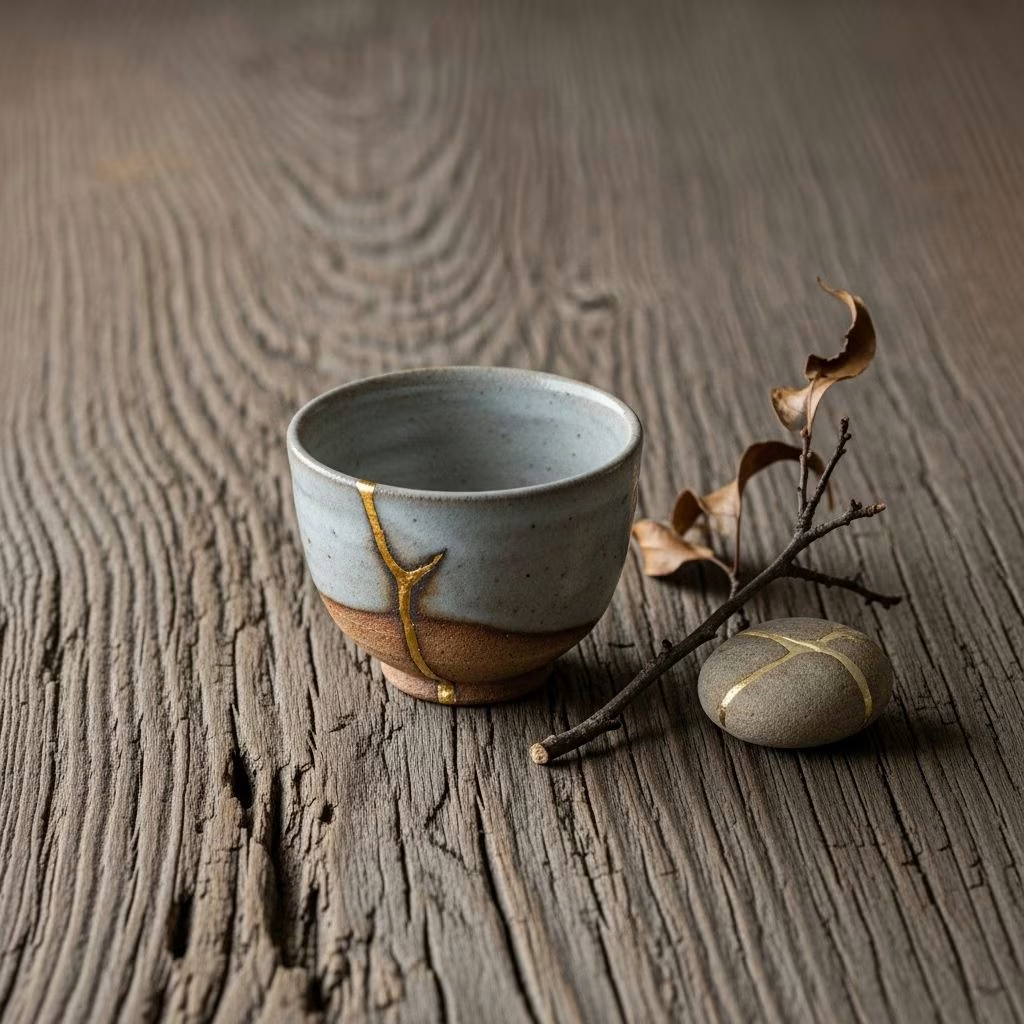
Wabi-Sabi represents a profound Japanese aesthetic philosophy that finds extraordinary beauty in the ordinary, imperfect, and transient aspects of existence. This ancient wisdom offers a revolutionary approach to creative expression that stands in stark contrast to contemporary society’s obsession with perfection and material excess.
The term itself combines two distinct yet complementary concepts. Wabi embodies simplicity, humility, and harmony with nature, representing a conscious choice to embrace minimalism and spiritual richness over material abundance. Sabi refers to the natural patina of time, celebrating how objects and experiences develop character and beauty through age, wear, and the inevitable passage of time.
In the context of creative expression, Wabi-Sabi invites artists to abandon the pursuit of flawless execution and instead embrace the authentic, spontaneous, and imperfect qualities that make art genuinely human. This philosophy transforms the creative process from a struggle against limitations into a celebration of them, recognizing that our perceived flaws and imperfections are precisely what give our work depth, character, and emotional resonance.
The Seven Aesthetic Principles of Wabi-Sabi
The foundation of Wabi-Sabi creative expression rests upon seven fundamental aesthetic principles, each offering unique insights into how we can approach our artistic practice with greater mindfulness and authenticity.
| Principle | Japanese Term | Creative Application |
|---|---|---|
| Asymmetry | Fukinsei | Embrace off-center compositions and irregular forms |
| Simplicity | Kanso | Eliminate unnecessary elements, focus on essence |
| Austerity | Shibumi | Use restraint, avoid excessive decoration |
| Naturalness | Shizen | Allow organic development without forcing outcomes |
| Grace | Yugen | Cultivate subtle depth and mysterious beauty |
| Freedom | Datsuzoku | Break conventional rules and expectations |
| Tranquility | Seijaku | Create spaces of peace and contemplation |
Fukinsei: The Power of Asymmetry
Fukinsei challenges our conventional understanding of balance by finding beauty in irregularity and asymmetry. In mindful creative expression, this principle encourages artists to resist the urge to create perfectly balanced compositions, instead allowing natural imbalances to create visual interest and emotional depth. This asymmetrical approach mirrors nature itself, where perfect symmetry rarely exists yet harmony prevails.
Kanso: Embracing Simplicity
Kanso advocates for the elimination of clutter and the celebration of emptiness as a creative force. In practice, this means learning to say more with less, allowing negative space to breathe life into compositions, and recognizing that what we choose to omit is often as important as what we include.
Shibumi: The Art of Restraint
Shibumi represents refined elegance achieved through subtlety rather than ostentation. This principle guides creators toward understated beauty, encouraging the development of sophisticated taste that appreciates nuance over spectacle.
Mindful Creative Expression Fundamentals
Mindful creative expression represents the conscious integration of awareness, intention, and acceptance into the artistic process. When combined with Wabi-Sabi principles, it creates a powerful framework for authentic creative work that honors both the process and the inevitable imperfections that arise during creation.
Present-Moment Awareness
The foundation of mindful creativity lies in cultivating present-moment awareness throughout the creative process. This means fully engaging with each brushstroke, each word, each movement without rushing toward a predetermined outcome. By remaining present, creators can notice and appreciate the subtle variations, happy accidents, and unexpected developments that occur naturally during the creative process.
Acceptance of Impermanence
Wabi-Sabi teaches that all things are impermanent, incomplete, and imperfect. In creative practice, this translates to accepting that no work of art will ever be “perfect” in the conventional sense, and that this imperfection is not a failure but rather the source of the work’s humanity and emotional impact.
Non-Attachment to Outcomes
Mindful creative expression requires developing non-attachment to specific outcomes while maintaining clear intention. This paradoxical approach allows creators to work with focused energy while remaining open to unexpected developments and changes in direction.
Integrating Wabi-Sabi in Creative Practice
Successfully integrating Wabi-Sabi principles into creative practice requires both philosophical understanding and practical application. This integration transforms not only the final creative output but also the entire creative experience, making it more fulfilling, authentic, and spiritually enriching.
Cultivating Beginner’s Mind
Approaching each creative session with beginner’s mind allows for fresh perspectives and prevents the ego from imposing rigid expectations. This mindset encourages experimentation, playfulness, and the discovery of beauty in unexpected places.
Working with Natural Materials and Processes
Whenever possible, incorporating natural materials and processes into creative work helps embody the Wabi-Sabi principle of Shizen. Natural materials age, change, and develop character over time, reflecting the impermanent nature of all existence while adding authenticity to creative expressions.
Embracing Mistakes as Teachers
In Wabi-Sabi creative practice, mistakes are not obstacles to overcome but teachers that reveal new possibilities. Each unintended mark, unexpected color mixture, or structural irregularity becomes an opportunity to explore new creative territories and develop greater flexibility in artistic expression.
Artistic Applications and Mediums
Wabi-Sabi principles can be applied across virtually all creative mediums, each offering unique opportunities to explore imperfection, simplicity, and transience in meaningful ways.
Visual Arts
In painting, drawing, and sculpture, Wabi-Sabi manifests through intentional imperfections, weathered textures, and compositions that celebrate asymmetry. Artists might allow paint to drip naturally, embrace the texture of aged canvas, or incorporate materials that show signs of wear and time.
Literary Arts
Writers can embody Wabi-Sabi through authentic voice, imperfect characters, and narratives that reflect the messy complexity of real life. This might involve leaving certain plot threads unresolved, embracing ambiguity, or finding beauty in ordinary, overlooked moments.
Performance Arts
In music, dance, and theater, Wabi-Sabi appears through improvisation, acceptance of technical imperfections, and the celebration of human vulnerability. Performers learn to work with rather than against their limitations, finding ways to transform technical challenges into expressive opportunities.
Digital Arts
Even in digital mediums, creators can embody Wabi-Sabi principles by introducing organic randomness, working with low-resolution elements, or deliberately incorporating glitches and artifacts as aesthetic elements rather than problems to be solved.
Benefits and Personal Transformation
Practicing Wabi-Sabi principles in creative expression offers profound benefits that extend far beyond artistic improvement, touching every aspect of personal growth and life satisfaction.
Reduced Creative Anxiety
By releasing the pressure to create perfect work, artists often experience significant reductions in creative anxiety and perfectionist paralysis. The acceptance of imperfection as beautiful and valuable removes the fear of failure that prevents many people from fully expressing their creativity.
Enhanced Authentic Expression
Wabi-Sabi encourages creators to express their true selves rather than conforming to external standards of perfection. This authenticity leads to more meaningful and personally satisfying creative work that resonates deeply with both creator and audience.
Increased Creative Flow
When creators stop fighting against imperfections and instead work with them, they often discover a more natural creative flow. Ideas develop organically, techniques emerge intuitively, and the creative process becomes more enjoyable and sustainable.
Deeper Appreciation for Process
Wabi-Sabi shifts focus from product to process, helping creators find joy and meaning in the act of creation itself rather than only in the finished result. This process-centered approach makes creative practice more fulfilling and less dependent on external validation.
Practical Exercises and Techniques
Developing proficiency in Wabi-Sabi creative expression requires consistent practice with specific exercises designed to cultivate the necessary mindset and skills.
Imperfection Meditation
Begin each creative session with a five-minute meditation focused on accepting imperfection. Visualize creating something beautiful that contains visible flaws, and practice feeling grateful for those imperfections rather than frustrated by them.
One-Session Completion
Create works that must be completed in a single session, preventing the tendency to over-perfect and allowing natural spontaneity to emerge. This exercise builds comfort with imperfection and develops trust in intuitive creative decisions.
Natural Material Exploration
Work exclusively with materials that age, weather, or change over time. Clay that cracks as it dries, paper that yellows with age, or metal that develops patina all embody Wabi-Sabi principles while teaching creators to work with rather than against natural processes.
Asymmetrical Composition Practice
Deliberately create compositions that violate traditional rules of balance and symmetry. Practice finding beauty in off-center arrangements, uneven distributions, and intentionally imbalanced designs.
Minimalist Reduction
Start with complex compositions or ideas, then systematically remove elements until only the most essential remain. This exercise develops discernment about what truly serves the creative expression and what merely adds unnecessary complexity.
Frequently Asked Questions
Q: How can beginners start incorporating Wabi-Sabi into their creative practice?
A: Begin by consciously embracing one “mistake” in each creative session as a beautiful element rather than correcting it. This simple shift helps develop comfort with imperfection while building appreciation for authentic creative expression.
Q: Does Wabi-Sabi mean being sloppy or careless in creative work?
A: Not at all. Wabi-Sabi involves mindful attention to the creative process while releasing attachment to conventional perfection. It’s about conscious acceptance of natural imperfections rather than careless execution.
Q: Can Wabi-Sabi principles apply to commercial creative work?
A: Yes, many successful commercial artists incorporate Wabi-Sabi principles by creating authentic, imperfect work that resonates emotionally with audiences. The key is finding clients who value authenticity over conventional perfection.
Q: How long does it take to develop comfort with imperfection in creative work?
A: The timeline varies by individual, but most practitioners notice increased comfort with imperfection within 2-3 months of consistent practice. Full integration of Wabi-Sabi principles often develops over several years of mindful creative practice.
Q: What’s the difference between Wabi-Sabi and simply being lazy in creative work?
A: Wabi-Sabi involves mindful presence and intentional acceptance of natural imperfections, while laziness represents inattention and lack of engagement. True Wabi-Sabi practice requires deep attention to the creative process and conscious choice-making.
References
- https://catherinevalentin.com/en/blogs/infos/la-philosophie-wabi-sabi-et-le-minimalisme
- https://www.omaritani.com/blog/wabi-sabi-philosophy-teachings
- https://danslegris.com/blogs/journal/7-japanese-zen-aesthetic-principles-that-define-wabi-sabi
- https://spiritofjapantours.com/zen-philosophy-of-life/
- https://twatanabe.faculty.wesleyan.edu/the-philosophy-of-wabi-sabi-by-quentin-rollet-2021/
- https://www.carnegielibrary.org/staff-picks/wabi-sabi-the-japanese-art-of-finding-the-beauty-in-imperfections/
- https://www.psychologytoday.com/us/blog/meditation-modern-life/202108/adopting-the-japanese-wabi-sabi-philosophy
- https://philarchive.org/rec/FALTPO-16
- https://slowlivingldn.com/journal/interiors/wabi-sabi-what-we-can-learn/


