


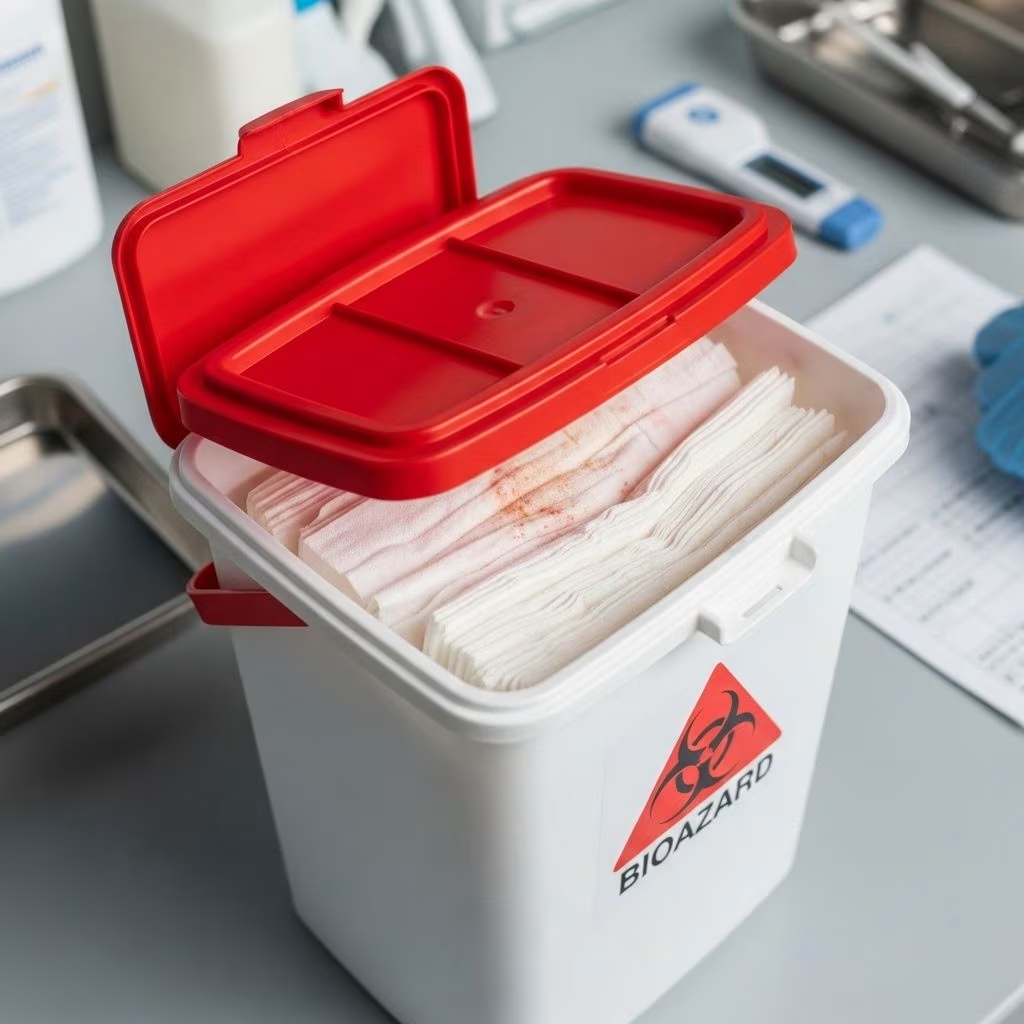
Introduction
Millions of tons of medical waste, including used tissues, are generated annually worldwide. Proper disposal is crucial for safeguarding public health, preventing infections, following legal requirements, and minimizing environmental damage. This article provides a comprehensive overview of best practices, regulatory guidelines, and safe technologies for handling used tissues and all classes of medical waste.
What is Medical Waste?
Medical waste refers to any by-product from health care, research, or veterinary laboratories that may potentially be infectious, hazardous, or environmentally damaging. It includes items such as used tissues, sharps, blood-soaked materials, pharmaceuticals, contaminated equipment, chemicals, and pathological specimens.
Examples of sources:
- Hospitals and clinics
- Dental offices
- Veterinary clinics
- Home health care
- Research laboratories
Used tissues, though common in households, are classified as potentially infectious waste when contaminated with blood or respiratory secretions, especially during outbreaks (e.g. influenza, COVID-19).
Why Proper Disposal Matters
Improper handling of used tissues and medical waste can result in:
- Spread of infectious diseases—viruses, bacteria, and other pathogens may contaminate surfaces or become airborne.
- Needle-stick injuries—improper disposal of sharps leads to injury and risk of infection for waste handlers.
- Environmental contamination—hazardous chemicals, heavy metals, or pharmaceuticals may leach into soil and water.
- Regulatory penalties—non-compliance with legal requirements can result in fines or legal actions.
Effective disposal protects medical staff, waste handlers, and the broader community from preventable harm.
Types & Classification of Medical Waste
Medical waste is classified into several categories based on risk, chemical nature, and regulatory requirements.
- Infectious Waste: Items contaminated with blood, body fluids, or cultures (e.g., used tissues, dressings, gloves)
- Sharps: Needles, syringes, scalpel blades, broken glass
- Pathological Waste: Human tissues, organs, body parts
- Pharmaceutical Waste: Expired, unused, or contaminated medications
- Chemical Waste: Laboratory chemicals, disinfectants, solvents
- Radioactive Waste: Used in diagnostic imaging or cancer therapy (e.g., radioactive isotopes)
- General Waste: Similar to domestic refuse, not hazardous
Used tissues typically fall under general infectious waste unless visibly soiled with blood or highly pathogenic agents, in which case higher-level containment is needed.
How to Dispose of Used Tissues
Even outside clinical environments, proper disposal of used tissues helps prevent disease spread, particularly in homes, schools, offices, and public places.
- At Home:
- Place used tissues directly into lined, covered waste bins.
- Wash hands immediately after handling used tissues.
- Frequently empty household waste bins, especially during illness outbreaks.
- Double-bagging is recommended if tissues are contaminated with blood or respiratory secretions (e.g. during colds or flu).
- Dispose in general municipal waste unless local regulation specifies otherwise.
- In Healthcare Facilities:
- Dispose of tissues that are contaminated or soiled in designated biohazard bags (usually red, leak-resistant).
- Refer to facility protocols for handling and segregation.
- In Public Spaces:
- Encourage use of closed waste bins.
- Post signage about the importance of safe disposal.
- Regularly disinfect public bin surfaces.
Do not:
- Flush used tissues in toilets (causes plumbing blockages; waste treatment issues).
- Leave used tissues exposed in open containers or on surfaces.
Legal & Regulatory Requirements
Medical waste management is governed by strict legal frameworks that dictate collection, transport, treatment, and disposal. Compliance ensures environmental protection and worker safety.
Key authorities include:
- U.S. Environmental Protection Agency (EPA)
- Department of Transportation (DOT)
- Occupational Safety and Health Administration (OSHA)
- State and local environmental agencies
Regulated medical waste must be properly labeled, contained in designated bags or containers, and transferred using licensed waste carriers. Failure to comply can result in substantial penalties.
Segregation and Safe Containment
Proper segregation is a primary step in safe medical waste management. Facilities and users should:
- Separate hazardous and non-hazardous waste at the point of generation.
- Use color-coded and clearly labeled containers (e.g., red for infectious, yellow for pathological, blue/white for recyclables).
- Employ puncture-proof containers for sharps and highly hazardous materials.
- Seal and secure waste containers to prevent leakage and accidental exposure.
Labeling requirements:
- Include biohazard symbols and relevant details.
- Mark containers with the facility name, address, and date.
- Comply with DOT and state requirements for shipping and manifests.
Modern Medical Waste Disposal Methods
Medical waste is processed using several advanced methods to reduce infection risk and minimize environmental impact:
- Autoclaving:
– Waste is placed in an autoclave and treated with high-pressure steam for 20–30 minutes, killing pathogens. This is the most common method for infectious and non-pathological waste.
– The autoclaved waste is compacted for landfill or waste-to-energy facilities. - Chemical Disinfection:
– Chlorine or similar chemicals neutralize microorganisms in liquid and some solid wastes.
– Treated waste may then be disposed of as regular garbage if rendered non-infectious. - Incineration:
– Waste is burned at temperatures above 1600°F.
– Used primarily for pathological waste, pharmaceuticals, and items not suitable for steam treatment.
– Incineration turns waste into inert ash and prevents contaminants from leaching into soil or water. - Microwaving:
– Waste is shredded, mixed with water, and exposed to microwaves, killing pathogens.
– Effective for most infectious and laboratory wastes. - Encapsulation:
– Used for sharps and items prone to puncturing.
– Materials are sealed in puncture-proof, leak-resistant containers before landfill disposal.
After treatment, non-infectious materials go to landfills or waste-to-energy plants, converting some waste into clean electricity by high-temperature combustion in a closed-loop system.
| Method | Best for | Key Advantages | Limitations |
|---|---|---|---|
| Autoclaving | Microbiological, most infectious waste | Highly effective; eco-friendly | Not suitable for pathological/chemical waste |
| Chemical Disinfection | Liquid, chemical-contaminated waste | Fast for liquids; low energy | Less suited for solids; chemical residue |
| Incineration | Pharmaceuticals, pathological waste | Complete destruction; reduces volume | Emissions concerns; costly |
| Microwaving | Small-scale, non-pathological waste | Quick; effective for many types | Requires pre-shredding; not for all waste |
| Encapsulation | Sharps, needles, broken glass | Prevents injury; secure landfill disposal | Does not destroy pathogens |
Environmental Considerations & Innovations
Modern waste management aims to minimize harm to the environment. Key strategies include:
- Waste Reduction: Encourage alternatives to single-use items and segregation of recyclables.
- Recyclable Packaging: Many facilities use reusable or recyclable containers (e.g., FDA-cleared, reusable sharps containers).
- Waste-to-Energy: Converting non-hazardous treated waste to electricity in closed-loop systems reduces landfill pressure and offsets carbon footprint.
- Monitoring & Compliance: Waste management partners provide tracking, shipping details, and compliance documentation to fulfill regulatory obligations and enable audits.
Public awareness and innovation continue to drive safer, greener solutions for medical waste disposal, such as biodegradable packaging and mobile treatment units for remote areas.
Frequently Asked Questions (FAQs)
Q: Can used tissues be recycled?
A: No, used tissues cannot be recycled due to potential contamination with infectious materials. Dispose as general waste unless otherwise directed by local health authorities.
Q: What should I do if I accidentally touch another person’s used tissue?
A: Immediately wash your hands with soap and water, or use hand sanitizer if water is unavailable. Avoid touching your face until your hands are clean.
Q: Are household waste bins sufficient for disposing of used tissues during illness outbreaks?
A: Yes, provided the waste bin is lined and covered, and contents are emptied regularly. Double-bagging is preferred if tissues are visibly contaminated; always practice hand hygiene after disposal.
Q: How are sharps like needles disposed of?
A: Place sharps in puncture-proof, leak-resistant containers approved for medical waste; never throw sharps in regular trash or recycling. Follow local guidelines for disposal sites or pick-up services.
Q: What are the penalties for improper medical waste disposal?
A: Legal penalties vary by jurisdiction and can include fines, shutdowns, or criminal prosecution for gross negligence, especially in healthcare settings.
Q: Is incineration safe for the environment?
A: Modern incinerators are equipped with emissions control technology; while they address certain waste issues, they should be used with careful regulation to avoid pollution.
Q: Are home medical waste treatments recommended?
A: No. Onsite treatment is only suitable for facilities with specialized equipment and legal oversight. Households should follow local collection services and never attempt to treat or burn waste themselves.
Conclusion
Proper disposal of used tissues and medical waste is critical for public health, staff safety, and environmental stewardship. By following legal requirements, best practices, and adopting new technologies, individuals and organizations can reduce risk and contribute to a safer community. Regular education, vigilance, and innovation remain essential as waste streams and public health risks evolve.
References
- https://blog.idrenvironmental.com/medical-waste-disposal-methods
- https://www.hazardouswasteexperts.com/medical-waste-disposal-methods/
- https://www.stericycle.com/en-us/resource-center/info-sheet/medical-waste-cycle-understanding-the-5-stages
- https://www.cdc.gov/infection-control/hcp/environmental-control/regulated-medical-waste.html
- https://www.epa.gov/rcra/medical-waste
- https://www.who.int/news-room/fact-sheets/detail/health-care-waste
- https://www.cdph.ca.gov/Programs/CEH/DRSEM/Pages/EMB/MedicalWaste/MedicalWaste.aspx
- https://www.youtube.com/watch?v=hCnThtBNeuc
- https://www.uclahealth.org/safety/hazmat/medical-waste-management-waste-streams


