


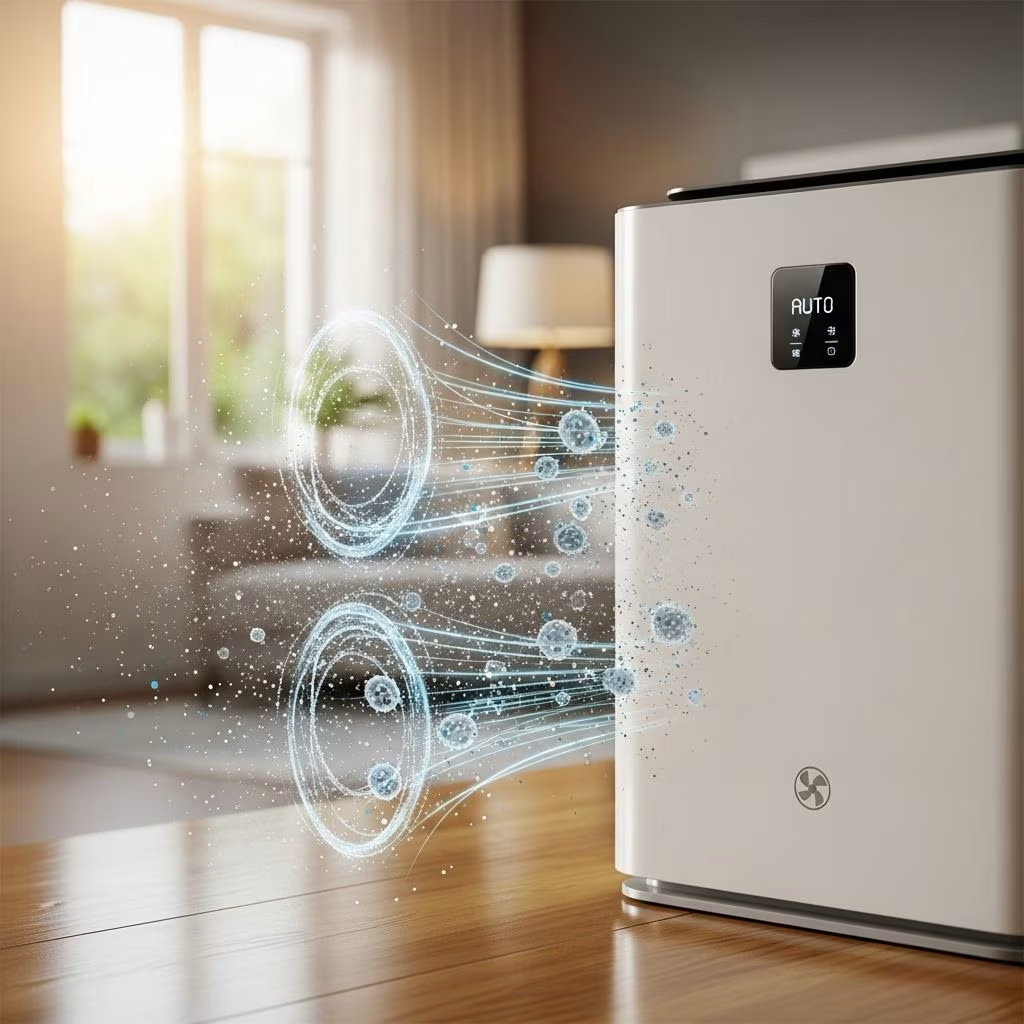
HEPA Air Filtration for Airborne Illness Prevention: Enhancing Indoor Health
Indoor air quality is a growing public health priority, especially in light of airborne illnesses like influenza, COVID-19, and other contagious respiratory infections. High-Efficiency Particulate Air (HEPA) filtration has emerged as a leading technology in mitigating airborne disease transmission. This article comprehensively explores HEPA filtration, its mechanisms, effectiveness against infectious aerosols, practical applications, limitations, and guidance for optimal selection and use.
What is HEPA Filtration?
HEPA (High-Efficiency Particulate Air) filters are specialized air filtration devices designed to remove at least 99.97% of airborne particles as small as 0.3 microns in diameter. This standard is set by agencies like the United States Environmental Protection Agency (EPA) and reflects the highest levels of filtration currently widely available for consumer, medical, and commercial use.
HEPA filters differ from ordinary mesh or fabric filters by using a pleated matrix of densely-packed, randomly-arranged fibers. This structure creates a tortuous pathway for air to move through, maximizing exposure to filter fibers and enhancing particle capture.
Mechanisms: How HEPA Filters Capture Airborne Particles
HEPA filters combine three primary mechanisms to ensure effective filtration:
- Impaction: Larger particles, including dust and droplets, are unable to navigate the bends of the intricate fiber matrix and directly collide with the filter fibers, becoming stuck.
- Interception: Particles that follow the air stream closely can come into contact with fibers and get trapped.
- Diffusion: Smaller particles move erratically, increasing their likelihood to collide with and adhere to fibers as they pass through.
These mechanisms enable HEPA filters not only to catch larger contaminants like dust and pollen but also to capture smaller, more dangerous particles including many bacteria and even viral aerosols.
| Particle Capture Mechanism | Targeted Particle Size | Examples of Captured Contaminants |
|---|---|---|
| Impaction | > 1 micron | Dust, pollen, droplets, mold spores |
| Interception | ~0.3 micron | Bacteria, dust mites, fine particulate matter |
| Diffusion | < 0.3 micron | Some viruses, smoke, ultrafine particles |
Airborne Illnesses and Transmission Routes
Airborne illnesses are those that spread primarily through infectious droplets or particles suspended in air. These may originate from coughing, sneezing, talking, or even breathing. Common airborne pathogens include:
- Influenza viruses
- SARS-CoV-2 (COVID-19)
- Common cold viruses (e.g., rhinovirus)
- Tuberculosis (Mycobacterium tuberculosis)
- Varicella (chickenpox)
- Bacteria causing pneumonia, meningitis, and other infections
Transmission occurs via respiratory droplets (typically >5 microns), aerosols (≤5 microns), and droplet nuclei (ultrafine, can stay airborne for hours). Filtration of these airborne particles is crucial, especially in shared indoor environments where aerosol transmission is a risk.
HEPA Effectiveness in Indoor Air Quality and Illness Prevention
Numerous scientific studies confirm the effectiveness of HEPA filtration in dramatically reducing concentrations of airborne particles, including those that carry infectious agents.
- Residential studies show HEPA use reduces indoor particulate matter by 55% to 95%, improving air quality and lowering risks of respiratory infections and asthma exacerbations.
- School-based research highlights significant reductions in allergy and asthma symptoms with HEPA filtration, especially in high-risk populations.
- Hospital and laboratory evidence supports the role of HEPA filtration in minimizing the spread of respiratory viruses and multidrug-resistant bacteria.
HEPA’s 99.97% removal efficiency for 0.3 micron particles covers most bacteria, many virus-laden droplets, and allergenic substances. Recent advances show that HEPA filters may be even more effective at capturing sub-micron particles, including viral aerosols, due to the physical principles of diffusion and interception.
Laboratory and Real-World Evidence
The practical impact of HEPA filtration depends on real-world factors, such as environmental conditions and particle size distribution.
- In controlled studies, HEPA air purifiers reduced indoor particle levels by 12% to 73% across size ranges from 0.25 to 10 microns.
- The greatest reductions were seen for allergens and large droplets, but significant removal of smaller aerosolized particles was also observed.
- The effectiveness varies by air purifier design, flow rate, and environmental contamination sources, but HEPA generally outperforms other technologies for bioaerosol removal.
Types of Particles Filtered by HEPA Systems
HEPA filters are proven to remove a diverse range of airborne contaminants, including:
- Dust (household, environmental)
- Pollen
- Pet dander
- Mold spores
- Bacteria (including those responsible for respiratory tract illnesses)
- Viral droplets (such as influenza, coronaviruses, and RSV when carried on droplet nuclei)
- Smoke and ultrafine particles
Some viruses and bacteria are smaller than the standard 0.3 micron tested for HEPA filters, but they are often attached to larger droplets or dust particles which are efficiently removed by HEPA systems. For direct sub-micron virus capture, HEPA is substantially more effective than standard home or HVAC filters.
Applications: Where HEPA Filtration is Used
HEPA filtration technology is now incorporated across a wide spectrum of environments where airborne illness prevention is critical:
- Residential homes: Bedrooms, living spaces, children’s rooms for allergy and illness mitigation
- Schools and childcare facilities: Reducing absenteeism and asthma prevalence among students
- Hospitals and healthcare settings: Operating rooms, isolation units, waiting areas, and laboratories
- Commercial offices: Enhancing workplace air quality and employee well-being
- Laboratories and research facilities: Providing sterile environments and minimizing infectious risk
- Public transport and airplanes: Limiting spread during travel
Increasingly, HEPA filtration is combined with advanced HVAC systems and smart air purifiers for whole-building protection against airborne contaminants.
Limitations and Complementary Technologies
Despite exceptional particle capture capabilities, HEPA filtration has certain limitations:
- Does not neutralize living organisms: While HEPA filters trap bacteria and viruses, they do not kill them. Trapped microbes remain viable unless combined with sterilization technologies.
- May not capture all volatile organic compounds (VOCs): Chemicals and gases often require additional filtration, such as activated carbon.
- Limited effectiveness against direct person-to-person droplet transmission: Close-range exposure still requires masks and distancing.
For enhanced protection, HEPA filtration is often paired with:
- UV germicidal irradiation (UVGI): Destroys DNA of trapped pathogens
- Activated carbon filters: Remove gases, odors, VOCs
- MERV-rated pre-filters: Extend HEPA lifespan by removing larger debris
- Proper ventilation: Ensures continued supply of fresh outdoor air
Choosing the Right HEPA Filter
For optimal airborne illness prevention, consider these criteria when selecting a HEPA filtration system:
- Certified “True HEPA”: Meets or exceeds 99.97% efficiency at 0.3 microns
- Appropriate air flow rate: Matches room size and desired exchanges per hour
- Quiet operation: Suitable for continuous use in living or working spaces
- Combined filtration technologies: For specialized needs (e.g., hospital-grade sterilization)
- Ease of maintenance: Accessible filter changes and clear replacement schedules
| Feature | Importance | Remarks |
|---|---|---|
| True HEPA Certification | Critical | Guarantees 99.97%+ efficiency at 0.3 microns |
| Room Coverage | High | Should cover entire area for protection |
| Maintenance Schedule | High | Ensures continued performance |
| Noise Level | Moderate | Important for bedrooms, offices |
| Additional Features | Variable | UV, carbon, remote monitoring if needed |
Maintenance and Best Practices
To ensure ongoing protection against airborne illness, follow these best practices for HEPA filter systems:
- Replace filters at the manufacturer’s recommended intervals (usually every 6–12 months)
- Use pre-filters when possible to extend HEPA lifetime
- Clean units and air intake areas regularly
- Do not attempt to wash or vacuum HEPA filters (can damage fibers)
- Monitor air quality to assess effectiveness and maintain healthy environments
Frequently Asked Questions (FAQs)
Q: Do HEPA filters capture viruses directly?
A: Most viruses are smaller than 0.3 microns, but HEPA filters still capture many viral particles because they travel attached to droplets or dust that are within the filter’s range. HEPA filters can effectively reduce viral load in indoor environments when used as part of a broader illness prevention strategy.
Q: Are HEPA filters suitable for allergy sufferers?
A: Yes. HEPA filters are particularly effective for individuals with allergies, asthma, or respiratory conditions due to their ability to capture allergens like pollen, dust mites, pet dander, and mold spores.
Q: Can I install a HEPA filter in my existing HVAC system?
A: Many modern HVAC systems allow for HEPA filter retrofitting, but the system must be compatible with the required airflow resistance. Portable HEPA units are an alternative for homes without central HVAC.
Q: Do HEPA filters require professional installation?
A: Small portable HEPA air purifiers can be installed and maintained by homeowners, while commercial or hospital-grade systems may require professional evaluation and setup.
Q: How often should HEPA filters be replaced?
A: Replacement frequency varies by manufacturer, air quality, and usage, but typically ranges from every 6 to 12 months for most residential units.
Key Takeaways
- HEPA filtration removes at least 99.97% of particles ≥0.3 microns, covering many bacteria, viral droplets, and allergens.
- Well-designed HEPA systems are valuable for preventing airborne illness in homes, schools, workplaces, and healthcare settings.
- For comprehensive protection, combine HEPA filtration with proper ventilation and complementary technologies (UV, carbon).
- Maintenance and proper selection are essential for continued effectiveness in disease mitigation and indoor air quality improvement.
References
- https://www.filtertime.com/news/the-ultimate-guide-to-hepa-air-filters-do-they-really-work
- https://alen.com/blogs/fresh-air-101/hepa-filters-understanding-types-efficiency-levels-and-effectiveness-in-air-purification
- https://www.iso-aire.com/blog/what-is-a-hepa-filter-and-how-does-it-work
- https://www.airoasis.com/blogs/articles/research-reveals-how-effective-hepa-air-purifiers-really-are-at-removing-indoor-pollutants
- https://pmc.ncbi.nlm.nih.gov/articles/PMC8449022/
- https://www.hepacart.com/blog/clean-air-the-effectiveness-of-hepa-filtration-systems-in-healthcare
- https://allergyasthmanetwork.org/news/hepa-help-hype/
- https://aaqr.org/articles/aaqr-23-08-oa-0202
- https://www.panasonic.com/global/hvac/nanoe/stories/hepa_filter.html


