


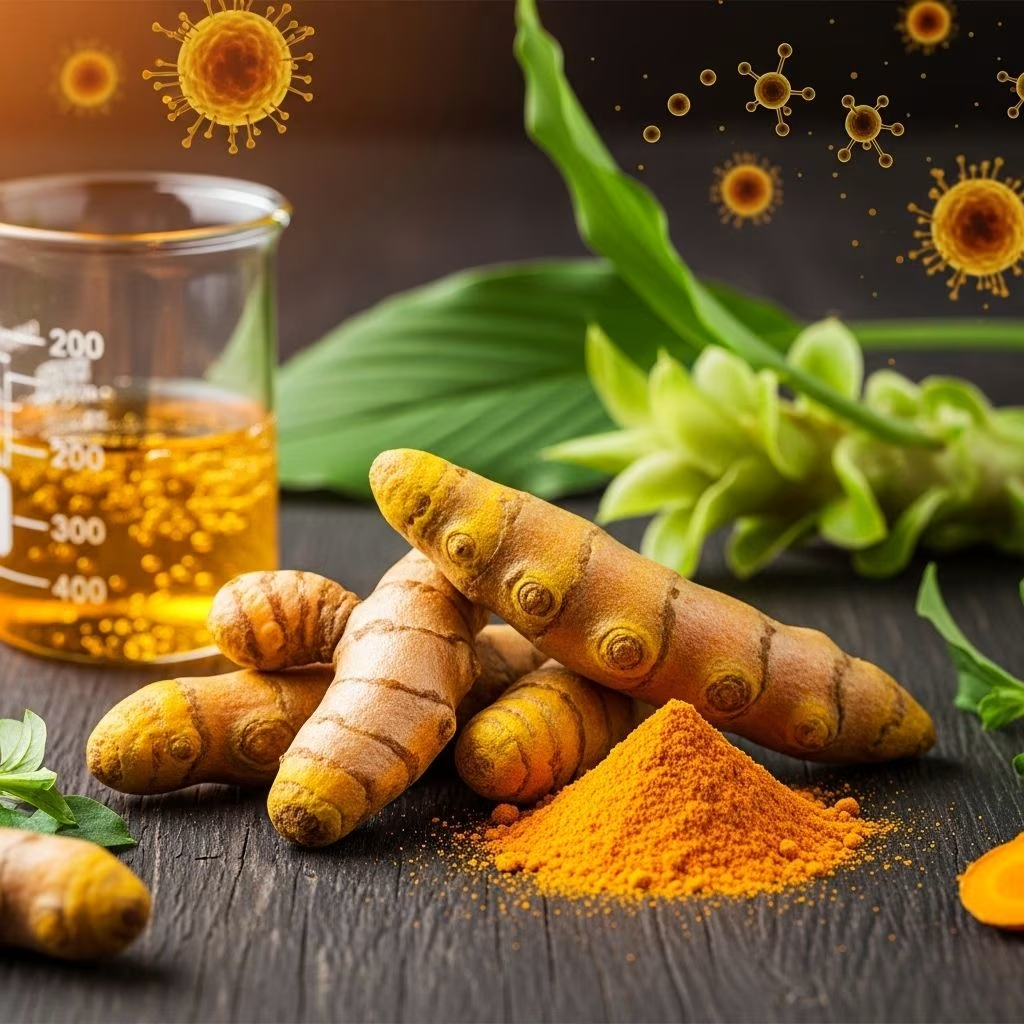
Turmeric, a bright yellow spice native to South Asia, has a long tradition of use in cooking and healing. Its most active component, curcumin, has gained significant scientific attention for its remarkable anti-inflammatory properties—especially in the management of acute inflammation. This article delves into the science, benefits, usage, and safety profile of turmeric and curcumin in addressing acute inflammatory conditions.
What is Inflammation?
Inflammation is a biological response of the immune system to harmful stimuli such as pathogens, injuries, or toxins. It is classified into two main types:
- Acute inflammation: Short-term, occurs within minutes or hours, and is vital for healing—symptoms include redness, swelling, heat, pain, and loss of function.
- Chronic inflammation: Persistent and may contribute to various diseases, including arthritis and cardiovascular conditions.
Acute inflammation serves as a protective mechanism; however, when excessive or unresolved, it can become pathological and require intervention.
Turmeric and Curcumin: An Overview
Turmeric (Curcuma longa) is a rhizomatous plant of the ginger family, widely used in Asian cuisine and traditional medicine. Its characteristic yellow color comes from curcuminoids, of which curcumin is the most biologically active.
- Curcumin typically comprises 2-8% of turmeric by weight.
- Turmeric powder contains other bioactive compounds with potential health effects, but curcumin is credited with most anti-inflammatory actions.
- Curcumin is available in various supplement forms, including standardized extracts, capsules, and powders.
Traditional Uses Versus Modern Research
Historically, turmeric was used for digestive ailments, skin issues, respiratory conditions, and wound healing. Modern research has focused on curcumin’s mechanism of action and its role in managing specific inflammatory conditions, both acute and chronic.
Curcumin’s Mechanisms Against Acute Inflammation
Curcumin exerts its anti-inflammatory effect through several molecular pathways. Key mechanisms include:
- Inhibition of pro-inflammatory mediators: Curcumin reduces levels of cytokines such as IL-1, IL-6, IL-8, IL-17, TNF-α, and MCP-1, all of which orchestrate inflammation’s amplification and propagation .
- Modulation of signaling pathways: Curcumin regulates central inflammatory signaling, such as:
- NF-κB (nuclear factor kappa B)
- AP-1 (activator protein 1)
- MAPK (mitogen-activated protein kinase)
- JAK/STAT (Janus kinase/signal transducer and activator of transcription)
- Impact on immune cells: Curcumin rebalances pro-inflammatory Th17 cells and inflammation-suppressing Treg cells, favoring immune homeostasis .
- Decreased expression of enzymes and mediators: Downregulates inducible nitric oxide synthase (iNOS), COX-2, and matrix metalloproteinases (MMPs), reducing tissue damage and inflammatory pain .
| Action | Effect |
|---|---|
| Inhibits cytokines (IL-1, IL-6, TNF-α, etc.) | Lessens inflammatory cell signaling |
| Blocks NF-κB, MAPK, AP-1 activation | Prevents transcription of inflammation-related genes |
| Reduces prostaglandins and leukotrienes | Decreases swelling and pain |
| Regulates Th17/Treg cell balance | Maintains immune equilibrium |
| Suppresses MMPs and enzymes | Protects tissues from degradation |
Scientific Evidence: Curcumin in Acute Inflammation
Several animal studies, cellular studies, and human trials support curcumin’s efficacy in mitigating acute inflammatory responses:
- Animal Models: Rats with induced joint inflammation showed reduced inflammatory markers, swelling, and pain after curcumin administration. Protective effects were noted on cartilage and synovial tissues .
- Cellular Studies: Curcumin downregulated inflammatory cytokines in immune cells and suppressed the NLRP3 inflammasome, reducing the production of IL-1β and other key mediators .
- Clinical Trials: In randomized, placebo-controlled trials, curcumin supplementation (e.g., 80 mg curcumin nano-micelle daily) led to significant reductions in C-reactive protein (CRP) and TNF-α, both hallmarks of systemic inflammation in humans .
Specific evidence also highlights curcumin’s role in:
- Reducing musculoskeletal pain after injury or intense exercise.
- Relieving abdominal pain and improving comfort in inflammatory bowel disease flare-ups .
- Decreasing the activity of inflammatory pathways in acute asthma and other respiratory conditions .
Clinical Relevance: Key Points
- Curcumin reduces multiple inflammatory mediators simultaneously, which can be more effective than single-target drugs for acute episodes.
- Effects are supported by biological plausibility and increasingly by clinical research, although more large-scale trials are needed.
Dosage, Bioavailability, and Supplement Options
While dietary turmeric can deliver curcumin, supplements are often used to achieve therapeutic levels in acute inflammation management. Key considerations:
- Dosage: Curcumin doses in studies range from 80 mg/day (as nano-micelles) up to 2 g/day in standard extract form.
- Bioavailability Issues: Curcumin has naturally low absorption. Formulations with piperine (black pepper extract), liposomes, or nanoparticles greatly enhance its systemic levels.
- Formulation Types: Popular forms include capsules, tablets, powders, and emulsions. Clinical trials often use standardized extracts with 95% curcuminoids.
- Dietary Sources: Traditional dishes use turmeric powder, generally providing much lower levels compared to supplementation.
Bioavailability Enhancement Table
| Formulation | Bioavailability Gain* |
|---|---|
| Standard curcumin | Baseline |
| Curcumin + piperine | Up to 2000% increased absorption |
| Curcumin nanoparticles / micelles | Substantially improved (varies by technology) |
| Phospholipid complexes (e.g., Meriva) | 3-5 times increased |
*Values are approximations based on published data.
Practical Applications and Safety Considerations
Curcumin and turmeric are generally recognized as safe when consumed at recommended doses.
- Common Benefits Reported:
- Reduced pain and inflammation in acute joint injuries and post-exercise recovery.
- Reduced inflammatory response during infections and respiratory illnesses.
- Potential reduction in duration and intensity of inflammatory flare-ups.
- Safety Profile:
- Adverse effects are rare but can include gastrointestinal upset, nausea, or diarrhea at high doses.
- Potential interaction with blood thinners and diabetes medications.
- Pregnant or breastfeeding individuals should consult healthcare providers before use.
Long-term use beyond several weeks should be supervised by a healthcare professional, especially in individuals with chronic health conditions.
When to Consider Turmeric/Curcumin for Acute Inflammation?
- As a complementary approach for joint pain, muscle soreness, or traumatic injury.
- During acute flare-ups of inflammatory bowel disease (with doctor’s supervision).
- To support medical therapy in acute respiratory or infectious inflammatory states.
Comparing Curcumin with NSAIDs and Conventional Treatments
| Aspect | Curcumin/Turmeric | NSAIDs (e.g., Ibuprofen) |
|---|---|---|
| Primary Mechanism | Multi-targeted anti-inflammatory action | Cyclooxygenase (COX) inhibition |
| Common Uses | Supplement for inflammation, adjunct in pain relief | Acute pain, fever, inflammation |
| Onset of Action | Slower (days to weeks) | Rapid (hours) |
| Side Effects | Usually mild (mainly GI disturbances) | Gastric ulcers, bleeding, renal strain |
| Suitability for Chronic Use | Safer | Potentially harmful |
Curcumin and turmeric provide a milder, multi-pathway anti-inflammatory effect, suitable for long-term use or as an adjunct to traditional therapy. NSAIDs, though faster-acting, carry more risks with prolonged use.
Frequently Asked Questions (FAQs)
Q: Can turmeric or curcumin help with acute injuries?
A: Yes, studies show curcumin can reduce inflammation and pain in acute joint and muscle injuries, although its effect may be milder and slower than conventional medications. It is often used as an adjunct to standard care, especially for individuals seeking natural or long-term options.
Q: What is the best way to take curcumin for acute inflammation?
A: For acute inflammation, standardized curcumin extracts (ideally with piperine or formulated for enhanced bioavailability) are preferable over dietary turmeric. Doses used in studies typically range from 80 mg (nano-form) to 1–2 g per day, but consult a healthcare professional for personalized advice.
Q: Is turmeric safe for everyone?
A: Turmeric is generally safe, but people with gallbladder disease, bleeding disorders, or those on blood-thinning medications should consult with a healthcare provider. Pregnant and nursing women should also seek medical advice before using high-dose supplements.
Q: Are curcumin supplements better than turmeric powder?
A: Most clinical studies use concentrated, standardized curcumin extracts, which deliver higher and more predictable dosages than culinary turmeric powder. Enhanced absorption formulations like those with piperine or micelles are particularly effective for therapeutic purposes.
Q: How long does it take to see effects?
A: Benefits may appear within a few days for mild inflammation, but more significant improvements—particularly for joint or systemic inflammatory symptoms—may take 1–2 weeks of consistent use.
Summary
Turmeric and its active ingredient curcumin offer a safe, natural, and scientifically backed approach to managing acute inflammation. By targeting multiple inflammatory pathways, curcumin helps modulate the body’s response, offering relief for joint, muscle, and gut-related inflammatory conditions. For those with acute or recurring inflammation, curcumin—especially in enhanced supplement forms—can be a valuable adjunct to traditional medical therapies when used under appropriate professional guidance.
References
- https://pmc.ncbi.nlm.nih.gov/articles/PMC8572027/
- https://pmc.ncbi.nlm.nih.gov/articles/PMC10111629/
- https://newsnetwork.mayoclinic.org/discussion/mayo-clinic-q-and-a-turmeric-for-healthier-diet-pain-relief/
- https://www.health.harvard.edu/staying-healthy/turmeric-benefits-a-look-at-the-evidence
- https://healthcare.utah.edu/healthfeed/2020/02/benefits-of-turmeric
- https://www.nature.com/articles/s41598-025-16092-4


