


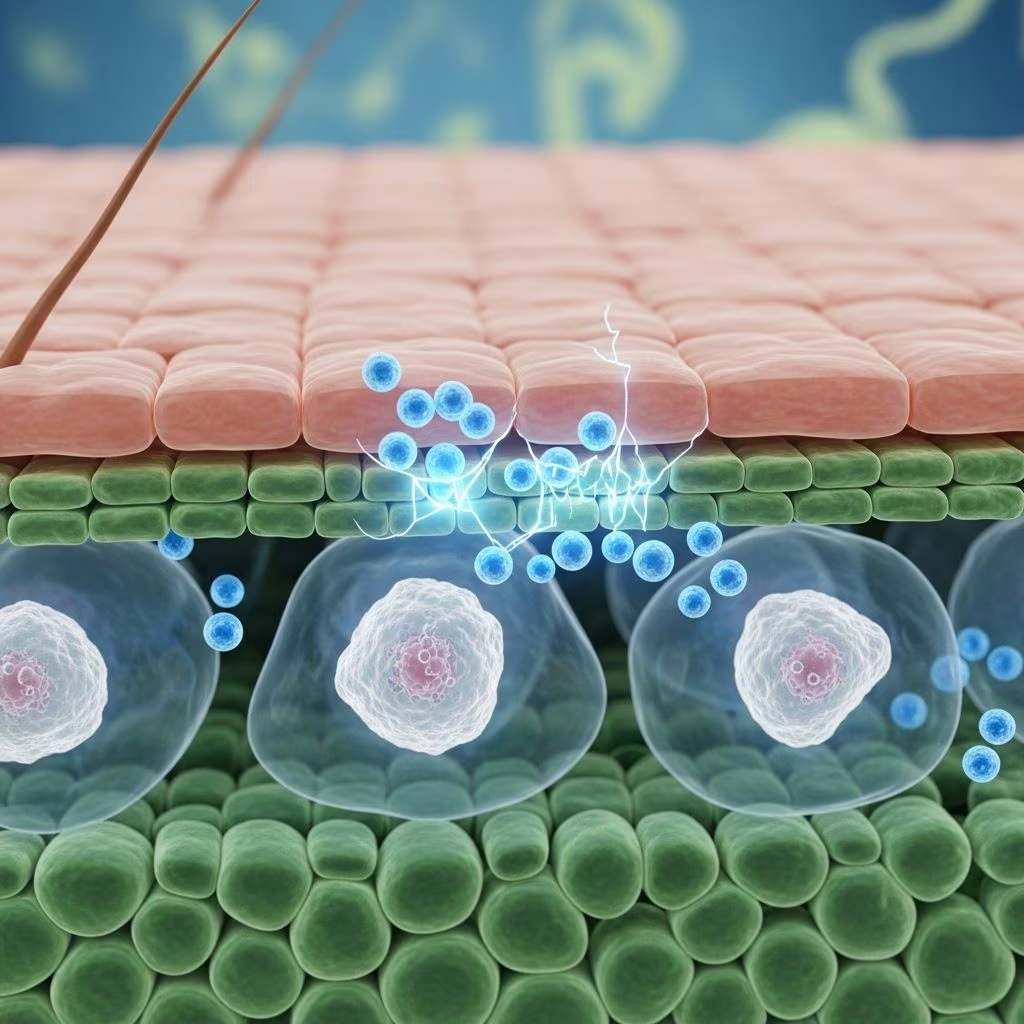
Beta-Glucan for Skin Barrier Repair and Immunomodulation
Beta-glucan, a natural polysaccharide found in oats, barley, mushrooms, and yeast, has emerged as a groundbreaking ingredient in dermatology. Its complex structure, comprising β-(1→3) and β-(1→6) glycosidic linkages, enables it to activate skin healing, enhance hydration, and modulate immune responses for improved skin health.
Recent advances reveal beta-glucan’s multifaceted benefits, including robust repair of the skin barrier, deep moisturization, and the ability to balance immune function in the skin, making it indispensable in both clinical and cosmetic formulations.
Introduction to Beta-Glucan
Beta-glucan is widely recognized for its immune-supporting and wound-healing abilities. In skin health, it serves dual purposes: repairing barrier damage and modulating the cutaneous immune response. First discovered as a potent immune enhancer, recent studies highlight its critical role in dermatology, specifically for individuals suffering from chronic dryness, eczema, and compromised skin integrity.
Understanding the Skin Barrier
The skin barrier, particularly the stratum corneum, is the outermost protective layer composed of keratinocytes, intercellular lipids, tight junctions, and structural proteins such as filaggrin and loricrin. This barrier prevents moisture loss (transepidermal water loss, TEWL) and shields against external irritants, microbes, and allergens. When compromised, conditions like eczema, psoriasis, increased sensitivity, and accelerated aging can occur.
- Maintains hydration and prevents dryness
- Protects against pathogens, toxins, and pollution
- Supports healthy skin regeneration
Mechanisms of Beta-Glucan in Skin Barrier Repair
Beta-glucan’s ability to repair the skin barrier is mediated through several distinct molecular pathways, particularly the Dectin-1 signaling pathway. Research shows that oat beta-glucan hydrogel effectively restores skin barrier function by altering gene expression and protein synthesis related to barrier integrity.
- Upregulates filaggrin and loricrin: Filaggrin and loricrin are vital for maintaining the barrier’s structural integrity. Beta-glucan increases their mRNA and protein levels, strengthening the skin’s protective coating.
- Promotes claudin-1 and β-catenin expression: These proteins reinforce cell–cell junctions in the epidermis, allow efficient barrier sealing, and reduce permeability to toxins and allergens.
- Regulates keratinocyte dynamics: By reducing PCNA and keratin 16, beta-glucan diminishes excess keratinocyte proliferation, promoting proper cell differentiation and reducing hyperproliferative conditions.
- Activates signaling pathways (ERK, p38 MAPK, CaSR, PLCγ1): These cascades result in enhanced epidermal differentiation and increased synthesis of junctional proteins and lipids.
- Stimulation of PPAR-γ: This nuclear receptor boosts lipid synthesis, crucial for restoring lipid bilayers and accelerating barrier repair.
These mechanisms culminate in a fortified skin barrier, enhanced resistance against environmental insult, and a reduction in chronic inflammation and TEWL.
Hydration and Moisturization: Beyond Humectants
Beta-glucan surpasses traditional humectants like hyaluronic acid by not only drawing moisture into the skin but also reinforcing the skin’s ability to retain it. Its molecular structure acts like a biological sponge, holding water up to 20% more efficiently than hyaluronic acid.
- Deep skin penetration: Beta-glucan penetrates beyond the surface to support hydration several layers into the epidermis.
- Prevents water loss: Forms a thin film on the skin to seal in moisture, reducing TEWL and protecting against dehydration.
- Plumps and smooths: Improved hydration results in softer, smoother, and more resilient skin texture, diminishing fine lines and roughness.
- Synergy with barrier repair: Hydration is fundamental for proper skin repair; beta-glucan enhances recovery by supporting both water retention and cellular healing.
Beta-Glucan and Immunomodulation
Beta-glucan is a powerful immunomodulator for the skin. Its interaction with Langerhans cells, macrophages, monocytes, and natural killer (NK) cells initiates balanced immune responses, critical for healing and protecting against chronic inflammation.
- Binds to immune cell receptors and activates macrophages, which clear pathogens and dead cells.
- Stimulates cytokine and growth factor production, accelerating tissue repair and cell proliferation for rapid healing.
- Regulates inflammation: Reduces excessive inflammatory responses that contribute to redness, irritation, and chronic skin conditions.
- Supports sensitive skin: Balanced immune activity enables faster recovery from irritation and post-procedure wounds.
By modulating the immune response, beta-glucan not only accelerates healing but also helps alleviate conditions such as acne, atopic dermatitis, allergic reactions, and post-inflammatory hyperpigmentation.
Clinical Evidence and Applications
Multiple studies confirm the efficacy of beta-glucan for skin repair and immunomodulation:
- Du et al. (2014): Demonstrated beta-glucan’s role in enhancing skin hydration, accelerating wound healing, and promoting the proliferation of keratinocytes and fibroblasts for collagen synthesis.
- Gao et al. (2021): Showed oat beta-glucan hydrogel activates Dectin-1 signaling, restoring barrier function and upregulating key proteins for cell–cell junctions and lipid synthesis.
- FDA approval: Beta-glucan is approved for topical use in the treatment of chronic inflammatory skin conditions, such as psoriasis.
- Wound healing: Topical beta-glucan accelerates reepithelialization and improves healing times after laser and chemical peel treatments, reducing redness and sensitivity.
Sources of Beta-Glucan
Beta-glucan can be obtained from several natural sources, each offering variations in molecular structure and skin benefits:
- Oats: Rich in high molecular weight beta-glucan, favored in pharmaceutical and skincare applications.
- Barley: Common in dietary supplements; lower viscosity makes it suitable for lighter skincare formulations.
- Mushrooms: Unique β-glucan forms with additional antioxidant potential; widely used in Asian skincare and wellness products.
- Yeast: Used for immunomodulatory extracts in advanced skin formulas.
| Property | Beta-Glucan | Hyaluronic Acid | Ceramides | Retinoids |
|---|---|---|---|---|
| Hydration | Deep, long-lasting (up to 20% more than HA) | Surface-level, strong humectant | Supports barrier function, retains moisture | Indirect (via cell renewal) |
| Barrier Repair | Activates cell junction & lipid synthesis | Relies on intact barrier | Restores intercellular lipids | Can weaken barrier with irritation |
| Immunomodulation | Balances and strengthens immune response | No direct immune effect | Anti-inflammatory, but less targeted | Can provoke inflammation |
| Wound Healing | Accelerates; reduces redness & sensitivity | Indirect support | Helps recovery | Delayed healing, increased irritation |
| Safety for Sensitive Skin | High (well-tolerated) | Generally safe | Generally safe | Potential for irritation |
Practical Usage in Skincare
Beta-glucan can be incorporated in various topical products to address issues from acute dryness and irritation to chronic inflammation:
- Serums: Concentrated extracts to deliver high-dose beta-glucan for intensive repair.
- Creams and moisturizers: Focus on hydration and barrier strengthening, ideal for daily use and recovery from procedures.
- Masks: Provide immediate soothing for stressed or post-procedure skin.
- Sunscreen formulas: Beta-glucan’s antioxidant properties amplify defense against UV stress.
Recommended for all skin types, but particularly effective for:
- Dry or dehydrated skin
- Compromised or sensitive barrier
- Post-procedure skin (e.g., after laser or peels)
- Inflammatory conditions (psoriasis, eczema, rosacea)
Frequently Asked Questions (FAQs)
Q: How does beta-glucan repair damaged skin barriers?
Beta-glucan activates barrier repair genes and proteins (filaggrin, loricrin, claudin-1), boosts lipid synthesis, and promotes proper epidermal cell differentiation for rapid restoration of barrier integrity.
Q: What makes beta-glucan superior to hyaluronic acid for hydration?
Beta-glucan penetrates deeper into the skin and retains water up to 20% more efficiently. It also strengthens the skin’s ability to retain moisture by repairing the barrier, addressing both cause and symptoms of dryness.
Q: Is beta-glucan safe for sensitive or post-procedure skin?
Yes, beta-glucan is non-irritating and suitable for sensitive skin. It accelerates healing and reduces inflammation, making it an excellent choice for skin recovering from cosmetic procedures or experiencing flare-ups.
Q: Does beta-glucan help with acne or inflammatory skin conditions?
Beta-glucan’s immunomodulatory actions help regulate inflammation, promote healing, and strengthen defenses against microbes, contributing to improved outcomes in acne, eczema, and related disorders.
Q: Which sources of beta-glucan are best for skin care?
Oat beta-glucan has the most evidence for topical skin barrier repair. Mushroom and yeast beta-glucans offer additional antioxidant and immune benefits. Product formulations often specify the source and purity.
Conclusion
Beta-glucan represents the convergence of immunological science and advanced skin care. Its unique action profile—repairing barrier function, delivering deep hydration, and modulating immune responses—positions it as a hero ingredient for resilient, youthful, and healthy skin. Incorporating beta-glucan into daily skincare routines or targeted treatments addresses not only symptoms but underlying mechanisms of disorder, making it a cornerstone for modern dermatological therapeutics.
References
- https://pmc.ncbi.nlm.nih.gov/articles/PMC12023766/
- https://bydrmom.com/blogs/skin-tips/how-does-beta-glucan-work-to-help-heal-and-hydrate-the-skin
- https://www.revivalabs.com/mushroom-mycelium-skincare-beta-glucans-for-barrier-repair/
- https://vibrantskinbar.com/blog/beta-glucan-benefits-for-skin/
- https://bpspubs.onlinelibrary.wiley.com/doi/10.1111/bph.16306
- https://www.drrachelho.com/blog/beta-glucan-skincare-review/
- https://onlinelibrary.wiley.com/doi/10.1002/fsn3.70212?af=R


