


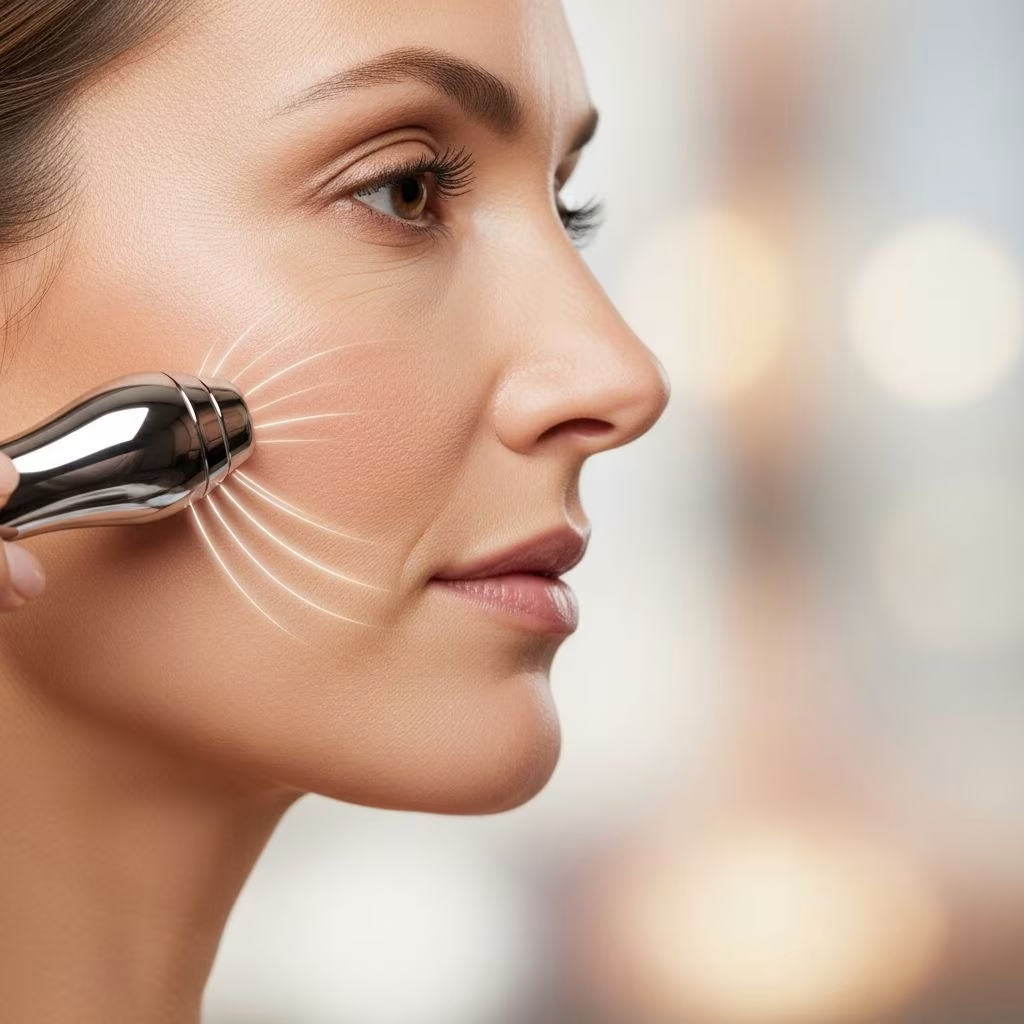
ZIIP Protocol for Nasolabial Folds: Microcurrent Solutions for Smoother Smile Lines
Nasolabial folds, often called “smile lines” or “laugh lines,” are a natural part of aging but can be a cosmetic concern for many individuals. While numerous invasive techniques exist to soften their appearance, modern at-home microcurrent devices like the ZIIP Halo offer a non-invasive, science-driven approach. This comprehensive guide explores how ZIIP targets nasolabial folds, the underlying technology, protocol details, treatment benefits, and expert-endorsed tips for effective use.
What Are Nasolabial Folds?
Nasolabial folds are paired skin creases that run from each side of the nose down toward the corners of the mouth. Manifesting gradually as the skin loses elasticity and underlying structures shift with age, these folds are among the most visible signs of facial aging. While everyone has them, their depth and prominence often increase due to:
- Natural loss of collagen and elastin
- Reduction in subcutaneous fat and soft tissue support
- Repeated facial muscle movement
- Decreased skin hydration and environmental damage
Though not a medical problem, deepened nasolabial folds can affect facial harmony, prompting interest in aesthetic treatments.
Conventional Treatments for Nasolabial Folds
Historically, several methods have been employed to minimize nasolabial folds. Each offers distinct benefits, invasiveness, and durability:
- Dermal Fillers: Injection of hyaluronic acid-based fillers directly into the folds or underlying layers to plump and soften lines.
- Surgery: Includes subcision (breaking apart fibrous tissue) or direct excision for severe cases, providing dramatic but often costly and invasive results.
- Chemical Peels: Chemical exfoliation to stimulate skin tightening, boost collagen, and smooth surface texture.
- Thread Lifts: Use of dissolvable threads under the skin to reposition and support tissue.
- Laser Resurfacing and Microdermabrasion: Energy-based or mechanical technologies to enhance skin tone and texture.
While these methods can yield significant improvements, they come with potential risks such as downtime, cost, discomfort, or unwanted aesthetic effects. Increasingly, consumers seek at-home, non-invasive solutions like microcurrent therapy—and this is where ZIIP enters.
Introduction to ZIIP Technology
ZIIP is a handheld, at-home device pioneering the use of both microcurrent and nanocurrent to enhance skin appearance. Built upon decades of bioelectrical research, ZIIP delivers low-level electrical currents through the skin’s surface, stimulating cellular energy (ATP), muscle toning, and collagen/elastin production. The Halo is the flagship model from ZIIP, offering customized routines for targeted facial concerns—including nasolabial folds.
| Technology | Action | Intended Benefit |
|---|---|---|
| Microcurrent | Stimulates facial muscles (mimicking natural bioelectricity) | Improves muscle tone, tightens skin, reduces sagging |
| Nanocurrent | Ultra-low level electrical stimulation at a cellular level | Enhances ATP production, cellular repair, glow |
By delivering alternating microcurrent and nanocurrent, ZIIP is designed to act globally on facial tone while providing specific routines to target issues like smile lines, sagging, and marionette lines.
ZIIP Protocol for Nasolabial Folds: The Science & Routine
The ZIIP protocol for nasolabial folds focuses on:
- Strengthening the zygomaticus and associated mouth elevators/depressor muscles
- Increasing skin’s firmness and elasticity via collagen and ATP stimulation
- Boosting circulation for tissue health and repair
- Reducing the visual depth and shadowing of the fold
Specialized routines such as “The Lift” and custom protocols within the ZIIP app guide users through motions specifically designed to lift and smooth the lower face. Many users pair the nasolabial fold protocol with jowl and marionette line treatments for maximum lower face rejuvenation.
Step-by-Step ZIIP Nasolabial Fold Protocol
Follow these standardized steps to maximize outcomes:
- Preparation:
– Cleanse and dry your face thoroughly.
– Apply a generous layer of ZIIP Conductive Gel (essential for electrical conductivity and skin protection). - Device Setup:
– Turn on your ZIIP device (Halo or compatible model).
– Sync the protocol for nasolabial folds via the ZIIP Beauty App, or use the manual mode for targeted microcurrent sequences (“The Lift” or “Founders Favorite”). - Treatment Motions:
– Using gentle, upward sweeps from the corners of the mouth along the nasolabial fold toward the cheekbone.
– Repeat slow, controlled strokes 6–8 times per side, maintaining steady contact.
– For deeper folds, spend additional time massaging across the smile line horizontally and vertically for maximum stimulation. - Optional Routines:
– Combine with lower face sculpting techniques by focusing on marionette lines and jowls (“Jowls” protocol available in some ZIIP apps). - Finish:
– Remove excess gel, apply skincare as desired.
– Repeat the full routine 2–3 times per week, or up to every other day for those seeking more rapid results.
Protocol Table: ZIIP Nasolabial Fold Routine Summary
| Step | Duration | Notes |
|---|---|---|
| Preparation | 2 min | Cleanse, dry face, apply conductive gel |
| Device Setup | 1 min | Load routine in app/manual selection |
| Treatment Motions | 4–8 min | Slow, upward strokes along and across smile lines |
| Finish | 1 min | Remove gel, apply skincare |
Expected Results and Benefits
- Immediate lifting/tightening effect: Visible difference in skin tautness and smoothness directly post-treatment, especially in those with reduced elasticity.
- Long-term improvements: Regular use promotes firmer, brighter, and more resilient skin, decreasing the appearance and depth of nasolabial folds over 4–8 weeks.
- Enhanced facial definition: Praised for the ability to contour the mid- and lower-face while maintaining a natural look.
- Reduced skin laxity: Aids in preventing progression of sagging and prolonged softening of fold severity.
- Non-invasive and downtime-free: Convenient for at-home routines with minimal risk or discomfort compared to fillers or surgery.
Clinical Effectiveness & Safety Considerations
While most ZIIP studies are based on user experience and professional endorsements, some principles underpin the device’s action:
- Bio-electric stimulation: Research shows microcurrent increases ATP production, boosts collagen, and improves muscle tone—central mechanisms for softening facial folds.
- Patient-reported satisfaction: Anecdotal and preliminary reviews indicate higher satisfaction due to subtle, natural-looking results and safety for regular use.
- Minimal adverse effects: No strong scientific evidence suggests harm from low-amperage at-home devices if used as directed; minor stinging or tingling (especially over blemishes) is not uncommon but typically transient and harmless.
- Inclusivity: Suitable for all skin types and ages, with enhanced immediate effects for mature or lower elasticity skin.
It is important to follow device guidelines, avoid overuse, and allow time for skin recovery between sessions (ideally every other day). Those with electronic implants or certain skin conditions should consult with a professional before use.
Expert Tips for ZIIP Success
- Consistency matters: For optimal outcomes use the device 2–3 times per week, allowing skin to rest and recover between sessions.
- Use the right gel: ZIIP’s conductive gel is formulated not only to conduct microcurrents efficiently but also to nourish the skin.
- Combine protocols: Many see stronger results by alternating different ZIIP routines—such as “The Lift” for overall firming and “Jowls” or “Founders Favorite” for specific areas.
- Photograph progress: Take before and after pictures to objectively track changes, particularly useful for lower face and nasolabial folds.
- Hydrate and support: Maintain a comprehensive skincare routine including moisturization and sun protection for synergistic effects.
Frequently Asked Questions (FAQs)
Q: Is ZIIP as effective as professional, in-clinic microcurrent treatments?
A: Professional devices tend to use higher power but may not offer the unique nanocurrent employed by ZIIP. At-home use provides the benefit of frequency and the ability to target specific areas like nasolabial folds with custom routines, although results may be more gradual than those of powerful clinical treatments.
Q: Who benefits most from the ZIIP for nasolabial folds?
A: Individuals with mild to moderate loss of elasticity, initial sagging, or those seeking to prevent the deepening of facial folds have the greatest results. Those over 40 typically report the most visible immediate lift, but all ages may use ZIIP preventatively.
Q: Can ZIIP replace fillers or surgery?
A: ZIIP is not a replacement for dermal fillers or surgical correction in cases of pronounced volume loss or severe folds. It is best for non-invasive enhancement, maintenance, and prevention—or as a supplement to professional treatments.
Q: How soon are results visible, and how often should I use ZIIP?
A: Many users notice subtle tightening after the first session, with cumulative smoothing and reduced fold depth over 4–8 weeks of consistent use (2–3 times per week is considered ideal).
Q: Is it safe to use ZIIP over blemishes or sensitive skin?
A: Mild stinging can occur if ZIIP is passed directly over pimples, due to the device’s action on charged bacteria. This is usually harmless and resolves as the skin clears. Those with skin sensitivity can use a gentler protocol or decrease treatment frequency.
Conclusion and Additional Resources
The ZIIP protocol for nasolabial folds offers a scientifically grounded, at-home solution to the visible signs of smile lines. By leveraging microcurrent and nanocurrent, ZIIP targets the muscular and connective structures underlying nasolabial folds, delivering subtle, natural-looking improvements over time without the risks associated with fillers or surgery. Consistency and proper technique are critical, and results are maximized when combined with comprehensive skincare habits.
Further learning:
- Refer to ZIIP’s official device manuals and app tutorials for detailed guidance on protocol settings and motions.
- Consult with an aesthetic professional for an individualized at-home and in-office treatment plan, especially if combining ZIIP with other modalities.
- Review online video tutorials demonstrating lower-face routines for real-time guidance on technique and sequence.
With diligence and the latest technology, at-home facial rejuvenation for nasolabial folds is more accessible than ever.
References
- https://clinicaltrials.gov/study/NCT07178119
- https://goalstogetglowing.com/2023/07/17/ziip-halo-overview/
- https://aedit.com/concern/nasolabial-folds
- https://www.youtube.com/watch?v=9VWONGjUhvU
- https://www.youtube.com/watch?v=KaP7Bo7TpNc
- https://www.ayoungerskin.com/jowls-and-marionette-lines-treatment/
- https://www.youtube.com/shorts/-w7D_nto4e4
- https://ziipbeauty.com/products/ziip-halo-microcurrent-device


