


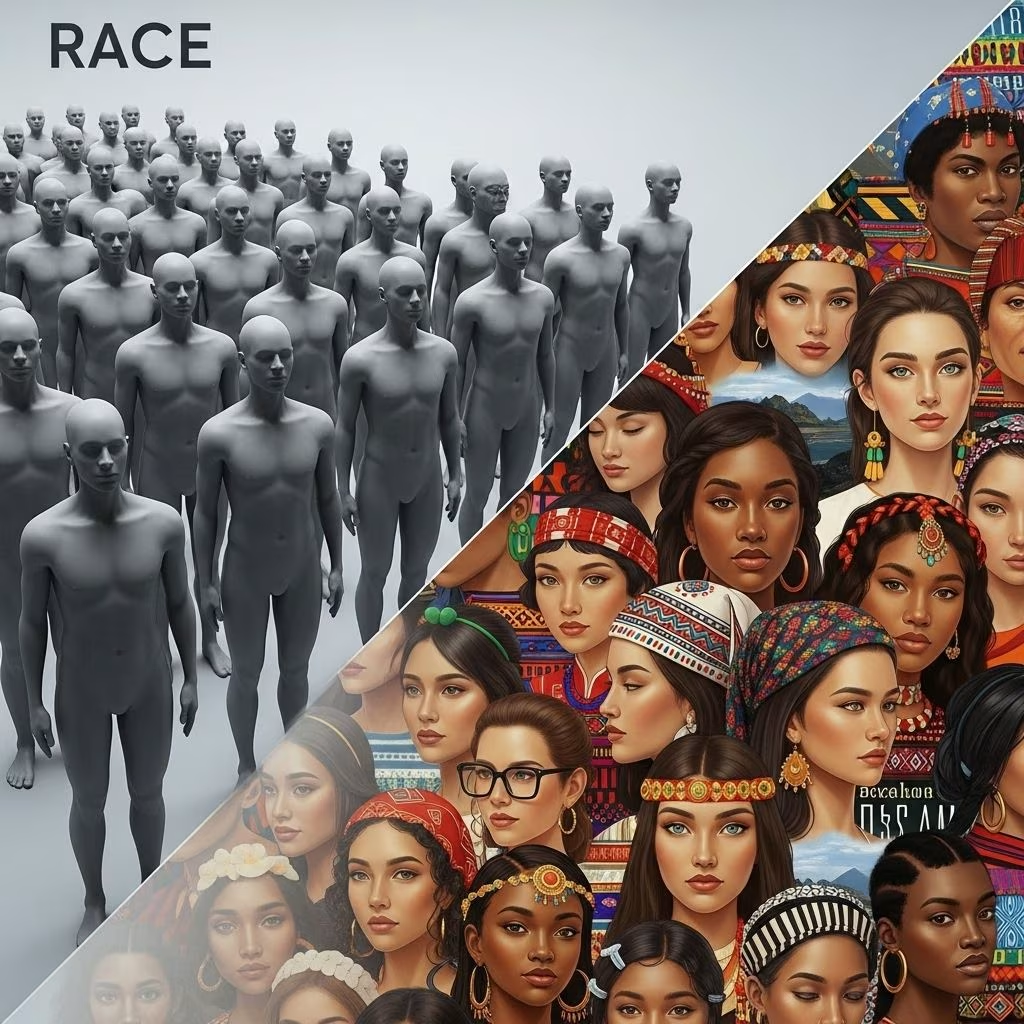
Understanding the Difference Between Race and Ethnicity
The terms race and ethnicity are often used interchangeably, yet they represent distinct concepts central to how individuals and groups define themselves and are identified by society. The difference between race and ethnicity influences personal identity, social dynamics, and collective experiences, making it essential to understand what sets them apart, their historical origins, common misconceptions, and why they matter in contemporary discussions about diversity, inclusion, and social equity.
Defining Race and Ethnicity
Race and ethnicity are both terms relating to human diversity, but each centers on different kinds of shared traits and histories:
- Race: Typically refers to physical characteristics—such as skin color, facial features, and hair type—that large groups of people are perceived to share. Importantly, these characteristics are seen as socially significant rather than based on concrete biological differences. Today, race is widely recognized as a social construct rather than a scientific or genetic reality.
- Ethnicity: Relates primarily to shared cultural traits, such as language, ancestry, traditions, religion, and dietary customs. Ethnicity often refers to a group’s cultural heritage and a sense of belonging that can span generations.
While race is often externally ascribed based on appearance, ethnicity is more frequently self-identified and intertwined with culture, tradition, and a sense of community.
Table: Key Distinctions between Race and Ethnicity
| Aspect | Race | Ethnicity |
|---|---|---|
| Definition | Grouping by perceived physical traits (skin color, features) | Grouping by shared cultural traits, traditions, or ancestry |
| Basis | Socially assigned, often external | Self-identified or community-based |
| Key Examples | Black, White, Asian, Native American | Hispanic, Ashkenazi Jew, Somali, Haitian |
| Historical Use | Linked to power, hierarchy, and segregation | Linked to migration, nationalism, and cultural expression |
| Current Understanding | Social construct, not based in biology or genetics | Dynamic, can involve choice and multiple identities |
The Origins and Development of the Concepts
History Behind the Notion of Race
The concept of race originated in the 18th century, when scientists and philosophers began classifying humans based on geographical location and shared physical features like skin color and hair type. Over time, these categories were wrongly believed to reflect innate biological differences, a notion now debunked by modern science. Race, as we understand it today, is not rooted in biology but is a product of historical, political, and social forces.
Ethnicity as a Cultural Marker
Ethnicity developed as a way to describe groups with shared language, beliefs, and traditions. Unlike race, ethnicity emphasizes cultural heritage, family lineage, and connection to a geographic region. Ethnicity can be fluid; individuals may claim one or more ethnic backgrounds and sometimes change their self-identification over time.
Why Understanding This Difference Matters
While both race and ethnicity shape personal identity and collective narratives, confusing the two—or assuming they are interchangeable—can obscure the experiences of various groups and perpetuate stereotypes. Recognizing the difference is essential for:
- Promoting social equity: Appreciating the difference allows for more tailored policies and more meaningful conversations about rights, representation, and resources.
- Self-identification and agency: Ethnicity offers a way for individuals to assert their identities and celebrate their heritage.
- Avoiding harmful assumptions: Understanding the nuances can prevent overgeneralization and bias that result from lumping people together solely by race or ethnicity.
Examples of Race and Ethnicity
Common Racial Categories
- Black or African American: Describes individuals with ancestry from sub-Saharan Africa. Encompasses a wide range of cultures and ethnicities.
- White: Typically refers to individuals of European descent.
- Asian: Covers people with origins in East Asia, Southeast Asia, or the Indian subcontinent.
- Native American/Alaska Native: Includes indigenous peoples of North and South America.
- Native Hawaiian or Other Pacific Islander: Refers to individuals descending from the original peoples of Hawaii, Guam, Samoa, or other Pacific islands.
Common Ethnic Categories
- Hispanic or Latino: Refers to people with cultural ties to Latin America or Spain; this group may span multiple races.
- Arab: Encompasses people originating from Arabic-speaking nations, united by language and culture rather than appearance.
- Jewish: Can be both a religious and an ethnic identity, often linked to ancestry and culture.
- Irish, Somali, Haitian, Ashkenazi Jew: Each illustrates a distinct ethnic group defined by national or cultural heritage.
It is important to note that a single racial group can contain multiple ethnicities and vice versa. For example, someone may be racially categorized as “Black” and ethnically identify as Ethiopian, Haitian, or Jamaican.
Common Misconceptions
- Race is biological: Scientific consensus has shown that race is not a valid biological classification but a product of social categorization.
- Ethnicity is synonymous with nationality: While ethnicity can overlap with nationality, it is not restricted to legal citizenship and may span across national borders.
- You can only have one: Individuals may have multiple ethnic backgrounds and sometimes even multiple racial identities, particularly in societies with high diversity and intermarriage.
- Race and ethnicity always align: People of the same race may have very different ethnic backgrounds (e.g., Black Americans and Black Haitians), and people sharing an ethnicity may come from different racial backgrounds (e.g., Latino communities include people of Black, White, and Indigenous heritage).
The Social Impact of Race and Ethnicity
Despite being social constructs, race and ethnicity have profound real-world consequences. These impacts are visible in areas such as:
- Access to resources and opportunities: Racial and ethnic categorizations have historically determined access to employment, education, healthcare, and political participation.
- Systemic inequality: Stereotypes and discrimination often arise along racial and ethnic lines, contributing to ongoing disparities.
- Sense of belonging and alienation: Individuals may find community and pride in their ethnic or racial group but may also experience exclusion due to imposed labels.
Sociologists and anthropologists emphasize that only by acknowledging these social realities—and the arbitrary nature of the boundaries between groups—can societies work toward greater fairness and inclusion.
Intersectionality: Where Race and Ethnicity Intertwine
Many people’s experiences are shaped by the intersection of race, ethnicity, and other identities such as gender, religion, and class—a framework known as intersectionality. For example, a woman who is both Latina and of Indigenous descent may navigate unique challenges and opportunities compared to others in her racial or ethnic groups.
In multicultural societies, multiple ethnic backgrounds, races, and identities frequently coexist, sometimes blending and sometimes standing apart. This complexity highlights the importance of allowing individuals to define their own identities rather than imposing fixed categories.
Frequently Asked Questions (FAQs)
What is the main difference between race and ethnicity?
Race is primarily based on perceived physical characteristics and is socially assigned, while ethnicity is linked to cultural heritage, practices, and shared ancestry, and is often self-identified.
Can a person belong to more than one ethnicity?
Yes. Individuals can have multiple ethnic identities, especially if they come from families or communities with diverse cultural backgrounds.
Is race real if it’s socially constructed and not biological?
Race is real in its social implications—how people are perceived, treated, and grouped—but it lacks a scientific basis in genetics or biology.
Why is ethnicity sometimes confused with nationality?
Because both can relate to cultural heritage and geographic origin; however, nationality is a legal identity, while ethnicity is rooted in cultural expression and lineage.
Do race and ethnicity influence personal identity?
Yes. Both can play major roles in shaping how individuals see themselves and are seen by others, impacting their experiences and sense of belonging.
How Race and Ethnicity Are Used in Society
Governments, institutions, and businesses often collect demographic information about race and ethnicity to track social trends, address disparities, and ensure equitable policy outcomes. For example, the US Census Bureau asks about both race and ethnicity to create nuanced data for allocating resources and drafting civil rights protections.
However, the way these questions are asked continues to evolve, as society recognizes the limitations and potential harms of rigid categories. Increasingly, data systems allow for multiple selections, write-in answers, or explanations, aiming for a more inclusive approach to identity.
Key Takeaways
- Race is a social construct based on perceived physical traits; it is not grounded in biological reality.
- Ethnicity relates to shared culture, traditions, language, and ancestry, and may involve personal identification and choice.
- The distinction between race and ethnicity is important for understanding identity, combating stereotypes, and advancing equity.
- Both race and ethnicity continue to shape access to resources, political representation, and social interactions, despite their constructed natures.
Further Reading and Resources
- Living Color: The Biological and Social Meaning of Skin Color by Nina G. Jablonski.
- Skin: A Natural History by Nina G. Jablonski.
- Centers for Disease Control and Prevention: Race & Ethnicity on Health Data.
- American Psychological Association: Guidelines on Race and Ethnicity.
- RACE Project: Exploring the Social Construct of Race.
References
- https://libguides.pratt.edu/c.php?g=1278195&p=9379311
- https://www.merriam-webster.com/grammar/difference-between-race-and-ethnicity
- https://www.livescience.com/difference-between-race-ethnicity.html
- https://ohr.dc.gov/sites/default/files/dc/sites/ohr/page_content/attachments/OHR_ILG_RaceEthnicity_FINAL%20(1).pdf
- https://www.diversityresources.com/learn-the-difference-between-race-and-ethnicity/
- https://www.apa.org/topics/race-ethnicity
- https://apastyle.apa.org/style-grammar-guidelines/bias-free-language/racial-ethnic-minorities


