


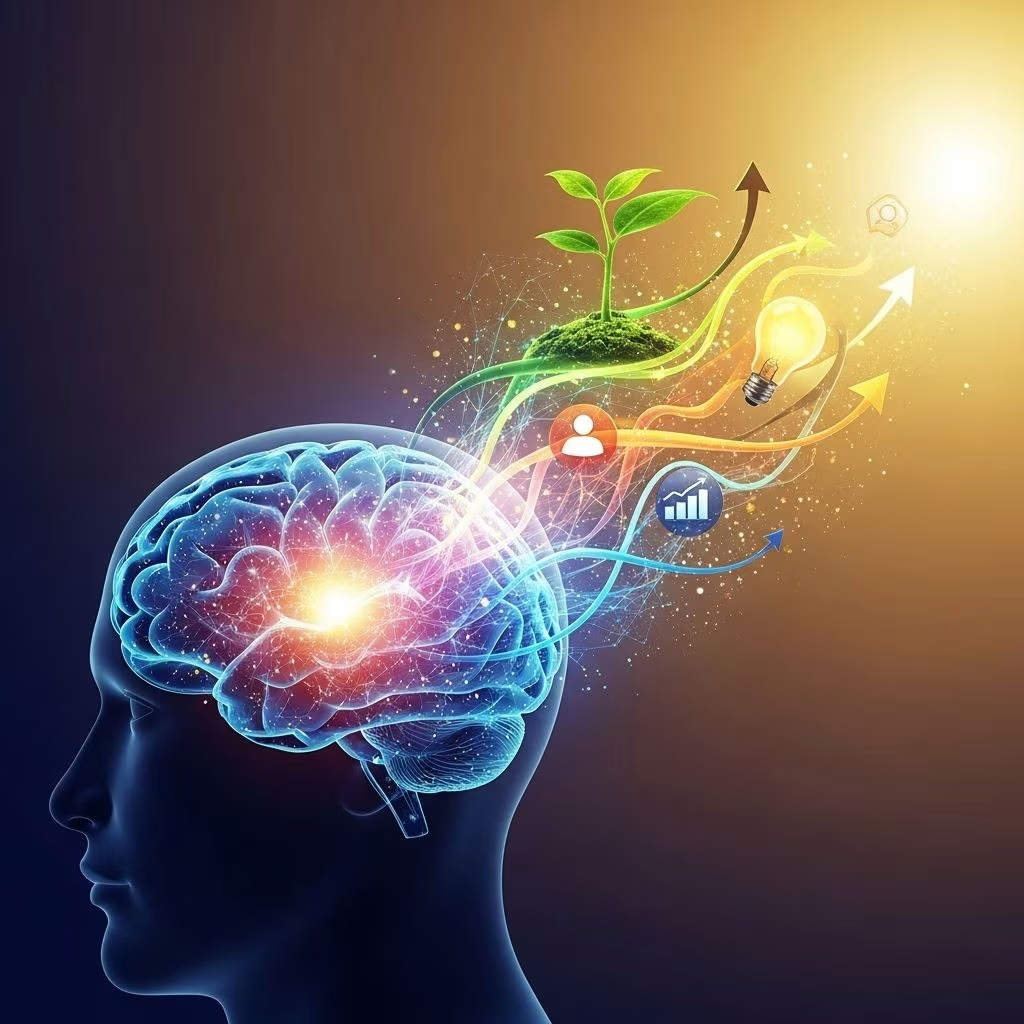
Intrinsic motivation plays a vital role in everything from everyday decisions to lifelong learning and personal growth. This internal drive leads individuals to pursue tasks and challenges out of pure interest, curiosity, or enjoyment, rather than for external rewards or pressures. As such, intrinsic motivation is widely recognized as a foundational concept in psychology and education, influencing achievement, creativity, and well-being.
What Is Intrinsic Motivation?
Intrinsic motivation refers to the act of doing something simply because it is interesting, enjoyable, or personally gratifying. In contrast to extrinsic motivation, which is fueled by external rewards, deadlines, or pressures, intrinsic motivation arises from within the individual.
- Pursuing activities for inherent satisfaction and engagement
- Driven by curiosity, challenge, or desire for mastery and autonomy
- Not contingent on external incentives, such as money, grades, or recognition
For example, a child learning to walk does so for the joy and challenge—not for praise or tangible rewards.
Intrinsic vs. Extrinsic Motivation
| Intrinsic Motivation | Extrinsic Motivation |
|---|---|
| Comes from within; the activity is its own reward | Driven by external rewards (money, grades, praise) |
| Leads to enjoyment, curiosity, mastery | Leads to compliance or completion (often for outcome) |
| Enhances creativity, persistence, and well-being | Can diminish motivation if external rewards are removed |
While both types can influence behavior, research shows that over-reliance on extrinsic rewards may undermine intrinsic motivation for tasks that people initially find interesting.
Core Principles and Theories of Intrinsic Motivation
Several psychological theories and principles have attempted to explain the mechanisms behind intrinsic motivation, the most prominent being Self-Determination Theory (SDT).
Self-Determination Theory (SDT)
SDT, developed by psychologists Edward Deci and Richard Ryan, asserts that intrinsic motivation thrives when three basic psychological needs are met:
- Competence – Feeling effective in one’s activities
- Autonomy – Experiencing a sense of volition or choice
- Relatedness – A sense of belonging or connection with others
People engage more fully and passionately in activities that satisfy these needs, which supports creativity, learning, and psychological health.
Types and Facets of Intrinsic Motivation
Research identifies several facets or sources of intrinsic motivation. A notable framework is the “4 C’s”:
- Challenge – Seeking mastery or accomplishment for the sheer pleasure of achievement
- Curiosity – Driven by interest in learning, exploring, and discovering unknowns
- Control – Enjoying a sense of agency over decisions and actions
- Context – Finding meaning in how tasks relate to broader life goals or situations
Examples of Intrinsic Motivation
Intrinsic motivation manifests across all areas of life. Common examples include:
- Learning an instrument simply for the joy of music
- Solving puzzles because the challenge is fun
- Gardening out of love for nature and growth
- Writing, painting, or creating motivated by self-expression and creativity
- Playing sports for skill development and enjoyment, not just competition
- Reading novels to immerse in stories rather than for a school assignment
These activities are pursued for their own sake—not for a reward, recognition, or obligation.
Benefits of Intrinsic Motivation
The advantages of intrinsic motivation are wide-ranging and impactful:
- Enhanced learning: Deeper engagement and retention of knowledge
- Creativity and innovation: Increased original thought and problem-solving
- Persistence: Greater resilience when facing obstacles
- Satisfaction and fulfillment: More enjoyment and meaning in activities
- Well-being: Improved psychological health and self-esteem
Research Insights
Studies show that when people are intrinsically motivated, they perform better, learn more deeply, and experience greater well-being. Tangible rewards or excessive focus on outcomes can reduce the inherent enjoyment and cause disengagement over time.
Factors Influencing Intrinsic Motivation
Intrinsic motivation is fostered—and sometimes hindered—by both internal and external factors. Key influences include:
- Task relevance: When tasks connect to personal values or interests, motivation rises
- Freedom of choice: Autonomy in how or what to pursue enhances engagement
- Appropriate challenge: Tasks that are neither too easy nor impossible spark mastery motivation
- Feedback: Constructive, non-controlling feedback supports perceived competence
- Social support: Environments that foster belonging fuel intrinsic drive
Conversely, controlling rewards, pressure, criticism, or lack of autonomy can diminish intrinsic interest.
Promoting Intrinsic Motivation: Strategies and Tips
While intrinsic motivation is natural, it can be intentionally cultivated. Individuals, educators, parents, and organizations can foster intrinsic drive through these evidence-based techniques:
- Encourage autonomy: Offer meaningful choices and avoid micromanagement
- Emphasize mastery over grades: Focus on skill and learning rather than strict outcomes
- Connect tasks to personal interests: Find ways to make assignments relevant to students’ or employees’ lives
- Acknowledge effort and progress: Give feedback that recognizes growth, not just results
- Support curiosity: Create environments where exploration and questions are valued
- Reduce overuse of extrinsic rewards: Avoid constant reliance on prizes, praise, or punishment
Application in Education
Educators can:
- Use inquiry-based learning and open-ended projects
- Help students see the relevance and applications of lessons
- Provide opportunities for self-directed exploration
Application in the Workplace
- Give employees autonomy over tasks and methods
- Encourage skill acquisition and professional development
- Align work tasks with personal and organizational values
- Promote a culture of trust, feedback, and support
Intrinsic Motivation Across the Lifespan
Intrinsic motivation evolves but remains critical throughout life:
- In childhood: Kids naturally engage in play, exploration, and learning without external incentives
- In adolescence: Autonomy and identity development depend on internal motivation
- In adulthood: Career satisfaction, personal growth, and lifelong learning are supported by intrinsic drives
- In later life: Pursuing hobbies, relationships, and personal fulfillment can sustain well-being
Intrinsic Motivation in Parenting
Supporting children in developing intrinsic motivation can positively impact lifelong learning and happiness. Parents can:
- Offer choices rather than orders
- Celebrate discovery and effort
- Avoid excessive use of rewards or punishment
- Focus on growth, curiosity, and enjoyment
Potential Pitfalls: Can Intrinsic Motivation Be Undermined?
Research has shown that certain situational factors, particularly tangible rewards, deadlines, or pressure, may reduce intrinsic interest in activities people initially enjoyed. This phenomenon is sometimes called the “overjustification effect.” Thus, balancing recognition with autonomy is key to preserving internal motivation.
Frequently Asked Questions (FAQs)
What is intrinsic motivation in simple terms?
Intrinsic motivation is doing something because it is personally rewarding, interesting, or enjoyable—not for external rewards or pressures.
How is intrinsic motivation different from extrinsic motivation?
Intrinsic motivation arises from internal satisfaction; extrinsic motivation comes from outside incentives, such as money, grades, or praise.
What are signs of intrinsic motivation?
- Deep engagement in tasks
- Persistence despite challenges
- Enjoyment or interest in the activity itself
Can intrinsic motivation be cultivated?
Yes. By supporting autonomy, curiosity, relevance, and feedback, both individuals and institutions can foster more intrinsic drive.
Are there situations where extrinsic motivation is useful?
Extrinsic motivation can be effective for tasks that are uninteresting or require short-term incentives, but intrinsic motivation tends to yield better long-term engagement and satisfaction.
Key Takeaways and Summary
- Intrinsic motivation is a powerful driver of learning, growth, and fulfillment.
- It is characterized by personal interest, enjoyment, and inherent satisfaction.
- Self-Determination Theory highlights the importance of autonomy, competence, and relatedness.
- Intrinsic motivation predicts better creativity, persistence, and well-being than extrinsic rewards.
- Strategies like offering choices, celebrating effort, and connecting tasks to personal interests help foster it.
References
Content synthesized and paraphrased from authoritative psychology sources including Simply Psychology, Healthline, Psychology Today, PMC articles on self-determination theory and intrinsic motivation.
References
- https://www.simplypsychology.org/differences-between-extrinsic-and-intrinsic-motivation.html
- https://www.healthline.com/health/intrinsic-motivation
- https://pmc.ncbi.nlm.nih.gov/articles/PMC5364176/
- https://pmc.ncbi.nlm.nih.gov/articles/PMC2533589/
- https://dictionary.apa.org/intrinsic-motivation
- https://positivepsychology.com/intrinsic-motivation-examples/
- https://www.selfdeterminationtheory.org/SDT/documents/2000_RyanDeci_IntExtDefs.pdf
- https://www.psychologytoday.com/us/blog/mind-brain-and-value/202101/the-power-intrinsic-motivation
- https://fiveable.me/key-terms/ap-psych/intrinsic-motivation


