


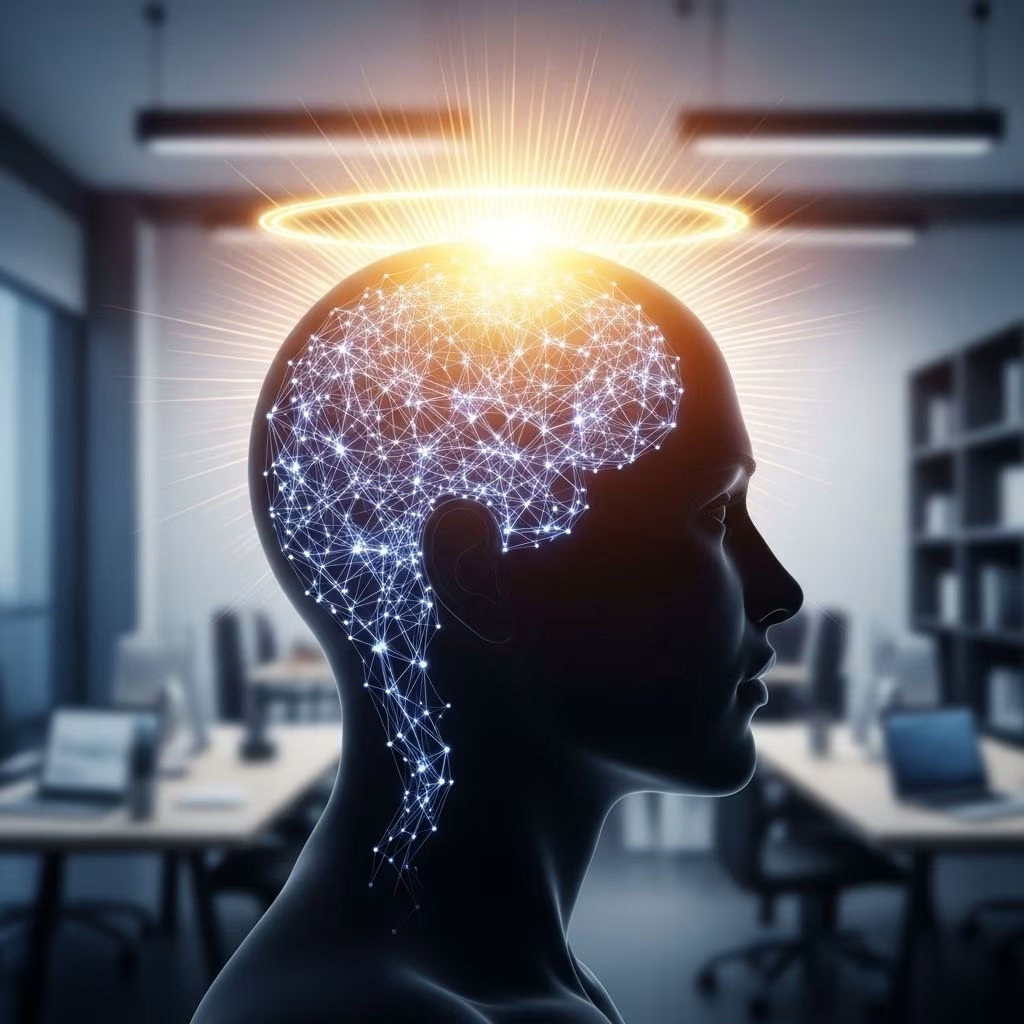
The halo effect is a widely studied psychological phenomenon affecting how we perceive and evaluate others. First described by psychologist Edward Thorndike in the early 20th century, this cognitive bias occurs when an observer’s overall impression of a person, brand, or entity influences their judgments about specific traits. This article delves into the definition of the halo effect, explores its historical origins, provides practical examples, examines its impact across various domains, explains the underlying psychological mechanisms, and offers strategies for recognizing and reducing its influence.
What Is the Halo Effect?
The halo effect is a cognitive bias where a single positive characteristic or the general impression of someone or something leads people to judge other unrelated aspects more favorably. This bias causes people to make snap judgments, often based on irrelevant features, which can influence attitudes, decisions, and actions without conscious awareness .
- Core concept: A single trait or impression (e.g., attractiveness, competence, friendliness) creates a “halo” that colors perception of other attributes.
- Example: Thinking someone is intelligent and trustworthy just because they are well-dressed or physically attractive.
- Result: Critical thinking may be bypassed in favor of quick judgments.
Though the term “halo effect” usually refers to positive bias, its opposite—negative bias based on one unfavorable characteristic—is called the horn effect .
The Origins and Definition of the Halo Effect
Psychologist Edward Thorndike first identified and named the halo effect in 1920. In his research with military officers rating their subordinates, Thorndike noticed that positive impressions in one domain (such as physical appearance or intelligence) often led to comparable ratings in unrelated domains (like leadership or morality), regardless of actual performance .
The term ‘halo’ refers to the religious iconography of a circle of light symbolizing divinity, suggesting that a single positive feature can illuminate all other aspects of perception .
How Does the Halo Effect Work?
The halo effect operates unconsciously, using mental shortcuts called heuristics. This process allows for rapid judgments but often comes at the expense of accuracy and objectivity .
- Automatic: People are usually unaware that unrelated attributes are being linked.
- Generalization: Positive feelings about one trait extend to other, neutral, or even unknown characteristics.
- Simplification: Reduces cognitive load, but can oversimplify complex individuals or situations.
Typical Situations Where the Halo Effect Occurs
- First impressions — Quick judgments during initial encounters.
- Performance reviews — Supervisors overrate employees based on a single standout characteristic.
- Social interactions — Attributing goodness, reliability, or talent to someone based on looks or charm.
- Consumer choices — Favoring products or brands because of attractive packaging or advertising.
Key Examples of the Halo Effect
The halo effect permeates daily life and influences numerous areas, including relationships, workplaces, education, and marketing. Some common examples include:
- Physical attractiveness: Attractive people are often judged as more intelligent, sociable, and competent than less attractive individuals, even without supporting evidence .
- Educational background: Individuals from prestigious universities may be assumed highly competent in all areas, including those unrelated to their degree .
- Product branding: Popular or visually appealing brands are believed to deliver higher quality and better performance, regardless of actual merit.
- Celebrity endorsements: Positive feelings toward a celebrity can transfer to a brand or product, boosting its appeal.
Conversely, the horn effect works in the opposite way, leading to negative overall impressions due to a single undesirable trait.
Halo Effect vs. Horn Effect Table
| Effect | Description | Example |
|---|---|---|
| Halo Effect | Positive trait creates overall favorable impression | Assuming an attractive job candidate is also highly competent |
| Horn Effect | Negative trait leads to unfavorable impression overall | Assuming untidy appearance means someone is unreliable |
Notable Research and Experiments
Thorndike’s Military Study
Edward Thorndike’s 1920 study identified supervisors’ tendency to let positive impressions in one area influence their ratings of subordinates across unrelated traits. Even when traits such as intelligence or leadership were evaluated separately, scores were closely aligned due to the halo effect .
Solomon Asch’s Person Perception Experiment
A classic experiment in 1946 by psychologist Solomon Asch illustrated the halo effect in person perception. Participants rated individuals depicted in photographs as possessing more positive traits (like intelligence and kindness) when they were labeled as attractive, compared to identical images categorized as unattractive .
Psychological Explanations for the Halo Effect
Several psychological mechanisms contribute to the halo effect:
- Heuristics: Mental shortcuts that make decision-making quick and efficient but prone to error .
- Implicit Association: Automatically linking traits due to cultural stereotypes or prior experiences.
- Cognitive Consistency: The human tendency to prefer harmony in attitudes, leading to consistent (often biased) evaluations.
- Emotional Reasoning: Positive emotions from initial traits affect perception of unrelated characteristics.
Real-Life Applications and Examples
In The Workplace
- Performance Appraisals: Supervisors may rate an employee as excellent in all aspects if they are punctual and well-spoken, overlooking areas that need improvement.
- Hiring Bias: Attractive or well-credentialed candidates may be favored over equally or more qualified applicants.
In Education
- Teacher Expectations: Students perceived as clever or conscientious are more likely to receive positive feedback and attention, boosting their confidence and actual performance (self-fulfilling prophecy).
- Academic Grading: Teachers may award better grades to well-behaved or presentable students, independent of academic quality.
In Daily Life
- Friendship and Romance: Early favorable impressions during dating may lead to overlooking negative traits—“love is blind” is partly explained by the halo effect .
- Consumer Behavior: Shoppers may consistently pick premium-branded products, assuming they are superior in quality, even when objective differences are minimal.
- Legal Judgments: Attractive defendants may receive lighter sentences, as positive first impressions unconsciously affect assessments of character .
How the Halo Effect Influences Decision-Making
The halo effect extends to a wide range of decisions, including:
- Hiring and promotions in business settings
- Votes in elections and political campaigns
- Product ratings and consumer purchases
- Judgments about character and trustworthiness
This bias not only distorts accuracy but can negatively influence fairness and objective decision-making. For example, overlooking flaws based on initial positive impressions can be costly in leadership selection or investment choices.
Consequences and Implications
- Errors in Judgment: Leads to decisions based on stereotypes or incomplete information.
- Reinforces Bias: Can perpetuate discrimination, favoritism, and unequal opportunities.
- Weakens Critical Analysis: Reduces the likelihood of objectively considering all relevant evidence.
- Influences Self-perception: The halo effect can affect self-image, as individuals internalize others’ biased perceptions.
How to Minimize the Halo Effect
While the halo effect is automatic and unconscious, certain strategies can help reduce its impact:
- Awareness: Recognize that initial impressions are not always reliable or comprehensive.
- Structured Evaluation: Use objective checklists and criteria to assess people, products, or ideas, especially during hiring or performance reviews.
- Intentional Reflection: Pause to consider information that contradicts first impressions.
- Separation of Traits: Make conscious efforts to evaluate each trait or quality independently.
- Diversity in Decision-Making: Engage multiple perspectives to balance individual biases.
Frequently Asked Questions (FAQs)
Q: What is the halo effect in simple terms?
The halo effect happens when your impression of one positive trait of a person or thing influences how you view their unrelated qualities, often leading to unrealistic positive judgments.
Q: Who discovered the halo effect?
Edward Thorndike, a psychologist, first identified and described the halo effect in 1920 during research on workplace evaluations.
Q: Can the halo effect be negative?
Yes. While the halo effect refers to positive bias, the horn effect is the name given to negative versions, where a single undesirable trait leads to an overall poor impression.
Q: How does the halo effect affect hiring?
Recruiters may select candidates for jobs based on irrelevant but favorable characteristics, like appearance or prestigious credentials, instead of objective qualifications.
Q: Is the halo effect permanent?
No. The effect is strongest with first impressions, but it can fade as more information is gathered. However, initial biases may persist unconsciously.
Summary Table: Key Points of the Halo Effect
| Aspect | Summary |
|---|---|
| Definition | Bias where single positive traits influence overall judgment |
| Origins | Edward Thorndike, 1920s; observed in workplace evaluations |
| Examples | Attractiveness, education, brand reputation, celebrity endorsements |
| Opposite Effect | Horn effect — negative trait biases overall impression |
| Consequences | Poor decision-making, favoritism, reduced objectivity |
| Reduction Strategies | Awareness, structured evaluation, reflection, diverse input |
Conclusion
The halo effect highlights the power of first impressions and the importance of questioning our snap judgments. Whether choosing a product, assessing a colleague, or forming relationships, being aware of this cognitive bias can lead to more objective, fair, and effective decision-making in all areas of life.
References
- https://en.wikipedia.org/wiki/Halo_effect
- https://quillbot.com/blog/bias/halo-effect/
- https://www.simplypsychology.org/halo-effect.html
- https://helpfulprofessor.com/halo-effect-examples/
- https://thedecisionlab.com/biases/halo-effect
- https://www.berkeleywellbeing.com/halo-effect.html
- https://www.psychologytoday.com/us/basics/halo-effect
- https://www.betterup.com/blog/halo-effect


