


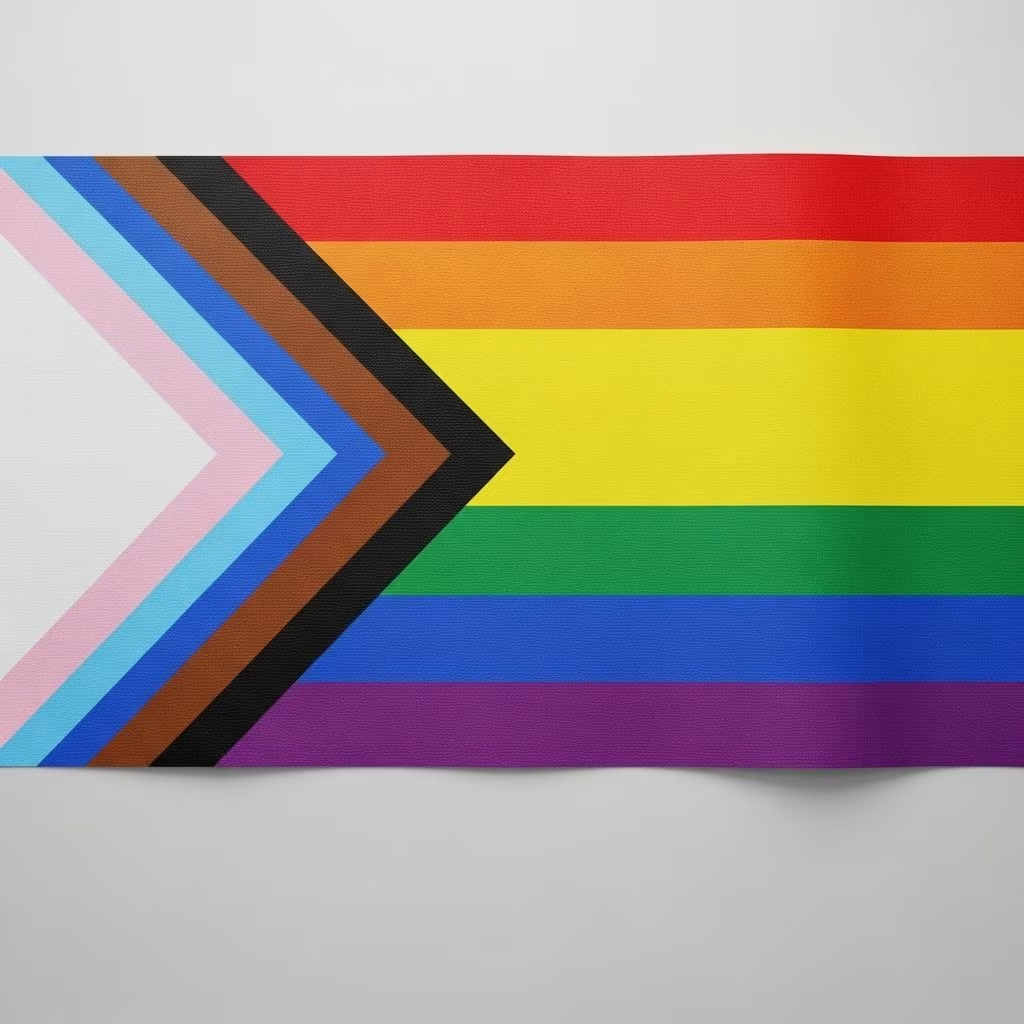
The Progress Pride Flag, a vibrant symbol of the LGBTQ+ movement, not only embodies a celebration of love and diversity but also carries a history of activism, inclusivity, and forward momentum. Each color in the flag resonates with unique significance, while the flag’s evolving design reflects the LGBTQ+ community’s ongoing push for recognition, equity, and solidarity across all identities. This article explores the nuanced meanings behind every stripe of the Progress Pride Flag, the story of its origins, and why its continuous evolution matters today.
The Origins and Evolution of Pride Flags
Before understanding what each stripe stands for, it’s important to trace the roots and transformation of the pride flag:
- 1978: The Original Rainbow Flag – Conceived by Gilbert Baker, the original rainbow flag debuted at San Francisco’s Gay and Lesbian Freedom Day Parade. Using eight colors, Baker assigned specific symbolic meanings to each stripe: pink (sex), red (life), orange (healing), yellow (sunlight), green (nature), turquoise (magic/art), indigo (serenity), and violet (spirit).
- 1979: Simplification – Due to fabric shortages and visibility concerns, the pink and turquoise stripes were dropped. The resulting six-color version—red, orange, yellow, green, blue (replacing indigo and turquoise), and violet—became the standard.
- The Era of New Flags and New Needs – As LGBTQ+ communities grew more visible, further flags emerged to represent specific identities such as bisexual, lesbian, transgender, and nonbinary people.
- 2017–2018: Highlighting Intersectionality – Philadelphia and Seattle introduced additional black and brown stripes to acknowledge LGBTQ+ people of color and the intersection of race and sexuality.
- 2018: The Progress Pride Flag – Designed by Daniel Quasar, this flag incorporates black and brown stripes for marginalized communities and pink, white, and blue for transgender and nonbinary individuals, forming a chevron arrow on the traditional rainbow background.
The Progress Pride Flag: A Visual Guide
The Progress Pride Flag incorporates both the traditional rainbow stripes and additional colors arranged in an arrow, symbolizing a forward-looking movement toward inclusion.
| Color | Symbolism |
|---|---|
| Red | Life, passion, love, and the energy that drives meaningful change |
| Orange | Healing, support, resilience in adversity, and community warmth |
| Yellow | Sunlight, optimism, hope, and the illuminating power of clarity |
| Green | Nature, growth, renewal, natural cycles, and balance |
| Blue | Serenity, peace, mental well-being, belonging, and emotional depth |
| Violet | Spirit, inner strength, creativity, identity, and dignity |
| Black | People of color (especially Black LGBTQ+ individuals), those living with or lost to HIV/AIDS, and the ongoing stigma around HIV |
| Brown | People of color, especially representation for marginalized communities of color within LGBTQ+ spaces |
| Pink | Transgender women and femininity (from the transgender flag), traditional color for girls |
| Baby Blue | Transgender men and masculinity, traditional color for boys |
| White | Transgender and nonbinary individuals, people who are transitioning, have a neutral or undefined gender, or are intersex |
The Meaning of Each Color in Detail
Red: Life
The red stripe stands for life, capturing the vital force, energy, and passion that fuels activism and love within the LGBTQ+ movement. It underscores the community’s vibrancy and its drive for positive change.
Orange: Healing
Orange represents the healing process—personal and collective. It signals resilience through adversity, the community’s ability to recover, and the support systems developed among LGBTQ+ individuals. The warmth of orange also evokes joy, encouragement, and communal bond.
Yellow: Sunlight
Yellow reflects sunlight, a symbol of optimism, hope, and openness. The brightness of yellow brings light to the movement, illuminating paths toward acceptance and enlightenment.
Green: Nature
Green reminds us of the natural world, symbolizing growth, renewal, and a connection to both the earth and the wider LGBTQ+ community. It embodies the idea of continual transformation and balance.
Blue: Serenity
Blue (originally indigo or a deeper blue) is the color of serenity and peace, essentials for the formation of safe, affirming spaces where individuals feel mentally well and emotionally supported.
Violet: Spirit
Violet stands for the “spirit” of the LGBTQ+ community, recognizing each person’s inner strength, authenticity, and the dignity they affirm by embracing their true selves.
Black and Brown: Centering Marginalized Voices
Black and brown stripes were added to highlight people of color—specifically Black, Indigenous, and other marginalized persons within LGBTQ+ spaces. Their inclusion is an intentional act of solidarity and a reminder of the activism and leadership of BIPOC individuals who have always been at the forefront of LGBTQ history (e.g., Marsha P. Johnson at the Stonewall Riots). The black stripe also memorializes those who have died from, or are living with, HIV/AIDS, and confronts the ongoing stigma the disease carries.
- Black: Centers Black LGBTQ+ members, honors those affected by HIV/AIDS, and the stigma still prevalent in society.
- Brown: Represents all LGBTQ+ people of color, encouraging visibility and inclusion within and beyond the community.
Pink, Baby Blue, and White: Transgender and Nonbinary Inclusion
These colors are borrowed from the Transgender Pride Flag, created by Monica Helms in 1999. Their addition signals an explicit welcome to transgender, nonbinary, and intersex individuals, who are still often marginalized, even within LGBTQ+ circles.
- Pink: Symbolizes girls and femininity.
- Baby Blue: Symbolizes boys and masculinity.
- White: Represents people who are nonbinary, intersex, or transitioning.
Together, they reinforce that gender is a spectrum and every gender identity deserves recognition and acceptance.
The Arrow: Symbol of Progress and Movement
Unlike the horizontal stripes of the original rainbow flag, the Progress Pride Flag arranges the new colors in a chevron or arrow shape. Pointing to the right, the arrow is a visual metaphor for advancement, reflecting the ongoing work needed toward full inclusion, equity, and justice.
- Separation from the Rainbow: The arrow’s placement physically and symbolically distinguishes the progress elements from the traditional values, centering marginalized groups and the work ahead.
- Emphasis on Action: The rightward direction is deliberate, pointing the way to a future where LGBTQ+ rights and recognition keep moving forward.
Why Does the Progress Pride Flag Matter?
The flag is much more than an array of colors—it’s a rallying point for solidarity and a call-to-action:
- Visibility for All: Ensures that every part of the LGBTQ+ spectrum, especially those often sidelined, has a place in the movement’s most familiar symbol.
- Historic and Cultural Memory: Honors the activists, especially Black and trans women, who have shaped LGBTQ+ history and continue to push for change.
- Commitment to Progress: The arrow underscores that the fight for equality is ongoing and that the flag’s meaning adapts alongside the community’s needs.
- Conversation Starter: Sparks dialogue about intersectionality within the LGBTQ+ movement, encouraging education and advocacy both within and beyond the community.
Critiques and Ongoing Discussions
Like all symbols, the Progress Pride Flag has drawn both praise and critique:
- Legibility: Some critics say the additional stripes and arrow shape can make the flag more visually complex and less instantly recognizable.
- Representation: Others feel the evolving flag landscape can dilute the power of the rainbow’s universal message. Yet, for many, the Progress Pride Flag’s adaptation to include specific groups signals an increased commitment to genuine inclusion rather than one-size-fits-all symbolism.
As flags continue to evolve alongside LGBTQ+ identities and politics, such conversations reflect a healthy, dynamic movement engaged in self-reflection and advocacy.
Frequently Asked Questions (FAQs)
What do the black and brown stripes represent in the Progress Pride Flag?
The black and brown stripes represent Black, Indigenous, and people of color (BIPOC) within the LGBTQ+ community, highlighting their experiences and activism. The black stripe also honors those affected by HIV/AIDS and the ongoing stigma around the virus.
Why were pink, baby blue, and white stripes added to the flag?
These colors, taken from the Transgender Pride Flag, symbolize transgender and nonbinary individuals and anyone whose gender is outside the traditional male/female binary.
Who designed the Progress Pride Flag and when?
The Progress Pride Flag was designed by Daniel Quasar in 2018 as a redesign of the standard rainbow flag, explicitly centering marginalized groups within the LGBTQ+ community.
What does the arrow shape on the flag mean?
The arrow (chevron) shape is meant to indicate forward movement and ongoing progress, visually separating and emphasizing the struggles and needs of marginalized groups.
Do the colors of the rainbow flag still have meaning in the Progress Pride Flag?
Yes, the six rainbow colors—red, orange, yellow, green, blue, and violet—continue to represent core LGBTQ+ values: life, healing, sunlight, nature, serenity, and spirit.
Other Notable LGBTQ+ Flag Variations
The Progress Pride Flag is one of many symbols within the growing family of pride flags. Here are a few notable examples:
- Transgender Pride Flag: Composed of five horizontal stripes—blue, pink, white, pink, blue—it represents transgender identities and inclusiveness.
- Philadelphia Pride Flag: The first to add the black and brown stripes atop the traditional rainbow in 2017, directly addressing racial inclusion.
- Nonbinary Pride Flag: Four stripes—yellow, white, purple, black—each representing different aspects of nonbinary experience.
Final Thoughts: The Future of the Pride Flag
The Progress Pride Flag is more than just a symbol; it’s an ever-evolving emblem of solidarity, struggle, and hope within the LGBTQ+ community. As visibility increases and activism continues, the flag is likely to continue adapting, ensuring all voices are seen, valued, and celebrated under its spectrum of colors.
References
- https://www.womenscollegehospital.ca/the-progress-pride-flag-all-the-colours-of-the-rainbow/
- https://www.vam.ac.uk/articles/the-progress-pride-flag
- https://www.sfgmc.org/blog/pride-flags
- https://www.cooperhewitt.org/2023/06/20/intersex-inclusive-progress-pride-flag-at-the-smithsonian/
- https://en.wikipedia.org/wiki/Rainbow_flag_(LGBTQ)


