


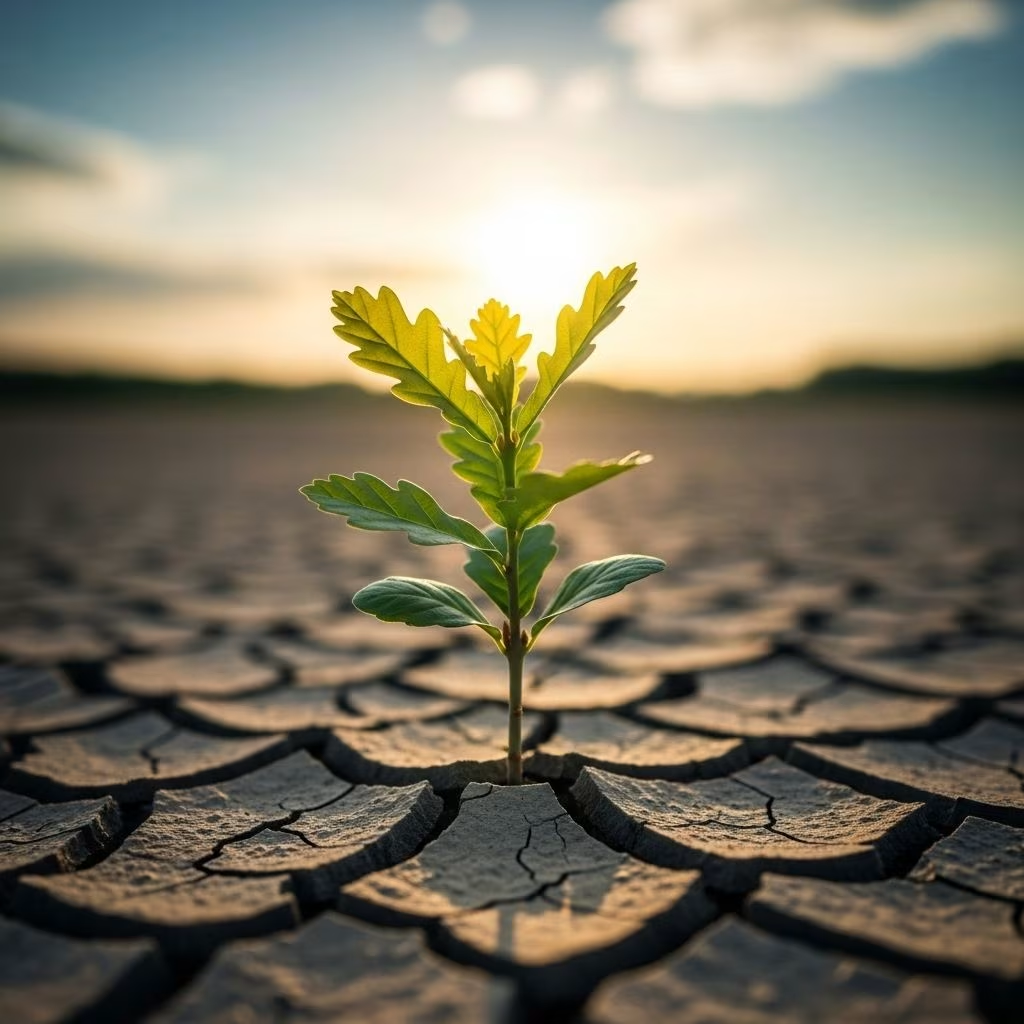
Characteristics of Resilience: How People Thrive in the Face of Adversity
Resilience is the remarkable ability to bounce back from setbacks, adapt to change, and continue moving forward despite challenges. Far from being an innate, fixed trait, resilience encompasses a dynamic set of skills, attitudes, and strategies that anyone can cultivate over time. Understanding what makes people resilient is critical for personal growth, mental wellbeing, and the ability to thrive in an ever-changing world.
This article examines the core traits, skills, and strategies resilient individuals rely on—including acceptance, adaptability, resourcefulness, and social support. We’ll analyze types of resilience, proven frameworks like the 7 C’s, and practical methods to build resilience in your own life.
What Is Resilience?
At its core, resilience is the ability to adapt positively to adversity, traumatic events, and stressors. Rather than avoiding hardship, resilient people meet it head-on, find ways to cope, and frequently emerge stronger from the experience. Research highlights that resilience isn’t just psychological—it encompasses emotional, social, and physical domains that interact to influence how individuals respond to setbacks.
Resilient individuals are distinguished by their capacity to accept reality, maintain hope, and remain flexible in the face of change. Their strength lies not in avoiding difficulty, but in embracing challenges as opportunities for growth.
Key Traits and Characteristics of Resilient Individuals
Resilient people share numerous traits that empower them to overcome adversity. The following are the most consistently recognized characteristics:
- Acceptance of Reality: Resilient individuals acknowledge their present circumstances—no matter how tough—without denial or avoidance. This perspective enables them to focus on solutions rather than problems.
- Flexibility and Adaptability: They adjust plans, embrace change, and pivot strategies in response to new information or obstacles. This flexibility keeps them moving forward even when plans fail.
- Resourcefulness and Creativity: When facing difficulty, resilient people creatively use whatever resources they can—internal or external—to find effective solutions.
- Perseverance: Faced with obstacles, they maintain determination and remain action-oriented, trusting in the process and refusing to give up.
- Emotional Awareness: They recognize and manage their own feelings, staying in touch with their emotional states and motives.
- Optimism: Resilient people maintain hope and see possibilities even in difficult circumstances, which helps them adopt an empowered, hopeful mindset.
- Internal Locus of Control: They believe they control their lives rather than being helpless victims of fate, fostering proactive problem-solving.
- Sense of Humor: Finding humor in adversity helps shift perspectives and diffuses stress, changing threats into manageable challenges.
- Strong Social Connections: Supportive relationships provide emotional sustenance and practical help in difficult times.
- Emotional Intelligence: The ability to recognize, understand, and regulate emotions is essential for maintaining stability during hardship.
Summary Table: Main Traits of Resilient Individuals
| Trait | Description |
|---|---|
| Acceptance | Facing reality without denial, focusing on solutions. |
| Adaptability | Flexibly adjusting actions and plans to changing circumstances. |
| Resourcefulness | Creatively using available resources and strategies. |
| Perseverance | Continuing to work toward goals despite obstacles. |
| Optimism | Maintaining hope and focusing on positive possibilities. |
| Social Connections | Building and utilizing supportive relationships. |
| Emotional Awareness | Recognizing and managing one’s own emotions. |
| Humor | Using laughter as a coping tool to shift perspective. |
Types of Resilience
Resilience is a multifaceted concept and can be categorized broadly into the following types:
- Physical Resilience: The ability to recover physically from illness, injury, or stress. Activities like regular exercise, good nutrition, and sufficient sleep can enhance this type of resilience.
- Mental Resilience: Adaptation to change and uncertainty with clarity and calmness. Mental fortitude involves being able to maintain focus and positivity in difficult times.
- Emotional Resilience: The capacity to manage and recover from emotional upset. People strong in emotional resilience remain aware of and in control of their feelings, even during hardship, maintaining realistic optimism and initiative.
- Social (Community) Resilience: The ability of individuals and communities to come together after setbacks, collaborating, supporting, and growing stronger collectively. Socially resilient communities offer collective protection and recovery after crises.
Factors That Build Resilience
A number of influences and learned skills help people strengthen their resilience:
- Supportive Social Networks: Friends, family, and communities help people weather adversity and restore wellbeing.
- Healthy Self-Esteem: Belief in one’s strengths fosters confidence and staves off helplessness or despair in tough times.
- Coping and Problem-Solving Skills: The ability to apply effective, constructive strategies—such as optimism, seeking help, or stress reduction techniques—empowers people to overcome adversity.
- Communication Skills: Knowing how to ask for help, express needs, and build trust fortifies resilience by connecting people with resources and support.
- Emotional Control: Managing overwhelming feelings and practicing self-regulation help keep people focused during crisis and aid rapid recovery.
The 7 C’s of Resilience Theory
The 7 C’s is a practical framework for building resilience, especially in youth and adults learning coping strategies:
| C | Description |
|---|---|
| Competence | Developing skills to effectively address challenges. |
| Confidence | Trusting in your abilities, built from past achievements. |
| Connection | Fostering supportive social ties for emotional and practical help. |
| Character | Understanding and living by personal values to guide decisions. |
| Contribution | Recognizing your purpose and impact in others’ lives. |
| Coping | Utilizing effective stress-management techniques to handle adversity. |
| Control | Focusing on aspects within your influence to maintain stability. |
Applying these principles fosters a strong foundation of resilience capable of withstanding a wide range of challenges.
The 3 P’s of Resilience: Overcoming Negative Patterns
Another valuable model for understanding resilience focuses on challenging destructive thinking:
- Personalization: The inclination to blame oneself for setbacks reduces resilience by increasing guilt and inadequacy. By realizing setbacks aren’t always personal flaws, individuals can enhance recovery.
- Pervasiveness: Viewing adversity as affecting all areas of life fosters a sense of helplessness. Resilient thinking localizes problems, keeping them from overwhelming other domains.
- Permanence: Believing adversity will last forever fosters hopelessness. Reframing setbacks as temporary helps restore optimism and momentum.
Shifting perspectives with these principles allows for healthier, more adaptive responses to adversity.
Practical Tips for Building Your Own Resilience
The skills and traits that comprise resilience can be learned, practiced, and strengthened throughout life. Consider the following actionable steps:
- Develop Healthy Relationships: Strengthen bonds with family, friends, and networks to create a strong support system.
- Practice Acceptance: Acknowledge life’s difficulties and focus attention on solutions within your reach.
- Embrace Change and Flexibility: Regularly review and adjust plans in light of new information or outcomes.
- Cultivate Optimism: Actively look for positives—even small ones—in each setback.
- Strengthen Emotional Awareness: Reflect on feelings, motives, and reactions. Develop coping skills to handle stress productively.
- Seek Humor: Use laughter to shift perspective and reduce stress.
- Focus on Controllable Actions: When overwhelmed, prioritize actions within your power rather than worrying about what can’t be changed.
- Build Self-Esteem: Track personal successes, strengths, and progress to foster confidence.
- Learn Problem-Solving Skills: Apply structured approaches to overcome obstacles, such as breaking challenges into manageable parts.
- Practice Self-Care:Eat well, exercise, and get adequate sleep to support physical resilience.
Frequently Asked Questions (FAQs)
What is the difference between emotional and mental resilience?
Emotional resilience refers to the ability to manage and recover from strong feelings or emotional setbacks, maintaining realistic optimism and motivation. Mental resilience is the capacity to adapt thought processes, remain clear-headed, and stay focused in the face of uncertainty or adversity.
Can resilience be learned or improved?
Yes, evidence shows resilience is not a fixed trait but a dynamic set of skills and attitudes that can be developed through practice, self-reflection, and intentional personal growth.
How do social connections influence resilience?
Social support provides emotional resources, encouragement, and practical help during adversity. Relationships build a buffer against stress, enabling more effective coping and recovery.
What are the signs that someone is resilient?
- They maintain perspective and composure during setbacks.
- Adapt and find new ways to solve problems.
- Seek help and use available resources.
- Feel hopeful, even when circumstances are tough.
- Quickly recover after setbacks, learning from experience.
Can humor really help you become more resilient?
Yes. Humor can change how you perceive difficulties, lower stress, and build psychological flexibility, enabling quicker recovery from adversity.
Conclusion: Putting Resilience into Practice
Resilience is a multi-dimensional, learnable capacity rooted in acceptance, adaptability, resourcefulness, and social support. By nurturing these traits and consistently applying effective coping strategies, anyone can strengthen their resilience and meet life’s challenges with courage, composure, and hope.
Sources: Grand Rising Behavioral Health, Be Strong, EPRA Journals, Inspired Practice, Unconditionally Her, World CDG Organization.
References
- https://www.grandrisingbehavioralhealth.com/blog/understanding-the-psychology-of-resilience
- https://bestrong.global/resources/parent/2021/why-emotional-resilience-is-a-trait-you-can-develop/
- https://eprajournals.com/IJSR/article/10123/download
- https://www.inspiredpractice.com/post/emotional-resilience-building-strength-in-the-face-of-lifes-challenges
- https://unconditionallyher.com/building-resilience-when-life-gives-you-lemons/
- https://worldcdg.org/care-mental-health/resilience


