


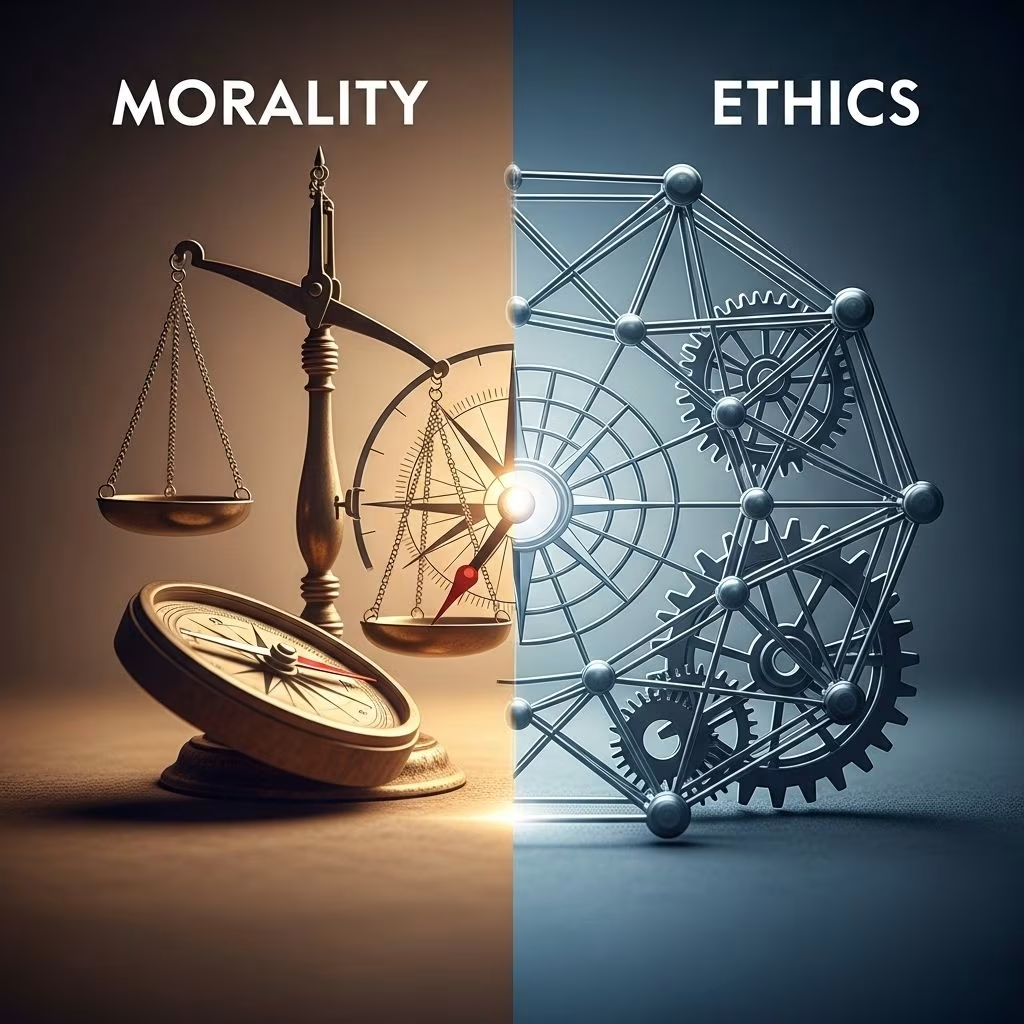
Morality and ethics are fundamental concepts that influence how individuals and societies determine what is right and wrong. While often used interchangeably, these terms have distinct meanings, applications, and implications. This article examines their definitions, primary differences, interconnections, examples, and their roles in shaping personal behavior, culture, and professional conduct.
Defining Morality and Ethics
To begin understanding the complexities of morality and ethics, it helps to establish clear definitions for each term:
- Morality: Refers to the principles, values, and beliefs regarding right and wrong that are held by an individual or a group. Morality is shaped by culture, upbringing, religion, and personal reflections. Moral judgments are often seen as personal and internalized, forming a moral compass that guides behavior.
- Ethics: Encompasses the set of rules, standards, or codes prescribed by external sources such as societies, institutions, or professional bodies to guide how individuals should act. Ethics is the formalized or systematic study of what is considered good conduct within a specific context, often aiming to create objectivity and consistency.
In philosophy, ethics is sometimes referred to as moral philosophy, the study of moral values and rules governing action.
Main Differences Between Ethics and Morality
| Aspect | Morality | Ethics |
|---|---|---|
| Origin | Personal or collective beliefs, shaped by culture, religion, upbringing | External standards set by society, organizations, or professions |
| Nature | Subjective, internalized | Objective, systematic, codified |
| Scope | What an individual or group believes is right or wrong | Rules and guidelines for appropriate conduct in a community or profession |
| Flexibility | Varies greatly between individuals and groups | Aims for consistency across settings or professions |
| Examples | Personal beliefs about honesty, fidelity, or generosity | Legal codes, medical ethics, business conduct codes |
While the concepts are closely related, the distinction primarily lies in the source and application of the principles.
Morality: The Personal and Cultural Foundation
Morality arises from personal convictions and collective values. It often varies significantly across individuals, cultures, and historical periods. Moral development is influenced by:
- Upbringing: Family and early socialization instill core values.
- Culture and Society: Different societies define specific actions as moral or immoral. What is considered acceptable in one group may be seen as wrong in another.
- Religion and Tradition: Religious doctrines provide frameworks for moral behavior—such as prohibitions against lying, stealing, or violence.
- Personal Experience: Moral perspectives evolve through individual experiences, reasoning, and reflection.
Morality is therefore fluid and highly individualized. For example, a community may have no strong views on a behavior like gambling, while some individuals may consider it deeply immoral based on personal or religious beliefs.
Ethics: Systematic Codes and Professional Standards
Ethics provides a structured approach to determining how people should act, especially when personal and cultural values might conflict. Ethical systems offer frameworks that promote:
- Consistency: Objective standards apply regardless of personal feelings.
- Accountability: Clear guidelines for acceptable behavior within a group, community, or profession.
- Debate and Reasoning: Encourages critical analysis and discussion to resolve dilemmas.
Common examples of ethical codes include:
- Medical Ethics: Principles such as “do no harm” (non-maleficence), patient autonomy, confidentiality, and justice in healthcare.
- Legal Ethics: Rules governing the behavior of lawyers, such as attorney-client privilege, honesty, and fair representation.
- Business Ethics: Standards for corporate integrity, fair dealing, and transparency.
Ethics is not only prescriptive but also analytic, questioning the justification and consequences of different actions and systems.
Common Areas of Overlap and Confusion
The distinction between ethics and morality is not always clear-cut; the terms are often used synonymously in everyday language and even among scholars. However, certain scenarios illustrate how the two can diverge:
- Personal vs. Social Norms: An individual might hold moral beliefs that differ from the ethical standards of their profession or community.
- Cultural Variation: Practices regarded as ethical in one culture may be deemed immoral in another.
- Moral Dilemmas: Ethical frameworks help navigate situations where moral intuitions or social values are in conflict, such as whistleblowing or euthanasia.
Philosophers often refer to morality as concerning personal conscience, while ethics relates to codified rules governing collective behavior. This complexity is reflected in difficult philosophical and real-life scenarios—for example, deciding whether it is permissible to harm one person to save several others (the classic “trolley problem”).
Philosophical Approaches to Morality and Ethics
In the Western philosophical tradition, ethical thought has developed three major approaches, each offering a unique perspective on how to resolve questions about right and wrong:
- Virtue Ethics: Stemming from Aristotle, this approach emphasizes the development of virtuous character traits such as courage, honesty, and generosity. Actions are right if they express virtuous qualities.
- Deontological Ethics: Associated with Immanuel Kant, deontology focuses on duty and adherence to rules. Moral actions are judged as right based on their alignment with universal duties, regardless of outcomes.
- Utilitarianism: Popularized by philosophers such as Jeremy Bentham and John Stuart Mill, this school holds that the correct action is the one that produces the greatest good or happiness for the greatest number.
Each approach offers tools to evaluate complex moral and ethical problems, but they can sometimes lead to conflicting recommendations in real-life cases.
Morality and Ethics in Daily Life and Professions
Both morality and ethics play vital roles in guiding everyday decisions, as well as setting standards in professional practice.
- Everyday Decisions: Questions about honesty, loyalty, and promises draw on personal morality and are influenced by cultural ethics.
- Medical and Professional Settings: Doctors, lawyers, engineers, and other professionals are bound by formal codes of ethics that sometimes require individuals to act against their personal moral intuition for the greater good or integrity of their profession.
- Business and Leadership: Strong ethical frameworks are essential for building trust and social legitimacy within organizations and among stakeholders.
Sometimes individuals face a conflict between their personal morality and the ethical requirements of a professional role—such as a lawyer defending a client whom they privately believe to be guilty. These conflicts are addressed through dialogue, ethical committees, and legal or organizational processes to ensure fair, reasoned outcomes.
Why the Distinction Matters
Understanding the difference between morality and ethics has meaningful implications:
- Personal Growth: Clarifying personal values vs. external standards supports self-awareness and integrity.
- Social Harmony: Shared ethical standards facilitate cooperation, reduce conflict, and create accountability.
- Critical Thinking: Recognizing these differences helps individuals question received wisdom and engage thoughtfully with cultural and professional expectations.
Recognizing these distinctions does not mean one is always more important than the other; rather, well-functioning individuals and societies balance personal morality and formal ethics to achieve justice, fairness, and personal fulfillment.
Real-World Examples
- Professional Codes vs. Personal Morals: A physician may personally oppose abortion for moral reasons, but ethical guidelines require providing complete information to patients and respecting their legal choices.
- Cultural Differences: Arranged marriage might be viewed as moral in some cultures, while others perceive it as unethical.
- Loyalty and Whistleblowing: Reporting organizational misconduct may require acting ethically (upholding legal or professional standards), even if it feels like a betrayal of personal loyalties.
Frequently Asked Questions (FAQs)
What is the simplest definition of morality?
Morality is the system of beliefs and values that distinguish right from wrong for an individual or group, shaped by culture, upbringing, and personal experience.
How is ethics different from morality?
Ethics are formal rules or codes set by society or professional groups to guide behavior, while morality refers to personal beliefs and values about right and wrong.
Can something be ethical but not moral?
Yes. Individuals may adhere to professional or legal codes (acting ethically) that conflict with their personal moral convictions, such as upholding client confidentiality even if they believe the client is guilty.
Why are ethics important in professions?
Ethics ensure consistent, fair, and responsible behavior, promoting trust and accountability within professions and protecting the interests of clients, the public, and employees.
Do all cultures have the same moral beliefs?
No. Morality varies widely across cultures, influenced by history, religion, environment, and social norms, leading to different perspectives on what is right or wrong.
Key Takeaways
- Morality is rooted in personal and cultural beliefs about right and wrong, while ethics refers to externally imposed standards or codes.
- Both concepts are crucial for guiding individual and collective behavior.
- Understanding the nuances helps resolve dilemmas, promote self-awareness, and build more just and effective societies.
References
- https://www.ebsco.com/research-starters/religion-and-philosophy/ethics-vs-morality
- https://pmc.ncbi.nlm.nih.gov/articles/PMC10593668/
- https://www.oxfordcollege.ac/news/ethics-versus-morals/
- https://www.britannica.com/story/whats-the-difference-between-morality-and-ethics
- https://www.youtube.com/watch?v=-gz5zdjSGvs
- https://www.masterclass.com/articles/moral-vs-ethical


