


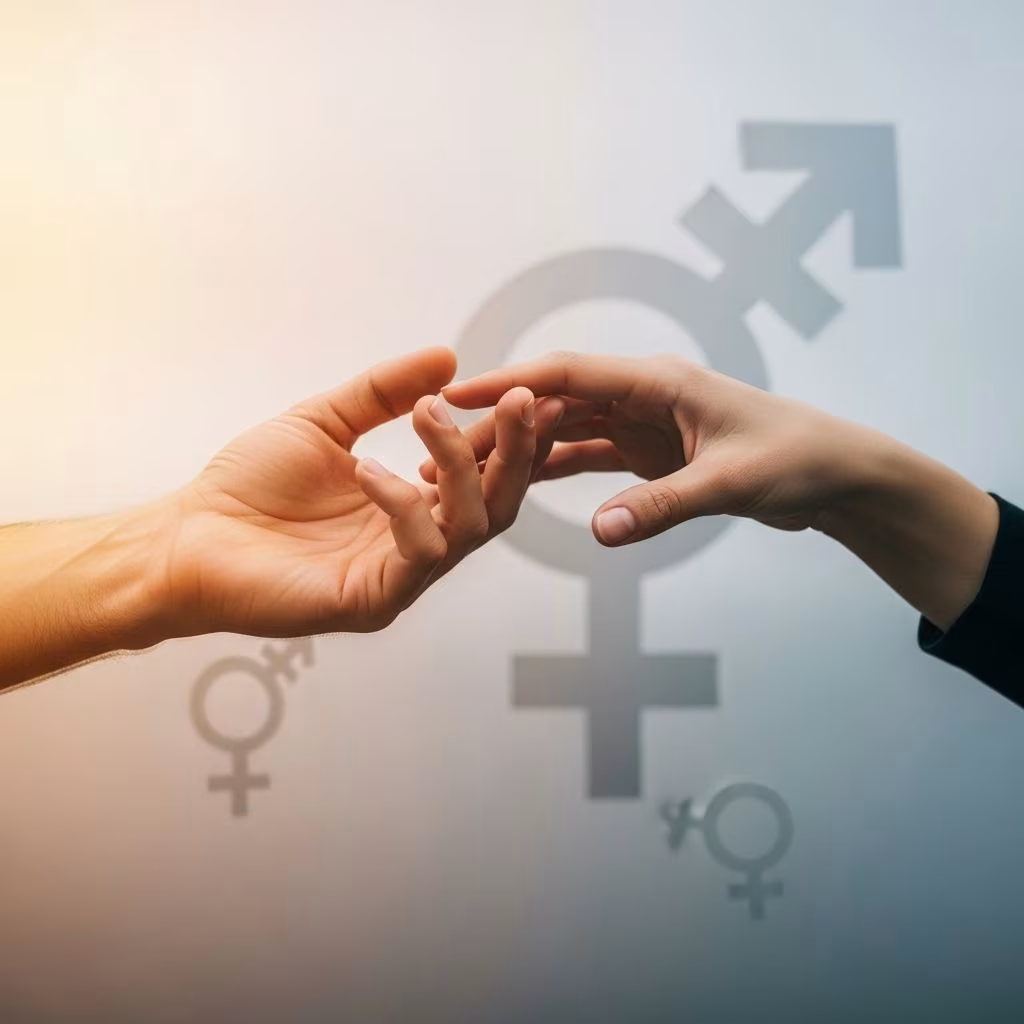
Understanding Gender Roles and Their Evolution
Gender roles represent deeply ingrained social expectations about how men and women should behave, communicate, and function within relationships. These roles have undergone significant transformation in recent decades, creating both opportunities and challenges for modern couples. Understanding how gender roles impact relationships is crucial for building healthier, more satisfying partnerships in today’s evolving social landscape.
Traditionally, gender roles have been clearly delineated, with men expected to be providers, protectors, and decision-makers, while women were expected to be nurturers, caregivers, and emotional supporters. However, as society has progressed toward greater gender equality, these rigid boundaries have become increasingly blurred, leading to both positive changes and new sources of relationship tension.
The Psychology Behind Gender Role Development
Gender roles are fundamentally social constructs that develop through complex psychological and social processes. From early childhood, individuals are socialized into specific gender expectations through family interactions, peer relationships, media exposure, and cultural messaging. These early experiences shape how people view themselves and their expected behaviors in romantic relationships.
Research indicates that gender role development is influenced by several key factors:
Family Socialization: Parents often unconsciously reinforce gender stereotypes through different expectations for sons and daughters, influencing how children learn to express emotions, handle conflict, and approach relationships.
Peer Influence: Same-sex friendships during childhood and adolescence reinforce gender-specific behavior patterns and communication styles that carry into adult romantic relationships.
Cultural Context: Broader societal messages about masculinity and femininity continue to shape individual expectations and behaviors, even as these messages evolve over time.
How Gender Roles Influence Relationship Dynamics
Gender roles significantly impact various aspects of romantic relationships, from communication patterns to decision-making processes and emotional expression. Understanding these influences can help couples navigate potential challenges and build stronger connections.
Communication Patterns and Conflict Resolution
Research reveals distinct gender differences in how men and women approach communication within relationships. Women are often socialized to be more expressive and emotionally open, while men may be encouraged to be more reserved and solution-focused. These different communication styles can create misunderstandings and frustration when partners have different expectations about emotional sharing and problem-solving approaches.
Studies examining couple communication patterns have found that women typically display more emotional expression during relationship discussions, while men may be more likely to withdraw from emotionally charged conversations. This dynamic, known as the demand/withdrawal pattern, can significantly impact relationship satisfaction when partners struggle to understand each other’s communication needs.
Division of Labor and Household Responsibilities
Traditional gender roles have historically dictated that men focus primarily on financial provision while women manage household duties and childcare. However, modern relationships often require more flexible arrangements as both partners frequently work outside the home. This shift has created opportunities for more equitable partnerships but has also generated new sources of stress and negotiation.
Contemporary research shows that women consistently desire greater increases in their partners’ instrumental support, including help with housework, parenting responsibilities, and household planning. This suggests that despite changing social expectations, many couples still struggle to achieve satisfactory divisions of labor that feel fair to both partners.
The Impact of Gender Role Conflict on Relationship Satisfaction
Gender role conflict occurs when individuals experience tension between their internalized gender role expectations and their personal desires or circumstances. This conflict can significantly impact relationship satisfaction and overall well-being.
Research demonstrates that individuals experiencing gender role conflict tend to report lower marital satisfaction compared to those with more flexible gender role orientations. Interestingly, people with feminine and androgynous gender roles consistently report higher levels of relationship satisfaction, suggesting that incorporating traditionally feminine characteristics such as empathy, emotional expressiveness, and nurturing behavior can benefit relationships regardless of biological sex.
The Benefits of Gender Role Flexibility
Couples who embrace more flexible approaches to gender roles often experience several relationship benefits:
Enhanced Communication: Partners who aren’t constrained by rigid gender expectations may feel more comfortable expressing their full range of emotions and needs.
Improved Problem-Solving: When both partners can access both traditionally masculine and feminine approaches to challenges, they have more tools available for addressing relationship issues.
Greater Relationship Satisfaction: Research consistently shows that androgynous individuals, who embody both masculine and feminine characteristics, report higher levels of marital satisfaction.
Modern Challenges in Gender Role Navigation
Contemporary couples face unique challenges as they navigate evolving gender role expectations. The transition away from traditional roles has created both liberation and confusion, as many people struggle to define their identities and relationships without clear cultural scripts.
Career and Family Balance
One of the most significant challenges modern couples face involves balancing career ambitions with family responsibilities. As women have gained greater access to professional opportunities, many couples must negotiate new arrangements for childcare, household management, and career prioritization. This negotiation can be particularly challenging when partners have different expectations about gender roles and responsibilities.
Emotional Expression and Vulnerability
Traditional masculinity has often discouraged emotional expression and vulnerability in men, while femininity has sometimes been associated with excessive emotionality. Modern relationships require both partners to develop emotional intelligence and the ability to express their needs clearly, regardless of gender stereotypes.
For many men, adapting to changing expectations around emotional expression can create anxiety and uncertainty. Similarly, women may struggle with balancing traditionally feminine nurturing roles with assertiveness and independence in their relationships.
Power Dynamics and Gender Equality
Gender roles significantly influence power dynamics within relationships, affecting everything from financial decision-making to conflict resolution strategies. Traditional gender roles have historically created hierarchical relationships where men held primary decision-making authority, but modern relationships increasingly strive for more egalitarian partnerships.
However, achieving true gender equality in relationships remains challenging. Power imbalances can create communication difficulties and mutual unhappiness between partners. When one partner maintains traditional gender role expectations while the other seeks more equality, significant relationship tension can result.
Strategies for Navigating Gender Roles in Relationships
Successfully navigating gender roles in modern relationships requires conscious effort, open communication, and willingness to challenge traditional assumptions. Couples can benefit from several key strategies:
Open Communication: Partners should regularly discuss their expectations, needs, and concerns related to gender roles and relationship dynamics. This includes addressing both emotional and practical aspects of their partnership.
Flexibility and Adaptation: Successful couples remain open to adjusting their roles and responsibilities as circumstances change, rather than rigidly adhering to predetermined gender expectations.
Individual Growth: Both partners benefit from developing a full range of skills and characteristics, regardless of traditional gender associations. This might include men developing nurturing abilities and women developing assertiveness skills.
Professional Support: Couples experiencing significant conflict around gender roles may benefit from professional counseling to help navigate these complex issues and develop healthier relationship patterns.
The Future of Gender Roles in Relationships
As society continues to evolve, gender roles in relationships will likely become increasingly fluid and individualized. Future couples may have greater freedom to define their partnerships based on personal preferences, strengths, and circumstances rather than societal expectations.
This evolution toward greater gender role flexibility offers significant potential benefits for relationship satisfaction and individual fulfillment. However, it also requires couples to develop stronger communication skills and greater self-awareness to successfully navigate less clearly defined relationship territories.
Frequently Asked Questions (FAQs)
Q: Do traditional gender roles always hurt relationships?
A: Not necessarily. Traditional gender roles can work well for some couples if both partners are genuinely comfortable with these arrangements. Problems arise when roles feel restrictive, unfair, or don’t match personal preferences and values.
Q: How can couples address gender role conflicts?
A: Open communication is key. Couples should discuss their expectations, express their needs clearly, and be willing to compromise and adapt their roles based on changing circumstances and personal growth.
Q: Are androgynous individuals more successful in relationships?
A: Research suggests that people with androgynous gender roles, who embody both masculine and feminine characteristics, often report higher relationship satisfaction. This may be because they have access to a broader range of emotional and behavioral responses.
Q: How do changing gender roles affect communication in relationships?
A: Evolving gender roles can improve communication by allowing both partners to express their full range of emotions and needs. However, it may also create confusion when partners have different expectations about communication styles and emotional expression.
Q: What should couples do if they have different views on gender roles?
A: Couples with different gender role perspectives should focus on understanding each other’s viewpoints, finding common ground, and negotiating arrangements that feel fair and satisfying to both partners. Professional counseling can be helpful in these situations.
References
- https://pmc.ncbi.nlm.nih.gov/articles/PMC7711028/
- https://pmc.ncbi.nlm.nih.gov/articles/PMC2778212/
- https://www.psychologytoday.com/us/blog/the-attraction-doctor/202003/gender-roles-do-they-make-or-break-romantic-relationships
- https://socialsci.libretexts.org/Courses/Pueblo_Community_College/Interpersonal_Communication_-_A_Mindful_Approach_to_Relationships_(Wrench_et_al.)/08:_Building_and_Maintaining_Relationships/8.06:_How_Gender_Affects_Relationships
- https://www.psychologytoday.com/us/blog/healthy-power-in-modern-times/202410/the-psychological-impact-of-gender-equality-on-men
- https://www.hercampus.com/school/u-mass-amherst/gender-roles-are-impacting-modern-relationships-more-than-you-think/
- https://gender.study/psychology-of-gender/socialization-gender-roles-relationships/


