


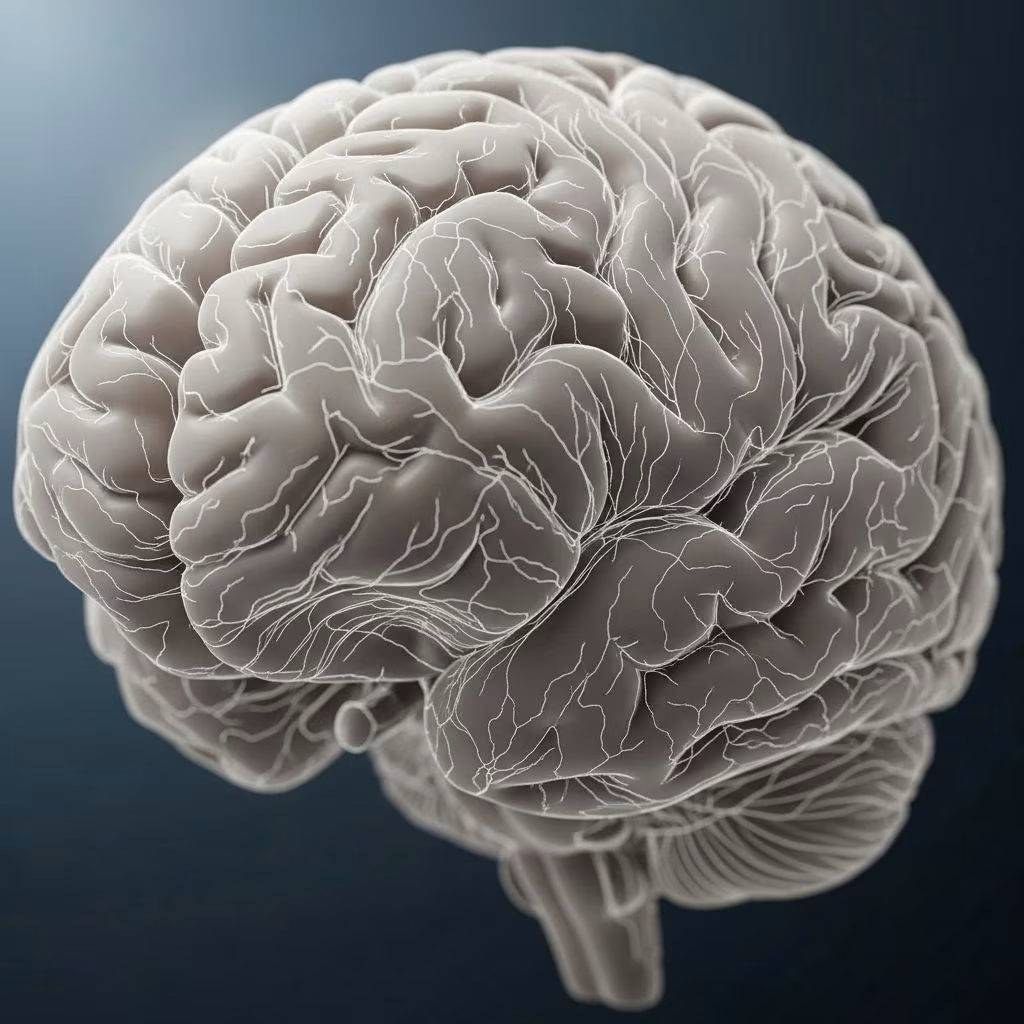
Gray matter is an essential part of the human nervous system, crucial for processing information, controlling movement, and enabling thought and perception. Understanding gray matter’s structure, function, and significance provides insights into how the brain works, influences cognitive abilities, and relates to neurological health.
What Is Gray Matter?
Gray matter refers to a type of tissue found throughout the central nervous system, characterized by its distinct grayish color. This color comes primarily from a high concentration of neuron cell bodies, dendrites, unmyelinated axons, and supporting glial cells, in contrast to the white matter which contains myelinated nerve fibers.
- Location: Most prominent as the cerebral cortex, the thin outer layer covering the brain, but also found deep within brain structures and as a butterfly-shaped region within the spinal cord.
- Structure: Contains neuronal cell bodies (somas), dendrites, various types of glial cells, and blood capillaries.
- Function: Serves as the site of information processing, synaptic activity, and neural integration necessary for sensation, perception, voluntary movement, and higher cognition.
Gray Matter vs. White Matter
The brain and spinal cord are composed of both gray matter and white matter, each serving distinct roles:
| Feature | Gray Matter | White Matter |
|---|---|---|
| Composition | Neuronal cell bodies, dendrites, unmyelinated axons, glial cells | Myelinated axons, few cell bodies |
| Color | Gray (due to nucleus-rich cell bodies and lack of myelin) | White (from the myelin sheath around axons) |
| Main function | Processing, integration, synaptic activity | Communication, transmission of signals between regions |
| Location in brain | Surface (cortex) and deep nuclei | Deep areas beneath cortex |
| Location in spinal cord | Central butterfly-shaped region | Surrounding outer region |
Gray Matter Composition
Gray matter’s complexity arises from its cellular architecture:
- Neuronal Cell Bodies (Somas): Main components housing a neuron’s nucleus; crucial for neural signaling.
- Dendrites: Branch-like extensions of neurons that receive incoming signals from other cells.
- Unmyelinated Axons: Extensions that transmit impulses locally within the gray matter.
- Glial Cells: Supportive cells including astrocytes (regulating the chemical environment), oligodendrocytes (myelination in CNS), and microglia (immune defense).
- Capillaries: Tiny blood vessels providing nutrients and oxygen to the neural tissue.
The abundant presence of glial cells allows for neural tissue support, repair, and homeostasis. In fact, glial cells outnumber neurons by a factor of ten in the human central nervous system.
Where Is Gray Matter in the Brain and Spinal Cord?
Gray matter is widely distributed throughout the nervous system:
- Cerebral Cortex: The outermost layer of the brain, forming ridges (gyri) and grooves (sulci) that increase the brain’s surface area and processing potential.
- Deep Brain Nuclei: Includes structures like the basal ganglia, thalamus, and hypothalamus, essential for movement, emotion, and sensory relay.
- Cerebellar Cortex: The cerebellum, though only 10% of brain volume, contains more neuronal cell bodies than any other region, supporting balance and coordination.
- Spinal Cord: Found within the central region, it forms a butterfly-shaped pattern, divided into anterior, posterior, and lateral gray columns involved in motor, sensory, and autonomic functions.
The folding of the cerebral cortex (gyri and sulci) allows more gray matter to fit inside the cranial cavity, giving humans greater cognitive capability compared to many other mammals.
Core Functions of Gray Matter
Gray matter is central to most brain operations, including:
- Information Processing: Integrates signals from sensory organs and other brain regions, decoding and responding to stimuli.
- Sensory Perception: Enables perception of touch, taste, vision, hearing, and smell.
- Motor Control: Initiates voluntary movements and coordinates automatic motor functions.
- Cognition: Responsible for memory, language, learning, reasoning, problem-solving, personality, and emotional responses.
- Autonomic Regulation: Certain gray matter regions modulate involuntary bodily functions like heart rate and digestion.
Functional Areas by Brain Lobe
- Frontal Lobe: Planning, voluntary movement, reasoning, personality, attention, and decision-making.
- Parietal Lobe: Integration of sensory information, spatial mapping, number processing, and somatosensory perception.
- Temporal Lobe: Language comprehension, auditory and olfactory processing, recognition, memory formation, and learning.
- Occipital Lobe: Visual processing – encoding features such as color, orientation, shape, and motion.
Specialized Gray Matter Regions
- Primary Motor Cortex: Controls execution of voluntary movements.
- Somatosensory Cortex: Processes tactile sensations like touch, pressure, pain, and temperature.
- Visual Cortex: Responsible for interpreting visual data from the eyes.
- Cerebellar Gray Matter: Supports balance, fine motor skills, and automatic motor behaviors.
Gray Matter in the Spinal Cord
The spinal cord’s gray matter allows communication between the body and brain, regulating both voluntary and involuntary actions:
- Anterior Gray Column: Contains motor neurons that send signals from the brain to muscles, initiating movement.
- Posterior Gray Column: Receives sensory information from the body, such as touch and pain, integrating environmental feedback.
- Lateral Gray Column: Found in thoracic and upper lumbar spinal cord; manages autonomic nervous system activity like sympathetic responses (e.g., increasing heart rate in emergencies).
Development and Changes in Gray Matter
Gray matter changes dynamically across the lifespan, responding to development, learning, and disease:
- Childhood and Adolescence: Gray matter volume increases, then prunes as the brain refines neural networks and becomes more efficient during maturation.
- Adulthood: Gray matter stabilizes, with some gradual thinning with age, especially in areas responsible for executive function and memory.
- Plasticity: Enriched environments, learning, and exercise can boost gray matter density and maintain brain health.
Gray Matter and Neurological Health
Gray matter integrity is critical for mental and neurological well-being. Damaged or diminished gray matter can affect thinking, emotion, and movement. Several conditions are associated with gray matter loss, abnormalities, or dysfunction, including:
- Alzheimer’s Disease: Loss of gray matter, especially in the hippocampus and cortex, leads to memory loss and cognitive decline.
- Multiple Sclerosis: Both white and gray matter can be affected, impairing physical and cognitive function.
- Schizophrenia and Mood Disorders: Some psychiatric illnesses show altered gray matter thickness or volume in specific brain regions, affecting mood, emotion, and perception.
- Stroke and Brain Injury: Localized damage to gray matter can cause loss of functions governed by that area (e.g., speech, movement).
How to Support Brain Gray Matter Health
Promoting gray matter health may help maintain cognitive abilities and reduce risk for neurodegenerative diseases. Evidence-based protective strategies include:
- Engaging in regular physical activity and cardiovascular exercise
- Staying intellectually active and continuously learning
- Ensuring adequate, high-quality sleep
- Consuming a balanced, nutrient-rich diet (e.g., Mediterranean-style)
- Managing stress and maintaining strong social connections
- Controlling risk factors like high blood pressure, diabetes, and cholesterol
Frequently Asked Questions (FAQs)
What is the main difference between gray matter and white matter?
Gray matter contains neuronal cell bodies and processes information, while white matter consists mainly of myelinated axons that transmit signals across different brain and spinal cord regions.
Where is gray matter found in the central nervous system?
Gray matter forms the cortex (surface) of the brain, deep brain structures (nuclei), cerebellar cortex, and the central core of the spinal cord in a butterfly-shaped pattern.
Does gray matter affect intelligence?
Gray matter is associated with cognitive abilities, including memory, learning, attention, language, and reasoning. Greater density or healthy gray matter in certain areas correlates with enhanced cognitive function.
How does gray matter change with age?
During development, gray matter increases and refines through pruning; it peaks in young adulthood and may gradually decline with age, but lifestyle factors can influence the rate and extent of these changes.
Can you increase gray matter?
Research indicates that physical exercise, intellectual engagement, skill learning, and a healthy lifestyle can increase gray matter volume or slow its loss, improving brain resilience and function.
What happens when gray matter is damaged?
Injury, stroke, or disease affecting gray matter can result in deficits in movement, sensation, language, memory, or emotional control, depending on the location and extent of the damage.
Key Takeaways
- Gray matter forms the processing centers of the brain and spinal cord, enabling sensation, thought, movement, and cognition.
- It consists primarily of neuron cell bodies, dendrites, and supporting glial cells.
- Gray matter plays a central role in voluntary actions, information processing, and regulating autonomic functions.
- Maintaining gray matter health is crucial for cognitive vitality across the lifespan.
References
- https://www.simplypsychology.org/what-is-grey-matter-in-the-brain.html
- https://www.ncbi.nlm.nih.gov/books/NBK553239/
- https://my.clevelandclinic.org/health/body/24831-grey-matter
- https://my.clevelandclinic.org/health/articles/23073-cerebral-cortex
- https://www.spinalcord.com/blog/gray-matter-vs-white-matter-in-the-brain
- https://headway.ie/about-brain-injury/introduction-to-the-brain/brain-structure-and-function/


