


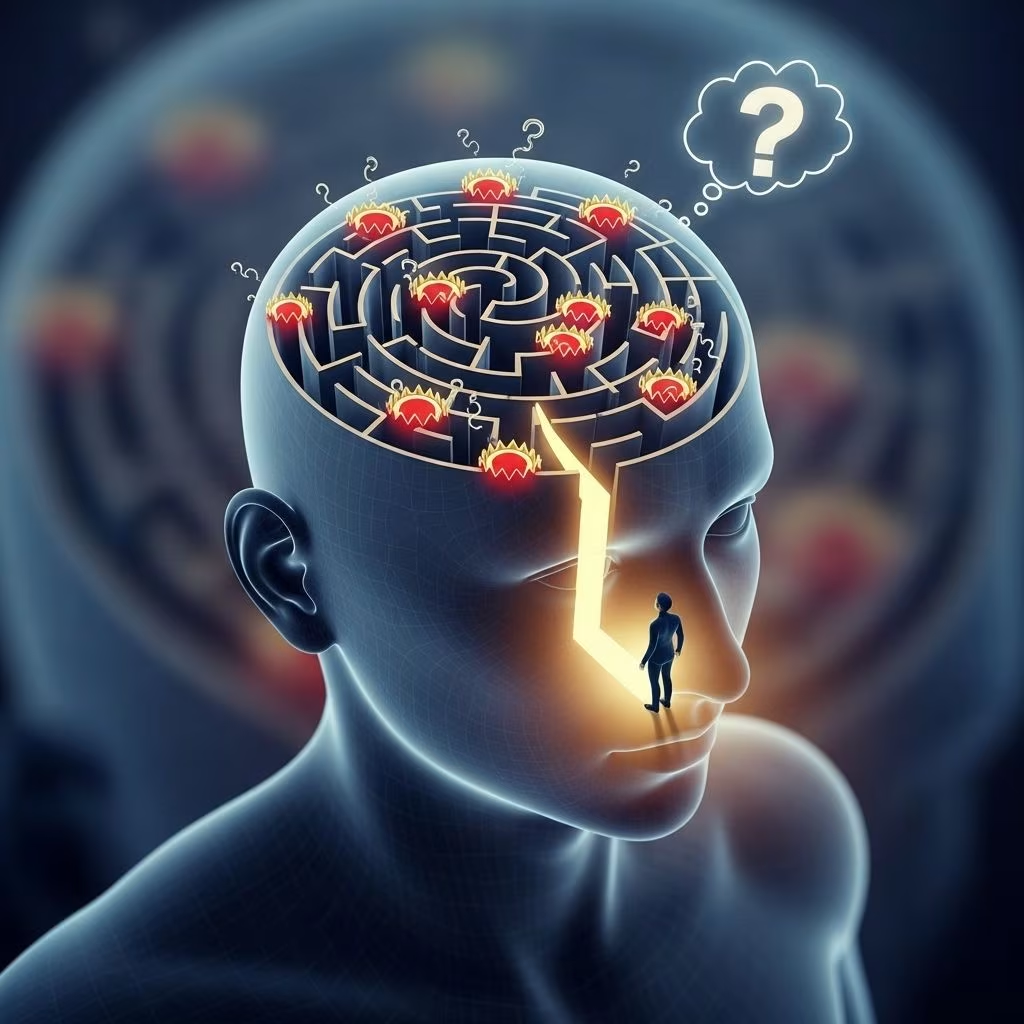
Every day, you make countless decisions—from what to wear to how to respond in complex social or professional scenarios. Some choices are trivial, but others can have lasting repercussions. Why do so many people, even with the best intentions and information, end up making poor decisions? This article explores the hidden mental factors that undermine good judgment, the common biases you might not recognize, and strategies to help you make smarter choices.
Understanding the Roots of Poor Decision-Making
Despite our confidence in logic and rational thinking, human minds are wired with specific biases and shortcuts, sometimes leading us astray. To understand why we make bad decisions, it’s crucial to recognize the cognitive traps and psychological influences that shape our thinking.
- Cognitive biases affect perception, memory, and evaluation of information.
- Emotional factors often override rational analysis.
- Social pressures and conformity can sway our choices, even against better judgment.
Common Psychological Shortcuts and Decision Errors
Human brains use heuristics—mental shortcuts—to simplify complex decisions. While efficient, these can introduce errors and biases. The most common pitfalls include:
1. Anchoring Bias
This occurs when we rely too heavily on the first piece of information encountered—the “anchor”—in making subsequent judgments. For example, if you hear that a car costs $30,000 and then see one for $25,000, you might view the second as a bargain, ignoring objective value.
2. Availability Heuristic
People tend to judge the likelihood of events based on how easily examples come to mind. After hearing about airplane accidents, you might overestimate your risk of flying, even when statistics show it’s safer than driving.
3. Confirmation Bias
We instinctively seek information that supports our beliefs and dismiss evidence to the contrary. This can reinforce poor choices, as we become blind to warning signs or opposing arguments.
4. Overconfidence Effect
Most people overestimate their knowledge, intuition, and predictive abilities, leading to risky or ill-advised actions. Overconfidence can blind you to the possibility of being wrong, increasing errors in judgment.
5. Sunk Cost Fallacy
Individuals often continue investing in a poor decision because they’ve already invested time, money, or effort—even when it would be wiser to cut losses. This fallacy keeps people stuck in unworkable projects or relationships.
6. Priming Effect
Your environment subtly shapes your choices. Subtle cues, such as words, images, or even moods, can influence your response to a situation without your conscious awareness. For example, seeing words associated with aggression can make you act more competitively in unrelated tasks.
The Influence of Emotional and Social Pressures
Decision-making isn’t just a logical process—emotions and group dynamics play powerful roles. Strong feelings like anxiety, excitement, or regret can bias your thinking. Social influences, from family, peers, or cultural norms, further complicate matters.
- Fear of Missing Out (FOMO): The urge to act based on social pressures, not personal values or needs.
- Peer Pressure and Groupthink: Adjusting your choices to fit in with a group, sometimes at the expense of personal judgment.
- Desire for Acceptance: Making choices to seek approval or avoid conflict, even if those choices contradict your true beliefs.
Groupthink: When Consensus Leads to Poor Outcomes
Groupthink happens when the desire for consensus overrides critical evaluation. Symptoms include:
- Illusion of invulnerability
- Rationalizing warnings away
- Belief in the group’s inherent morality
- Stereotyping outsiders
- Suppressing dissent (self-censorship)
- Pressure to conform
This leads to overlooking better solutions and failing to prepare for negative outcomes. Creating open channels for dissent and encouraging diverse viewpoints can help prevent groupthink.
Other Factors That Impair Decision-Making
Time Pressure and Cognitive Overload
When forced to decide quickly or juggle many facts at once, the brain falls back on shortcuts—sometimes at the expense of accuracy. Cognitive overload increases the likelihood of errors and snap judgments.
Habitual Behavior and Status Quo Bias
The tendency to favor familiar routines and existing situations (‘status quo bias’) can make us resist beneficial changes.
This inertia can keep us from seeking, evaluating, or implementing better alternatives.
Clutter and Environmental Stress
Physical and mental clutter can overwhelm your brain, making it more difficult to weigh options clearly. Some people avoid decisions altogether due to anxiety about making a mistake, resulting in inertia or hoarding behaviors.
How to Make Better Decisions
Practical Strategies to Counteract Cognitive Biases
- Recognize Common Biases: Awareness is the first step. Training yourself to spot patterns like anchoring or overconfidence can help you pause before acting impulsively.
- Slow Down: Give yourself space to deliberate, especially on significant decisions. Time helps circumvent snap judgments.
- Challenge Your Assumptions: Seek out information that contradicts your view instead of only confirming it.
- Quantify the Pros and Cons: Explicitly list benefits and drawbacks to clarify your thinking.
- Seek Objective Feedback: Consult trusted friends or mentors who offer honest perspectives.
- Set Decision Criteria in Advance: Define what matters most before evaluating your options to guard against emotional sway.
Minimizing Social and Emotional Influence
- Encourage Dissent: Build environments, at work and home, where alternative viewpoints are welcome.
- Practice Assertiveness: Make choices that align with your own values rather than succumbing to peer or societal expectations.
- Be Mindful of Emotional Triggers: Learn to recognize when strong feelings may be clouding your judgment, and opt to wait until they subside before deciding.
Improving Your Decision Environment
- Reduce Clutter: Organize your physical and digital spaces to minimize distractions and stress, freeing up cognitive resources for thoughtful analysis.
- Limit Choices: Sometimes too many options create paralysis. Narrow your options to a manageable number.
- Use Checklists and Decision Aids: These tools can provide structure and prompt you to consider all relevant information.
Table: Common Biases and How to Overcome Them
| Bias | Description | Improvement Strategy |
|---|---|---|
| Anchoring | Over-reliance on first information | Consider multiple starting points; re-evaluate after initial impression |
| Availability | Judging likelihood based on vivid examples | Analyze actual statistics; question memorable anecdotes |
| Confirmation Bias | Seeking info that supports one’s views | Deliberately seek out opposing evidence |
| Overconfidence | Overestimating one’s ability or knowledge | Solicit feedback; consider past mistakes |
| Sunk Cost Fallacy | Continuing a bad investment due to resources already spent | Focus on future costs and benefits, not past investments |
Frequently Asked Questions (FAQs)
Q: Why do people keep making the same bad decisions repeatedly?
A: Repetition often comes from ingrained habits, lack of awareness about personal biases, or strong emotional associations. Breaking the cycle requires self-reflection, feedback from others, and developing new, more mindful patterns of evaluation.
Q: How can I tell if my emotions are clouding my judgment?
A: Watch for signs like racing thoughts, impulsivity, irrational fears, or feeling pressured to decide quickly. If possible, delay important decisions until you feel calm and objective.
Q: What role does groupthink play in bad decisions at work?
A: Groupthink can lead teams to overlook risks, ignore alternatives, and stifle dissent—resulting in suboptimal choices. Encourage open discussions and appoint a ‘devil’s advocate’ to challenge ideas regularly.
Q: Are there any tools or techniques to help me make better decisions daily?
A: Yes. Use decision matrices, pros-and-cons lists, or checklists to guide your thinking. Scheduling time for decisions and consulting objective third parties can also reduce bias risk.
Q: Can decluttering my environment really help me make better decisions?
A: Yes. Less physical and mental clutter means fewer distractions, helping you focus on clear, deliberate thinking and avoid overwhelm.
Conclusion: Toward Smarter, More Self-Aware Choices
Bad decisions are rarely a sign of laziness or incompetence. Instead, they’re often the result of subtle psychological forces, cognitive biases, and environmental pressures operating beneath the surface. By learning to recognize these influences—and applying practical corrective strategies—you can bypass the most common mental traps and build a habit of better decision-making. The path to wiser choices lies in self-awareness, critical thinking, and a willingness to challenge both your own assumptions and those of the groups you belong to.


