


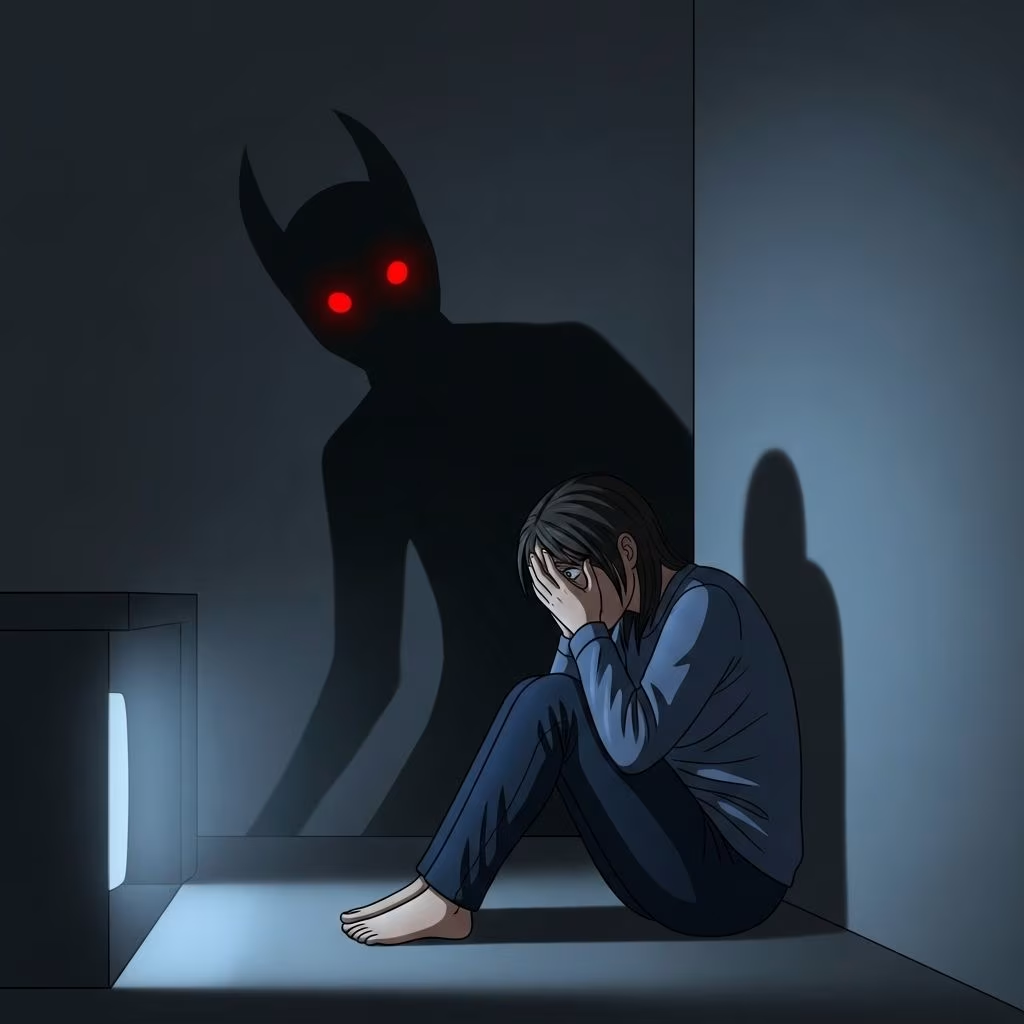
Monsters have haunted the human imagination for millennia. From childhood nightmares to blockbuster horror films, fears of the unknown and unnatural persist across cultures and life stages. While for many people these fears are fleeting or thrilling, for others they can develop into a persistent phobia known as teraphobia. This article explores the psychological foundations, symptoms, prevalence, and treatment of this fear, and seeks to demystify why monsters command such a powerful grip on the mind.
What Is Teraphobia?
Teraphobia is the term used to describe an intense, irrational fear of monsters or terrifying beings—real or imagined. Monsters that evoke this fear range from creatures of folklore and mythology, such as the Cyclops or Kraken, to modern representations in horror movies or even undefined threats that lurk under the bed . Though most common in childhood, for some, this fear can persist into adolescence and adulthood, influencing daily life, relationships, and emotional well-being.
- Not just a childhood issue: While the fear of monsters is most frequent in children, it can transition into adulthood, where it might contribute to or coexist with other anxiety disorders.
- Clinical definition: Teraphobia is not listed as a specific disorder in the DSM-5 but falls under Specific Phobia: Other Type .
- Severity spectrum: It may manifest as mild discomfort or escalate into paralyzing panic, hindering normal routines and social interactions.
Common Triggers and Cultural Origins
Monsters reflect collective anxieties and societal taboos. They often serve as a narrative device for parents or storytellers to signal danger or establish social norms. Children are especially susceptible due to their vivid imaginations and developing perceptions of reality versus fantasy.
- Folklore and mythology: Tales of fearsome creatures are part of virtually every culture, shaping societal fears and warnings.
- Media and literature: Scary movies, books, or even Halloween festivities can introduce or amplify fear in impressionable minds .
- Personal experiences: Episodes such as nightmares, scary costumes, or unexpected noises in the dark can seed or reinforce fears.
- Verbal suggestions: Parents or caregivers reinforcing the existence of monsters (even jokingly) can have a powerful impact on a child’s beliefs and fears.
The Psychology of Monster Fear
Psychologically, monsters serve as symbols for deeper anxieties—fear of the unknown, feelings of vulnerability, or experiences that lack explanation. This phenomenon can be understood through several psychological theories:
1. Rachman’s Theory of Fear Acquisition
- Direct Conditioning: Fear develops from a direct unpleasant experience (like being startled at night).
- Vicarious Learning: Observing others’ fearful reactions can implant similar fears in the observer.
- Informational Transmission: Hearing stories or warnings from adults can solidify irrational beliefs about monsters .
2. Monsters as Psychological Metaphors
- Symbol of the unknown: Monsters often represent what is out of reach or not understood, particularly for children still learning to distinguish reality.
- Projection of internal anxieties: Sometimes, fears about punishment, abandonment, or trauma are projected onto ‘monsters’ as tangible threats .
- Societal function: Monsters help societies establish and reinforce boundaries between acceptable and taboo behaviors.
Symptoms of Teraphobia
The experience and expression of teraphobia can vary but often include a combination of emotional, mental, and physical symptoms. Symptoms typically occur when the individual thinks about, sees, or discusses monsters or similar entities.
- Intense anxiety or panic upon exposure to triggers (images, sounds, stories).
- Avoidance behaviors—refusal to enter dark rooms, avoid scary content or even certain toys.
- Physical symptoms:
- Rapid heartbeat
- Sweating
- Shortness of breath
- Trembling or shaking
- Dizziness or nausea
- Pervasive thoughts and worries about the possible presence of monsters.
- Panic attacks in extreme cases, especially if unexpectedly confronted with the feared stimulus .
Why Monsters?
Monsters are effective triggers for phobias for several reasons:
- Ambiguity: Monsters are generally undefined, allowing imaginations to fill in fearful details.
- Dichotomy of safety and danger: Monsters are positioned as threats lurking just beyond the safe boundaries of light, family, and home.
- Loss of control: Encounters with monsters often occur at night or in the dark, when other senses are heightened and control is reduced.
Monster Fears in Childhood
Children’s fears of monsters are a common developmental experience. The distinction between fantasy and reality is still emerging, and nighttime—when safety cues diminish—can become a prime stage for fears to surface .
- Normal developmental stage: Most children experience some fear of monsters; it is usually transient and resolves with age .
- Common sources: Darkness, being alone, hearing unsettling sounds, or watching scary media.
- Expression:
- Refusal to sleep alone
- Seeking reassurance from adults
- Clinging to rituals before bed (checking under the bed, requesting night lights)
- Increased anxiety after stressful events
Monsters may serve as a scapegoat for broader anxieties—a tangible way for children to express confusion, fear, or uncertainty about their environment .
When Monster Fears Become a Problem
| Typical Childhood Fear | Phobia / Clinical Concern |
|---|---|
| Resolves within weeks/months | Persisting for 6+ months |
| Does not severely interfere with life | Disrupts sleep, causes distress, limits activities |
| Reassurance is effective | Reassurance has minimal effect |
| Encouragement and comfort help | Panic attacks, severe avoidance, significant anxiety |
- Seek professional help if a child’s fear:
- Persists for more than six months
- Disrupts routines (sleep, school, relationships)
- Is accompanied by panic, nightmares, or extreme avoidance
Teraphobia in Adults
While less frequently discussed, some adults retain significant fear of monsters, especially after traumatic events or if they were not supported through their fears as children. In adults, monster fears may also manifest symbolically as anxiety about the unknown, mistrust of others, or aversions to horror media .
- Avoidance of triggers: Refusing to engage with horror movies, supernatural fiction, or certain cultural rituals.
- Co-occurrence with other phobias: Such as agoraphobia, fear of the dark, or social anxieties.
- Stigma: Adults may avoid discussing these fears due to shame, which can inhibit seeking help.
Diagnosis of Teraphobia
Teraphobia is typically diagnosed as part of specific phobias, a category in the DSM-5 used to describe persistent, unreasonable fears about particular objects or situations. Proper diagnosis requires ruling out other anxiety or developmental disorders.
- Clinical interview: A qualified mental health professional evaluates symptoms and how the fear affects daily living.
- Relating to DSM-5 criteria: The phobia must cause marked distress and significant impairment in social, academic, or occupational areas.
- Tools: Structured interviews, questionnaires, and behavioral assessments may be used.
Treatment for Teraphobia
Most childhood monster fears fade with reassurance and the development of reasoning; however, persistent or severe cases benefit from psychological interventions. Adults who struggle to function because of teraphobia may also require professional help.
Evidence-Based Interventions Include:
- Cognitive-Behavioral Therapy (CBT): The most effective approach, helping individuals challenge irrational thoughts and develop healthy coping strategies .
- Exposure therapy: Gradual, controlled exposure to the feared stimulus (real or imagined) in a safe environment, helping to reduce anxiety through desensitization.
- Relaxation techniques: Deep breathing, muscle relaxation, and visualization help manage acute anxiety symptoms during triggering events.
- Parental guidance for children:
- Offer calm reassurance without reinforcing fears.
- Maintain comforting routines (nightlights, bedtime stories).
- Avoid introducing unnecessary scary stimuli.
- Psychoeducation: Teaching individuals (and parents) about the nature of fears and how they can be managed.
Living with Teraphobia: Tips for Parents and Adults
- Open communication: Invite conversations about fears without judgment or ridicule.
- Provide reassurance: Use comfort objects, nightlights, and calming bedtime routines.
- Validate emotions: Never dismiss a person’s fear; instead, acknowledge it as real and offer support.
- Model coping: Demonstrate and teach healthy ways to address and reduce fears.
- Seek help: If fears interfere with daily life or cause distress, consult a mental health professional.
Frequently Asked Questions (FAQ)
What is the difference between a normal fear of monsters and teraphobia?
Normal childhood fears of monsters are typically transient and do not significantly disrupt daily life. Teraphobia is a clinical term used when the fear is excessive, persistent, and interferes with normal functioning, persisting for more than six months and causing significant distress or avoidance .
Why do children fear monsters at night?
The combination of darkness, imagination, and uncertainty makes night-time a prime opportunity for fears to surface. Children’s brains often fill gaps in sensory information with imagined threats, especially when tired or stressed .
Can adults have a monster phobia?
Yes. While uncommon, some adults experience persistent fear of monsters. For them, it may be symbolic of deeper anxieties or the result of unresolved childhood fears. Adults may avoid discussing these fears due to stigma or embarrassment .
Are monster fears linked to any other psychological disorders?
Fear of monsters may co-occur with other anxiety disorders, such as generalized anxiety disorder, panic disorder, or specific phobias (e.g., fear of the dark). It can also be a manifestation of unresolved trauma .
What can parents do to help children with this fear?
- Reassure your child that they are safe—avoid mocking or dismissing the fear.
- Establish calm, predictable evening routines.
- Offer nightlights and soothing bedtime rituals.
- If the fear persists and disrupts daily functioning, consult a child therapist.
Takeaway
The fear of monsters—teraphobia—offers insight into the way humans process anxiety, separate fantasy from reality, and cope with the unknown. For children, it is a normal if anxious part of development; for adults, it may signal deeper unresolved issues. If these fears significantly intrude on life, evidence-based therapy provides pathways to recovery. Above all, empathy and understanding are key—whether the monster lives in a storybook or the shadows of the imagination.
References
- https://psychology.tips/what-is-teraphobia/
- https://aihcp.net/2025/08/20/behavioral-health-certifications-psychology-and-the-fear-of-monsters/
- https://psychcentral.com/health/teraphobia
- https://pmc.ncbi.nlm.nih.gov/articles/PMC5228195/
- http://www.awareparenting.com/answer2.htm
- https://www.mayoclinic.org/diseases-conditions/specific-phobias/symptoms-causes/syc-20355156
- https://www.nature.com/articles/s41599-020-00628-2


