


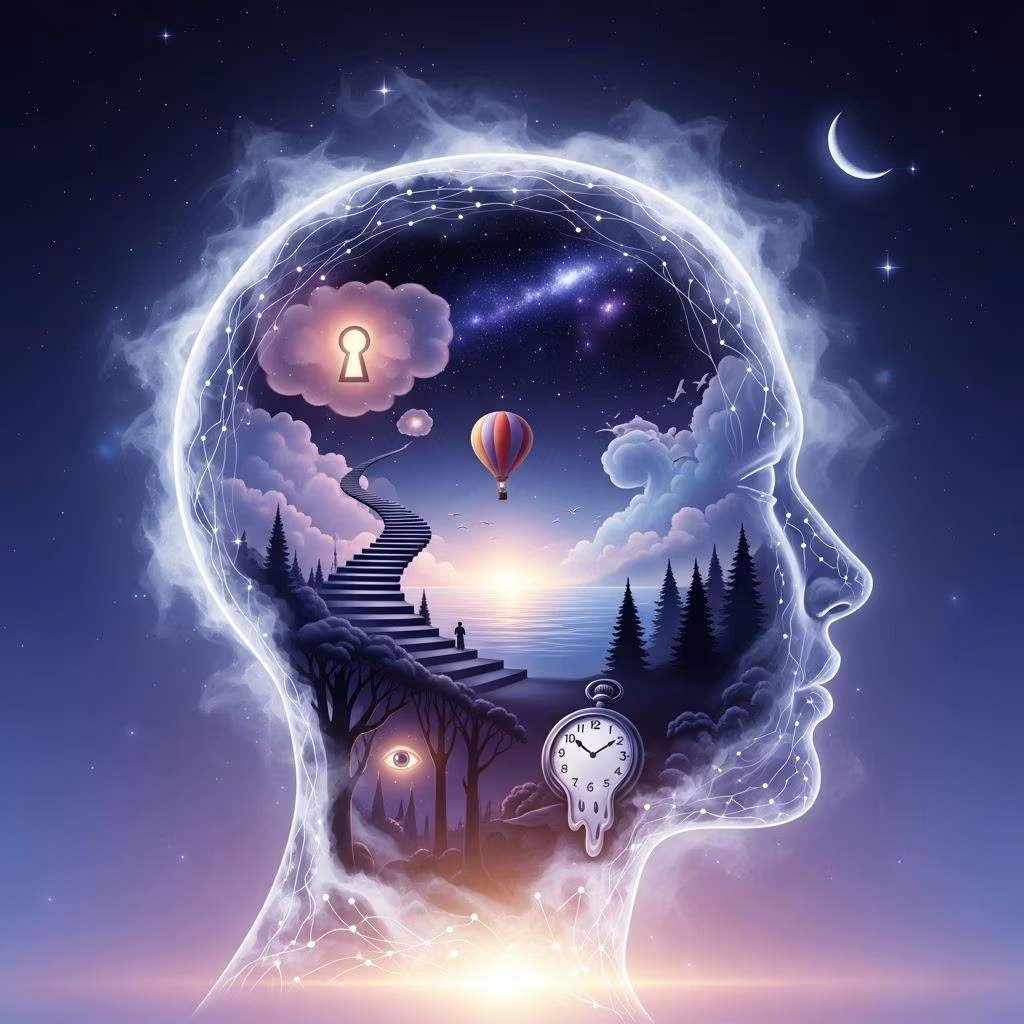
Dream Interpretation: What Do Dreams Mean?
Dreams have intrigued humans for thousands of years, inspiring myths, scientific research, art, and psychology. The search for meaning in our dreams crosses cultures and eras, prompting questions about why we dream, what our dreams indicate about our subconscious minds, and whether dream interpretation can offer insight into who we are. In this article, we’ll explore the major theories, recurrent themes, and scientific findings surrounding dream interpretation and the meaning of dreams.
Why Do People Dream?
Dreaming is a universal part of the human experience. On average, adults and babies spend about two hours each night dreaming, even if most dreams are quickly forgotten upon waking. Scientists have yet to reach consensus on the exact purpose of dreams, though several prominent theories exist:
- Information Processing: Dreams help with sorting and storing memories or facilitating problem-solving by running mental simulations.
- Psychological Safety Valve: Sigmund Freud famously suggested that dreams act as outlets for unconscious thoughts, desires, and impulses that are difficult to express in waking life.
- Compensatory Mechanisms: Carl Jung argued that dreaming balances aspects of our conscious and unconscious selves, serving to regulate emotional states.
- Biological Repair: Neurophysiological research proposes that dreaming is related to neural maintenance, emotional processing, or cognitive rehearsal.
No single theory dominates, and new findings in neuroscience continue to shape our understanding of what happens in our minds during sleep.
Major Theories of Dream Interpretation
For centuries, dream interpretation has been debated by scholars, spiritual leaders, and psychologists alike. Let’s examine the most influential approaches to understanding dreams and their meanings:
Psychoanalytic Theory: Sigmund Freud
Freud’s theory remains the most famous. In his landmark book The Interpretation of Dreams, Freud described dreams as expressions of our subconscious, where forbidden wishes and impulses are disguised through symbolic imagery. According to Freud:
- Manifest Content: What the dreamer consciously recalls.
- Latent Content: The hidden, symbolic meaning of the dream, which reflects unconscious desires or conflicts.
Freud developed a process called dream work to decode latent meanings from manifest dream symbols by associating elements and exploring their psychological significance. For example, dreaming of blowing out candles beside a gray-haired man might symbolize buried resentment toward a father figure, with candles representing knowledge and the act of extinguishing symbolizing the desire to end unwanted advice.
Analytical Perspective: Carl Jung
Jung, initially Freud’s collaborator, proposed different hypotheses. He saw dreams as compensatory; they balance our waking attitudes by manifesting aspects that are repressed or neglected in daily life. Jung emphasized multi-level analysis:
- Personal Unconscious: Past experiences or emotions relevant to the dreamer.
- Cultural Unconscious: Symbolic resonances influenced by society or culture.
- Collective Unconscious: Universal archetypes, such as death, motherhood, or fertility, which surface in dreams as shared symbols.
For Jung, the meaning of a dream depends not only on personal context but can also reflect broad, shared human experiences. For instance, stepping into manure might simply relate to a recent experience, or—through deeper cultural or archetypal analysis—symbolize issues of fertility or transformation.
Cognitive Approach
Calvin Hall and subsequent cognitive theorists suggest dreams are internal reflections of a person’s conceptions about themselves, others, and reality. According to this approach, dreams mirror cognitive processes, schemas, and distortions similar to those found while awake.
- Dreams as Cognitive Reflections: Recurring nightmares can reveal deep-seated anxieties, faulty reasoning, or pessimistic expectations.
- Scientific Method: Hall’s method emphasizes analysis of dream figures, interactions, settings, and outcomes, aiming to understand the dreamer’s personality and attitudes more than extracting hidden symbolism.
Projection Theory: Zygmunt Piotrowski
Piotrowski’s approach focuses on psychological projection. In his view, characters in our dreams often represent facets of the dreamer’s own psyche. For example:
- If a person dreams of interacting with someone who ignores them, the dream may reflect their own inability to listen or relate, rather than a literal relationship issue.
This method highlights how dream imagery can reveal internal conflicts through external scenarios.
The Science of Dreaming
Modern science has unraveled much about the mechanics of dreaming. Key insights include:
- REM Sleep: Most vivid dreams occur during rapid eye movement (REM) sleep cycles.
- Universal Experience: Almost everyone dreams, though frequency and recall vary. Even if you don’t remember your dreams, you almost certainly have them.
Recent studies in neuroscience and biochemistry address questions about the biological basis of dreaming, but the subjective meanings remain largely open to interpretation.
Dream Themes and Symbolism
Certain dream topics are remarkably common, appearing in cultures around the world. While interpretations differ according to personal, social, and cultural backgrounds, the following symbols recur:
| Common Dream Topic | Possible Meanings |
|---|---|
| Falling | Feeling out of control, anxiety, or fear of failure. |
| Being chased | Trying to avoid something in waking life or reluctance to face a situation. |
| Death | Endings, transformation, or fear of the unknown. |
| Flying | Desire for freedom or a sense of empowerment. |
| Teeth falling out | Insecurity, concerns about self-image or loss. |
| Being naked in public | Vulnerability, embarrassment, or exposure of secrets. |
Can Dreams Predict the Future?
The idea that dreams can serve as premonitions or foresee future events is ancient and persists in folklore. However, scientific evaluation does not support dreams as reliable predictors. While some people report dreaming about events that later occur, these are generally explained by random coincidence, selective memory, or anticipation of likely outcomes.
Dreams Across Cultures and History
Throughout history, dream interpretation has been shaped by cultural beliefs, spiritual practices, and societal norms. In ancient Greece and Rome, dreams were considered messages from the gods and were consulted before making important decisions. Many Indigenous cultures view dreams as spiritual journeys or sources of wisdom. Modern Western psychology tends to prioritize personal symbolism and unconscious processes.
- Some cultures maintain dream journals and engage in group interpretation sessions.
- Religious texts across traditions record dreams as omens, divine communication, or moral lessons.
How to Interpret Your Own Dreams
Interpreting dreams is both an art and a science, requiring attention to personal context and recurring themes. If you wish to analyze your dreams, consider these steps:
- Record Immediately: Keep a journal by your bed and write notes upon waking to capture details before they fade.
- Identify Patterns: Look for recurring symbols or storylines; repetition often indicates important personal themes.
- Consider Emotions: Your feelings in the dream matter as much as the events.
- Use Associations: Explore what each element means to you, rather than relying exclusively on dream dictionaries.
- Reflect on Life Context: Relate dream content to current issues, relationships, or stresses.
Some people find it useful to consult with therapists—particularly those trained in Jungian or psychoanalytic traditions—for deeper insight.
Scientific Limitations and Ongoing Questions
Despite advances in psychology and neuroscience, many aspects of dreams remain mysterious:
- Subjectivity: The personal nature of dreams makes broad generalizations difficult.
- Memory: Most dreams are forgotten quickly; recall depends on biological and psychological factors.
- Lack of Consensus: Scholars debate the value of dream analysis, with some emphasizing metaphorical and personal insight, while others attribute dreams to neurological activity without deeper meaning.
Frequently Asked Questions (FAQs) About Dreams
Do all people dream every night?
Yes, research indicates that virtually everyone dreams during sleep, though not all remember their dreams.
Can dreams help solve problems or give advice?
Some studies suggest dreams may assist with problem-solving or emotional processing, acting as a rehearsal for challenges faced when awake.
Is there scientific evidence that dreams predict the future?
No. While some cultures believe in prophetic dreams, scientific research does not support the predictive power of dreams.
Are recurring dreams significant?
Recurring dreams often highlight unresolved issues, persistent anxieties, or ongoing themes in your life. Their repetition increases the likelihood of personal significance.
What is lucid dreaming?
Lucid dreaming occurs when the dreamer becomes aware that they are dreaming and sometimes can control the narrative. It can be practiced to enhance self-awareness and emotional regulation.
Conclusion: What Do Dreams Reveal?
Dreams remain one of psychology’s most fascinating puzzles. Although interpretation approaches differ, most agree that dreams can reflect our thoughts, desires, fears, and hopes—whether through symbolic metaphor or cognitive patterns. The art of interpreting dreams lies in balancing psychological expertise, cultural context, and personal reflection. Ultimately, dreams may be an invitation to deeper self-understanding, creativity, and emotional well-being.
References
- https://www.ebsco.com/research-starters/health-and-medicine/dreams
- https://www.oniri.io/post/dream-in-therapy
- https://meganmary.com/as-seen-in-verywell-mind-how-to-lucid-dream/
- https://science.howstuffworks.com/life/inside-the-mind/human-brain/dream9.htm
- https://www.britannica.com/topic/dream-sleep-experience/Psychoanalytic-interpretations
- https://www.revely.app/blog-article/does-everyone-dream-during-the-night/r/recRjpreUke5cAv98
- https://www.snooze.com.au/blogs/inspiration/4-reasons-why-we-dream


