


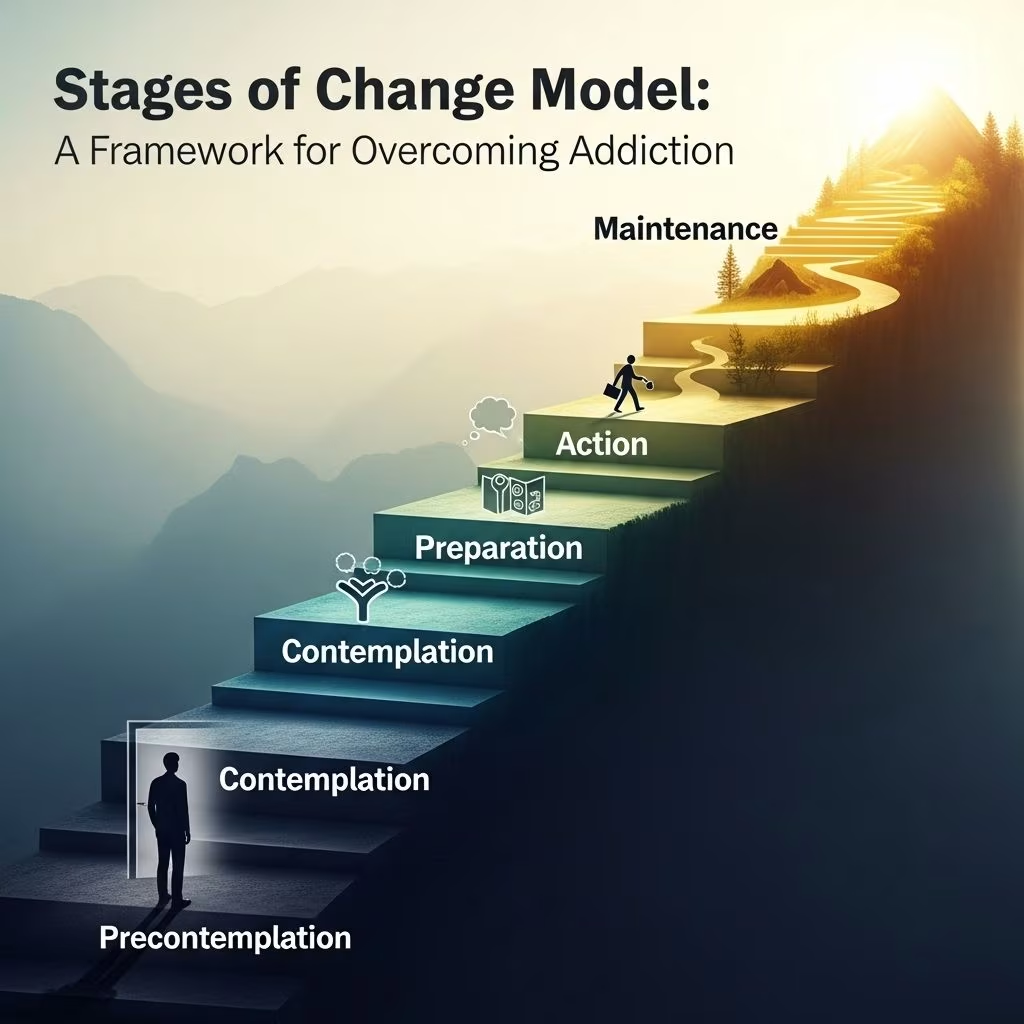
The Stages of Change Model: A Foundation for Overcoming Addiction
The Stages of Change Model, also known as the Transtheoretical Model, provides a comprehensive framework for understanding how people overcome addiction. Developed by psychologists James Prochaska and Carlo DiClemente, this model strongly influences the way professionals approach substance use disorders and other behavior changes. Recognizing that recovery is rarely linear, this model breaks down the journey into distinct, manageable phases that can guide individuals and practitioners toward lasting transformation.
Why Understanding Stages Matters
- Individualized Treatment: Tailoring interventions to a person’s current stage enhances effectiveness.
- Realistic Expectations: Recognizing recovery as a process prevents frustration and defeat when setbacks occur.
- Empowerment: Identifying one’s stage fosters self-awareness and motivates change.
What Are the Stages of Change in Addiction Recovery?
The Stages of Change Model typically identifies five main phases:
- Precontemplation
- Contemplation
- Preparation
- Action
- Maintenance
Some practitioners add a sixth stage, Termination, which indicates the person has reached a point of complete independence from the addictive behavior. Others discuss Relapse as a parallel or optional phase, highlighting how setbacks are common and can be addressed constructively.
| Stage | Key Characteristics | Typical Emotional State |
|---|---|---|
| Precontemplation | Unaware of problem, resistant to change | Denial, defensiveness |
| Contemplation | Acknowledges problem, explores feelings | Ambivalent, uncertain |
| Preparation | Plans steps for action, seeks support | Determined, hopeful |
| Action | Implements changes, actively engages in recovery | Committed, proactive |
| Maintenance | Sustains behavior changes, prevents relapse | Focused, resilient |
Detailed Stage Descriptions
Precontemplation
In Precontemplation, individuals do not recognize their substance use as a problem. Thoughts such as “It’s not hurting anyone,” or “I deserve this,” are common. Denial and defensiveness prevail, often accompanied by resistance to intervention. People in this stage:
- Enjoy the perceived benefits of their behavior
- Minimize negative consequences
- React negatively to advice, confrontation, or suggestions to change
- May only transition forward after experiencing significant consequences
Questions for Reflection:
- What problems am I experiencing in my life?
- How might my substance use contribute to these challenges?
- What are the possible long-term outcomes if I don’t change?
Contemplation
Within Contemplation, people begin to acknowledge their problem but remain ambivalent about change. There is often an inner debate over the perceived benefits of substance use versus consequences. This stage is characterized by:
- Growing self-awareness, but uncertainty about commitment
- Weighing pros and cons of current behavior
- Increasing openness to information about change
Ambivalence signals opportunity: support and information provided at this stage can tip the balance toward preparation and action.
Preparation
In the Preparation stage, individuals decide to make a change and actively plan next steps. This phase is marked by:
- Setting realistic, achievable goals
- Seeking treatment providers or support groups
- Identifying resources that can help in the recovery journey
- Making small, practical changes (e.g., adjusting routines, building support networks)
Preparation is often brief but critical—the foundation for effective action.
Action
During Action, individuals actively implement changes and commit to new, healthier behaviors. This stage involves:
- Enrolling in treatment or therapy
- Joining support groups
- Modifying routines to reduce triggers
- Using new coping strategies to sustain change
The action stage demands significant energy and can be challenging, but it also leads to meaningful transformation.
Maintenance
Maintaining positive change requires vigilance. In Maintenance, individuals must sustain new behaviors and avoid relapse. Strategies include:
- Ongoing therapy or counseling
- Regular attendance at support groups
- Building routines that reinforce sobriety
- Avoiding high-risk situations
- Developing new hobbies and social supports
This phase is critical for lifelong recovery. Many return to earlier stages, but these cycles can be managed productively.
Termination (Sixth Stage)
Some experts propose a Termination phase, where individuals feel complete independence from addiction, no longer experience cravings, and demonstrate strong self-efficacy. For many, maintenance remains a lifelong endeavor, but termination represents an aspirational goal.
Addiction Recovery Is a Process: Non-Linear Progression
Recovery from addiction does not follow a straight line. People may cycle through the stages multiple times, move backward, or find themselves straddling stages at once. Factors influencing stage movement include:
- Life stressors or new challenges
- Change in motivation or readiness
- Emerging support or barriers
The Stages of Change Model normalizes relapse as part of the journey, not a sign of failure. When understood and addressed, setbacks become learning opportunities.
Frequently Asked Questions (FAQs)
Q: Can someone skip stages in the recovery process?
A: Progression through the stages is generally sequential, but individuals can move back and forth, sometimes skipping or revisiting stages based on unique circumstances and readiness.
Q: Is relapse a stage in the change model?
A: While not universally part of the model, many practitioners view relapse as a common occurrence and an opportunity for growth, leading individuals to reassess their strategies and renew their commitment.
Q: Why is maintenance considered so important?
A: The maintenance phase is critical for preventing relapse and supporting long-term change. Ongoing care, structure, and social support form the backbone of sustained recovery.
Q: How do practitioners use the stages of change?
A: Professionals use the model to tailor interventions—matching support and motivation-building strategies to the individual’s current stage, maximizing receptivity and progress.
Q: What role does self-efficacy play in the process?
A: Self-efficacy—belief in one’s ability to change—strengthens with each successful stage and is especially critical in action, maintenance, and termination.
Practical Takeaways for Individuals and Families
- Recognize the stage: Assessing readiness helps avoid frustration and facilitates targeted support.
- Support, don’t force: Gently encourage contemplation in precontemplation; actively assist planning in preparation; celebrate action and maintenance milestones.
- Emphasize learning: Relapse can inform future strategies, not represent failure.
- Build a support network: Community and professional help are vital at every stage.
- Set achievable goals: Small, realistic objectives reinforce progress and boost self-confidence.
The Stages of Change in Context
This model does not apply only to substance addiction—its principles guide growth in any struggle with problematic behaviors, such as gambling, overeating, or unhealthy relationships. The move away from confrontational approaches, toward motivational and person-centered care, has greatly improved outcomes for those navigating the complex journey of change.
Summary Table: Stages, Main Challenges, Strategies
| Stage | Main Challenge | Effective Strategies |
|---|---|---|
| Precontemplation | Denial, lack of awareness | Gentle information, explore consequences |
| Contemplation | Ambivalence, uncertainty | Pros/cons analysis, motivational interviewing |
| Preparation | Lack of practical plan | Goal-setting, resource identification |
| Action | Implementing new behaviors | Treatment, therapy, support groups |
| Maintenance | Preventing relapse | Ongoing care, routine, avoidance of triggers |
Conclusion: Empowering Recovery With the Stages of Change Model
The Stages of Change Model supports individuals and their loved ones by outlining a realistic, evidence-based pathway to overcoming addiction. Each stage presents unique challenges and opportunities, requiring personalized interventions and a compassionate, patient approach. By recognizing where someone is—and what they need—recovery becomes a journey of empowerment and hope rather than one of frustration and defeat.
References
- https://www.leorabh.com/blog/the-importance-of-understanding-the-stages-of-change-in-recovery
- https://www.issup.net/knowledge-share/resources/2019-11/stages-change-model-overcoming-addiction
- https://www.restoredhopecounselingservices.com/blog/2021/4/21/understanding-the-role-of-stages-of-change-in-addiction-recovery
- https://www.texashealth.org/areyouawellbeing/Behavioral-Health/stages-of-addiction-recovery
- https://online.yu.edu/wurzweiler/blog/prochaska-and-diclementes-stages-of-change-model-for-social-workers


