


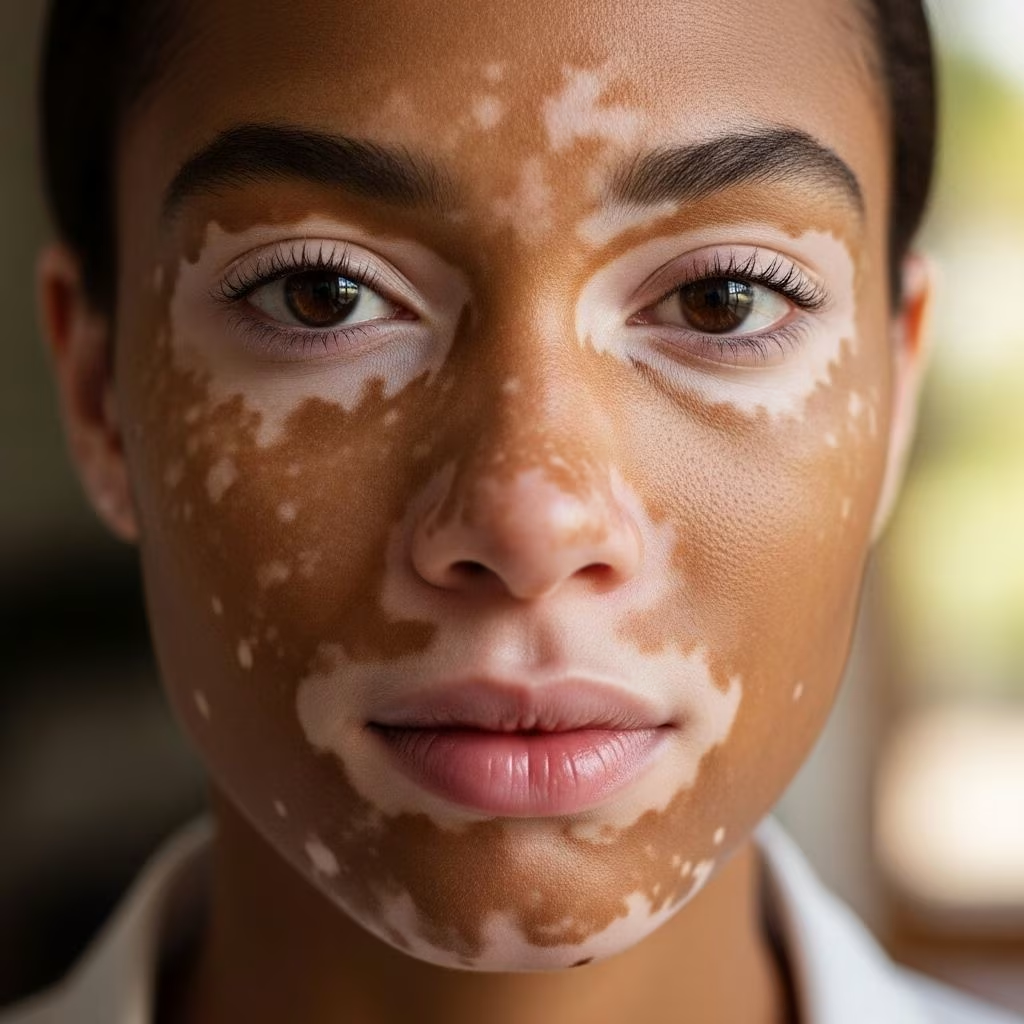
Vitiligo is a chronic skin disorder that causes areas of the skin to lose their color, resulting in white patches that can vary in size and location. This condition affects people of all ages, genders, and ethnic backgrounds. Understanding vitiligo, its causes, risk factors, symptoms, diagnosis, and management strategies is essential for affected individuals, caregivers, and healthcare providers. This article offers a comprehensive, research-based overview to help recognize and manage vitiligo effectively.
What is Vitiligo?
Vitiligo is a long-term (chronic) skin condition characterized by the loss of pigment-producing cells called melanocytes. These cells are responsible for producing melanin, the substance that gives skin, hair, and eyes their color. When melanocytes are destroyed or stop functioning, affected areas of the skin turn white due to the lack of melanin. Vitiligo can also impact hair, the inside of the mouth, eyes, and other body parts.
Vitiligo is not contagious, is usually painless, and is primarily considered a cosmetic condition; however, it can have significant psychological and social effects on those affected.
Causes of Vitiligo
The exact cause of vitiligo is not completely understood, but several mechanisms are believed to contribute to its development:
- Autoimmune process: The most widely accepted theory is that in most cases, vitiligo is an autoimmune disease, where the body’s immune system mistakenly attacks melanocytes, destroying or impairing their function.
- Genetic factors: Up to 30% of cases may be inherited, and certain gene mutations are associated with increased susceptibility to vitiligo.
- Neurochemical toxicity: In less common forms, like segmental vitiligo, chemicals released from nerve endings may be toxic to melanocytes.
- Environmental triggers: Events such as sunburn, skin injury, or chemical exposure may initiate or exacerbate vitiligo in predisposed individuals.
It is important to note that vitiligo is not caused by infection and is not transmissible from person to person.
Types of Vitiligo
Vitiligo can be categorized based on the pattern and distribution of the white patches. The main types include:
- Non-segmental (generalized) vitiligo: The most common type, characterized by symmetrical white patches that often appear on both sides of the body. These patches may develop on the face, hands, and other exposed areas. Non-segmental vitiligo usually progresses over time.
- Segmental vitiligo: Less common, these patches usually appear on just one side or part of the body, often with a rapid onset and limited progression. It is more frequently seen in children.
- Localized (focal) vitiligo: This type features just a few spots in one area, with limited spread.
- Universal vitiligo: Very rare, this involves pigment loss over nearly the entire body.
Table: Comparison of Non-Segmental vs. Segmental Vitiligo
| Feature | Non-Segmental Vitiligo (Generalized) | Segmental Vitiligo |
|---|---|---|
| Pattern | Symmetrical, both sides of the body | Unilateral (one side), follows a nerve segment |
| Onset | Gradual and progressive | Rapid onset, usually stable after a short period |
| Prevalence | Most common form | Less common, often seen in children |
| Cause | Autoimmune processes | Related to neurochemical factors |
Who Gets Vitiligo? Prevalence and Risk Factors
Vitiligo affects about 1% of the global population. It can develop at any age but most commonly appears before age 30. The condition is equally prevalent among men and women and affects all ethnic groups, though the loss of pigment is more noticeable in people with darker skin tones.
Risk factors for developing vitiligo include:
- Family history of vitiligo or other autoimmune diseases
- Existing autoimmune diseases like hyperthyroidism, rheumatoid arthritis, type 1 diabetes, psoriasis, pernicious anemia, Addison disease, and lupus
- Certain cancers such as melanoma or non-Hodgkin lymphoma
- Particular gene variants that may predispose to the destruction of melanocytes
Other associated conditions include eczema, celiac disease, Crohn disease, and ulcerative colitis.
How Vitiligo Develops: Pathogenesis and Triggers
While the fundamental process behind vitiligo is the targeting and destruction of melanocytes, specific triggers can start or accelerate the appearance of white patches, especially in predisposed individuals. Potential triggers and contributing factors include:
- Physical injury or skin trauma (Koebner phenomenon) such as cuts, abrasions, or severe sunburn can trigger the onset of vitiligo or contribute to the spread of patches
- Emotional stress has been reported as a possible trigger, though evidence is largely anecdotal
- Hormonal changes such as puberty or pregnancy
- Exposure to certain chemicals in products or the environment
- Liver or kidney disorders (rarely identified as contributing factors)
The progression of vitiligo is highly variable. Some individuals may develop only a few stable patches, while others may experience ongoing pigment loss over large body areas.
Symptoms and Recognition
The hallmark symptom of vitiligo is the appearance of flat, white patches of skin with well-defined, sometimes irregular borders. The patches themselves usually feel like normal skin, and there is no associated pain or scaling. Key features include:
- Location: Commonly affected areas include the face (especially around the mouth, eyes, and nose), hands (including knuckles, wrists, and fingers), arms, feet, genitals, and skin creases
- Symmetry: In non-segmental vitiligo, patches typically appear symmetrically on both sides of the body
- Hair changes: Loss of color (depigmentation) in hair on the scalp, eyebrows, eyelashes, or beard
- Other affected tissues: Pigment loss can also occur in mucous membranes (inside the mouth and nose) and in the eyes
The patches are more distinct in individuals with darker skin. While vitiligo itself is not physically harmful, the affected skin is more vulnerable to sunburn, and some people may experience itching at the edges of lesions. Vitiligo is not usually accompanied by changes in skin texture or sensation.
Diagnosis of Vitiligo
Vitiligo is generally diagnosed based on clinical examination and medical history. Key diagnostic steps include:
- Visual assessment: A dermatologist or healthcare provider examines the pattern and distribution of skin lesions.
- Wood’s lamp examination: Ultraviolet (UV) light (Wood’s lamp) can help highlight depigmented areas more clearly, especially on lighter skin.
- Medical and family history review: A thorough discussion of personal and family history of autoimmune or dermatologic conditions.
- Additional tests: Occasionally, laboratory blood tests may be used to screen for other autoimmune diseases (e.g., thyroid function tests), and a skin biopsy may be done in unclear cases.
The diagnosis is primarily clinical, and other causes of pigment loss are ruled out during assessment.
Management and Treatment Options
There is no cure for vitiligo, but a range of treatments can help to restore skin color, stop progression, or improve the appearance of patches. The choice of treatment depends on factors such as the type, extent, and location of vitiligo, and the patient’s age and preferences.
Main Goals of Treatment
- Slow or stop the loss of pigment
- Restore pigment to affected areas (repigmentation)
- Address cosmetic and psychological concerns
Treatment Options
- Topical corticosteroids: These anti-inflammatory creams may help repigment the skin, especially when used early. However, long-term use can cause thinning of the skin.
- Topical calcineurin inhibitors (e.g., tacrolimus, pimecrolimus): Useful for sensitive areas such as the face and folds of skin, with fewer side effects than steroids.
- Phototherapy (narrowband UVB or PUVA): Controlled exposure to ultraviolet light may stimulate repigmentation. This is often used for widespread or difficult-to-treat cases.
- Excimer laser therapy: Targeted laser light can treat small, local areas of depigmentation.
- Depigmentation therapy: For those with widespread vitiligo, medications can lighten the remaining pigmented skin to achieve a more uniform appearance.
- Surgical options: Skin grafting or transplanting melanocytes from unaffected to affected skin, reserved for small, stable patches.
- Cosmetic camouflage: Special makeup or self-tanning products can mask patches for cosmetic purposes.
In addition to medical treatments, all patients should protect affected skin from the sun to reduce the risk of sunburn, as depigmented areas lack natural UV protection.
Psychological Support
- Therapy or counseling can help individuals cope with the emotional and social effects of vitiligo.
- Support groups and patient networks may provide valuable information and reassurance.
Living with Vitiligo: Psychological and Social Aspects
Although vitiligo does not usually affect physical health, it can have a significant psychological and social impact, particularly because the condition often affects visible parts of the body. People with vitiligo may experience:
- Low self-esteem or self-consciousness
- Feelings of isolation, embarrassment, or depression
- Social withdrawal or discrimination
Managing these challenges involves not only treating the skin, but also addressing emotional well-being. Open communication, awareness, psychological counseling, and connecting with others living with vitiligo can make a meaningful difference. Education of family, friends, and the community is also important in reducing stigma and promoting acceptance.
Frequently Asked Questions (FAQs)
Q: Is vitiligo contagious?
A: No, vitiligo is not contagious and cannot be spread through skin contact or other means.
Q: Does vitiligo run in families?
A: Yes, about 30% of cases may have a hereditary component, and those with a family history of vitiligo or autoimmune diseases are at increased risk.
Q: Can diet or supplements cure vitiligo?
A: Currently, there is no dietary cure for vitiligo. Healthy nutrition supports general well-being, but evidence for supplements or specific foods altering vitiligo progression is limited.
Q: Are there side effects to vitiligo treatments?
A: Some treatments, such as topical steroids, can cause skin thinning, while phototherapy can increase sensitivity to sunlight. Discuss all options and risks with your healthcare provider.
Q: How can I protect vitiligo-affected skin?
A: Use broad-spectrum sunscreen, protective clothing, and avoid peak sun hours to prevent sunburn. Consider cosmetic camouflage to even out skin tone if desired.
Q: Does vitiligo affect overall health?
A: Vitiligo is mostly a cosmetic condition, but it may be associated with other autoimmune disorders, so regular health check-ups are advised.
References
- NHS: Vitiligo – Causes, Symptoms, and Management
- Penn Medicine: Vitiligo Overview and Symptoms
- Vitiligo Society: What is Vitiligo? Causes, Signs, Symptoms, & More
- Cleveland Clinic: Vitiligo Types, Symptoms, and Diagnosis
- Pfizer: Vitiligo – Types, Causes, Risk Factors, and Treatment
- American Academy of Dermatology: Vitiligo Diagnosis and Treatment
References
- https://www.nhs.uk/conditions/vitiligo/
- https://www.pennmedicine.org/conditions/vitiligo
- https://vitiligosociety.org/about-vitiligo/
- https://my.clevelandclinic.org/health/diseases/12419-vitiligo
- https://www.pfizer.com/disease-and-conditions/vitiligo
- https://www.mayoclinic.org/diseases-conditions/vitiligo/symptoms-causes/syc-20355912
- https://www.yalemedicine.org/conditions/vitiligo
- https://www.aad.org/public/diseases/a-z/vitiligo-treatment
- https://www.stlouischildrens.org/conditions-treatments/vitiligo


