


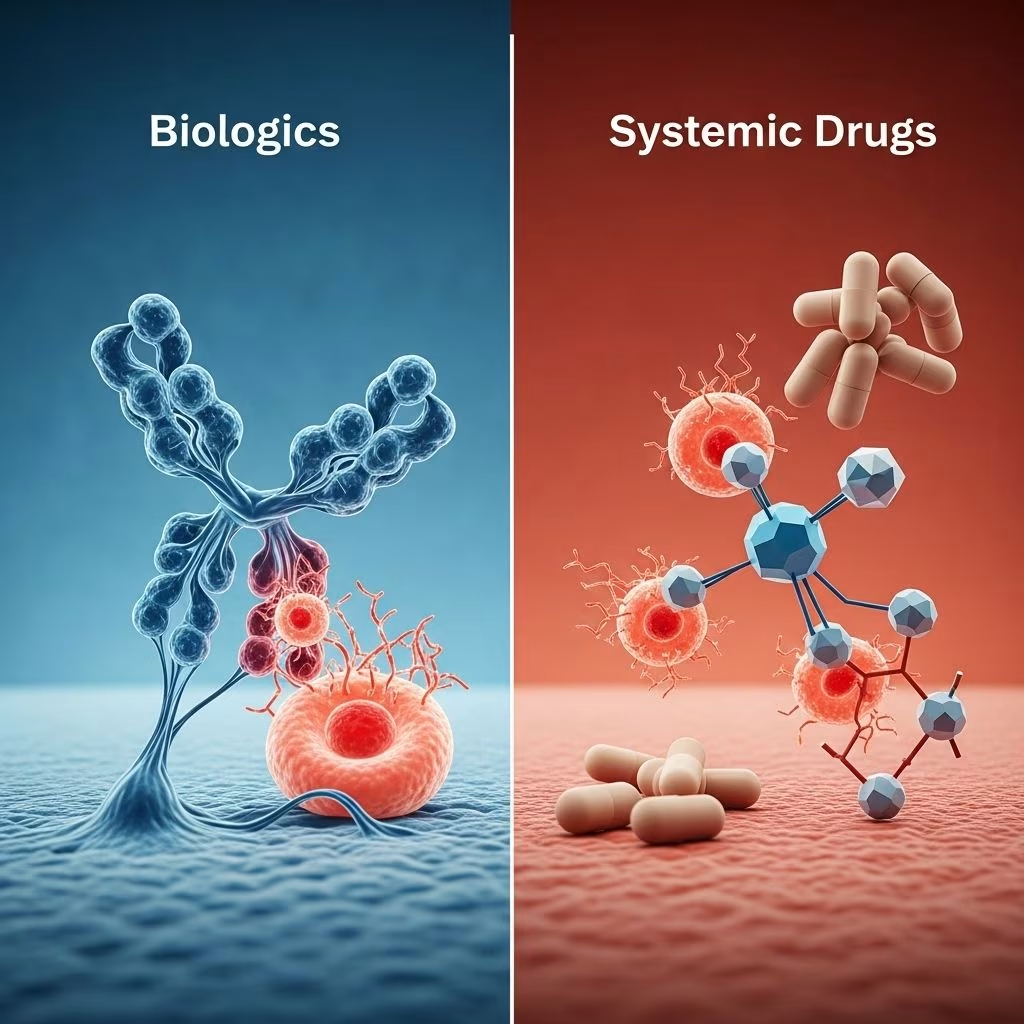
Biologics vs. Systemic Drugs for Psoriasis: An In-Depth Comparative Review
Psoriasis is a chronic, immune-mediated skin disorder that affects millions globally. Treatment options for moderate-to-severe pyoderma have expanded considerably over the past three decades, transitioning from broad-acting traditional systemic drugs to targeted biologic therapies. This article comprehensively compares biologics and systemic drugs for psoriasis, addressing mechanisms of action, indications, efficacy, safety, and clinical decision-making.
Introduction
Psoriasis, affecting up to 6.5% of certain populations, is a lifelong inflammatory disease with varying degrees of severity and comorbidity, including cardiovascular disease, psoriatic arthritis, and psychological distress. Historically, treatments focused on topical agents and phototherapy for mild cases. For moderate-to-severe disease, systemic drugs were the mainstay, until biologics revolutionized care by selectively targeting components of the immune system.
Pathophysiology of Psoriasis
Psoriasis is characterized by an overactive immune system, involving several cytokines and immune cells:
- T cells: Key drivers of immune activation and inflammation.
- Cytokines: Proteins like TNF-α, IL-17, IL-12, and IL-23 mediate inflammation and the abnormal proliferation of skin cells.
This dysregulation results in erythematous, scaling plaques on the skin, joint involvement in psoriatic arthritis, and systemic inflammation.
Overview of Psoriasis Treatments
Treatment depends on disease severity, patient factors, and comorbidities. The main categories include:
- Topical therapies (for mild cases)
- Phototherapy
- Traditional systemic drugs
- Biologic agents (and biosimilars)
Systemic Drugs: Mechanism and Use
Mechanism of Action
Traditional systemic drugs broadly suppress immune responses throughout the body, impacting various aspects of the immune system. Common agents include:
- Methotrexate: Inhibits folate metabolism, reduces immune cell proliferation, suppresses inflammation.
- Cyclosporine: Blocks T-cell activation via calcineurin inhibition.
- Acitretin: A retinoid that modulates skin cell growth.
Systemic drugs are typically reserved for patients who do not respond adequately to topical treatments or phototherapy, or those with extensive disease.
Advantages of Systemic Drugs
- Long history of use and extensive clinical experience.
- More affordable and widely accessible.
- Useful for patients with contraindications to biologics.
Limitations
- Non-specific immunosuppression increases the risk of infections and other complications.
- Potential for significant adverse effects (liver, kidney, hypertension).
- Monitoring required (lab tests for toxicity).
Biologics: Mechanism and Use
Mechanism of Action
Biologics are large, engineered proteins that target specific molecules involved in the inflammatory cascade:
- TNF-α inhibitors: Etanercept, adalimumab, infliximab, golimumab block TNF-α, a central cytokine in psoriasis.
- Interleukin inhibitors:
- IL-12/IL-23 (ustekinumab)
- IL-17A (secukinumab, ixekizumab)
- IL-23 (guselkumab, tildrakizumab, risankizumab)
- T-cell modulators: Abatacept (affecting T-cell costimulation)
Biologics are generally administered via injection. Biosimilars (highly similar agents to reference biologics) are increasingly available for some indications.
Advantages of Biologics
- Targeted action—reduces systemic immunosuppression.
- Superior or comparable efficacy to traditional drugs, particularly for moderate-to-severe cases.
- Lower rates of treatment failure and longer survival time on drug.
- Generally better-tolerated with fewer severe systemic side effects.
Limitations
- High cost and limited access for some patients.
- Potential for serious infections (e.g., tuberculosis reactivation), although incidence is comparable to systemics.
- Possible immunogenicity and need for parenteral administration.
Clinical Efficacy: Biologics vs. Systemic Drugs
Clinical trials and real-world studies demonstrate that biologics frequently provide faster and more reliable control of disease:
| Parameter | Biologics | Systemic Drugs |
|---|---|---|
| Target | Specific cytokines/immune pathways | Broad immunosuppression |
| Effective speed (onset) | 3-7 days for lesion improvement | 6-15 days for lesion improvement |
| PASI Score Reduction (Week 24) | From ~27 to ~2.5 | From ~26 to ~10.4 |
| Complete lesion remission | Higher rates | Lower rates (notable ineffectiveness ~20%) |
| Duration of effectiveness | Longer survival time, less treatment failure | Shorter survival time, more discontinuations |
| Recurrence rate | None reported (in clinical studies) | Up to 11% recurrence |
| Adverse event risk | Comparable to systemics in clinical trials | Comparable risk, but higher toxicity risk for certain organs |
These findings underscore the superior efficacy, durability, and rapidity of biologic therapies, especially in moderate-to-severe plaque psoriasis. However, real-world considerations such as cost, access, and individual patient response must guide therapy choice.
Safety and Adverse Effects
Safety profiles differ between biologics and systemic drugs:
- Biologics
- Risk of infections (tuberculosis, hepatitis)
- Injection site reactions
- Potential antibody formation and loss of efficacy (rare)
- Systemic Drugs
- Liver and renal toxicity (methotrexate, cyclosporine)
- Hypertension and increased cardiovascular risk (cyclosporine)
- Teratogenicity (acitretin)
- General immunosuppression—broad risk of infections
Recent studies suggest that, when properly selected for individual patients, both groups have comparable overall adverse event rates. However, the nature and severity of toxicity differ substantially.
Patient Selection and Guidelines
Individualizing therapy maximizes outcomes and minimizes risk:
- Biologics are preferred for:
- Moderate-to-severe psoriasis unresponsive to or unsuitable for systemics
- Psoriatic arthritis (joint involvement)
- Patients with comorbidities requiring targeted action
- Prior adverse reactions to systemics
- Systemic drugs may be appropriate for:
- Milder disease unresponsive to topical agents
- Patients with cost or access barriers
- Medical contraindications to biologics (e.g., active, untreated infection)
Guidelines from expert panels, such as the National Psoriasis Foundation and international dermatology associations, emphasize shared decision-making, weighing efficacy, safety, comorbidity, and patient preferences.
Cost, Access, and Practical Considerations
- Biologics: High cost, insurance pre-approval, and sometimes need for infusion centers; biosimilars improving access.
- Systemic drugs: More affordable, widely available, oral administration, but careful monitoring is required due to side effects.
Cost and access remain significant barriers for some patients. Practical factors, including frequency of administration and monitoring, may influence treatment choices as much as clinical factors.
Future Directions in Psoriasis Treatment
- Development of next-generation biologics targeting novel cytokines.
- Combination therapies for synergistic targeting of multiple pathways.
- Biosimilars and oral biologics for improved accessibility.
- Personalized medicine approaches, including genetic and biomarker-guided therapy selection.
Ongoing clinical trials and real-world studies will further clarify optimal use, durability, and safety of these advanced therapeutics for diverse psoriasis populations.
Frequently Asked Questions (FAQs)
Q: What are the main differences between biologics and systemic drugs for psoriasis?
A: Biologics specifically target cytokines or immune cells involved in psoriasis, whereas systemic drugs have broader immunosuppressive effects throughout the body. Biologics generally provide faster, more reliable, and longer-lasting control of disease with fewer severe side effects, but may be more costly and less accessible for some patients.
Q: Are biologics safer than traditional systemic therapies?
A: Adverse event rates in clinical trials are comparable between groups, but biologics reduce risks of certain organ toxicities seen with systemics. Specific infection risks persist for both, requiring monitoring.
Q: How do clinicians decide which therapy is appropriate?
A: Decisions consider disease severity, comorbidities, patient preference, access and cost, efficacy, safety profiles, and prior treatment response. Shared decision-making with the patient is recommended.
Q: Are biosimilars as effective as original biologics?
A: Biosimilars are highly similar to reference biologics, with no clinically meaningful differences in efficacy or safety. Regulatory agencies and professional guidelines endorse their use for psoriasis.
Q: Can biologics and systemic drugs be used in combination?
A: Studies suggest combination therapy may produce rapid and durable remission in select cases, but long-term safety and cost-effectiveness require further investigation.
References
- Comparative studies and clinical guidelines from National Psoriasis Foundation and peer-reviewed literature.
References
- https://www.hmpgloballearningnetwork.com/site/thederm/npf-endorsed-features/biologics-vs-nonbiologics-treating-psoriasis-choosing-right
- https://www.frontiersin.org/journals/medicine/articles/10.3389/fmed.2024.1451069/full
- https://jddonline.com/articles/a-comparison-of-psoriasis-drug-failure-rates-and-reasons-for-discontinuation-in-biologics-vs-convent-S1545961614P0848X
- https://www.psoriasis.org/biologics/
- https://pmc.ncbi.nlm.nih.gov/articles/PMC9574692/
- https://www.rheumatologyadvisor.com/features/systemic-therapies-psoriatic-disease/
- https://jamanetwork.com/journals/jamadermatology/fullarticle/2759772


