


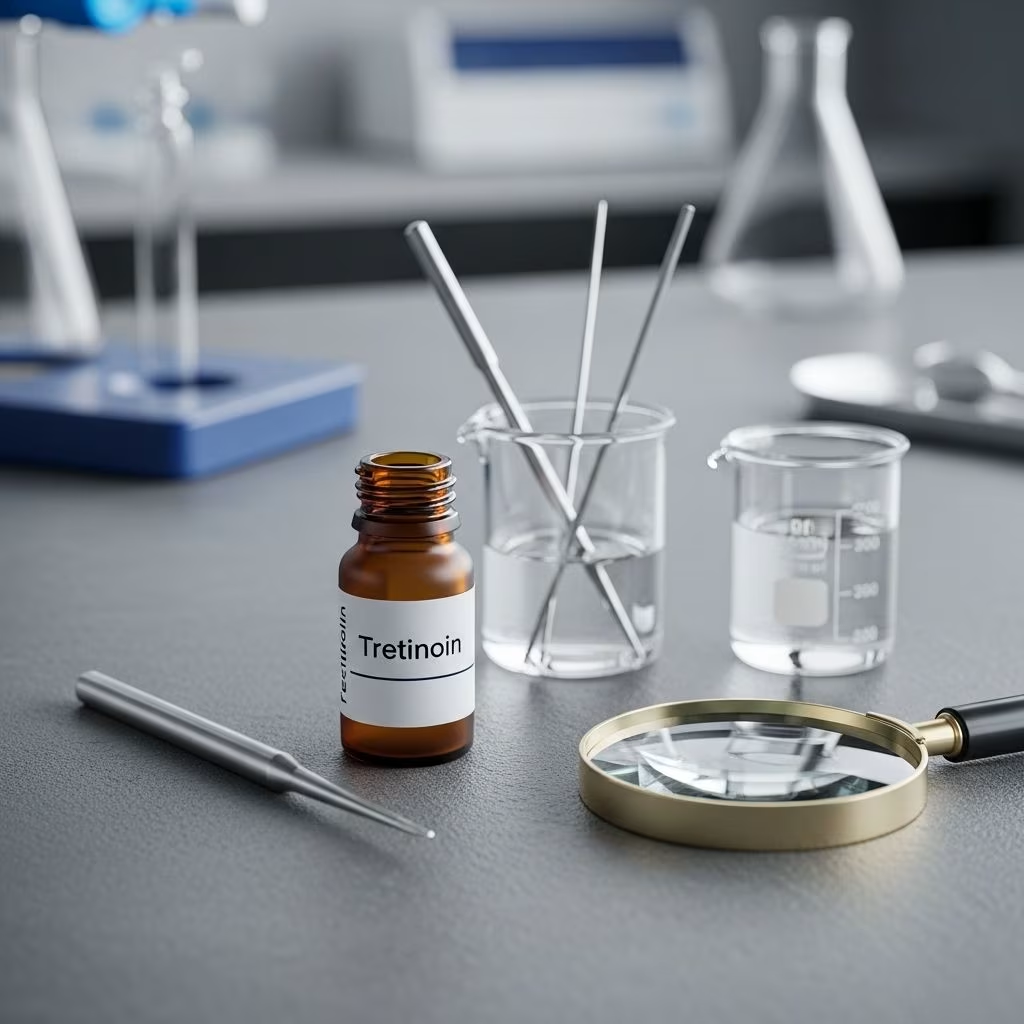
Photoaging, also known as extrinsic aging, arises primarily from chronic sun exposure, resulting in wrinkles, hyperpigmentation, roughness, and sallow skin tone. Topical tretinoin, a prescription-strength retinoid, remains the gold standard in reversing photoaged skin through well-studied mechanisms. This in-depth guide presents evidence-based protocols for tretinoin use, addressing clinical efficacy, dosing regimens, patient counseling, adverse effect management, and practical recommendations for both clinicians and patients.
Introduction to Tretinoin and Photoaging
Tretinoin (all-trans retinoic acid) is a vitamin A derivative used topically for photoaged skin. Since its approval, tretinoin has become a cornerstone of dermatological anti-aging therapies owing to extensive evidence supporting its ability to reverse damage from ultraviolet (UV) radiation. Photoaging describes the cumulative structural and functional changes in skin that occur due to prolonged sun exposure, distinct from intrinsic (chronological) aging. Typical features include:
- Fine and coarse wrinkles
- Mottled hyperpigmentation (age spots, lentigines, freckles)
- Loss of elasticity and firmness
- Skin roughness and dryness
- Telangiectasia (surface blood vessels)
- Sallow, uneven skin tone
How Tretinoin Reverses Photoaging
Tretinoin exerts multiple effects at the cellular and molecular level, targeting both the epidermis and underlying dermal structures:
- Stimulates epidermal turnover: Increases the proliferation of basal keratinocytes, leading to smoother, more uniform skin.
- Promotes exfoliation: Accelerates desquamation, reducing visible roughness and promoting a brighter complexion.
- Restores stratum corneum morphology: Initially causes stratum corneum compaction, later normalizes the structure for improved light interaction.
- Enhances collagen synthesis: Upregulates fibroblast activity, boosting new collagen formation in the papillary dermis and restoring structural support.
- Reduces collagen breakdown: Inhibits matrix metalloproteinase (MMP) activity, which is responsible for collagen degradation, while increasing tissue inhibitors of MMPs (TIMPs).
- Improves skin elasticity: Induces synthesis of elastin and fibrillin-rich microfibrils.
- Decreases mottled pigmentation: Promotes even distribution and turnover of melanin, fading age spots.
These combined effects explain the visible reversal of fine and coarse wrinkles, age spots, skin laxity, and sallowness observed during tretinoin therapy.
Indications, Efficacy, and Expected Improvements
Extensive clinical studies support the use of topical tretinoin in concentrations between 0.01% to 0.1% for managing photoaging. Tretinoin is indicated for:
- Fine and moderate facial wrinkling
- Irregular skin tone and roughness
- Solar (actinic) lentigines and freckles
- Sun-induced sallowness
Visible improvements typically emerge after several weeks of consistent use, with optimal effects observed over 3-12 months:
- Reduced fine lines and superficial wrinkles
- Faded age spots and pigmentation irregularities
- Smoother, more luminous skin texture
- Rosier, healthier appearance
Improvement is gradual. Patients must be educated to anticipate delayed, incremental progress to ensure compliance and reduce frustration.
Selecting Tretinoin Formulations and Concentrations
Tretinoin is available in several cream, gel, and microsphere formulations, in concentrations typically ranging from 0.01%, 0.025%, 0.05%, to 0.1%. Key considerations for selecting formulations include:
- Skin Type: Creams are generally better tolerated by dry or sensitive skin; gels may be preferable for oily skin.
- Concentration: Initial therapy usually starts at lower concentrations (0.025% or 0.05%) to minimize irritation, especially in sensitive individuals. Higher strengths (0.1%) may be considered for tougher, more resistant skin types or if lower strengths are well tolerated.
- Microsphere Formulations: Designed to deliver tretinoin more slowly, microsphere systems may reduce peak irritation by providing controlled release.
Optimal therapeutic regimens involve individual tailoring based on patient skin type, sensitivity, and degree of photoaging.
Initiating Treatment: Stepwise Protocols
Introducing tretinoin requires a gradual approach to minimize adverse effects (often called the “retinoid reaction”). Evidence-based protocols recommend:
- Start with a pea-sized amount of the selected formulation. Apply a thin, even layer at night to all photoaged areas (face, forearms, etc.).
- Initial frequency: Apply every third night for the first 1-2 weeks.
- Escalation protocol: Increase to every other night for the next 2 weeks, then advance to nightly application as tolerated.
- Special areas: The periorbital region (eye area) responds well but is also more susceptible to irritation. Careful, sparing application is recommended.
If irritation (erythema, peeling, burning) occurs, reduce frequency or take a short break. Instruct patients that mild irritation or peeling may indicate therapeutic dosing (but is not required for efficacy). A low-potency hydrocortisone cream (e.g., 1%) may be used briefly for severe discomfort, but prolonged corticosteroid use should be avoided due to skin atrophy risk.
Correct Application Techniques
- Cleanse the skin: Wash gently with a mild, non-abrasive cleanser. Pat skin dry and wait 20-30 minutes before application to minimize stinging.
- Amount: Use a pea-sized amount for the full face or as directed. Over-application increases side effect risk without added benefit.
- Apply thinly: Spread evenly over the entire treatment area, avoiding eyes, lips, nostrils, and mucous membranes.
- Timing: Apply at night, as tretinoin is inactivated by UV light and may make skin more susceptible to sunburn.
- Moisturize: Non-comedogenic moisturizers can be applied after tretinoin dries, or in the morning as needed for comfort.
Managing Adverse Reactions and Side Effects
The most common adverse effects of tretinoin therapy are mild to moderate and usually transient:
- Erythema (redness)
- Dryness and peeling
- Stinging or burning sensation
- Pruritus (itching)
- Temporary exacerbation of visible irritation
Physiological irritation is often most pronounced in the first 2-6 weeks of therapy and gradually subsides with continued use. To mitigate discomfort:
- Titrate frequency or reduce concentration if irritation persists.
- Use gentle cleansers, avoid harsh soaps and scrubs.
- Incorporate bland, fragrance-free moisturizers liberally.
- If necessary, brief use of low-potency topical corticosteroids for acute reactions (under medical supervision).
- Discontinue use and consult a dermatologist if severe or persistent dermatitis develops.
In rare cases, allergic contact dermatitis or photosensitivity reactions may occur. Advise patients to report any severe, spreading, or vesicular (blistering) rashes.
Adjunctive Skin Care and Photoprotection
Adjunctive measures are crucial for maximizing tretinoin benefits and minimizing risks:
- Photoprotection: Daily use of broad-spectrum sunscreen (SPF 30+) is essential, since tretinoin increases sun sensitivity and unprotected exposure negates therapeutic gains.
- Sun avoidance: Protective clothing, hats, and seeking shade further reduce risk of sunburn and pigmentary changes.
- Moisturizers: Apply as needed to counteract dryness and peeling. Choose non-comedogenic, fragrance-free formulations.
- Gentle skin care: Avoid astringents, exfoliants, and products containing alcohol or strong acids that may exacerbate irritation.
- Make-up: Non-comedogenic products may be used to cover redness or flaking.
Special Populations and Contraindications
- Pregnancy and lactation: Tretinoin is contraindicated during pregnancy and in those trying to conceive due to potential teratogenicity, although topical exposure is much lower risk than oral retinoids. Breastfeeding women should also avoid application on or near the areola and nipple.
- Sensitive skin: Patients with rosacea, eczema, or active dermatitis should use with extreme caution or avoid altogether.
- Pediatric and elderly patients: Use lower strengths and monitor closely.
Monitoring and Follow-Up
- Initial follow-up: Schedule a visit 4 weeks after treatment initiation to assess tolerability, answer questions, and reinforce education.
- Interval reviews: Continue monitoring every 3 months until the treatment is established, then as needed.
- Patient support: Consider printed instructions or written handouts summarizing key steps, side effects, and troubleshooting tips to reinforce in-office counseling.
Common Troubleshooting and Patient FAQs
Q1. How long before I see visible improvement in my skin?
Significant improvement may take 3-6 months, and maximum benefit typically occurs after 6-12 months of consistent, correct use. Early improvements include brighter tone and smoother texture, with wrinkle reduction and pigment levelling following thereafter.
Q2. My skin is peeling and red. Should I stop tretinoin?
Mild redness, peeling, or dryness are common “retinoid reactions” and often subside with ongoing use. Consider reducing application frequency, moisturizing more frequently, or consulting your provider before discontinuation. Severe irritation warrants medical review.
Q3. Can I use tretinoin with other active ingredients?
Caution is needed when combining tretinoin with other potentially irritating agents (e.g., alpha/beta hydroxy acids, benzoyl peroxide, vitamin C serum). Introduce actives one at a time, monitor for irritation, and consult with a dermatologist. Moisturizers and sunscreens are generally compatible.
Q4. Can tretinoin be used indefinitely?
Evidence supports long-term use under medical supervision, as benefits plateau but are maintained with continued application. If severe irritation, allergy, or new contraindications develop, re-evaluation is needed.
Q5. Is tretinoin safe for use around the eyes?
The periorbital area is particularly responsive but also more prone to irritation. Use sparingly, avoiding direct contact with eyes or eyelids. If stinging or visible dermatitis develops, withhold application temporarily or switch to a lower concentration.
Evidence Base and References
| Study/Reference | Key Findings |
|---|---|
| Goldfarb et al., 1990 | Tretinoin 0.1% improved fine/coarse wrinkles, brown spots, tactile roughness; gradual efficacy; irritation often temporary; stepwise protocol advised |
| Fisher et al.; Schlessinger et al., reviewed in BJD, 2023 | Reduction of wrinkles, pigment, collagen homeostasis restoration; best-studied retinoid for photoaging |
| Kligman, 1989 | Detailed guidance on patient education and application technique; need for compliance and sunscreen emphasized |
| Recent comparative efficacy meta-analysis, 2025 | Tretinoin shown superior to other topicals for hyperpigmentation and fine wrinkling |
Key Takeaways for Safe and Effective Tretinoin Use:
- Start low and go slow: Introduce tretinoin at lower concentrations and gradually titrate frequency.
- Emphasize regular sunscreen use to prevent further photoaging and avoid sunburn.
- Educate patients on gradual improvement timelines (months, not days).
- Prioritize gentle skin care and moisturization to enhance tolerability.
- Monitor progress via scheduled follow-ups and address issues early.
Tretinoin remains the gold standard for reversing photoaging when used within structured protocols, supported by robust scientific evidence and attentive patient management.
Frequently Asked Questions (FAQs)
Q: Can tretinoin be used on all skin types?
A: Tretinoin can benefit all skin types, but dosing and frequency should be customized based on skin sensitivity and response. Patients with darker skin types may require careful monitoring for post-inflammatory pigmentation.
Q: What happens if I apply too much tretinoin?
A: Overapplication may increase the risk of irritation without added efficacy. Stick to a pea-sized amount and adjust only under medical guidance.
Q: Should I stop tretinoin before procedures or vacations?
A: Discontinue tretinoin several days before procedures like waxing, laser, or peels to reduce irritation risk. It is prudent to pause use during vacations with anticipated high sun exposure.
Q: Is there a minimum age for starting tretinoin for photoaging?
A: Tretinoin is most often prescribed for adults; use in pediatric populations should only occur under specialist guidance for specific dermatologic reasons.
Q: Can I get tretinoin over the counter?
A: In most countries, tretinoin is prescription-only due to its potency and risk profile.
References
- https://deepblue.lib.umich.edu/bitstream/handle/2027.42/72667/j.1365-2133.1990?sequence=1
- https://academic.oup.com/bjd/article/189/Supplement_1/i17/7333865
- https://pubmed.ncbi.nlm.nih.gov/2778128/
- https://www.carencampbellmd.com/blogs/news/how-to-use-tretinoin
- https://www.nature.com/articles/s41598-025-12597-0


