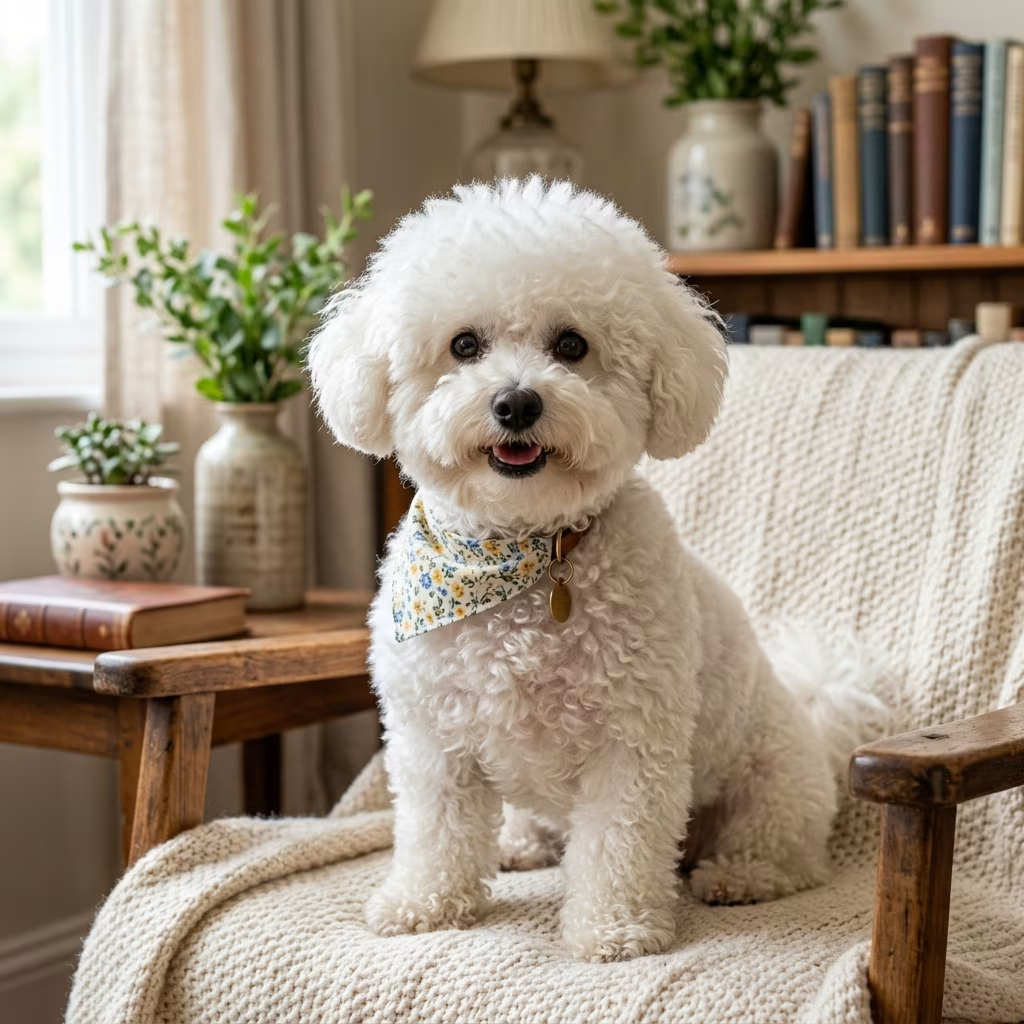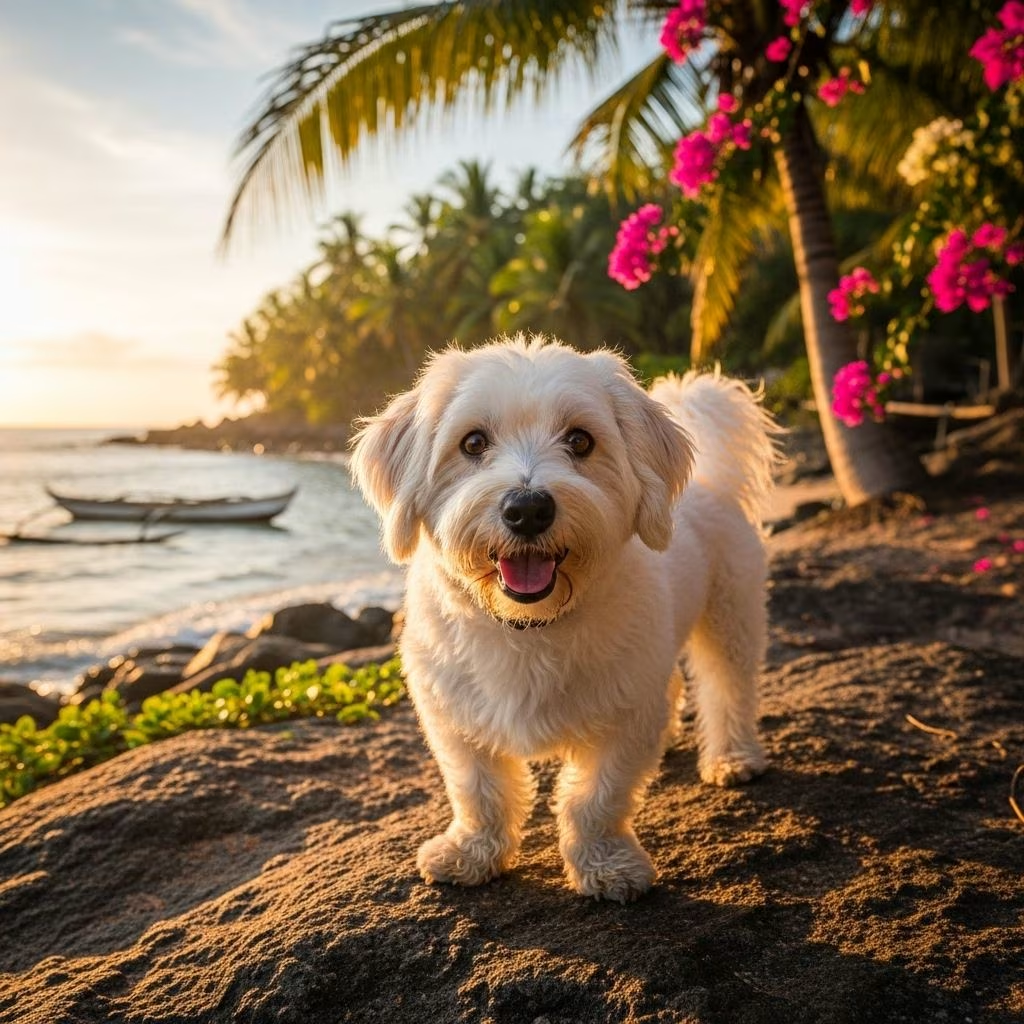
Coton de Tulear: The Fluffy Jewel of Madagascar
The Coton de Tulear whose name speaks both to its luxuriously soft, cotton-like coat and to the port city of Tulear (now Toliara) on Madagascar’s southwest coast, stands out not only for its unique appearance but for a history shrouded in romance, adventure, and survival. With roots reaching back several centuries, this charming breed captures the imagination of dog lovers with tales of seafaring journeys, island adaptation, and royal companionship.
Setting the Stage: Madagascar’s Feral and Fluffy
Madagascar, the world’s fourth largest island, is a land of remarkable ecological diversity, home to creatures found nowhere else on earth. Against this backdrop of tropical rainforests, arid southern scrublands, and bustling port cities, the Coton de Tulear developed its distinctive character. While modern Cotons are beloved for their gentle nature, the earliest ancestors of the breed survived as both feral foragers and cherished companions, always adapting to the island’s every challenge.
- Origin: Native to Madagascar, particularly around the port of Tulear.
- Unique Features: Fluffy, silky coat compared to cotton; lively, affectionate temperament.
- Enduring Legend: Tales of shipwreck, pirates, and royal favor have fueled its mystique.
A Seafaring Arrival: Folklore, Fact, and Fable
The story of the Coton de Tulear’s arrival on Madagascar is colored as much by fact as by legend. The most enduring tale recounts a shipwreck off Tulear’s coast, with white companion dogs swimming ashore to survive on the island’s shores. These resilient animals adapted both by necessity and by nature, forming the foundation for the breed we know today.
- Ships and Survivors: Small white dogs, possibly ancestors of today’s Cotons, are said to have survived a shipwreck and swum ashore off the southern coast of Madagascar.
- Role as Ship Dogs: Historical records suggest these dogs voyaged with European sailors as both ratters and companions, accompanying traders, pirates, and explorers into the Indian Ocean region.
- Connection to Bichons: The Coton de Tulear is genetically and historically linked to the Bichon family, including the Bichon Frise, Bolognese, and Maltese, all favored as small companion dogs in Renaissance Europe.
- Other Ancestral Breeds: Possible ancestors include the Tenerife dog, the now-extinct Coton de Reunion, and the Morondava Hunting Dog, drawing a genetic line through the Mediterranean’s ancient canine populations.
- Feral Life & Survival Skills: In the forests near Tulear and the surrounding wilds, Cotons developed strong constitutions, intelligence, and pack behavior, all vital for survival in a land with extremes of drought, monsoon, and predators.
- Companions of the Elite: Oral histories and visitor accounts describe the breed as treasured by the island’s wealthier classes—particularly the Merina people—who regarded them as status symbols and protective companions.
- Coat Evolution: The breed’s airy, cotton-like coat may have evolved as “natural air conditioning,” light and insulating for the island’s fluctuation between heat and rain.
- Spread Across the Island: Stories from locals recount Cotons both as friendly street dogs and as coddled house pets traded across the channel into Mozambique and beyond.
- Not True Hunters: Despite colorful stories, Cotons lack the physical strength, prey drive, or temperament to hunt wild boar or crocodiles. They are, genetically and behaviorally, companion dogs at heart.
- Island Adaption and Diversity: Cotons coexisted with Madagascar’s diverse wildlife—such as the famous ring-tailed lemur—developing social skills and adaptability rather than aggression.
- Sea Voyages and Companionship: Their popularity aboard ships as rodent-controllers and companions underscores their versatility and appeal with sailors, travelers, and local dignitaries alike.
- Origins of the Breed Standard: The Coton’s original diversity in size, color, and structure called for selective breeding to establish consistent traits: a white, fluffy coat; small, compact frame; and lively, affectionate nature.
- Coat Evolution: Early Cotons sported coats that were straggly and variable in color. Through careful selection, breeders in Europe achieved the hallmark silky, long, and dense coat—full and luminous, emblematic of the breed today.
- Recognition: The breed was first standardized in Madagascar and exported to Europe, where dog enthusiasts and breeders fell in love with their look and charisma.
- International Acceptance: By the late twentieth and early twenty-first centuries, the breed earned formal recognition and found dedicated admirers across America and Europe.
- Physical Traits: Height 9–11 inches, weight 8–13 pounds. Cotons feature expressive dark eyes, a profuse, soft white coat (occasionally with champagne or grey markings), and a perpetual look of gentle curiosity.
- Temperament: Lively, clownish, yet gentle and loyal. Known for ‘talking’ with vocalizations, Cotons adore their families and dislike being left alone.
- Health and Care: Generally robust, with few breed-specific health issues. Their coat, while profuse, is low-shedding and often considered more ‘hypoallergenic’ than most.
- Adaptability: Cotons easily adjust to city or rural life, thriving on social interaction, short walks, and indoor play.
- National Dog: The Coton is officially recognized as Madagascar’s national breed, with its image appearing on local postage stamps and other cultural symbols.
- Breed Clubs and Preservation: There are active kennel clubs working to preserve its legacy, monitor its genetics, and encourage responsible breeding both within Madagascar and internationally.
- Continued Diversity: Some Cotons in Madagascar retain more variety in color and build, reflecting a living bridge to their feral roots and the continued influence of island genetics.
- International Following: The breed’s fluffy look, happy-go-lucky temperament, and suitability for allergy sufferers have made Cotons a favorite in households far beyond Madagascar.
- Film and Literature: Their story is told in books, on postage stamps, and in popular culture, always emphasizing their magical origins and loving personality.
- Recognition of Resilience: At heart, the Coton de Tulear is both a symbol of Madagascar’s resilient spirit and a living legacy of centuries of human-canine companionship.
- Breed history and folklore from leading breeder clubs
- Genetic and cultural studies of Madagascar’s companion animals
- First-person accounts from Madagascar and European dog fanciers
The Adaptation: From Scavenger to Sophisticate
Once ashore, the dogs confronted Madagascar’s unique and challenging environment. Stories suggest the earliest Cotons lived both as strays and as favored pets of the local Merina tribe’s ruling class. They were remarkably adaptable, equally at home scavenging for survival or living in comfort as pampered companions.
Unraveling Myth from Reality
With romantic tales surround the Coton’s early days—some say the breed hunted wild boar or crocodile, others claim they were always royal pets—distinguishing legend from history is challenging. Recent scholarship and genetic research provide a clearer picture, correcting several enduring myths.
The Breed Takes Shape: Standardization and Spread
The Coton de Tulear’s journey from the forests and streets of Madagascar to international fame is one of careful stewardship by generations of breeders. As the breed’s popularity soared in Europe during the twentieth century, breeders set about refining and standardizing the Coton’s distinctive look and loving temperament.
Modern Cotons: The Beloved Companions
Today, the Coton de Tulear is prized as an affectionate, energetic, and highly adaptable companion. Their ease with children, sociable attitude toward other pets, and low-shedding coats make them especially attractive to families and apartment dwellers.
The Coton’s Place in Madagascar Today
Contrary to some reports, the Coton de Tulear remains a living symbol of Madagascar’s national heritage. The creation of the Association des Cynophiles de Madagascar (ACYM) in 2002 cemented their official status. Cotons are found in healthy numbers on the island, in a spectrum of color and size that recalls their ancient ancestry and local variety.
Legacy, Lore, and Enduring Appeal
Perhaps no other small breed blends the romance of pirate legends, the adaptability of wild survivors, and the charm of aristocratic companions like the Coton de Tulear. Their story—real, imagined, and somewhere in between—continues to endear them to new generations of dog lovers worldwide.
Frequently Asked Questions (FAQs)
What is the origin of the Coton de Tulear?
The Coton de Tulear traces its beginnings to Madagascar, where legend says shipwrecked dogs swam ashore and adapted to island life. The breed developed through contact with European sailors, local nobles, and centuries of adaptation.
Are Coton de Tulears really from feral dogs?
Historical accounts differ: while some Cotons lived as street dogs or feral packs, most evidence suggests they were kept as companions and status pets by Madagascar’s elite.
What are the main features of a Coton de Tulear?
The breed is defined by a fluffy cotton-like coat, expressive eyes, an affectionate temperament, and small stature (9–13 pounds, 9–11 inches tall).
What are their grooming needs?
Cotons require regular brushing to prevent mats and tangles. While their coat is profuse, it is low-shedding and may be suitable for some allergy sufferers.
Do Cotons still exist in Madagascar?
Yes, Cotons remain present in Madagascar, representing both the traditional, diverse types and the standardized show varieties recognized by kennel clubs worldwide.
How did the breed become popular outside Madagascar?
After initial export to Europe in the twentieth century and breeder-led standardization, Cotons became valued for their temperament, charm, and hypoallergenic qualities, gaining international recognition with kennel clubs and pet lovers alike.
References & Further Reading