


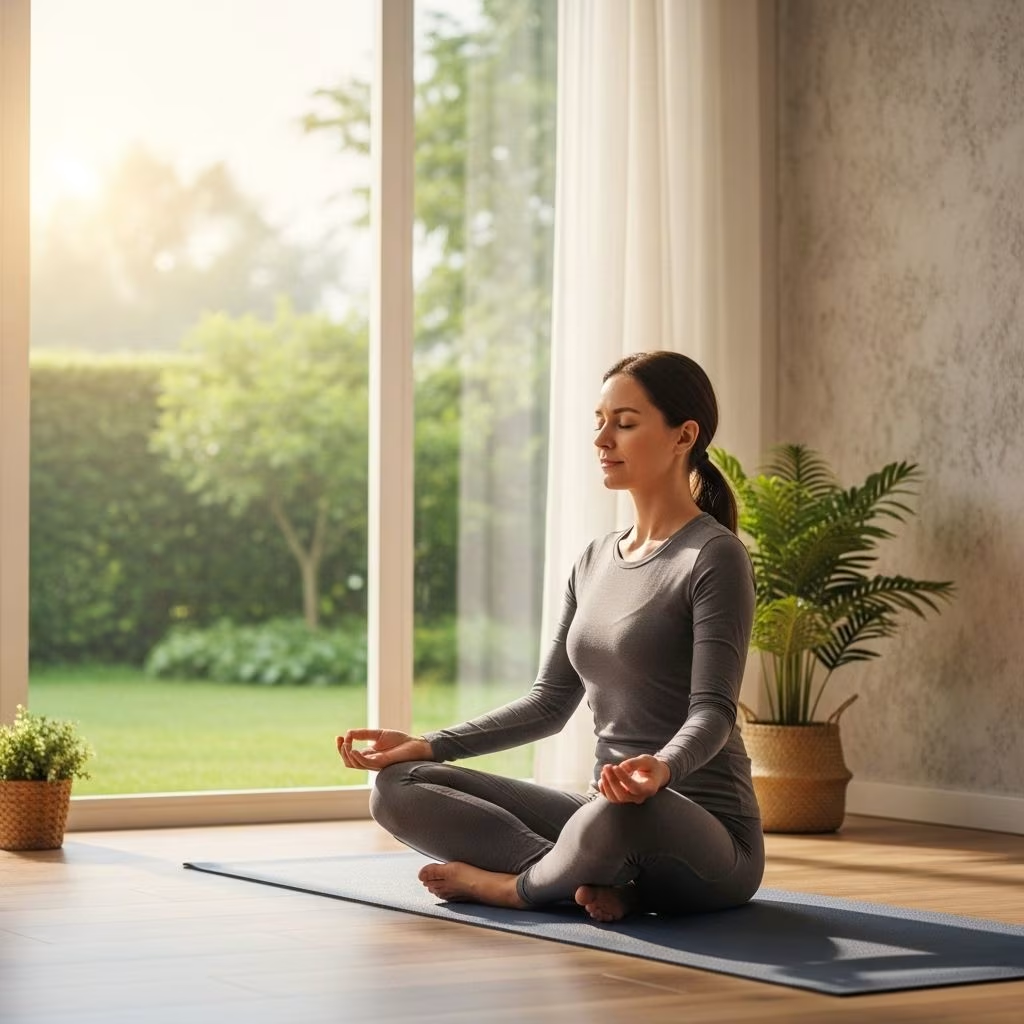
The 4-7-8 Breathing Technique for Waking Up
Can a simple breathing pattern transform how you wake up and face the day? The 4-7-8 breathing technique, often called the “relaxation breath,” is not only a powerful tool for reducing stress and improving sleep but also an effective strategy for starting your morning with clarity and calm. Rooted in yogic traditions, this science-backed breathwork method regulates your nervous system and focuses your mind, helping you rise above anxiety and grogginess to greet each day at your best.
Introduction: What Is the 4-7-8 Breathing Technique?
The 4-7-8 breathing technique is a controlled breathing practice designed to switch your body’s stress response to a relaxation response using a simple sequence:
- Inhale through your nose for 4 seconds.
- Hold your breath for 7 seconds.
- Exhale through your mouth for 8 seconds, making a gentle “whoosh” sound.
This method is based on pranayama, the ancient yoga practice of breath control. While primarily popularized for managing anxiety and falling asleep, growing evidence and user experiences indicate that morning practice can:
- Reduce wake-up anxiety
- Sharpen morning focus
- Set a grounded, relaxed tone for your day
Origins and Science Behind 4-7-8 Breathing
The technique was popularized by Dr. Andrew Weil, a leading integrative medicine practitioner, who calls it a “natural tranquilizer for the nervous system.” However, its roots trace to yogic traditions where breathwork (pranayama) was seen as essential for mental and physical control.
The Science
- Parasympathetic Activation: The extended exhale stimulates your body’s parasympathetic nervous system, responsible for relaxation and “rest-and-digest,” countering the “fight-or-flight” stress response.
- Cortisol Regulation: Slow, mindful breathing patterns can lower cortisol—the primary stress hormone.
- Heart Rate variability (HRV): Studies indicate 4-7-8 breathing may improve HRV, a marker of stress resilience and cardiovascular health.
- Blood Pressure Management: Practicing deep breathing for minutes can help lower blood pressure and heart rate.
Although robust clinical research is still developing, anecdotal evidence and early studies strongly support the technique’s ability to rewire stress patterns and promote physiological wellness.
Why Use 4-7-8 Breathing for Waking Up?
Morning routines set the psychological and physiological tone for your day. Instead of reaching for caffeine or rushing through a groggy haze, integrating 4-7-8 breathing into your morning can:
- Dispel residual anxiety from disrupted sleep or stressful dreams
- Regulate morning cortisol spikes
- Promote alertness without overstimulation
- Stabilize your heart rate and breathing
- Prime your mind for focus and intention
- Help ease sleep inertia and morning fog
Many report that morning breathwork leaves them feeling clearheaded, centered, and ready to meet their goals. For those who wake up anxious or unrested, this practice can become a simple yet powerful self-care ritual.
Common Morning Challenges Addressed by 4-7-8 Breathing
| Challenge | 4-7-8 Breathing Solution |
|---|---|
| Waking with anxiety or negative thoughts | Shifts focus and calms stress response, leading to relaxation |
| Feeling groggy or foggy-headed | Boosts oxygen flow, stabilizes nervous system, sharpens focus |
| Morning blood pressure spikes | Lowered heart rate and blood pressure through relaxation |
| Sleep inertia (difficulty getting going) | Gentle awakening, reset physiological rhythms |
How to Practice 4-7-8 Breathing
Step-by-Step Instructions
Follow these structured steps for a safe and effective morning practice:
- Step 1: Upon waking, sit upright in bed or on a chair. Straighten your back and relax your shoulders.
- Step 2: Place the tip of your tongue just behind your upper front teeth, touching the roof of your mouth. Keep it there for the entire cycle.
- Step 3: Exhale fully through your mouth, making a “whoosh” sound.
- Step 4: Close your lips and inhale quietly through your nose for a comfortable count of 4 seconds.
- Step 5: Hold your breath for 7 seconds. Remain relaxed and avoid straining.
- Step 6: Exhale through your mouth for 8 seconds, producing the “whoosh.” Purse your lips if it helps direct airflow.
- Step 7: This completes one cycle. Repeat for three more rounds (four cycles total). If desired, gradually increase to eight cycles as your body adapts.
Important Tips:
- Always maintain a gentle ratio; if 4-7-8 feels challenging, use a shorter ratio (like 2-3.5-4 seconds) and build up.
- Lightheadedness is normal at first. Practice sitting or lying down until acclimated.
- Consistency is key; aim for daily use for best results.
Health and Mental Benefits of 4-7-8 Breathing
Physical Benefits
- Improved heart and lung function: Deep, controlled breaths maximize oxygen uptake and efficiency.
- Lower blood pressure: Slow breathing cues physiological relaxation, dropping blood pressure readings quickly.
- Calms the stress response: Controls cortisol and stress-induced symptoms (rapid heart rate, digestive discomfort).
- Migraines: Evidence suggests breathing techniques may reduce the frequency and severity of migraine attacks.
- Better sleep: Prepares the body for restful sleep by lowering arousal, but also refreshes the mind after poor sleep.
Mental and Emotional Benefits
- Reduced anxiety and depression: Interrupts the worry cycle via focus and parasympathetic activation.
- Emotional self-regulation: Useful for managing anger, food cravings, and impulsive reactions.
- Improved concentration and focus: Studies show enhanced performance on attention tasks and more positive emotions after weeks of deep breathing practice.
- Pain management: Deep breathing lowers perceived pain and tension in both short- and longer-term settings.
Tips for Maximizing Your Morning Breathwork
- Create a Ritual: Pair 4-7-8 breathing with other morning practices—stretching, gentle yoga, or gratitude journaling.
- Consistency Counts: Practice daily, ideally at the same time, to build neurophysiological habit and resilience.
- Be Patient: Benefits accumulate over time; expect gradual improvement in mood and focus.
- Add Visualization: Imagine calm energy filling you on each inhale and stress leaving on each exhale.
- Use Apps or Reminders: Mindfulness and breathing apps (even basic alarm reminders) can help anchor your morning routine until it becomes automatic.
Sample Morning Routine Using 4-7-8 Breathing
- Wake-up: Sit up and stretch gently.
- Perform one 4-7-8 breathing cycle, focusing on sensations and clearing lingering worries.
- Repeat for three more cycles, setting an intention for the day.
- Move into stretching or light yoga, then proceed with hydration and healthy breakfast as desired.
Frequently Asked Questions (FAQs)
Q: How quickly will I feel the effects in the morning?
A: Many report feeling calmer and more focused within just a few cycles, but the most dramatic effects develop with consistent practice over several weeks.
Q: Is it safe to do 4-7-8 breathing every morning?
A: Yes, for most healthy individuals, daily practice is safe. Those with respiratory issues or dizziness should start slowly and consult a healthcare provider if concerned.
Q: Can children or seniors use this technique for waking up?
A: Yes! The practice is gentle and adaptable, making it suitable for all ages. Children may prefer shorter ratios (‘2-3.5-4’), and seniors may benefit from its blood pressure-lowering effects.
Q: Do I need any equipment or special preparation?
A: No equipment required. Just a comfortable seat and your attention. Adding relaxing music or mindful visualization can enhance the experience but is optional.
Q: Can it replace coffee or other stimulants?
A: While 4-7-8 breathing helps wake you up and focus your mind, it does not provide the same physiological stimulation as caffeine. Many find it complementary, using breathwork to ground themselves before coffee or to substitute on days of caffeine reduction.
Q: What if I can’t hold my breath or feel lightheaded?
A: Scale down the time ratio until it feels comfortable (e.g., inhale for 2 seconds, hold for 3.5, exhale for 4), and gradually lengthen as you improve.
Q: Will this help with poor sleep at night?
A: Yes. 4-7-8 breathing is renowned for aiding sleep. When practiced in the morning, it can counteract sleep inertia and set a more relaxed tone for the day, which may also improve nighttime sleep patterns.
Conclusion: Make Mornings Mindful
The 4-7-8 breathing technique is an accessible, scientifically supported practice that can revolutionize how you wake up and engage with your day. Starting your morning with focused breathwork provides tangible benefits—reducing anxiety, balancing your physiological state, and helping you meet challenges with clarity. Whether you’re facing high pressure or just want to start each day with intention, this simple tool can offer profound transformation over time.
References
- https://www.medicalnewstoday.com/articles/324417
- https://www.webmd.com/balance/what-to-know-4-7-8-breathing
- https://www.gundersenhealth.org/health-wellness/mental-health-relationships/4-7-8-breathing-technique
- https://health.clevelandclinic.org/4-7-8-breathing
- https://awcim.arizona.edu/health_hub/awcimagazine/just_breathe_using_breathwork_for_wellbeing.html
- https://www.youtube.com/watch?v=H6O0xX8jj1E
- https://pmc.ncbi.nlm.nih.gov/articles/PMC9277512/
- https://www.heart.org/en/healthy-living/healthy-lifestyle/stress-management/breathing-brings-benefits-infographic
- https://www.bhf.org.uk/informationsupport/heart-matters-magazine/wellbeing/breathing-exercises


