


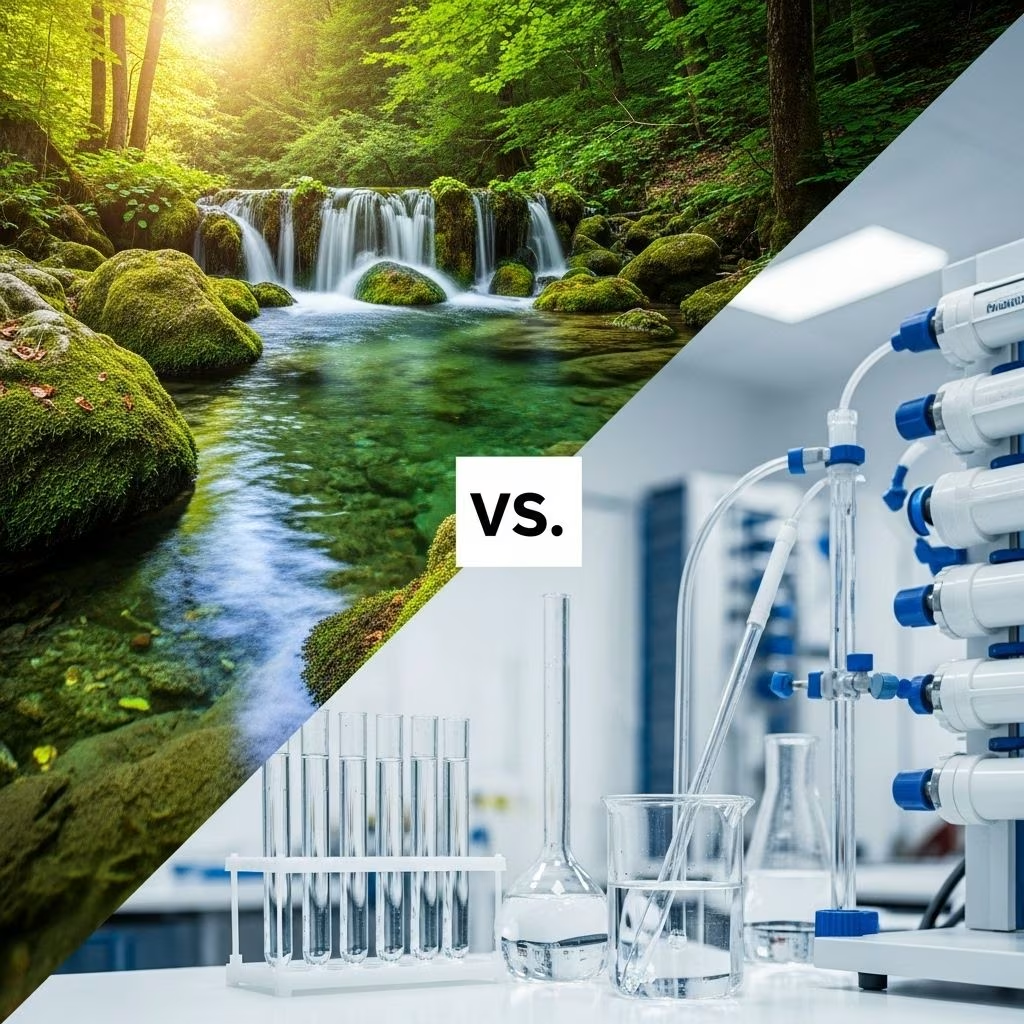
Water is essential to life, but choosing the right type for your daily consumption is not always straightforward. Mineral water and purified water are two of the most popular options globally, each with distinct processing methods, mineral profiles, purported health benefits, and environmental footprints. This article delivers an in-depth, evidence-based comparison to help you decide: Mineral vs. Purified Water—Which is better?
What is Mineral Water?
Mineral water is sourced directly from underground reservoirs and springs, naturally rich in minerals like calcium, magnesium, and potassium. According to most standards, to be classified as natural mineral water, the water must:
- Originate from a geologically protected underground source
- Have a stable composition of minerals and trace elements at the source
- Be bottled at the source with minimal processing (typically only filtration and sterilization)
Some bottled mineral waters are artificial mineral waters, produced by adding minerals to purified or spring water to mimic natural mineral profiles.
Types of Mineral Water
- Natural Mineral Water: Drawn and bottled directly from a natural underground source with minimal treatment
- Artificial Mineral Water: Produced by adding inorganic dissolved minerals to purified or spring water
- Mixed Mineral Water: Created by blending different natural mineral waters to achieve a desired composition
What is Purified Water?
Purified water refers to water that has undergone extensive treatment and filtration processes to remove nearly all impurities, including minerals, contaminants, bacteria, and chemicals. Common sources include tap water or groundwater that is made safe and suitable for drinking through purification. It includes:
- Distilled Water: Produced by boiling water and condensing the steam, leaving most impurities and minerals behind
- Reverse Osmosis (RO) Water: Forced through a semi-permeable membrane, filtering out minerals, impurities, and contaminants
- Deionized or Demineralized Water: Treated to remove mineral ions such as sodium, calcium, iron, and copper
Purified water is sometimes remineralized for taste or to comply with regulations but is generally lower in minerals than mineral water.
Production Processes: Mineral Water vs. Purified Water
| Process Step | Mineral Water | Purified Water |
|---|---|---|
| Sourcing | From protected underground springs or reservoirs | Tap, groundwater, or other sources |
| Aeration | To remove gases like CO2 and H2S | Not always required |
| Filtration | Multiple stages: sand, carbon, micron filtration for particles & microbes | Pre-filtration, carbon/sand filtration, microfiltration, reverse osmosis, or distillation to remove particulates and contaminants |
| Sterilization | Ozone or UV sterilization to destroy bacteria | UV, ozone, chemical (e.g., chlorine) disinfection after filtration |
| Mineral Content | Natural (may be artificially added in some brands) | Mostly removed; sometimes minerals are added back |
| Bottling | At the source (for natural mineral water) | After treatment; can be bottled at different locations |
Summary of Key Processing Steps
- Mineral Water: Emphasizes preserving mineral composition; filtered for particulates and sterilized, but minimally altered chemically.
- Purified Water: Undergoes rigorous multi-stage filtration and disinfection to remove virtually all dissolved substances, including essential minerals.
Mineral Content: Natural vs. Artificial
The primary distinction lies in mineral composition:
- Mineral water contains naturally occurring (or supplemented) minerals such as calcium, magnesium, potassium, and bicarbonates
- Purified water typically contains very low levels of minerals, unless minerals are reintroduced after purification
Common minerals in natural mineral water, with approximate ranges:
- Calcium: 20–150 mg/L
- Magnesium: 5–50 mg/L
- Potassium: 1–10 mg/L
- Bicarbonate, sulfate, silica, and others depending on source
The mineral content not only provides potential health benefits but also influences taste and texture.
Health Benefits and Potential Risks
Benefits of Mineral Water
- Supplemental minerals: Provides bioavailable calcium, magnesium, and potassium, which support bone, muscle, and cardiovascular health
- Digestive aid: Certain mineral waters (high in bicarbonate or sulfate) may aid digestion and relieve symptoms like indigestion or constipation
- Electrolyte balance: For active individuals or those in hot climates, replenishing lost electrolytes is easier with mineral-rich water
Potential Risks
- High sodium: Some mineral waters can be high in sodium, which may not be suitable for those on low-sodium diets
- Contaminants: If improperly sourced or bottled, natural mineral water may contain contaminants, though strict regulations reduce this risk
- Ineffective for infants: The high mineral content is sometimes unsuitable for infant formula or people with kidney issues
Benefits of Purified Water
- Universal safety: Extensive purification removes contaminants (chemicals, microorganisms, heavy metals)
- Low allergenicity: Absence of most minerals, organics, and microbes reduces risk for people with sensitivities or compromised immune systems
- Adaptable: Often used as a base for other beverages and infant formula after slight remineralization
Potential Risks
- Lack of minerals: May lead to lower daily mineral intake, which is a minor concern where diets are already marginal in calcium, magnesium, or potassium
- Taste: Some find purified water flat or unpalatable due to mineral removal
- Corrosiveness: Deionized or very low-mineral water can be slightly corrosive, though this is mostly an issue for industrial uses
Taste and Sensory Differences
Taste is a major differentiator. Mineral water tends to have a crisp, sometimes slightly salty or earthy taste, while purified water tastes flat, clean, or neutral depending on whether minerals are added back in.
- Mineral water flavor: Bold or subtle, influenced by type and amount of dissolved minerals
- Purified water flavor: Neutral, lacking the distinctive notes imparted by minerals
Those sensitive to off-flavors in municipal tap water often prefer purified water, while those looking for a more robust sensory experience may favor mineral water.
Environmental Impact
- Bottled mineral water: Often bottled at the source, sometimes transported long distances, resulting in a higher carbon footprint per liter
- Bottled purified water: Can be produced closer to consumers from local sources but still requires energy for purification
- Single-use plastics used in both types contribute significantly to environmental pollution
From a sustainability viewpoint, filtered tap water (a form of purified water) in reusable containers typically has the lowest environmental impact.
Cost and Availability
- Mineral water: Usually more expensive due to sourcing, branding, and regulatory protections
- Purified water: More widely available and generally cheaper, especially from large scale producers or through home filtration
In areas with limited access to clean tap water, both options are popular, though cost may be a deciding factor.
How to Choose: Key Considerations
- Health status: Those needing extra minerals (e.g., calcium, magnesium) may benefit from mineral water
- Sensitivity to contaminants: For immunocompromised people or infants, purified water is safest
- Taste preference: Taste-sensitive individuals may prefer mineral water; those seeking pure neutrality may opt for purified water
- Budget and availability: Cost-conscious users may lean toward purified or filtered tap water
- Environmental impact: Home filtration (producing purified water) in reusable bottles minimizes waste
Frequently Asked Questions (FAQs)
Q: Is mineral water healthier than purified water?
A: Not necessarily. Mineral water supplies extra minerals that can support health, but most people meet their needs through food. Purified water is safer in areas where contamination is a concern.
Q: Can infants and young children drink mineral or purified water?
A: Purified water is often recommended for infant formula preparation due to low minerals and contaminants. Mineral water with high sodium or sulfate may be unsuitable for babies.
Q: Does mineral water taste different from purified water?
A: Yes. Mineral water can taste crisp, earthy, or slightly salty depending on its mineral content, while purified water has a bland or neutral taste.
Q: Are all purified waters the same?
A: No. Purified water varies based on the method (distillation, reverse osmosis, deionization). Some brands remineralize for taste.
Q: Which is more environmentally friendly?
A: Filtered tap water (a form of purified water) in reusable containers is most sustainable. Bottled products, especially those shipped long distances, have higher carbon footprints.
Conclusion: Which Water is Better?
The decision between mineral water and purified water depends on factors like dietary needs, taste preference, cost, access, and sustainability. Mineral water is advantageous for its valuable minerals and taste and may appeal to those needing an extra dietary boost. Purified water, including filtered tap water, is best for those prioritizing purity, safety, and affordability, especially in areas with questionable water quality. For most healthy adults with balanced diets, either option is acceptable when consumed as part of an overall healthy lifestyle. Ultimately, the best choice is the one that aligns with your health needs, preferences, and values.
References
- https://sensorex.com/water-purification-methods/
- https://www.hongtekfiltration.com/news/filtration-process-of-bottled-mineral-water.html
- https://www.cdc.gov/drinking-water/about/how-water-treatment-works.html
- https://www.meco.com/whats-in-your-bottled-water/
- https://www.waterdoctorofwashington.com/from-source-to-bottle
- https://en.wikipedia.org/wiki/Water_purification
- https://extension.psu.edu/understanding-bottled-water/
- https://mineralwaterplant.com/mineral-water-process-details.html


